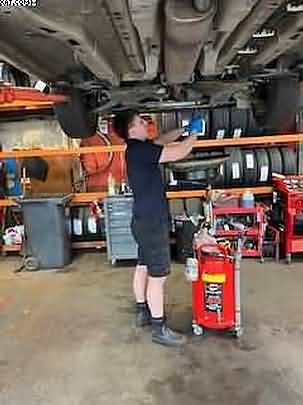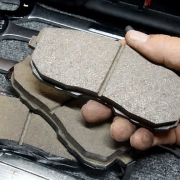
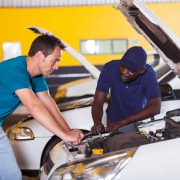
Hi I would like to introduce myself. Working in the Garage and tyre and all Car Servicing business now for 40 years. So. worked for a couple of national tyre companies before starting my first business. Of course, I now own a company here in the UK called Pellon Tyre and Auto-centre. Blogging about anything to do with Car Servicing and their related products. Naturally, that will help my business. We are members of Point-S and MotorCodes and are also a Unipart Car Care Centre.
Eric Roberts, MD of Pellon Auto Centre, recently attended a regional meeting of Unipart Car Care Centres (UCCC). This was in a hotel in Wakefield, West Yorkshire. New plans that mean that Pellon Autocentre joins Unipart were unveiled to upgrade their new image among garage members.
UCCC members will be offered complete new signage. Consequently, by using Unipart’s updated logo,. This logo is very similar to the present one. Because it appeared that there was only a slight modification to upgrade. Eric Roberts says, “The new image looks very stylish. Although there is not much change, the new design will look very useful. Especially when bonded together with all the other promotional effects that will be on offer to us.
Our garage images are in the Unipart style and colours.” Pellon Autocentre Leaves Unipart
Unipart will still provide their garage network with their website design service to help their individual garages build their websites.
In keeping with the previous system, Unipart will be funding this service. This offer has been taken up by over 500 garages and has become a favourite feature for the garages in the scheme. Motorcodes will still play a significant part in Unipart’s big changes; this will ensure an excellent standard of quality across the complete network. Therefore, it is crucial when offering a nationwide warranty service to the network’s customers.
Pellon Autocentre Leaves Unipart
A brand new feature will be the introduction of Ben Collins (the former “sting” from the Top Gear motoring programme on TV). Ben will be helping promote the Car Care Centres at a national and local levels, holding regular events across the country. Another new feature will be the introduction of more training facilities. Garages participating will have access to Unipart’s technical helpline and training staff support. “This Pellon Autocentre leaving Unipart service will be of great use to participating garages such as ourselves,” says Eric Roberts.
Unipart will be revamping the existing web site.
This website will be fully optimised and search engine-friendly. Links to participating member websites. Furthermore, offering the partners a right online image with the facilities to offer online service and MOT booking.
Furthermore, the new workwear was also on display for the garage owners to browse over, and the meeting concluded with a buffet. Unipart’s marketing director, Wendy Williams, conducted the meeting in a very professional manner, and it felt that all the participating centre members in attendance were looking forward to the new changes with great anticipation.
The latest 2020 update to our total independence- Pellon Autocentre Leaves Unipart
Lastly, I have recently made a decision to leave the Unipart setup. Importantly, the organisation has recently come under pressure from other similar trade groups. So, in the final analysis I thought that we should move forward as an independent garage being able to trade with all the trade groups.
Given these points,
I believe that the car parts replacement market has also had a recent shake up. So, giving us the opportunity to buy parts and service parts at better prices for our customers. Generally speaking, trade is very good following the recent “Corvid 19” MOT Testing restrictions. Here at Pellon Autocentre we are now free from any motoring organizations and totally independent.
The next organisation to follow were Point-S. I did try and see what the benefits would be. However it was to become another disappointing large organisation without much clout?
Inclement weather could be on its way! bad weather car tips
So this attached article is more about how to handle your car during bad weather. Of course, it stands out that you should! Also, make sure the car is well serviced and ready for any bad winter weather.
Brakes and tyres are indeed very important. Consequently, a good winter service will ensure that your vehicle’s tyres and brakes are up to scratch. Ready to tackle any snow and torrential rain. Importantly, it is a great idea to fit winter tyres or at least all-weather tyres before the weather turns for the worst. As temperatures start to drop, area mechanics say drivers may want to make some adjustments to their cars to avoid cold weather issues.
Mechanics at Valvoline in New Bern say there are three main pieces of advice that everyone should know before handling their car in colder weather. Donta Berry says drivers may have already noticed, but with the change in weather comes a change in tyre pressure.
Q: Why is a winter check-up necessary for my vehicle? A winter check-up is essential to keeping your car functional and safe during the colder months. Cold weather may have a big impact on your car’s battery, tyres, and engine, so a comprehensive inspection can help prevent failures and costly repairs.
Q: What are the most important items to check in a car for winter? A: Check the batteries, tyres (including tread depth and pressure), antifreeze levels, lights, wipers, and brakes. These components are more vulnerable to cold temperatures and poor weather conditions.
Q. How does cold weather affect car batteries? A: Cold weather can diminish a car battery’s efficacy, making it more difficult to start the engine. Batteries are more likely to fail in the winter due to increased electrical demands (such as heating and lighting) and decreased charging capacity.
Q: Why is tyre condition crucial in the winter? Bad Weather Car Tips A: Good tyre condition is essential for safe winter driving. Cold temperatures can harden tyre rubber, diminishing grip. Furthermore, wet or slippery roads require adequate tread depth to ensure grip and control.
Q: Do I need winter tyres in the UK? A: Although not required in the UK, winter tyres can provide greater grip and handling in temperatures below 7°C. They include a specific tread and rubber combination that is ideal for cold, wet, icy, or snowy weather.
Q: How does antifreeze affect winter car care? Bad Weather Car Tips A: Antifreeze, or coolant, is necessary to keep your engine from freezing in cold weather. It also helps to keep the engine at its optimal working temperature, lowering the risk of overheating.
Q: How frequently should I check my car’s lights and wipers? A: It is recommended that you check your car’s lights and wipers on a regular basis, particularly during the winter. Shorter days necessitate higher usage of lighting, and good wipers are essential for visibility during rain or snow.
Q: Will winter impact my car’s brakes? Bad Weather Car Tips A: Yes, colder temperatures and wet circumstances can impair braking performance. Moisture can cause brake components to rust, and salt on roadways can cause corrosion, demanding a thorough inspection.
Q: Is it necessary to carry a winter emergency pack in my car? A: Absolutely. A winter emergency kit should include a blanket, lantern, de-icer, scraper, first-aid kit, and food and water. It’s essential for unforeseen situations, particularly in isolated places.
Q: Where can I have my car winter-checked in the UK? A: You can have your car winter-checked at most garages and service centres in the UK. To ensure a comprehensive and reliable check, use a respected firm that has been suggested by friends or has positive web ratings.
Finally, it is always a good idea to have a pre-winter service on your vehicle to ensure safe driving in a safe car.
Source: Mechanics: Follow these tips to avoid car trouble in chilly weather | WCTI
Q: What is the importance of checking my car’s brakes on a frequent basis? A: Regular brake inspections are critical for safety. They ensure that your brakes are operating properly, which is critical for stopping your car quickly and safely, particularly in emergency situations.
Q: What are the symptoms that my brakes need to be checked? A: Unusual noises like screaming or grinding, a spongy or soft brake pedal, the car pulling to one side when braking, or the brake warning light turning on are all signs that your brakes need to be serviced.
Q: How often should I get my brakes checked? A: It is advised that you check your brakes at least once a year. However, if you observe any problems or if your driving habits include numerous stops, more frequent inspections may be required.
Q: What happens during a brake check? A brake check normally entails assessing the brake pads, brake discs, and shoes for wear, testing the brake fluid level and quality, and verifying that the complete braking system, including pipes and hoses, is in excellent working order.
Q: Can worn brakes impair my car’s performance? A: Yes, worn brakes can have a substantial impact on your vehicle’s performance. They can result in longer stopping distances, decreased vehicle control, and a higher risk of brake failure.
Q: Why is the handbrake check necessary? Audi TT Hand-Brake Failure A: The handbrake, often known as the parking brake, is essential for keeping your vehicle secure while parked. A properly operating handbrake keeps the car from rolling, especially on slopes, assuring safety and adherence to traffic requirements.
Q: How can I know if my handbrake needs adjusting? A: If your handbrake takes several clicks to engage or lifts higher than usual, it may require adjustment. Also, if the car rolls slightly when parked on an incline with the handbrake engaged, it indicates that it needs to be checked.
Q: What happens if I skip brake maintenance? A: Neglecting brake maintenance can result in brake failure, longer stopping distances, and an increased risk of accidents. If components wear out prematurely, it might lead to more expensive repairs later on.
Q: Do different types of brakes require different care? Audi TT Hand-Brake Failure A: Yes, cars can use Audi TT Hand-Brake Failure, drum brakes, or a mix of the two. Each type has unique components (for example, disc brake pads and drum brake shoes) that require specific maintenance and care.
Q: Where should I have my brakes checked? A: Get your brakes tested at a reputed garage or repair shop. For the best service, look for places that have qualified mechanics that are familiar with the make and model of your vehicle.
The Audi TT has in the past had many problems with the handbrake. There have been several reasons for this issue.
Last week, a good customer of ours told us that his daughter had parked her car on a slight slope while she went into the bank. When she returned, the car had moved down the hill about ten feet. Luckily for her, the cat had come to rest against a very high pathway edge.
She was kind of scared and reflected in her mind: what could have happened?
His daughter was in her late twenties and worked as an insurance broker in Halifax, UK. The family brought all their cars into my garage for servicing and repairs; this Audi TT was no exception.
The father then called us and told us the story. The first thing that we asked was, “Whether she had put the handbrake on at all?” He said that this was the first thing that she had checked.
The car finally arrived at the garage, and the young lady left it with us for the day. I often look at particular forums on the internet. The Audi forum did come up with a few different problems associated with Audi TT handbrake failure problems.
Audi TT Hand-Brake Failure
Audi TT Hand-Brake failure
We put the Audi TT up onto a ramp and removed the wheels. Although the problem was with the rear handbrake, we always check all the cars brakes to be on the safe side. The car was registered in 2005 and was an 1800 Turbo special edition. A 225 BHP engine powered the car, giving it high performance.
Alex had the responsibility to repair this car. He set to work, examining all the parts that make up the handbrake. Everything looked in good order, so Alex greased the moving parts and began to examine the discs and pads.
The brake discs looked in good condition. Audi TT Hand-Brake Failure
but Alex noticed that the pads had a shine on them. Shiny pads usually mean that they have “gone hard.”
We decided to fit a new set of pads as we suspected that this was the culprit. Alex completed the work and tested the handbrake on some of the steep hills that surround Halifax. He ran the car, making sure the brakes were hot, and checked the handbrake again.
Finally, another satisfied customer drove away into the sunset.
Audi A3 Front Brake Disc Corrosion – A Common Problem on Calderdale Roads
The other day here at Pellon Tyres & Autocentre in Halifax, we were visited by the owner of a neat Audi A3. The car looked well cared for on the outside, but the driver was concerned about worrying noises coming from the front end when braking. It’s the sort of thing drivers often try to ignore at first, but as most motorists soon realise, brake noises rarely get better on their own.
Once Alex had the car up on the ramp and the wheels removed, the cause became obvious straight away. The front brake discs were badly corroded, and the brake pads were worn unevenly. In short, the brakes were past their best and needed replacing to restore safe and quiet braking.
This is a problem we see regularly, especially on vehicles driven around Halifax and the wider Calderdale area, where road conditions and driving patterns play a big part in brake wear.
Why Do Brake Discs Corrode? Audi A3 for New Front Discs
Brake disc corrosion is extremely common in the UK, and it’s not always down to poor maintenance. Modern cars like the Audi A3 use cast iron brake discs, which naturally rust when exposed to moisture. Normally, light surface rust is cleaned off the discs the first time the brakes are applied.
However, problems arise when:
Cars are used mainly for short journeys
Vehicles are parked for long periods
Brakes don’t get hot enough to clean themselves
The car is driven gently most of the time
Winter road salt is present
In areas like Halifax, where the weather is often damp and cold, corrosion can build up quickly. Add in steep hills, stop-start traffic, and rough road surfaces, and brakes take a real hammering.
When corrosion builds up around the outer edges of the disc, it prevents the brake pads from making full contact. This leads to:
Grinding or scraping noises
Vibration through the brake pedal
Reduced braking performance
Uneven pad wear
That’s exactly what we found on this Audi A3.
Audi A3 for New Front Discs
A Brief History of the Audi A3 in the UK
The Audi A3 has been a popular sight on UK roads since it first arrived in the mid-1990s. It was Audi’s answer to the growing demand for premium hatchbacks, offering German build quality in a compact, practical package.
Over the years, the A3 has earned a reputation for:
Solid build quality
Comfortable interiors
Good handling
Strong resale values
It’s been especially popular with drivers who want something a bit more refined than a standard family hatchback but still practical for everyday use.
However, like all cars — premium or not — the A3 still relies on routine servicing, particularly when it comes to brakes. Being a heavier, well-insulated car, brake wear isn’t always obvious until noises start appearing.
one of the old discs
Calderdale Roads and Brake Wear: Audi A3 for New Front Discs
Anyone who drives regularly around Calderdale knows the challenges:
Steep hills
Tight bends
Sudden stops
Rough road surfaces
Potholes that appear overnight
All of this increases the workload on a car’s braking system. Add wet weather and winter grit into the mix, and corrosion becomes almost unavoidable if brakes aren’t checked regularly.
We often tell customers that brakes can look fine from the outside, but once the wheels are off, a very different picture emerges.
Nice new brake disc in place
The Importance of Regular Brake Servicing
In this case, replacing the front discs and pads together was the correct and safest solution. Fitting new pads to corroded discs is false economy and often leads to repeat problems within weeks.
Regular servicing allows us to:
Inspect brake discs properly
Check pad thickness evenly
Clean and lubricate brake components
Catch corrosion before it becomes serious
Prevent expensive repairs later on
A simple inspection at service time can often save customers money and keep their car quiet, safe, and reliable.
A Happy Ending: Audi A3 for New Front Discs
Once the new discs and pads were fitted, the Audi A3 was road tested and braking smoothly again — no noises, no vibration, and full braking performance restored. The customer left reassured, knowing the issue had been dealt with properly and safely.
That’s what we aim for every time here at Pellon Tyres — honest advice, proper repairs, and peace of mind for drivers across Halifax and Calderdale.
https://www.pellonautocentre.com/wp-content/uploads/2024/07/pellon-tyres-logo-509x321.jpg00Eric Robertshttps://www.pellonautocentre.com/wp-content/uploads/2024/07/pellon-tyres-logo-509x321.jpgEric Roberts2025-12-21 08:12:102025-12-21 08:14:25Audi A3 for New Front Discs
VW up! Rear Brake Problems – A Common Cause of Poor Braking and Noises
The other day at Pellon Tyres in Halifax, we had a VW up! brought in by a worried driver. The car just didn’t feel right. There were odd noises coming from the rear when braking, and the overall performance felt sluggish and unpredictable.
Like many motorists around Calderdale, the customer was concerned it might turn into a big repair bill – and with Christmas just around the corner, that’s the last thing anyone wants.
Thankfully, after a proper inspection by Ethan, the issue turned out to be something we see quite regularly on smaller cars, especially ones used for local driving.
What Was the Problem? VW Up with Seized brakes
Once the wheels were off and the rear brakes inspected, the fault became clear straight away.
The rear brake shoes were completely seized.
On the VW up!, the rear brakes use drum brakes rather than discs. Inside the drum is a set of brake shoes, springs, adjusters and handbrake mechanisms. Over time, especially in areas like Halifax where we get plenty of rain, road salt, and hills, these components can:
Corrode
Dry out
Stick in place
Seize completely
In this case, the shoes weren’t releasing properly after braking. That causes:
Noises from the rear
Poor braking performance
Dragging brakes
Reduced fuel economy
A car that just doesn’t feel right to drive
Left untreated, seized rear shoes can also lead to overheating and even brake failure.
VW Up with Seized brakes
Why Rear Brakes Seize Up on Cars Like the VW up!
Small city cars like the VW up! are often used for:
Short journeys
School runs
Shopping trips
Local commuting around town
That means the rear brakes don’t always get worked as hard as the fronts. Add in Calderdale’s damp climate and winter road salt, and the rear brake mechanisms can quietly seize up without the driver realising.
We see this a lot on cars that:
Sit unused for a few days
Are driven gently most of the time
Haven’t had the rear brakes stripped and serviced for a while
VW Up with Seized brakes
The Repair – No Massive Bill, Just Proper Garage Work
Rather than replacing everything unnecessarily, Ethan did what good garages should always do first.
We:
Stripped down the rear brake assemblies
Removed all the shoes and hardware
Cleaned everything thoroughly
Freed off the seized adjusters and handbrake mechanism
Lubricated the correct contact points using special high-temperature brake grease
Reassembled and adjusted the brakes properly
Once rebuilt, everything moved freely again.
Eureka! The brakes were back to normal, the noises had gone, and the car drove exactly as it should.
Best of all, the customer avoided a large repair bill – something we know is hugely appreciated, especially in the run-up to Christmas.
A Bit of History – The VW up! in the UK: VW Up with Seized brakes
The Volkswagen up! was introduced to the UK in 2012 as a compact, economical city car. It quickly became popular with:
First-time drivers
Older motorists
People needing a reliable second car
Drivers doing lots of town driving
Its strengths include:
Low running costs
Good fuel economy
Simple, reliable engineering
Surprisingly solid build quality for a small car
However, like all cars, the up! still needs proper maintenance – and brakes are a big part of that.
VW Up with Seized brakes
Why Regular Brake Checks Matter in Halifax & Calderdale
Driving around Halifax and the surrounding Calderdale area puts extra strain on brakes:
Steep hills
Stop-start traffic
Wet roads
Cold winter weather
Gritted roads
Rear brakes in particular can quietly deteriorate because drivers don’t always feel the problem straight away.
That’s why we always recommend:
Regular brake inspections
Servicing rear brakes, not just replacing pads
Checking handbrake operation
Sorting small issues before they become big ones
A Happy Customer – The Best Result: VW Up with Seized brakes
After the repair, the customer left knowing:
The problem had been properly diagnosed
The brakes were safe and working correctly
There was no massive bill
The car was ready for winter driving
That’s what we aim for at Pellon Tyres – honest advice, sensible repairs, and keeping people safely on the road without spending money they don’t need to.
VW Up! Rear Brake Problems in Halifax – A Common Issue with a Happy Ending
Just before Christmas, we had a driver bring in their VW Up! to us here at Pellon Tyres & Autocentre in Halifax. The owner was worried the car wasn’t performing as it should and had started making worrying noises from the rear when braking. It’s the sort of thing that instantly sets alarm bells ringing, especially at this time of year when nobody wants an unexpected repair bill.
The VW Up! is a popular little car around Halifax and Calderdale. It’s compact, economical, easy to park on tight streets, and ideal for town driving. You see plenty of them pottering about locally, from Sowerby Bridge to Illingworth, often used as a daily runabout or first car. Because they’re generally very reliable, unusual noises tend to worry owners more than usual.
First Checks in the Workshop
One of our technicians, Ethan, got the VW Up! straight onto the ramp to have a proper look. The customer explained that the noise seemed to come from the back of the car, especially when braking, and that the car didn’t feel quite right.
Rear brake noises are something we see fairly often, particularly on cars that use rear drum brakes, like the VW Up!. These systems are robust and long-lasting, but they do have one weakness – they don’t always get enough use to keep everything moving freely.
Once the rear wheels and drums were removed, the problem became clear straight away.
Rear Brake Shoes Completely Seized
Both rear brake shoes and the operating mechanism were completely seized. This meant the brakes weren’t releasing properly, causing drag, noise, and poor performance. In some cases, this can even lead to overheating or uneven braking if left unchecked.
This kind of fault doesn’t usually happen overnight. It builds up gradually due to a combination of:
Moisture getting inside the brake drums
Road salt (especially in Calderdale winters)
Light usage of the rear brakes
The handbrake mechanism sticking over time
Many VW Up! cars are driven gently around town, and the rear brakes don’t always get a proper workout. Over time, the internal components dry out, corrode slightly, and eventually seize.
The Good News – No Massive Bill: VW Up with Seized brakes
Here’s where the relief kicked in for the customer.
Instead of needing brand new brake shoes, wheel cylinders, or a full rebuild, Ethan was able to strip everything down, clean all the components thoroughly, and free off the seized parts. The mechanism was carefully cleaned and then lubricated using special high-temperature brake grease, designed specifically for brake systems.
Once everything was rebuilt and adjusted correctly, the brakes were tested and worked exactly as they should.
Eureka! The noise had gone, the brakes were operating smoothly, and the handbrake felt right again.
Best of all, the customer avoided a big repair bill just before Christmas – something we know makes a huge difference at this time of year.
A Bit of History – The VW Up! in the UK
The VW Up! was introduced to the UK in 2012 as Volkswagen’s answer to small city cars. Built to be simple, economical, and practical, it quickly became popular with first-time drivers, older motorists, and families needing a second car.
In areas like Halifax and Calderdale, where roads can be narrow, hilly, and busy, the Up! fits in perfectly. It’s easy to drive, cheap to run, and generally very dependable – provided it’s looked after properly.
However, like many modern small cars, rear drum brakes can suffer from lack of movement, especially if the car does short journeys or sits unused for periods.
Why Regular Brake Checks Matter: VW Up with Seized brakes
This job is a perfect example of why regular brake inspections are so important. A seized rear brake doesn’t always show obvious symptoms straight away. Often it’s a slight noise, reduced performance, or increased fuel consumption.
Catching the problem early meant we could fix it properly and affordably.
Here at Pellon Tyres & Autocentre, we always try to repair rather than replace where it’s safe to do so. It saves our customers money and keeps perfectly good parts in use.
A Happy Customer on the Road Again: VW Up with Seized brakes
The customer left happy, relieved, and confident that their VW Up! was back to normal. No scary warning lights, no grinding noises, and no massive bill – just a well-sorted car ready for winter driving around Calderdale.
If your car is making unusual noises, especially when braking, it’s always worth getting it checked sooner rather than later. Often, like this one, the solution is simpler than you might think.
https://www.pellonautocentre.com/wp-content/uploads/2024/07/pellon-tyres-logo-509x321.jpg00Eric Robertshttps://www.pellonautocentre.com/wp-content/uploads/2024/07/pellon-tyres-logo-509x321.jpgEric Roberts2025-12-20 09:29:192025-12-20 09:49:11VW Up with Seized brakes
Peugeot 207 Brake Warning Light – When an ABS Fault Is the Real Problem
Yesterday here at Pellon Tyres & Autocentre in Halifax, we had a Peugeot 207 brought in with a brake warning light glowing on the dashboard. The driver was understandably concerned — and quite right too — because when a brake warning light comes on, it’s never something to ignore.
After a full inspection, it turned out the car had developed a fault with the ABS unit on one side of the braking system, a problem we see fairly regularly on Peugeot 207s here in the UK.
This article explains what that warning light really means, what can cause ABS faults, why Peugeot 207s are prone to it, and what drivers around Halifax and Calderdale should look out for.
Peugeot 207 with Brakes Problem
Understanding the Brake Warning Lights in a Peugeot 207
Modern cars like the Peugeot 207 don’t just have one brake warning light — they have several, and each means something slightly different.
In the Peugeot 207 cabin you’ll usually see:
A red brake warning light
An amber ABS warning light
Sometimes both lights together
Each tells a different story.
Red Brake Warning Light
This usually relates to:
Low brake fluid
Worn brake pads
A serious braking system fault
If this light stays on while driving, the car needs checking immediately.
Amber ABS Warning Light
This points directly to the Anti-lock Braking System. When this light comes on:
Normal braking still works
ABS assistance is disabled
Emergency braking and wet-road safety are reduced
This is exactly what we found on the Peugeot 207 that came into the workshop.
new unit in place
What Is the ABS System, and Why Does It Matter?
ABS (Anti-lock Braking System) prevents the wheels from locking under heavy braking. Instead of skidding, the wheels continue to rotate, allowing the driver to steer while braking.
This is especially important in:
Heavy Calderdale rain
Steep Halifax hills
Slippery winter roads
Emergency stop situations
Without ABS:
Wheels can lock
Steering control is reduced
Stopping distances can increase
The Peugeot 207 ABS Problem – What We Found
On this particular Peugeot 207, diagnostic testing showed a fault within the ABS unit on one side of the braking system.
Common causes include:
Internal ABS pump failure
Failed solenoid valves
Corrosion inside the ABS module
Electrical failure within the unit
Unfortunately, these units can’t usually be repaired once they fail internally and often require replacement.
Old unit to show customer
Why ABS Units Fail on Peugeot 207s: Peugeot 207 with Brakes Problem
We see this problem more often than people realise, especially on UK-used Peugeot 207s.
1. Age and Mileage
Many 207s are now:
12–18 years old
Well past 100,000 miles
ABS components simply wear out over time.
2. Moisture and Road Salt
Here in Halifax and Calderdale, cars are exposed to:
Constant rain
Winter road salt
Damp conditions year-round
Moisture can seep into ABS units and connectors, causing corrosion and electrical faults.
3. Wheel Speed Sensor Issues
Sometimes the fault starts with:
A failed wheel speed sensor
Broken wiring near the hub
Corroded sensor rings
If ignored, this can overload and damage the ABS unit itself.
4. Battery or Charging Problems
Low voltage can confuse ABS modules. A weak battery or alternator issue can trigger faults that eventually become permanent.
New boxed unit ready to be fitted
What the Driver Might Notice: Peugeot 207 with Brakes Problem
When ABS faults appear on a Peugeot 207, drivers often report:
https://www.pellonautocentre.com/wp-content/uploads/2024/07/pellon-tyres-logo-509x321.jpg00Eric Robertshttps://www.pellonautocentre.com/wp-content/uploads/2024/07/pellon-tyres-logo-509x321.jpgEric Roberts2025-12-19 10:18:162025-12-19 10:33:36Peugeot 207 with Brakes Problem
Grinding Brakes on an Audi A1 – What’s Causing the Noise?
Yesterday at Pellon Tyre & Autocentre in Halifax, we were presented with an Audi A1 whose owner was worried about a nasty grinding noise every time the brakes were applied. It’s a sound that makes most drivers wince, and for good reason.
A quick inspection soon showed the cause – the car needed new brake discs all round, along with a full set of brake pads. Sadly, this is something we see quite often, not just on Audi A1s but on many modern cars driven around Calderdale’s hills, traffic lights, and stop-start town driving.
So let’s look at why brakes grind, what it means for your car, and a bit of background on the Audi A1 here in the UK.
Audi A1 for new Brake Discs
Why Do Brakes Make a Grinding Noise?
A grinding noise when braking is never something to ignore. Around Halifax, with steep hills like Pellon Lane, Boothtown Road, and the run down into the town centre, brakes work hard – and problems show themselves quickly.
1. Worn Brake Pads
The most common cause is brake pads worn right down. Once the friction material is gone, you’re left with metal scraping on metal. That grinding sound is your brake pad backing plate eating into the disc.
At this stage:
Braking performance is reduced
Discs get damaged very quickly
Repair costs rise sharply
What could have been pads only often turns into pads and discs.
old worn out disc
2. Discs Worn or Corroded
In Calderdale, cars often sit overnight in damp air, especially near the River Calder. This leads to surface rust on brake discs.
Short journeys around Halifax, Sowerby Bridge or Illingworth mean:
Brakes don’t get hot enough to clean themselves
Rust builds up
Discs wear unevenly
Once discs are badly worn or lipped, they’ll grind even with new pads fitted.
Audi A1 for new Brake Discs
3. Cheap or Incorrect Brake Parts
Some budget pads are:
Too hard
Poorly matched to the disc material
This can cause grinding, squealing, or vibration. At Pellon, we always fit quality, correctly specified parts, because cheap brakes are false economy.
new disc fitted
4. Seized Brake Components: Audi A1 for new Brake Discs
Salted winter roads around Halifax don’t help. Brake callipers and sliders can seize, causing:
Pads to stay in contact with the disc
Overheating
Premature wear and grinding noises
Regular brake servicing helps prevent this.
5. Ignoring Early Warning Signs: Audi A1 for new Brake Discs
Most cars give you plenty of notice:
Squealing
Slight vibration
Pulling to one side
Sadly, many drivers wait until the noise becomes a full-on grind – by then, damage is already done.
A Bit of History – The Audi A1 in the UK
The Audi A1 first arrived in the UK around 2010, aimed at drivers wanting Audi quality in a small, stylish package. It was Audi’s answer to cars like the MINI and VW Polo, but with that familiar German premium feel.
Over the years, the A1 has been popular with:
Younger drivers
Town and city commuters
Drivers wanting something compact but well built
Here in Halifax and Calderdale, they’re ideal for:
Narrow streets
Busy town centres
Tight parking spots
But like all modern cars, they rely heavily on well-maintained braking systems, especially with hill starts, traffic queues, and roundabouts being part of daily life around here.
Why Regular Brake Checks Matter in Calderdale: Audi A1 for new Brake Discs
Local driving conditions really do take their toll:
Hills increase brake wear
Short journeys encourage corrosion
Wet weather speeds up rust
We recommend having your brakes checked:
At least once a year
Or whenever you hear a new noise
A quick inspection can save a lot of money – and a lot of worry.
https://www.pellonautocentre.com/wp-content/uploads/2024/07/pellon-tyres-logo-509x321.jpg00Eric Robertshttps://www.pellonautocentre.com/wp-content/uploads/2024/07/pellon-tyres-logo-509x321.jpgEric Roberts2025-12-16 07:52:572025-12-16 07:59:54Audi A1 for new Brake Discs
Land Rover Discovery Brake Repair at Halifax’s Pellon Tyres
A Land Rover Discovery with a somewhat concerning issue—poor braking performance—pulled up at Pellon Tyres here in Halifax earlier this week. Particularly when travelling downhill on the Yorkshire roads—which, let’s face it, can be a little nerve-racking even in the best of circumstances—the client had noted that the brakes were spongy and just weren’t biting as they used to.
It didn’t take long to determine what was wrong after we had the Discovery up on the ramp for a thorough inspection. The brake pads were worn down to the metal in several places, and the brake discs were severely worn. Particularly in the Pennine hills surrounding Halifax and beyond, a large, hefty 4×4 like the Discovery requires a good amount of stopping force, so this is not what you want.
Before returning the vehicle, we tested the system thoroughly and installed new brake discs and pads that were of high quality and matched the vehicle’s weight and dimensions. There was a huge difference. The braking felt responsive, solid, and just right. The client departed satisfied, certain that his reliable disco was once again prepared for action.
Discovery for Discs and Pads
A Little History of Discovery- Discovery for Discs and Pads
In West Yorkshire, as well as throughout the United Kingdom, the Land Rover Discovery has long been a popular vehicle. The Discovery was Land Rover’s response to families and drivers who want the off-road capability of a Defender but with greater comfort and spaciousness. It was first introduced in 1989, which also happened to be the year I moved into a portion of the Pellon garage.
From the boxy and tough early models to the sleeker, more technologically advanced forms we see today, it has undergone multiple changes throughout the years. The Disco has always been capable of handling any situation, whether it is navigating muddy fields, navigating winding country roads, or simply running the school run during the winter.
We see a good number of them at the garage, both newer ones for tyres, MOTs, and services, as well as older ones that require some TLC. They are generally reliable cars, but just like any other car, they require maintenance, particularly when it comes to something as important as the brakes.
Discovery for Discs and Pads
The Reasons Behind Brake Disc Wear Out? Discovery for Discs and Pads
We refer to brake discs and pads as “consumables” because they deteriorate over time, and the rate at which this occurs is determined by several factors:
1. Driving Style – Yourbrakes will be severely abused if you often stop-start your car, particularly in mountainous areas like Halifax. They deteriorate more quickly under heavy braking.
2. The vehicle’s weight Because of its size, the Discovery’s weight increases the strain on the brakes, particularly when it is fully loaded or being towed.
3. Conditions of the Road We get a lot of grit and muck in the winter, wet roads, and steep hills while we live in Calderdale. Brake parts suffer from all of that.
4. Inexpensive or Low-Grade Components – Because less expensive discs and pads can wear out more quickly and produce issues like brake fade, screeching, or vibration when braking, we only ever use respectable, well-known brands.
5. Lack of Servicing – Frequent inspections during a MOT or service help identify wear early, before the pads deteriorate and damage the discs, which makes the repair more expensive.
Discovery for Discs and Pads
Last Word – Discovery for Discs and Pads
Given how crucial safe, dependable brakes are for a car like this, it was fantastic to have this Discovery fixed and back on the road. We enjoy working on Land Rovers since they are authentic British vehicles with lots of personality (and maybe a few eccentricities, if you see what I mean!).
Don’t wait around if your brakes feel a little strange, such as a mushy pedal, a grinding sound, or pulling to one side. Please feel free to visit us, and we’ll be happy to take a look. Given the hills and twisting roads in this area, it’s advisable to exercise caution.
Thank you for reading, and keep in mind that the staff at Pellon Tyres in Halifax is always there to help keep you safe and sound while driving, whether you have a Discovery or a small city car.
https://www.pellonautocentre.com/wp-content/uploads/2024/07/pellon-tyres-logo-509x321.jpg00Eric Robertshttps://www.pellonautocentre.com/wp-content/uploads/2024/07/pellon-tyres-logo-509x321.jpgEric Roberts2025-12-16 06:40:002025-12-17 10:08:22Discovery for Discs and Pads
Taking a Deep Breath: The Advantages of Regularly Changing and Servicing the Air Cabin Filter in Your Vehicle
The air cabin filter in your vehicle is an essential component in the process of preserving the integrity of the air inside the vehicle. Altering and maintaining this filter on a regular basis brings a number of benefits, not only to your health but also to the functioning of your vehicle.
Improved Air Quality
The air cabin filter’s primary job is to remove pollutants, allergens, and other potentially hazardous particles from the air that is drawn into your vehicle. This results in improved air quality. Changing this filter on a consistent basis helps to maintain the air quality inside your vehicle, which contributes to the driver’s and passengers’ comfort as well as their overall health. To put it simply, it functions as the initial line of defence for your vehicle against airborne pollutants.
Reduction of Unpleasant Odors:
An air cabin filter that is kept clean can also help with the reduction of unpleasant odours inside your vehicle. The filter eliminates contaminants that can lead to unpleasant odours, ensuring that your cabin maintains its pleasant aroma. Therefore, if you want your car to smell better, all it takes is a moment to switch out the air filter.
Improved Performance of Your Heating, Cabin filters Not Changed
Ventilation and Air Conditioning (HVAC) System A clogged air cabin filter can have a negative impact on the performance of your heating, ventilation, and air conditioning (HVAC) system. It can reduce the amount of airflow, making your air conditioner work harder, lowering its efficiency, and increasing the risk of needing expensive repairs. Altering the filters in the HVAC system at regular intervals ensures its continued efficiency.
Defogging Effectiveness: Keeping your car’s air cabin filter clean and in good working order can help the windscreen of your vehicle defog more quickly. Because the moisture level in your vehicle is better managed thanks to the filter, your windows and windscreen will defog more quickly, which is an important factor in maintaining safe driving conditions in certain weather conditions.
Believe it or not, the fuel efficiency of your vehicle can actually be improved by maintaining a clean air cabin filter and having it inspected regularly. When your heating, ventilation, and air conditioning systems are running smoothly, it puts less strain on your vehicle’s engine, which in turn can lead to better gas mileage.
Money Savings:
Performing routine maintenance on your filters can help you avoid more expensive problems in the future. A clogged filter can result in expensive repairs for a heating, ventilation, and air conditioning (HVAC) system that is failing. Changing the filter in the air cabin is a relatively minor expense in comparison.
Lengthened Lifespan of the HVAC System Changing the filter in your car’s HVAC system on a regular basis can lengthen its lifespan. By putting less stress on the system, you are helping to extend its overall lifespan, which will save you money in the long run by preventing the need for premature replacement.
In conclusion, the significance of regularly servicing and replacing the air cabin filter in your vehicle cannot be overemphasised enough. This straightforward preventative maintenance task boosts the quality of the air, improves the performance of the vehicle, and may even end up saving you money in the long run. Any person who owns a car could stand to benefit significantly from performing this simple task.
Cabin filters Not Changed
Keep in mind that the air cabin filter in your vehicle is more than just a part of the vehicle; it plays an essential role in both the quality of your driving experience and the overall health of your vehicle. With a properly maintained air cabin filter, you can not only breathe easier but also drive more comfortably.
So, this image tells a story. This is a cabin filter that should be changed on most models of cars. Of course, they have not changed!
Cabin filters are very important. Importantly, they filter out all sorts of nasties from entering your car’s cabin. Demons like pollen and other invisible irritants make many people feel really ill! Hay fever is the enemy that comes to mind.
However, there are many other little monsters that can get into the car cabin area. Dust particles from all sorts of pollutants enter the cabin when the filter is removed or not changed when required.
Should it be changed at the correct servicing interval? Cabin filters Not Changed
So, these filters are part of most vehicles big service. However, they are often overlooked and not changed by many service centres. Here at the independent garage, Pellon Autocentre, we save the old service parts and physically show our customers the dirty parts. In my opinion, this is the best practise. including the old air filters and oil filters.
Corteco has highlighted the importance of regular cabin filter replacement. Cabin air filters work to block out pollutants and irritants emitted by other vehicles on the road. Throughout the colder months, filters work to demist the windows, what happens if there is no cabin air filter, Never change cabin air filter. Cabin filters Not Changed.
As winter approaches and the weather becomes as unpredictable as a coin flip, it’s critical that we Brits give our automobiles a thorough once-over. Winter in the United Kingdom, particularly in locations like Halifax, can be a bit of a drama queen—one day it’s all sunshine and rainbows, and the next it’s like something out of “The Chronicles of Narnia.” That’s why a winter vehicle inspection isn’t just a nice idea; it’s critical for keeping you and your family safe.
Let’s break it down now, shall we? Winter Car Check
Here are the most important things to look for when winterizing your car:
Batteries and electrics: Car batteries can suffer over the winter. You don’t want to be stuck at Sowerby Bridge with a car that won’t start. Check that your battery is in good condition and that all electrical systems are functioning properly.
This is the lifeblood of your vehicle’s cooling system. It not only stops your engine from freezing, but it also keeps it from overheating and protects against corrosion.
Tyres:
Your car’s tyres are its shoes. Would you walk around in flip-flops in the snow? Exactly. Check the tread depth and make sure the tyres are appropriately inflated to withstand the Calderdale roads.
Winter Car Check
Lights:
As the days grow shorter and foggier, good lighting becomes increasingly important. Examine all of your lights, from the headlights to the brake lights. You must see and be seen, especially when navigating the misty Halifax hills.
Windscreens and wipers:
A clean view is essential. Check that your windscreen is clear of cracks and that your wipers are in good working order to manage the increased rain and snow.
When it comes to safety, your car’s best friend is its brakes. Check them to ensure they are responsive and in good working order.
Winter Car Check
Emergency Kit:
This is more than a precaution; it is a requirement. Pack items such as a blanket, torch, first-aid kit, and snacks. You never know when you’ll need them.
While you may perform some of these tests at home, nothing beats a professional inspection.
That’s where Halifax’s Pellon Autocentre comes in. These people know vehicles like the back of their hands and are well-versed in the local weather’s penchant for throwing curveballs.
Pellon will provide your car with the winter maintenance it needs. They can check your antifreeze strength, make sure your battery is ready for the cold mornings, and even check your winter tyres, which are crucial on those icy Halifax roads.
Winter Car Check
But why is this so significant, you may ask? Winter Car Check
It’s all about peace of mind, after all. When driving through the moors or navigating the congested streets of Halifax town centre, knowing your car is winter-ready takes one concern off your plate. It’s not just about avoiding breakdowns; it’s about keeping you and your family safe, no matter what the British weather has in store for you.
In essence, a winter check is similar to a winter coat for your car:
it’s important, protective, and, in certain situations, lifesaving. So, before the weather turns “Game of Thrones” on us, stop by Pellon Autocentre or your local garage. Let us work together to keep our cars operating smoothly, our roads safe, and our winter rides as cosy as a Halifax pub on a cold evening. Keep warm and safe, and keep those wheels going!
https://www.pellonautocentre.com/wp-content/uploads/2020/11/first-winter-tyres.jpg267400Eric Robertshttps://www.pellonautocentre.com/wp-content/uploads/2024/07/pellon-tyres-logo-509x321.jpgEric Roberts2025-12-14 06:39:022025-12-17 10:55:48Winter Car Check: Winter conditions will soon be upon us.
We may request cookies to be set on your device. We use cookies to let us know when you visit our websites, how you interact with us, to enrich your user experience, and to customize your relationship with our website.
Click on the different category headings to find out more. You can also change some of your preferences. Note that blocking some types of cookies may impact your experience on our websites and the services we are able to offer.
Essential Website Cookies
These cookies are strictly necessary to provide you with services available through our website and to use some of its features.
Because these cookies are strictly necessary to deliver the website, refusing them will have impact how our site functions. You always can block or delete cookies by changing your browser settings and force blocking all cookies on this website. But this will always prompt you to accept/refuse cookies when revisiting our site.
We fully respect if you want to refuse cookies but to avoid asking you again and again kindly allow us to store a cookie for that. You are free to opt out any time or opt in for other cookies to get a better experience. If you refuse cookies we will remove all set cookies in our domain.
We provide you with a list of stored cookies on your computer in our domain so you can check what we stored. Due to security reasons we are not able to show or modify cookies from other domains. You can check these in your browser security settings.
Other external services
We also use different external services like Google Webfonts, Google Maps, and external Video providers. Since these providers may collect personal data like your IP address we allow you to block them here. Please be aware that this might heavily reduce the functionality and appearance of our site. Changes will take effect once you reload the page.