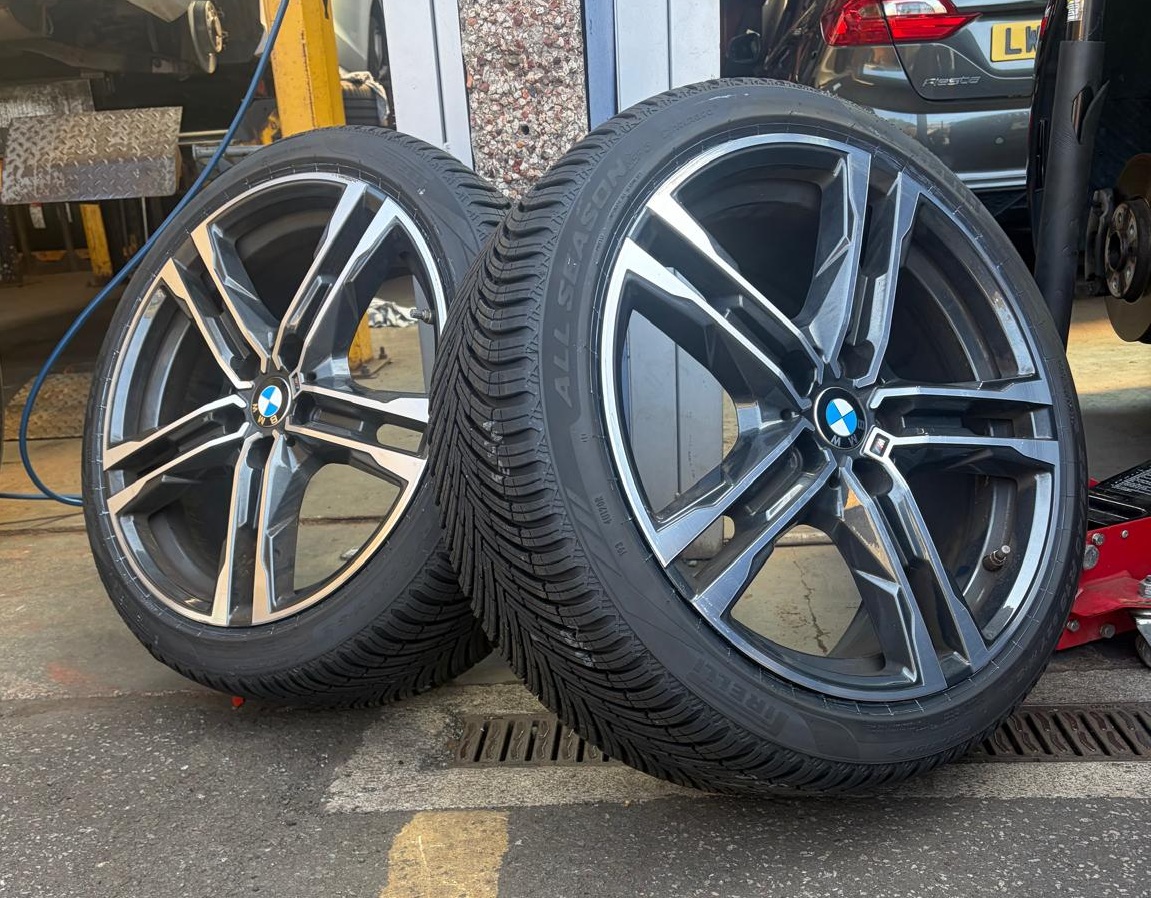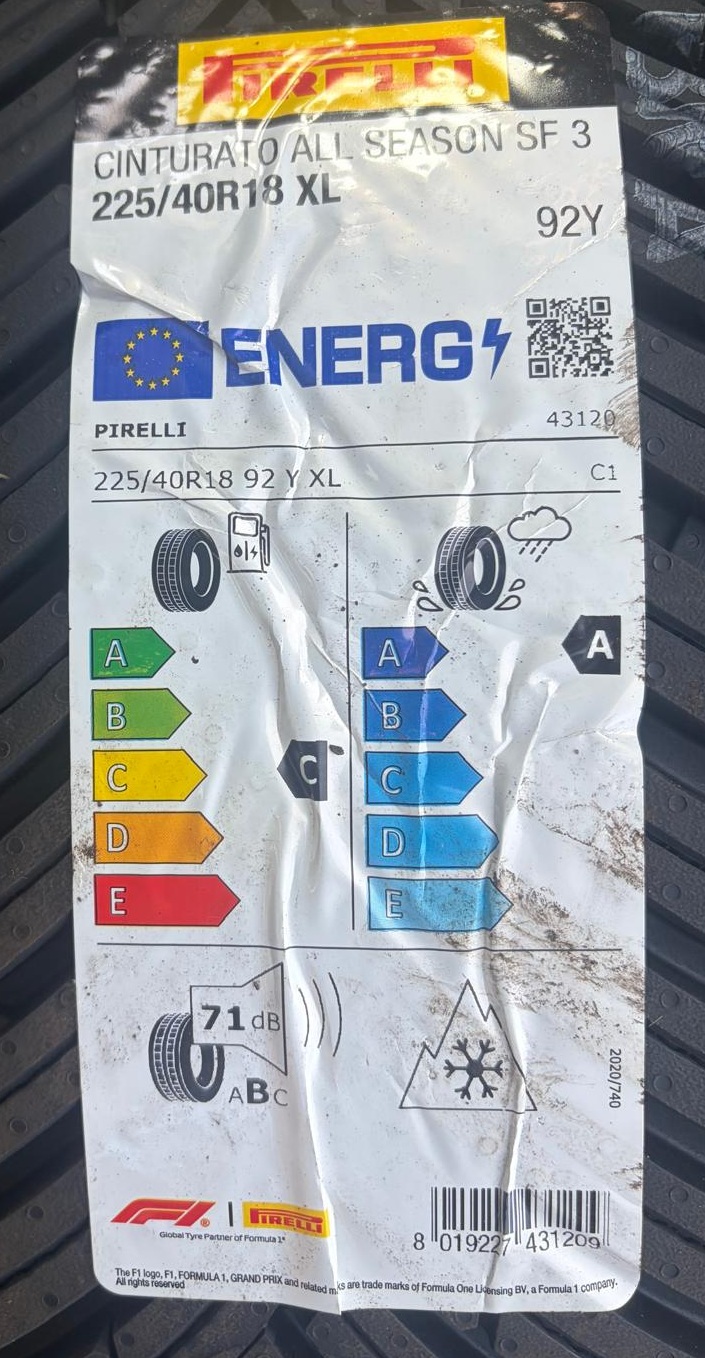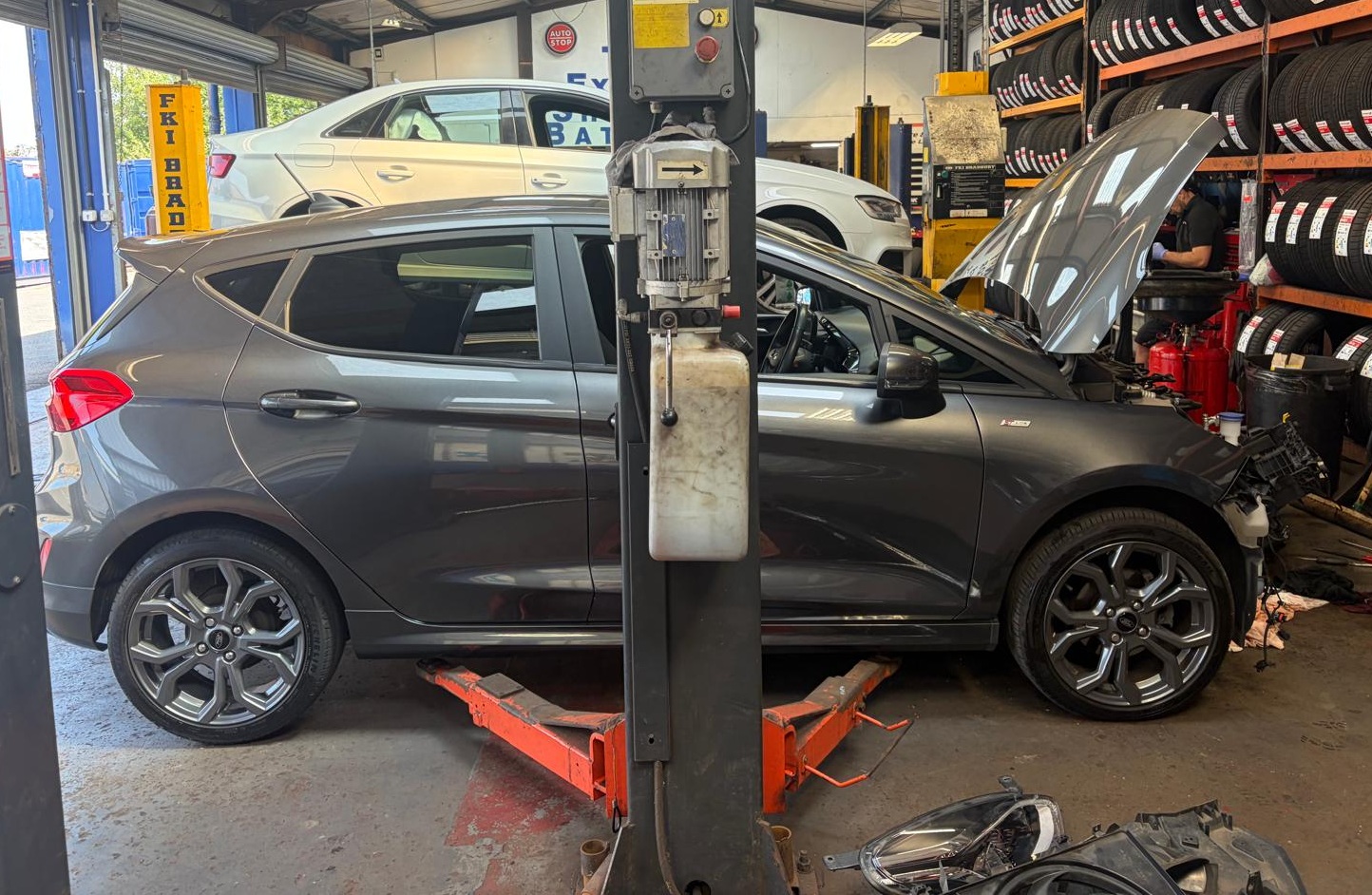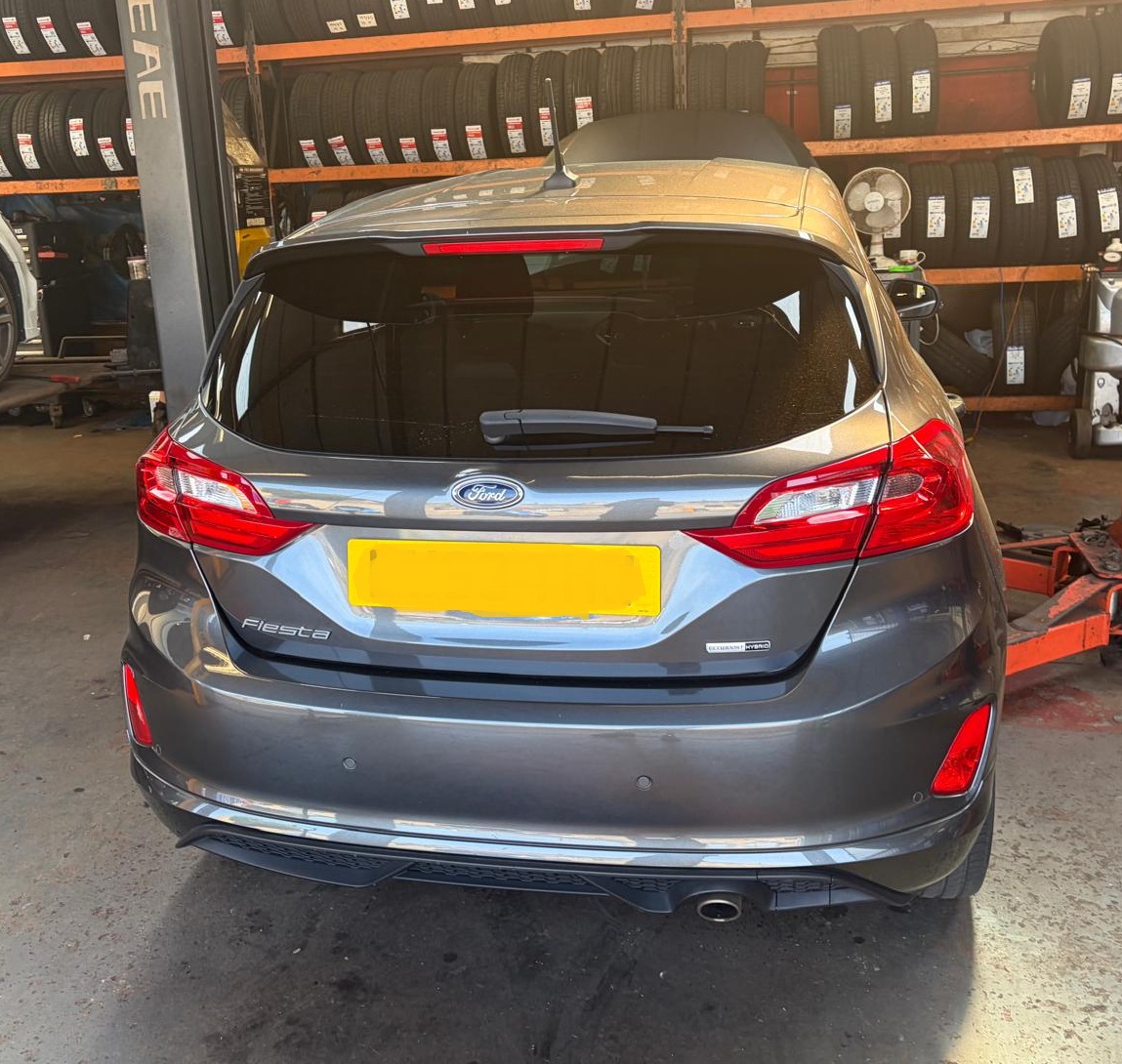
A Damaged BMW Run-Flat Tyre Reveals an Unexpected MOT Surprise
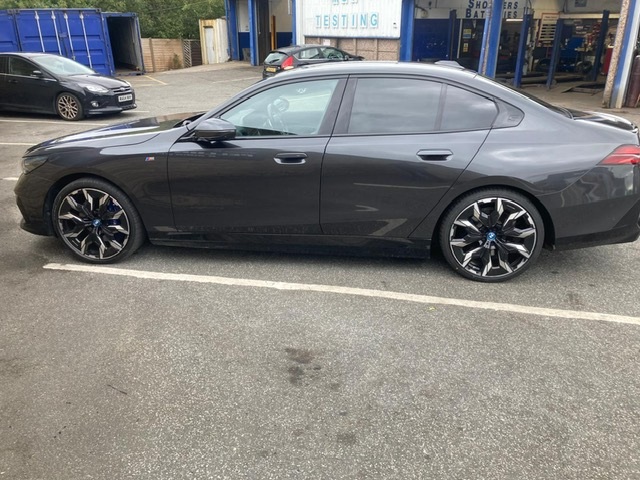
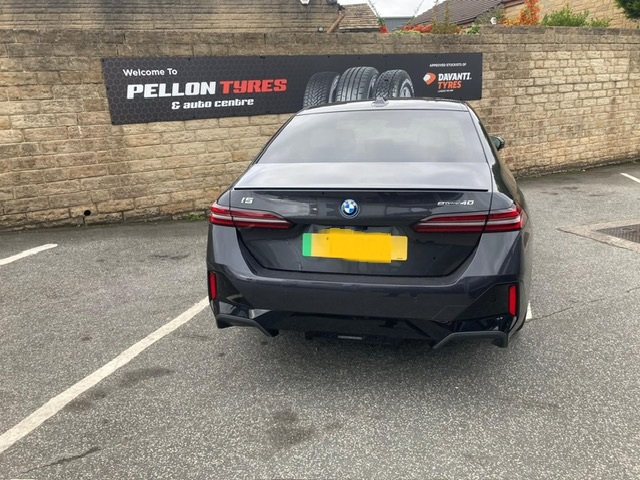
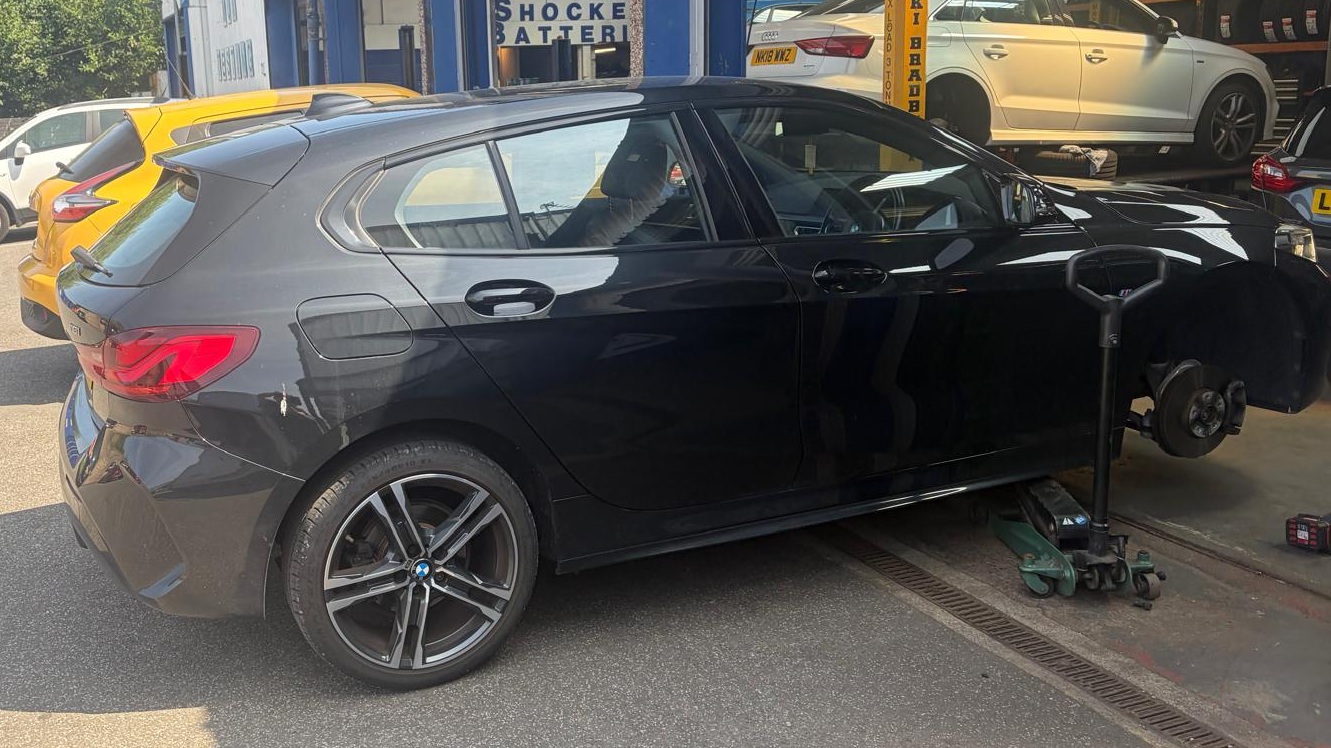
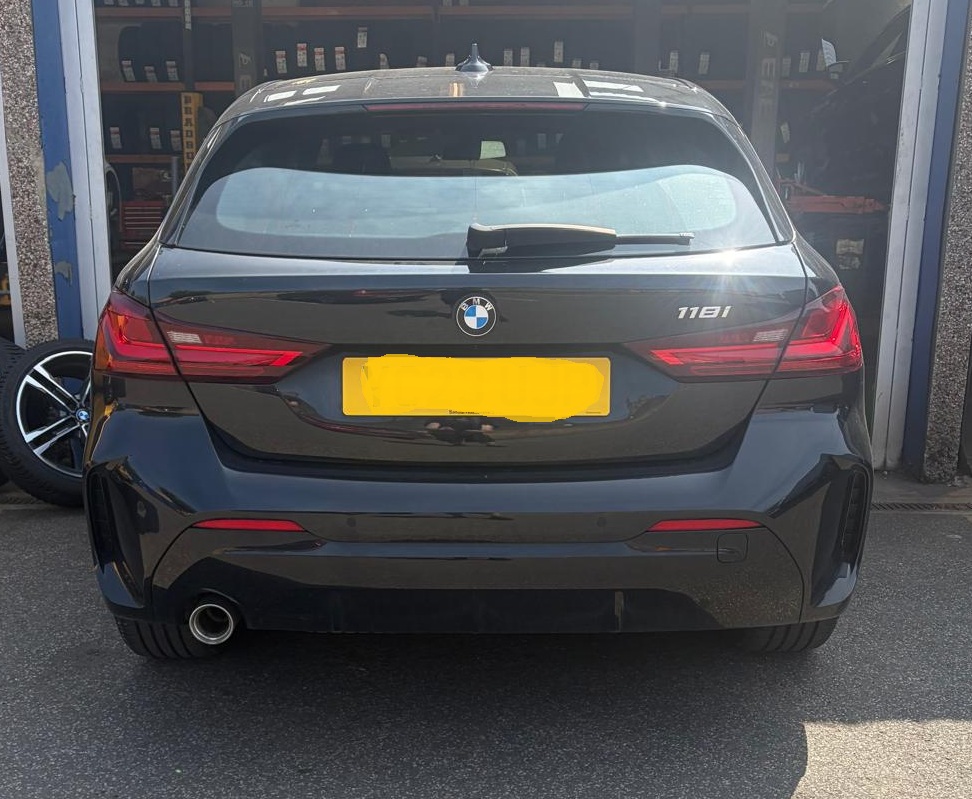
One of the more interesting jobs that came into Pellon Tyres this week involved a rather smart BMW 420i xDrive Gran Coupé belonging to a lady who works for a local timber merchant here in West Yorkshire.
At first glance, it looked like a straightforward tyre replacement.
As it turned out, there was a little more to the story.
A Gaping Hole in the Front Tyre
The customer explained that she had noticed something wasn’t quite right with the car and asked us to inspect the driver’s side front tyre.
Once the vehicle was safely in our workshop, the problem was immediately obvious.
There was a large hole in the side of the tyre.
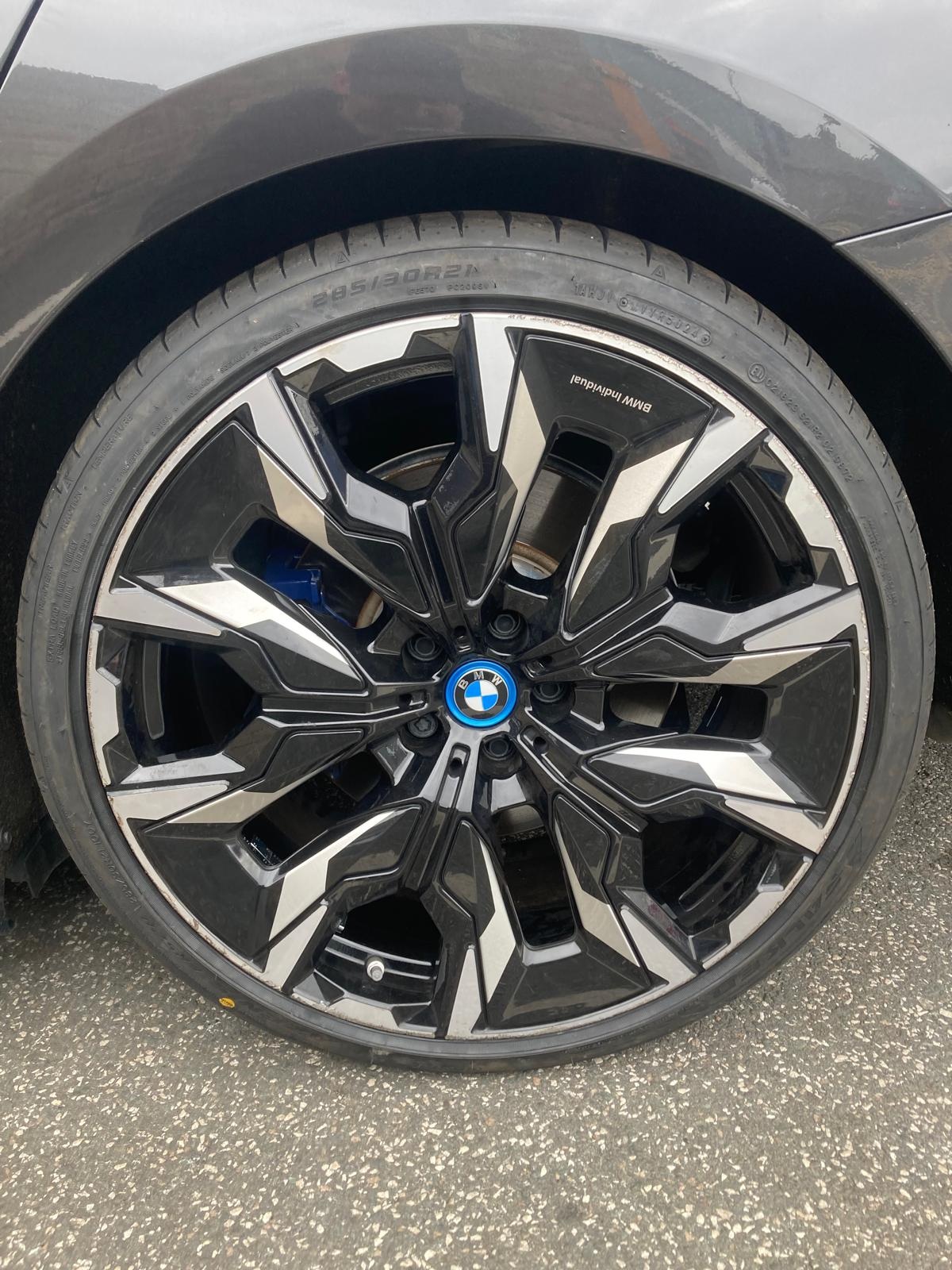
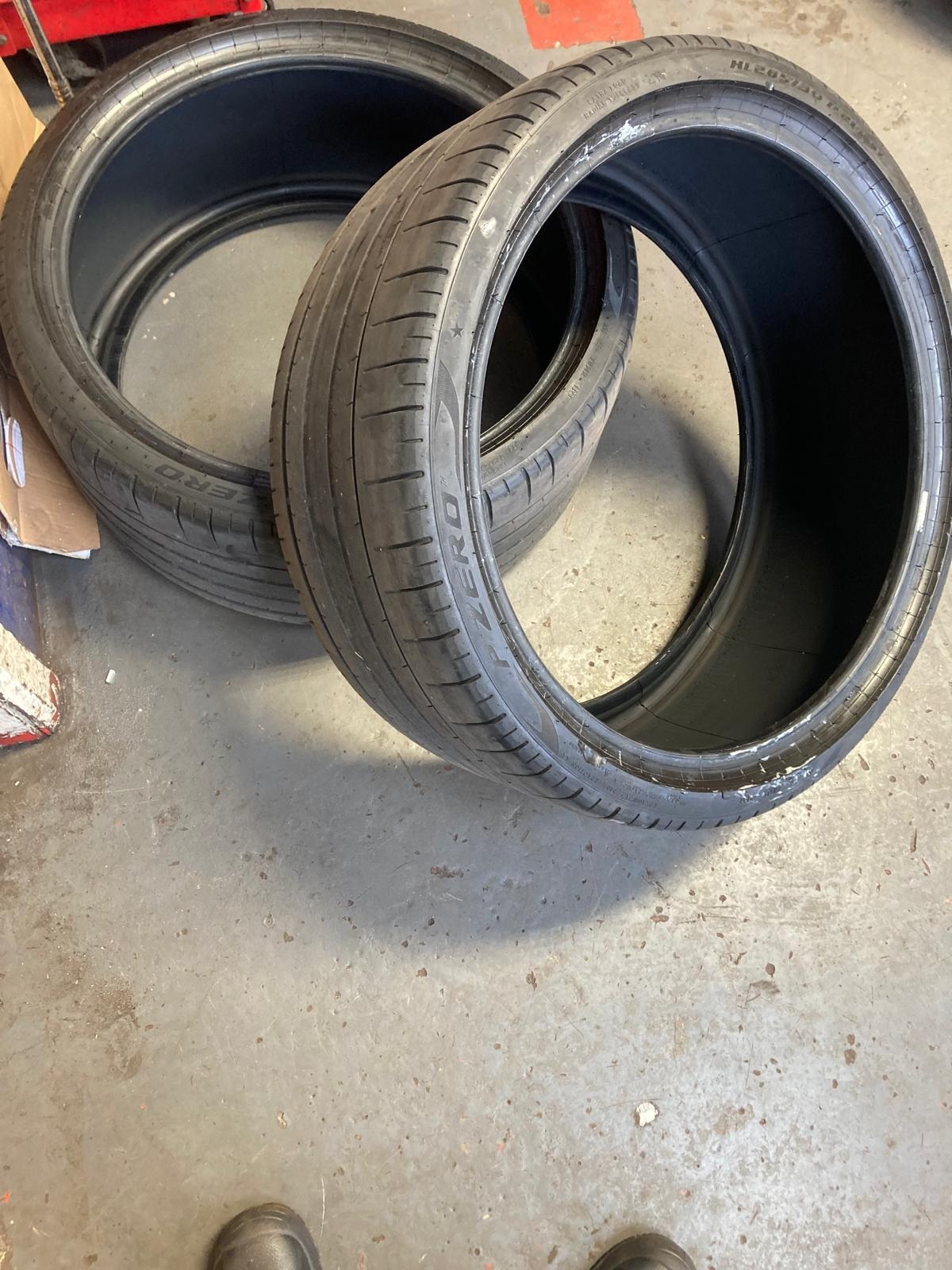
The BMW was fitted with 225/40 R19 93Y Goodyear Eagle F1 ROF XL run-flat tyres, a premium tyre fitted to many modern BMW models.
To be honest, I was amazed the tyre was still holding air.
The damage was so severe that it appeared to be hanging together only by the tyre’s reinforced internal construction.
It was a good example of just how robust modern run-flat tyres can be.
Unlike conventional tyres, run-flats are built with heavily reinforced sidewalls.
If the tyre loses air pressure after a puncture, those strengthened sidewalls support the weight of the vehicle for a limited distance.
This allows the driver to continue safely to a garage rather than being stranded at the roadside changing a wheel.
It’s a clever piece of engineering.
Many modern BMWs no longer even carry a spare wheel because the run-flat tyre is designed to get you home or to the nearest tyre depot.
Of course, there are limits.
Most manufacturers recommend travelling no more than around 50 miles (80 km) at a reduced speed after a complete loss of pressure.
Once a run-flat has been driven in its deflated condition, it normally has to be replaced.
Why This Tyre Could Not Be Repaired
People often ask whether a puncture can simply be repaired.
Unfortunately, the answer isn’t always yes.
Tyres can only be repaired if the damage falls within very strict British Standard guidelines.
The puncture must normally be within the central tread area and must not be too large.
Damage to the shoulder or sidewall is an entirely different matter.
The sidewall constantly flexes as the tyre rotates, making any repair unsafe.
In the case of this BMW, the hole was simply too large.
There was never any possibility of carrying out a safe repair.
The only sensible option was to replace the damaged tyre.
We fitted a brand-new Goodyear Eagle F1 ROF XL in the correct 225/40 R19 93Y specification, ensuring the vehicle retained the handling characteristics BMW intended.
Modern Workshop Technology Helps Everyone: Driving Without an MOT
After fitting the new tyre, we moved on to the paperwork.
Like many modern garages, Pellon Tyres uses a computerised garage management system that links directly to DVLA vehicle information.
This allows us to confirm details about the vehicle while booking jobs into the workshop.
One particularly useful feature is that it also alerts us if a vehicle’s MOT has expired.
As soon as we entered the BMW’s registration number, the system flagged something unexpected.
She had completely forgotten that her MOT had expired.
Believe me, she isn’t alone.
Over the years, we’ve seen many motorists who have simply lost track of the date.
Life gets busy.
People have work, families, holidays and countless other things to think about.
Sometimes the MOT date simply slips their mind.
Thankfully, our system highlighted the problem before anything more serious happened.
We arranged to book the BMW in for an MOT test as soon as we had an available appointment.
The customer left relieved that the problem had been spotted.
What Does the Law Say About Driving Without an MOT?
In the UK, most vehicles over three years old must have a valid MOT certificate if they are being used on the public highway.
Driving without an MOT can lead to serious consequences.
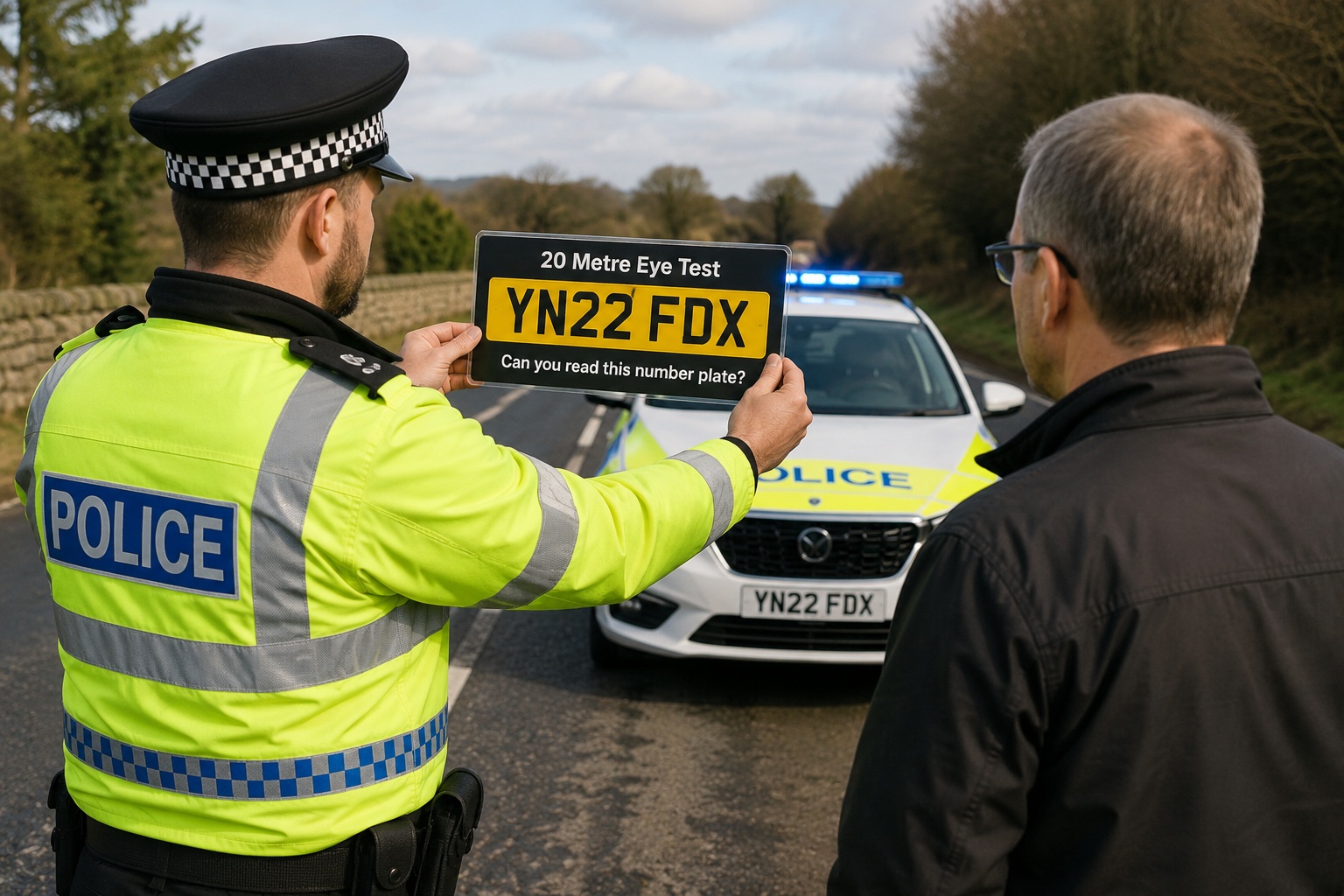
If your vehicle is stopped by the police and does not have a valid MOT, you could receive a fine of up to £1,000.
However, that’s only part of the story.
If your vehicle is found to have dangerous defects, the penalties can be much more severe.
In those circumstances, drivers can face fines of up to £2,500, receive penalty points and, in some cases, even be disqualified from driving.
Does Your Insurance Still Cover You?
This is another question customers often ask.
Having no MOT does not automatically invalidate your motor insurance.
However, if your vehicle is involved in an accident and investigators find that the lack of an MOT or poor vehicle condition contributed to the collision, your insurer may decide not to cover certain claims or recover costs from you.
It’s not a situation anybody wants to find themselves in.
Keeping your MOT up to date is one of the simplest ways to help ensure your vehicle remains safe and legal.
Can You Drive to an MOT Test Without an MOT?
There is one important exception.
The law allows you to drive a vehicle without an MOT if you are travelling directly to a pre-booked MOT appointment.
You may also drive to a garage for repairs following an MOT failure, provided the journey is directly related to the repair.
Outside these circumstances, driving without a valid MOT is illegal.
Why Regular MOT Testing Matters
Some motorists see the MOT as an inconvenience.
Personally, after spending more than 60 years in the motor trade, I see it rather differently.
The MOT has undoubtedly helped improve road safety across Britain.
Every year, worn tyres, faulty brakes, damaged suspension components, steering defects and dangerous corrosion are identified during MOT inspections.
Many of these faults might otherwise go unnoticed until they cause a breakdown—or worse.
That’s why we always encourage customers not to leave their MOT until the last minute.
Booking a little early can often save unnecessary stress.
Technology Makes It Easier Than Ever: Driving Without an MOT
The interesting thing about this BMW wasn’t just the damaged run-flat tyre.
It was the way modern technology helped protect the customer.
Years ago, we would simply have fitted the tyre and waved her goodbye.
Today, our garage management system automatically checks important vehicle information, helping us spot issues that customers themselves may have forgotten.
In this case, it meant we could remind the customer about her overdue MOT before it became a much bigger problem.
Looking After Our Customers
Here at Pellon Tyres in Halifax, we don’t just fit tyres.
We try to look after our customers as well.
Whether it’s spotting a dangerous tyre, advising against an unsafe repair, or reminding someone that their MOT has expired, it’s all part of providing the sort of service we’ve always believed in.
The BMW left our depot fitted with a brand-new Goodyear Eagle F1 run-flat tyre and with an MOT appointment safely booked.
The customer was naturally relieved.
And although discovering an overdue MOT was a little embarrassing, I’m sure she was much happier finding out in our reception than during a roadside police check.
Sometimes what appears to be an ordinary tyre replacement can turn into something far more interesting.
After more than six decades in the tyre trade, that’s one of the reasons I still enjoy coming to work every morning.
https://www.pellonautocentre.com/wp-content/uploads/2024/07/pellon-tyres-logo-509x321.jpg00Eric Robertshttps://www.pellonautocentre.com/wp-content/uploads/2024/07/pellon-tyres-logo-509x321.jpgEric Roberts2026-07-16 16:31:562026-07-16 16:33:21Driving Without an MOT – A Real Story from Pellon Tyres
My Own Long Association with Goodyear Tyres and Motorsport
When I read that Goodyear is expanding its famous Blue Streak historic racing tyre range, it immediately brought back many memories from my own early days in the tyre trade.
As regular readers of my blog will know, I have been involved with tyres for over 60 years. During that time, I have seen enormous changes in tyre technology, from the old cross-ply tyres of my youth to the sophisticated radial, run-flat, winter and electric vehicle tyres that we fit today at Pellon Tyres here in Halifax.
However, some of my fondest memories go back to the days when I worked for Tyreservices in Huddersfield, which, at that time was owned by Goodyear.
Goodyear wasn’t simply another tyre manufacturer to me. I was actually involved with the company and its products during one of the most exciting periods in motorsport history.
In the 1970s, motorsport felt raw and exciting. Rally cars sounded incredible, drivers were real characters, and spectators could get remarkably close to the action.
I was fortunate enough to be involved in supporting the Goodyear rally scene, including some memorable winter rally events. These experiences helped build my lifelong respect for Goodyear as a tyre manufacturer.
So, when I read about the expansion of the legendary Goodyear Blue Streak racing tyre range, I couldn’t help thinking about how the past and present of the tyre industry have come together.
Goodyear isn’t simply looking back at its history. The company is making sure that some of the world’s greatest historic racing cars can continue competing on tyres appropriate for the eras in which those cars originally raced.
And for somebody like me, who remembers those days first-hand, I think that’s absolutely wonderful.
The Famous Goodyear Blue Streak Racing Tyres Return in a Much Bigger Way
Goodyear has announced a major expansion of its legendary Blue Streak range, strengthening its commitment to the rapidly growing world of historic motorsport.
The company has added 57 additional tyre sizes and specifications, significantly increasing the number of historic racing cars that can use Goodyear tyres.
The expanded range covers an incredible variety of machinery.
We’re talking about everything from pre-war Bentley, ERA and Alfa Romeo racing cars to the great sports cars and Formula cars of the 1950s, 60s and 70s.
Then there are legendary endurance racing machines such as the Porsche 917 and Ferrari 512, cars that fought some of the greatest battles ever seen at Le Mans and in the World Sportscar Championship.
Goodyear is also supporting the smaller, lightweight racing cars that frequently punched above their weight, including famous names such as Matra, Lola and Chevron.
For the more modern classics of the 1980s onwards, Goodyear is also expanding its historic Eagle range to support GT2, LMP2, LMP1 and Super Touring machinery.
To me, this is about far more than nostalgia.
These cars were built to be driven, and there’s something very special about seeing a genuine historic racing car being used as its designers intended rather than simply sitting silently in a museum.
My Days at Goodyear-Owned Tyreservices in Huddersfield: Goodyear Blue Streak Racing Tyres
My own association with Goodyear really developed during my days working at Tyreservices in Huddersfield.
At the time, Tyreservices was owned by Goodyear, and this brought me into much closer contact with the company’s products and motorsport activities.
I was a younger man then, full of enthusiasm for the tyre trade, although I don’t suppose I could possibly have imagined that all these years later I would still be writing about tyres in 2026!
Those days gave me experiences and memories that have stayed with me throughout my life.
Motorsport was an important part of tyre development. Manufacturers such as Goodyear used racing and rallying to push their tyres to the absolute limit.
On a racing circuit, tyres had to cope with extreme cornering forces, high speeds and enormous heat.
Rallying was perhaps even more challenging because conditions could change constantly. A tyre might face dry tarmac, standing water, mud, ice or snow, sometimes all during the same event.
For a young tyre man like myself, it was fascinating.
And I loved every minute of it.
Supporting Goodyear Rallying in the 1970s
Some of my strongest memories involve supporting rallying during the 1970s.
These were the days of proper rally cars and some incredibly talented drivers.
I remember being involved with winter rally events, including the Mintex and HRCR scene. On one memorable occasion, we were out through the night around Scarborough in the middle of winter.
Anybody who has been involved with rallying will know that it isn’t always glamorous!
There can be hours of waiting around in freezing weather, followed by frantic activity as cars arrive and tyres need attention. Then suddenly the cars disappear into the darkness again, leaving behind the smell of hot engines, petrol and tyres.
But there was a wonderful atmosphere.
Everybody was there because they loved motorsport.
I also remember supporting Krissy Ashford, whose Ford Escort Mk2 carried Tyreservices and Goodyear support. The car was white with a distinctive blue stripe and looked exactly like a proper rally car should.
The Ford Escort Mk2 itself has become one of the great icons of rallying history.
Even today, decades later, these cars remain enormously popular in historic rallying, and good examples can be worth considerable amounts of money.
When I see an Escort Mk2 competing today, it immediately takes me back to those earlier days.
Goodyear’s Incredible Motorsport Record: Goodyear Blue Streak Racing Tyres
Goodyear has one of the greatest motorsport records of any tyre manufacturer in history.
The figures are astonishing.
The company achieved 368 Formula One victories, an extraordinary record from an era when Goodyear tyres were fitted to some of the greatest Formula One cars ever built.
Goodyear has also achieved 14 overall victories at the 24 Hours of Le Mans.
Here in Britain, the company has won more races in the British Touring Car Championship than any other tyre manufacturer since the championship began in 1958.
Then, of course, there is NASCAR.
Goodyear has supplied tyres to NASCAR for more than 70 years and has been the exclusive tyre supplier to NASCAR’s three national series since 1997.
When you look at that history, the expansion of the Blue Streak range makes perfect sense.
Goodyear has played an enormous part in motorsport history, and many legendary racing cars originally competed on its tyres.
Now, those same types of cars can continue racing on Goodyear tyres designed to preserve the authentic performance and appearance of their era.
The Great Porsche 917 and Ferrari 512 Battles
One part of the new Blue Streak expansion that particularly caught my attention is the availability of wider tyre specifications for the great sports racing cars of the 1960s and 1970s.
This was a golden age of endurance racing.
The Porsche 917 and Ferrari 512 became legendary rivals, competing at incredible speeds at circuits around the world.
The Porsche 917, in particular, is remembered as one of the greatest racing cars ever built. It was enormously powerful and frighteningly fast.
These weren’t racing cars filled with computers and electronic driver aids.
The drivers relied on their own skill, courage and feel for the car.
And, of course, everything ultimately depended on those four relatively small contact patches between the tyres and the racing surface.
That’s something I’ve always said throughout my life in the tyre trade.
No matter how powerful, expensive or sophisticated a car might be, the tyres are the only parts actually connecting it to the road.
That was true in the 1970s, and it’s still true today.
Keeping Historic Racing Authentic: Goodyear Blue Streak Racing Tyres
One of the most important aspects of the expanded Goodyear range is authenticity.
Historic racing isn’t simply about putting modern tyres onto old cars and driving them as fast as possible.
The cars should behave and feel in a way that is appropriate for their period.
That’s why the FIA has strict Appendix K homologation requirements governing historic motorsport.
Goodyear says that the approved production methods, moulds, specifications and performance characteristics of its historic tyres will be preserved.
I think that’s extremely important.
If you fitted a historic 1960s racing car with completely modern racing tyres providing vastly more grip than the originals, you would fundamentally change how the car handled.
The suspension, chassis and brakes were all designed around the tyres available at the time.
Historic racing tyres therefore need to provide the right balance between modern manufacturing quality and authentic period performance.
Goodyear Blue Streak for the Earlier Racing Generations
Goodyear has divided its historic racing tyre strategy into two main brands.
The famous Blue Streak name will cover pre-1980s competition cars, while the Goodyear Eagle brand will support historic racing categories from the 1980s through to more recent machinery.
I think this makes good sense because it reflects the different generations of motorsport.
The Blue Streak name itself has a wonderful historic sound to it.
For enthusiasts of classic American racing cars, Formula cars, touring cars and sports racers, it is a name that immediately brings back memories of a different age.
The expanded range now includes tyres suitable for racing machinery going all the way back to the 1920s and 1930s.
That means cars from manufacturers such as Bentley, ERA and Alfa Romeo can continue competing with tyres that provide the appropriate period appearance and performance.
Imagine watching one of those huge old Bentleys thundering around a circuit.
That’s proper motorsport history brought back to life.
The Lightweight Giant Killers: Goodyear Blue Streak Racing Tyres
I was also pleased to see names such as Lola, Chevron and Matra mentioned in connection with the expanded range.
These lightweight sports racing cars were often incredibly successful.
They might not always have had the biggest engines or the most enormous budgets, but their low weight and clever engineering allowed them to compete against much more powerful machinery.
There’s something very British about the idea of a small, lightweight racing car taking on the giants and giving them a good run for their money!
Lola and Chevron, in particular, have a special place in British motorsport history.
Many of these cars still race today at historic events, where spectators can see and hear machinery from motorsport’s golden age being driven hard once again.
My Unforgettable Visit to Goodyear in Luxembourg
One of my greatest personal Goodyear memories was visiting the company’s facilities in Luxembourg.
I was fortunate enough to attend a Goodyear track day where we experienced the company’s Grand Prix X tyres on Vauxhall Cavaliers.
The cars were fitted with 1600cc engines, and we were able to experience the tyres under controlled test conditions.
But the real highlight for me was being driven around the circuit by the legendary Finnish rally driver Timo Mäkinen.
Now, that was an experience!
Timo was one of the famous Flying Finns and a genuine rallying legend. He won the RAC Rally three times and also achieved three victories on the famous 1000 Lakes Rally in Finland.
Sitting alongside a driver of that calibre was something I’ll never forget.
Professional rally drivers operate on another level entirely.
What feels frighteningly fast to an ordinary passenger is completely controlled to them.
Those experiences strengthened my respect for Goodyear and its involvement in motorsport.
They also taught me just how important tyre development is to vehicle performance.
From Goodyear Rally Tyres to Pellon Tyres in Halifax
It’s strange to think about how life develops.
Back then, I was a young tyre man involved with Goodyear, rallying and Tyreservices.
Today, all these decades later, I’m still involved with tyres as the owner of Pellon Tyres here in Halifax.
The industry has changed enormously.
We now fit tyres for electric cars, hybrids, high-performance SUVs and vehicles with wheel sizes that would have seemed enormous when I started out.
My own white Hyundai Tucson hybrid is a perfect example of how much cars have changed.
Yet my enthusiasm for good tyre brands has remained.
I’ve always had great respect for Goodyear because I have genuine personal experience with the company and its products.
It’s not simply a name I’ve read about in a brochure.
Goodyear forms part of my own journey through the tyre trade.
Modern Historic Racing Is Booming: Goodyear Blue Streak Racing Tyres
Historic motorsport has grown enormously in popularity.
Events such as the Goodwood Revival and Silverstone Festival attract huge crowds who want to see legendary racing cars competing once again.
And I can understand why.
Modern racing cars are incredibly fast and technologically advanced, but historic machinery has something different.
It has character.
You can see the drivers working. You can hear the engines, watch the cars moving around under braking and cornering, and often smell the oil and fuel.
For people of my generation, these cars bring back memories.
For younger enthusiasts, they provide an opportunity to experience machinery they might previously have seen only in old photographs or videos.
The fact that Goodyear is adding 57 more sizes and specifications shows that this isn’t some tiny corner of motorsport.
There is genuine demand for authentic tyres for historic competition cars.
From Blue Streak to Goodyear Eagle
While Blue Streak tyres will concentrate on pre-1980 competition cars, the Goodyear Eagle historic range covers the later generations.
And even cars from the 1990s and 2000s are now becoming historic!
That certainly makes me feel old.
Cars from GT2, LMP2, LMP1 and the Super Touring era are now highly sought-after historic racing machines.
I remember when these cars were the latest technology.
The Super Touring era of the British Touring Car Championship was particularly exciting, with manufacturers spending enormous sums of money developing cars that looked vaguely like the family saloons in the showroom but were, underneath, sophisticated racing machines.
Goodyear’s expanded historic portfolio will help keep these cars racing as well.
Why I Think Goodyear Is Doing the Right Thing
I think Goodyear deserves credit for investing in historic motorsport.
Making specialised tyres in relatively low volumes can’t be as straightforward as mass-producing tyres for everyday road cars.
Different sizes, constructions and specifications are required for cars from very different periods.
Yet preserving these tyres helps preserve the cars themselves.
A racing car was designed to race.
Of course, museums have an important role, but there’s nothing quite like seeing a historic competition car driven at speed.
The noise, movement and atmosphere bring history to life.
Goodyear’s Blue Streak expansion means that more of these legendary cars can continue competing on tyres connected with their original racing eras.
Goodyear Tyres: Part of My Own Tyre Trade Story
Reading about this new expansion brought back many happy memories for me.
From my days at Goodyear-owned Tyreservices in Huddersfield to supporting winter rallies around Yorkshire and Scarborough, helping with Krissy Ashford’s Escort Mk2 and travelling to Luxembourg for that unforgettable track experience with Timo Mäkinen, Goodyear has been part of my own tyre-trade story.
More than 60 years after I first entered the motor trade, I still get excited by developments in the tyre industry.
Perhaps that’s one reason I’ve stayed involved for so long.
I have seen cross-ply tyres give way to radials. I’ve watched wheel sizes grow dramatically. I’ve seen the arrival of run-flat tyres, sophisticated winter tyres, all-season tyres and specialist tyres designed for electric vehicles.
But motorsport heritage reminds us where much of that tyre development began.
Racing pushes tyres to their limits.
And lessons learned on the race circuit and rally stage have helped manufacturers improve tyres for ordinary motorists over many decades.
Keeping the Great Racing Cars Alive
For me, the expansion of the Goodyear Blue Streak historic racing tyre range is about much more than adding another 57 sizes to a product catalogue.
It is about preserving motorsport history.
It’s about allowing Bentleys from the 1920s, Formula cars from the 1950s, Porsche 917s and Ferrari 512s from the great endurance racing era, lightweight Lolas and Chevrons, and later GT and touring cars to continue doing what they were built to do.
Race.
And I think Goodyear’s Xavier Fraipont summed it up perfectly when he explained that historic racers don’t choose tyres through nostalgia alone. They need authentic performance, confidence and consistency.
After my own long career in the tyre trade, I completely understand that.
A great racing car deserves the right tyres.
And after all these years, I am proud to say that Goodyear remains one of the tyre brands I admire most.
From the rally stages of my younger days to the historic racing circuits of today, that famous Goodyear name continues rolling on.
https://www.pellonautocentre.com/wp-content/uploads/2024/07/pellon-tyres-logo-509x321.jpg00Eric Robertshttps://www.pellonautocentre.com/wp-content/uploads/2024/07/pellon-tyres-logo-509x321.jpgEric Roberts2026-07-15 06:43:502026-07-15 07:12:45Goodyear Blue Streak Racing Tyres
Goodyear UltraGrip Performance 3 – A Winter Tyre for Modern British Roads
Here at Pellon Tyres in Halifax, I have been involved with winter tyres for more years than I care to remember. In fact, my association with Goodyear tyres goes right back to my younger days in the tyre trade, when winter tyres were very different from the highly developed products we see today.
So, I am always interested when Goodyear announces something new concerning its famous UltraGrip range.
The latest news is particularly impressive. Goodyear has expanded its UltraGrip Performance 3 winter tyre range to an incredible 344 different sizes and specifications, adding 66 new fitments to cover an even wider selection of modern cars, SUVs and electric vehicles.
According to Goodyear, this gives the UltraGrip Performance 3 the broadest winter tyre coverage available from a single tread pattern.
That’s quite an achievement.
For motorists here in Halifax and across Calderdale, it also means that many more vehicles can now be fitted with the same award-winning winter tyre technology.
One Winter Tyre Pattern Covering 344 Different Fitments: New Goodyear Winter Tyre
The modern car market has become incredibly complicated.
When I first started in the tyre trade, things were much simpler. Wheel sizes were smaller, and there were nowhere near as many tyre sizes as we have today.
Now, we regularly see cars arriving at Pellon Tyres fitted with 18, 19, 20 and even 21-inch wheels. SUVs have become increasingly popular, while electric vehicles often require larger tyres capable of carrying additional weight.
Goodyear has responded by expanding the UltraGrip Performance 3 range to 344 different specifications, covering wheel sizes from 14 inches right up to 23 inches.
Interestingly, more than 90% of the 66 newly added sizes are for wheels of 19 inches or larger.
This tells us a great deal about how the modern car market is changing.
Large wheels were once mainly associated with sports cars and expensive luxury vehicles. Today, they are commonplace on family SUVs, crossovers and electric cars.
Here at Pellon Tyres, we have certainly noticed this change over the years. The days when most family cars arrived on 13, 14 or 15-inch wheels are long gone!
Why Winter Tyres Matter Here in Halifax
Anyone who knows Halifax and the surrounding Calderdale area will understand why I have always been a supporter of winter tyres.
We have hills everywhere!
From Wainstalls and Mount Tabor to Queensbury, Sowerby Bridge and the higher parts of Calderdale, our local roads can become extremely challenging during cold weather.
And it isn’t always deep snow that causes the biggest problems.
Cold rain, slush, frost and icy patches can make winter driving difficult. A good winter tyre is designed to remain flexible at lower temperatures, providing better grip when an ordinary summer tyre can become harder and less effective.
This is particularly important when braking or cornering.
I have seen it many times over the years. A car fitted with proper winter tyres can often climb a snowy Yorkshire hill while another vehicle on summer tyres struggles for grip.
Of course, winter tyres don’t make anyone invincible. Drivers must still adjust their speed and driving style to suit the conditions. However, having the correct tyres underneath you can make an enormous difference.
Goodyear UltraGrip – A Name I Remember Well: New Goodyear Winter Tyre
The UltraGrip name means something special to me personally because of my long history with Goodyear.
Back in the 1970s, I was involved with Goodyear through my work at Tyreservices in Huddersfield, which at the time was owned by Goodyear.
Those were exciting days for me in the tyre trade.
I remember supporting rally cars and attending events where winter tyres were pushed to their limits in some very difficult conditions. Rallying was a fantastic proving ground for tyre manufacturers because it tested tyres on snow, ice, mud, wet roads and loose surfaces.
I was also fortunate enough to visit Goodyear’s facilities in Luxembourg and even experienced being driven around a test track by the great Finnish rally driver Timo Mäkinen.
That’s a memory I’ll never forget!
Tyre technology has changed enormously since those days, but the basic challenge remains the same: keeping a vehicle safely connected to the road in difficult conditions.
The modern UltraGrip Performance 3 is the result of decades of development since those earlier days.
Snow Protect Technology for Winter Conditions
One of the key features of the Goodyear UltraGrip Performance 3 is what the company calls Snow Protect Technology.
In simple terms, the tread pattern is designed to provide strong traction when driving on snow.
The tyre has many grooves and edges that can bite into a snowy surface, helping the car accelerate, brake and maintain control.
This can be especially valuable on the steep roads around Halifax.
Anyone who has tried climbing one of our Pennine hills after a heavy snowfall will understand exactly what I mean!
The trouble with snow is that it can quickly become compacted by traffic. This creates an extremely slippery surface, particularly on hills and at junctions.
Having a tyre specifically designed to work in these conditions can provide valuable extra grip.
Wet Grip+ Technology for British Winters: New Goodyear Winter Tyre
Let’s face it: a British winter usually means more rain than snow!
This is why I think wet-weather performance is every bit as important as snow performance when choosing a winter tyre for UK roads.
The UltraGrip Performance 3 uses Goodyear’s Wet Grip+ Technology, which is designed to improve braking and control on wet roads.
For drivers around Halifax, Brighouse, Elland, Huddersfield and the wider West Yorkshire area, this is particularly relevant.
Our winters can bring weeks of cold rain, standing water and damp roads. Temperatures can hover only a few degrees above freezing, creating conditions where good grip is essential.
A winter tyre that performs well in the wet as well as the snow makes much more sense for the typical British climate.
An Award-Winning Goodyear Winter Tyre
Of course, any tyre manufacturer can tell us how wonderful its own products are.
What interests me more is how a tyre performs in independent testing.
The Goodyear UltraGrip Performance 3 has achieved some impressive results.
According to Goodyear, the tyre secured first place in ADAC winter tyre testing in both 2024 and 2025.
ADAC is one of Europe’s most respected motoring organisations, and its tyre tests are known for examining performance across a wide range of conditions.
The tyre was tested for performance in the wet, dry and snow, as well as for wear and efficiency.
One particularly impressive figure was its predicted mileage of 76,500 kilometres.
That’s approximately 47,500 miles, which is certainly a significant potential lifespan for a winter tyre, although, of course, actual tyre life will always depend on the vehicle, driving style, road conditions, tyre pressures and other factors.
Auto Bild also named Goodyear its Top Manufacturer of the Year 2025 in the winter tyre category, further strengthening the reputation of the UltraGrip Performance 3.
Suitable for Electric Cars and SUVs: New Goodyear Winter Tyre
One of the biggest changes in the motor industry is the rapid growth of electric vehicles and larger SUVs.
These vehicles can place different demands on their tyres.
Electric cars are often heavier because of their large battery packs. They also produce instant torque, which can increase tyre wear if the tyres aren’t suited to the vehicle.
Goodyear says that the UltraGrip Performance 3 has been developed for both electric and traditional petrol or diesel vehicles.
The tyre includes features aimed at reducing rolling resistance and interior noise, both of which can be particularly beneficial for EV drivers.
Because electric vehicles don’t have the noise of a traditional combustion engine, tyre noise can become much more noticeable inside the cabin.
A quieter tyre can therefore make a real difference to comfort.
New Sizes for the Latest Generation of Cars
The expansion of the UltraGrip Performance 3 range includes fitments for some of the newest vehicles on European roads.
These include electric and high-performance vehicles from manufacturers such as BMW, Audi, Volvo, Škoda, Polestar, Porsche and Mercedes-Benz.
The range now covers sizes from 14 inches to 23 inches, meaning the same basic winter tyre design can be fitted to everything from smaller city cars to large SUVs and powerful electric vehicles.
For tyre dealers like ourselves at Pellon Tyres, this wider coverage is useful because the modern tyre market has become so diverse.
We can have a small hatchback in one minute and a large electric SUV the next, both requiring completely different tyre sizes and load capabilities.
The Importance of Choosing the Correct Winter Tyre: New Goodyear Winter Tyre
Although the UltraGrip Performance 3 is available in hundreds of specifications, it’s still important to fit the correct tyre for the individual vehicle.
Tyre size is only part of the story.
The correct load rating and speed rating must also be considered, particularly for heavy SUVs and electric vehicles.
Some cars also use mixed tyre sizes, with different dimensions on the front and rear axles.
This is another reason why it’s worth getting professional advice rather than simply buying a tyre based on size alone.
At Pellon Tyres, we always check the vehicle requirements and make sure that the tyres supplied are suitable for the car.
My Long-Standing Belief in Winter Tyres
I have been writing about winter tyres for many years, long before they became as widely discussed in Britain as they are today.
My interest comes partly from my own experiences in the tyre industry and rallying.
I have seen first-hand the difference that the correct tyres can make in challenging conditions.
Here in Halifax, we don’t need to imagine difficult winter roads. We have them on our doorstep.
The steep hills and high moorland surrounding Calderdale can quickly become challenging when snow, frost or ice arrives.
For people who need to travel regardless of the weather — perhaps for work, healthcare or family commitments — winter tyres can provide extra confidence and grip.
Many of our customers also keep a separate set of winter wheels and tyres, fitting them as temperatures fall and changing back to summer tyres in spring.
Others choose all-season tyres as a compromise for year-round use.
There is no single answer that’s right for everybody. It depends on where you live, where you drive and how essential your car is during bad weather.
A Winter Tyre Range That Keeps Growing: New Goodyear Winter Tyre
For me, the most impressive aspect of the Goodyear UltraGrip Performance 3 is the sheer scale of the range.
One tread pattern. 344 different specifications. Wheel sizes from 14 to 23 inches.
That is an enormous spread of vehicle coverage.
It also shows just how complicated the modern tyre industry has become.
Cars are getting heavier, wheels are getting larger, and electric vehicles are bringing new demands. Yet motorists still expect the same basic things from their tyres: safety, good braking, reliable handling and reasonable mileage.
Goodyear appears to have designed the UltraGrip Performance 3 with all these challenges in mind.
Goodyear Winter Tyres at Pellon Tyres Halifax
After more than 60 years in the tyre trade, I have seen many tyre designs come and go.
I remember the old cross-ply tyres, the early radial tyres and the winter patterns used on rally cars decades ago.
Now we have tyres designed using advanced computer technology, sophisticated rubber compounds and tread patterns capable of working across an enormous range of modern vehicles.
Yet the purpose of a tyre remains exactly the same.
It is still the only part of your vehicle actually touching the road.
For motorists around Halifax, Calderdale and West Yorkshire, the Goodyear UltraGrip Performance 3 looks like a particularly interesting winter tyre option.
Its combination of snow performance, wet grip, independent test results and an enormous choice of sizes makes it one to watch as we head towards the colder months.
And knowing Yorkshire weather, winter can sometimes arrive when we least expect it!
Here at Pellon Tyres in Halifax, we’ll continue helping our customers choose tyres that suit their vehicles, budgets and driving needs.
Because whether you’re driving through Halifax town centre, climbing towards Wainstalls or heading over the Pennine hills on a cold winter morning, having the right tyres fitted can make all the difference.
Brake Servicing in the Calderdale Area – Including Electric and Hybrid Cars
If there’s one thing you don’t want to take chances with on the roads of Calderdale, it’s your brakes. From the steep climbs out of Hebden Bridge to the winding drops into Sowerby Bridge, your brakes are working overtime. Whether you drive a petrol, diesel, hybrid, or fully electric car, keeping your braking system in top shape is essential for safety — and it could save you a small fortune down the line.
Here at Pellon Tyre and Autocentre in Halifax, we’ve been keeping local drivers safe on these hills for decades, and brake servicing is one of our daily jobs.
Why Regular Brake Servicing Matters: Brake Servicing in the Calderdale Area
Your brakes take a beating — especially around Calderdale’s hilly roads and stop-start town traffic. Over time, brake pads wear down, discs can corrode, and brake fluid absorbs moisture, all of which reduce braking performance.
Many people only think about their brakes when they start to hear a squeal or grinding noise, but regular servicing helps avoid those nasty surprises. Our technicians check:
Brake pads and discs for wear or corrosion
Brake callipers and sliders for sticking or seizing (a common issue in UK weather)
Brake fluid condition – it should be changed roughly every two years
Handbrake or electronic parking brake operation
If you drive up and down Halifax’s hills daily, that constant pressure means your brakes are doing double duty — regular checks are vital for safety.
Electric and Hybrid Car Brakes – What’s Different? Brake Servicing in the Calderdale Area
A lot of people assume electric and hybrid cars barely use their brakes, and while that’s partly true, it’s also what causes other issues!
Most EVs and hybrids use regenerative braking — where the motor helps slow the car and recovers energy for the battery. That means the physical brakes (the pads and discs) are used less often. Sounds great, right?
Well, not entirely. Because they’re used less, the discs and callipers don’t heat up enough to burn off moisture. Over time, that leads to rust and corrosion, especially in our damp Calderdale climate. We often see electric cars come in with seized rear brakes or corroded discs that make horrible grinding noises.
That’s why even electric and hybrid cars still need a proper brake inspection every year — especially before winter. At Pellon Autocentre, our lads are trained and equipped to handle EV and hybrid brake systems, including those with electronic parking brakes and advanced diagnostic systems.
Signs Your Brakes Might Need Attention: Brake Servicing in the Calderdale Area
If you notice any of these, it’s time to pop in for a check:
Squealing or grinding noises
Car pulling to one side under braking
Juddering or vibration when braking
A soft or spongy brake pedal
Warning lights on your dashboard
Don’t ignore them — the longer you wait, the more expensive it can become.
Brake Servicing – How We Do It
At Pellon Tyre and Autocentre, we use quality parts and modern equipment for every brake job. Whether it’s replacing pads, discs, or bleeding the hydraulic system, everything is done to manufacturer standards.
We’ll always give you a full explanation of what needs doing — no surprises, just honest advice. For EVs and hybrids, we check the condition of the regenerative systems and ensure your braking components aren’t seizing due to lack of use.
Our customers appreciate that we don’t just replace parts for the sake of it — if something can be cleaned, freed off, or repaired safely, we’ll do that first.
Local Knowledge, Local Roads- Brake Servicing in the Calderdale Area
Driving around Calderdale brings its own challenges — from the steep climbs up Pellon Lane to the twisting routes around Elland and Brighouse. Having well-maintained brakes gives you confidence and safety on every journey.
That’s why so many local motorists trust Pellon Tyre and Autocentre for their brake servicing and repairs. We’ve built our reputation on honesty, good value, and proper workmanship since 1989.
Book Your Brake Check Today
If you’re not sure when your brakes were last checked, drop by our garage in Halifax or book online at www.pellontyres.co.uk. Whether you drive a Ford Fiesta, a Toyota Hybrid, or a fully electric Nissan Leaf, our team has the right tools and know-how to keep you stopping safely on Calderdale’s hills.
https://www.pellonautocentre.com/wp-content/uploads/2024/07/pellon-tyres-logo-509x321.jpg00Eric Robertshttps://www.pellonautocentre.com/wp-content/uploads/2024/07/pellon-tyres-logo-509x321.jpgEric Roberts2026-07-13 07:41:122026-07-13 07:41:12Brake Servicing in the Calderdale Area
Electric Cars Are Changing the UK Garage Trade – But Independent Garages Aren’t Going Anywhere
There is no getting away from it now.
Electric cars are becoming an increasingly common sight on British roads.
Here in Halifax and across Calderdale, we’re seeing more electric and hybrid vehicles every year. Some people love them, others aren’t so sure, and plenty of motorists are still perfectly happy with their petrol or diesel cars.
That’s fine by me.
I’ve spent most of my life in the motor trade, and if there’s one thing I’ve learnt, it’s that the industry never stands still.
Cars change.
Technology changes.
Garages have to change with them.
The electric vehicle revolution is simply the latest chapter in a story that’s been evolving ever since the first motor cars appeared on British roads.
I’ve Seen Enormous Changes in My Lifetime: Electric Cars and the MOT Test
When I first entered the motor trade, cars were incredibly simple compared with today’s vehicles.
There were no computers controlling the engine.
No touchscreen displays.
No lane-keeping systems.
No cameras watching the road.
Certainly no enormous battery underneath the floor powering the entire vehicle!
A good mechanic could often diagnose a fault simply by listening to the engine.
Those days haven’t completely disappeared, but modern vehicle repair is increasingly about combining traditional mechanical knowledge with computers, electronics and sophisticated diagnostic equipment.
But an electric car still has plenty of components that require inspection and maintenance.
It still has tyres.
It still has brakes.
It still has suspension.
It still has steering.
It still has air conditioning.
And it still needs an MOT once it reaches the required age.
In fact, because many electric vehicles are considerably heavier than equivalent petrol cars, tyres and suspension components can face additional demands.
Modern vehicles can now have automatic emergency braking, lane-keeping assistance, adaptive cruise control, parking systems and numerous cameras and sensors.
These systems can require recalibration after certain repairs.
For example, replacing a windscreen, carrying out suspension repairs or adjusting wheel alignment may affect sensors and cameras.
This creates another new area of work for modern garages.
The equipment isn’t cheap, and technicians need proper training, but it’s another example of how the motor trade is evolving rather than disappearing.
Electric vehicles still require an MOT once they reach the appropriate age.
Many of the familiar safety checks remain exactly the same.
Tyres must be legal.
Brakes must work properly.
Suspension must be safe.
Lights, seatbelts, steering and windscreens still need inspecting.
However, as the number of electric vehicles grows, I expect MOT testing will continue evolving to reflect changes in vehicle technology.
Battery safety, electronic systems and advanced driver assistance features could become increasingly important in the future.
The MOT has changed many times over the years, and I’m sure it will change many more times yet.
Will Electric Cars Kill the Independent Garage?
Personally, I don’t think so.
The work will change, certainly.
Electric vehicles have fewer traditional engine components.
There are no oil changes on fully electric cars.
No exhaust systems.
No spark plugs.
No conventional timing belts.
But cars will always need maintaining.
They’ll still hit potholes.
They’ll still need tyres.
Suspension components will still wear.
Air-conditioning systems will still require servicing.
Electronic faults will still occur.
And as vehicles become increasingly complex, skilled technicians could become more valuable than ever.
Garages Must Move with the Times: Electric Cars and the MOT Test
The independent garages that succeed will be the ones willing to adapt.
That’s always been the case.
When fuel injection arrived, garages had to learn about it.
When catalytic converters became standard, we adapted.
When computer diagnostics became essential, we invested in equipment.
When tyre pressure monitoring systems arrived, we learnt how to diagnose and repair them.
Electric vehicles are simply the next stage.
Garages that invest sensibly in training and technology will continue looking after their customers for many years to come.
My Own Experience with Hybrid Motoring
I’ve recently joined the hybrid world myself after buying a Hyundai Tucson self-charging hybrid.
And I must say, it’s a lovely car that drives like a dream.
The technology is impressive.
Driving around town, the vehicle can move quietly using electric assistance, while the petrol engine takes over when required.
Regenerative braking helps recover energy that would otherwise be wasted.
Of course, mine isn’t a fully electric car, but it has certainly given me a greater appreciation of how quickly vehicle technology is changing.
Having spent a lifetime around cars, I find these developments fascinating.
Halifax Garages Will Continue to Have an Important Role
People sometimes talk about the future as though every independent garage will suddenly disappear.
I don’t believe that for one minute.
Motorists still value local businesses they can trust.
They want someone to explain a problem in straightforward language.
They want honest advice.
And they want to know that work will only be carried out when it’s genuinely needed.
That’s always been our philosophy at Pellon Tyres.
Whether the car runs on petrol, diesel, electricity or a combination of both doesn’t change that basic principle.
The Next Ten Years Will Be Fascinating: Electric Cars and the MOT Test
I think we’re entering one of the most interesting periods the motor trade has ever experienced.
Petrol and diesel cars will remain on British roads for many years.
Hybrids will continue growing in popularity.
Fully electric cars will become increasingly common.
And garages will adapt to look after all of them.
The tools may change.
The training may change.
The diagnostic equipment will certainly change.
But the basic job remains the same.
Keeping customers’ vehicles safe, reliable and roadworthy.
After spending most of my working life in the motor trade, I’ve witnessed incredible changes.
And I suspect there are plenty more still to come.
Here at Pellon Tyres in Halifax, we’ll continue doing what we’ve always done: moving with the times, learning about new technology and providing honest advice to motorists throughout Halifax, Calderdale and the surrounding Yorkshire area.
Because cars may change enormously, but good customer service never goes out of date.
https://www.pellonautocentre.com/wp-content/uploads/2024/07/pellon-tyres-logo-509x321.jpg00Eric Robertshttps://www.pellonautocentre.com/wp-content/uploads/2024/07/pellon-tyres-logo-509x321.jpgEric Roberts2026-07-10 13:32:092026-07-10 13:56:19Electric Cars and the MOT Test
After spending more than forty years in the tyre trade, you naturally form opinions about different tyre manufacturers.
Some brands come and go. Others promise the earth and then disappear a few years later. However, a small number of tyre manufacturers have consistently produced excellent products over many decades.
Michelin is certainly one of them.
I have always been a big fan of Michelin tyres for many reasons. I should make it perfectly clear that Pellon Tyres has no affiliation with Michelin, and we’re not paid to promote their products.
We simply respect the quality of the tyres they produce.
If one of our customers asks for Michelin tyres, we’re always happy to supply and fit them. My opinion comes from decades of working with tyres, fitting them to customers’ cars and seeing how they perform in the real world.
One of Michelin’s greatest modern success stories has undoubtedly been the CrossClimate range.
When the Original Michelin CrossClimate Arrived: Michelin Tyres Still Number One
Another important feature of the Michelin CrossClimate is the Three Peak Mountain Snowflake symbol displayed on the sidewall.
This symbol isn’t simply decoration.
It shows that the tyre has passed recognised tests for snow performance.
For motorists, this provides reassurance that the tyre has genuine winter capabilities rather than simply having an aggressive-looking tread pattern.
That can be particularly valuable for drivers around Halifax and Calderdale, where unexpected snow can quickly make steep roads difficult.
The CrossClimate Range Has Continued to Develop
Since the arrival of the original CrossClimate, Michelin has continued developing and improving the range.
The CrossClimate 2 became an enormous success, building on the strengths of the original tyre with improvements in areas such as wet braking, snow performance and tyre life.
The CrossClimate family has continued to evolve as vehicle technology and customer expectations have changed.
Modern cars are heavier, more powerful and increasingly likely to be hybrid or electric.
Tyres must now cope with greater loads while also helping to reduce noise and rolling resistance.
Michelin continues investing heavily in meeting these new challenges.
Why I Respect Michelin Tyres: Michelin Tyres Still Number One
My respect for Michelin isn’t based on advertising.
It comes from many years of practical experience.
When you’ve spent decades in the tyre trade, you see thousands upon thousands of tyres.
You see which ones wear evenly.
You see which ones provide good mileage.
You see which manufacturers consistently produce quality products.
Michelin has always impressed me in these areas.
That doesn’t mean every motorist needs to buy Michelin tyres.
There are many excellent tyre manufacturers producing good products at different price points.
At Pellon Tyres, we fit a wide range of premium, mid-range and budget tyres depending on the customer’s requirements and budget.
However, if a customer specifically asks for Michelin, I’m always confident that they’re buying a quality product.
No Affiliation – Just Genuine Respect
I think this point is worth repeating.
Pellon Tyres isn’t affiliated with Michelin.
We don’t have a special agreement that requires us to promote the brand.
We simply sell Michelin tyres when our customers request them, and I personally have enormous respect for the quality of their products.
After more than forty years in the tyre trade, I’ve earned the right to have my own opinions!
Michelin is simply one of those manufacturers that I have always admired.
Are CrossClimate Tyres Right for Everyone? Michelin Tyres Still Number One
No tyre is perfect for every driver.
Someone living in an area with severe winters and regular deep snow may still be better suited to dedicated winter tyres.
A high-performance driver who only uses their sports car during summer may prefer a dedicated summer tyre.
However, for the average British motorist, a premium all-season tyre can make excellent sense.
You don’t need to change tyres twice a year.
You have reassurance during cold weather.
You retain good performance during warmer months.
For many drivers, it’s a very practical solution.
Perfect for Yorkshire’s Changing Weather
I often think that all-season tyres were almost made for Yorkshire.
Our weather rarely stays the same for long.
We get plenty of rain, cold mornings, occasional snow and some surprisingly hot summer days.
The roads around Halifax add another challenge.
Steep gradients and twisting roads mean tyres need to provide dependable grip throughout the year.
Whether you’re heading through Sowerby Bridge, climbing towards Queensbury or crossing the Pennines, having good tyres underneath you makes a real difference.
A Tyre That Changed the Market: Michelin Tyres Still Number One
When Michelin first introduced the CrossClimate, it helped change the way many motorists thought about all-season tyres.
What was once a relatively small part of the tyre market has grown enormously.
Almost every major tyre manufacturer now offers some form of all-season product.
Competition has become fierce, which is ultimately good news for motorists.
It pushes manufacturers to continue developing better, safer and more efficient tyres.
My Final Thoughts on Michelin CrossClimate Tyres
After more than four decades working in the tyre industry, I’ve seen countless new products arrive.
Some disappeared almost as quickly as they appeared.
Others genuinely changed the market.
The Michelin CrossClimate belongs firmly in the second category.
It helped bring all-season tyres into the mainstream and proved that motorists could have genuine winter capability without sacrificing everyday summer performance.
Here at Pellon Tyres in Halifax, we’ll continue supplying Michelin tyres whenever our customers request them.
Not because we’re affiliated with Michelin.
Not because we’re being paid to promote them.
Simply because, in my opinion, Michelin produces some of the finest tyres in the world.
And after all these years in the tyre trade, I still believe that quality deserves recognition.
https://www.pellonautocentre.com/wp-content/uploads/2024/07/pellon-tyres-logo-509x321.jpg00Eric Robertshttps://www.pellonautocentre.com/wp-content/uploads/2024/07/pellon-tyres-logo-509x321.jpgEric Roberts2026-07-10 08:10:532026-07-10 08:11:58Michelin Tyres Still Number One
Michelin Agilis Van and Motorhome Tyres – Built for Hard Work and Long Journeys
I’ve been in the tyre trade for more than forty years, and throughout all that time I’ve never made any secret of my respect for Michelin tyres.
In my opinion, Michelin remains one of the finest tyre manufacturers in the world.
Of course, other premium manufacturers such as Continental, Goodyear, Pirelli and Bridgestone produce some excellent tyres. However, Michelin has always held a special place in the tyre industry, not least because of its pioneering work in developing the radial tyre.
When it comes to vans and motorhomes, the Michelin Agilis range continues that tradition of quality.
Here at Pellon Tyres in Halifax, we’ve fitted countless van tyres over the years. From local tradesmen working around Calderdale to delivery drivers covering thousands of motorway miles, commercial vehicles put enormous demands on their tyres.
Then we have motorhomes, which present a completely different challenge.
That’s where choosing the correct tyre becomes extremely important.
A working van is very different from an ordinary family car.
It may carry heavy tools, building materials or parcels. It could spend all day stopping and starting around Halifax or covering hundreds of motorway miles every week.
The tyres must cope with all of this while providing good braking, predictable handling and a respectable working life.
Michelin developed the Agilis range specifically with commercial vehicles in mind.
Over the years, different versions have included tyres such as the Agilis 41, Agilis 51 and Agilis 61.
Tyre technology has naturally moved forward since those earlier models, and today’s Agilis family includes newer products designed to meet the demands of modern vans.
However, the basic principle remains the same.
A good commercial tyre must be tough, dependable and capable of carrying the correct load safely.
Why Van Tyres Have a Hard Life
Anyone who runs a van knows how hard these vehicles work.
A local plumber or electrician may spend the day climbing the steep roads around Halifax, stopping at one job after another.
Delivery vans can spend hours driving over speed bumps, kerbs and potholes.
Motorway vans may cover huge mileages at sustained speeds.
Then there is the weight.
Tools and equipment soon add up, which means the tyres are constantly working under significant load.
This is why it’s important to fit tyres with the correct load and speed ratings rather than simply choosing something because it’s cheap.
Motorhomes create their own particular challenges.
Unlike an ordinary van, a motorhome may spend weeks or even months parked in one position.
It could then suddenly be loaded with passengers, water, food, luggage and camping equipment before setting off on a journey of several thousand miles.
That places unusual stresses on the tyres.
Michelin developed its Agilis Camping range specifically for motorhomes.
These tyres are designed to cope with prolonged periods of standing, high loads and long-distance travel.
They also carry the CP marking used for tyres designed specifically for motor caravan use where applicable.
For motorhome owners, fitting the correct tyres is particularly important.
Motorhomes Are Often Heavier Than People Realise
One thing I’ve noticed over the years is that people often underestimate just how heavy a fully loaded motorhome can become.
Add passengers, water tanks, gas bottles, bikes, food and all the bits and pieces people take on holiday, and the weight soon increases.
This is why tyre pressures and load ratings matter so much.
The correct pressure shouldn’t simply be guessed.
Ideally, the vehicle should be weighed when loaded for travel, and the tyre pressures set according to the vehicle manufacturer’s and tyre manufacturer’s recommendations.
Too little pressure can cause excessive heat build-up and damage.
Too much pressure can affect comfort and handling.
We removed the wheels and balanced them, but my fitter commented that they were unusually difficult to balance correctly.
Anyone with experience in the tyre trade knows that this can occasionally be a warning sign.
A tyre that’s out of round, has suffered internal damage or has been subjected to severe impact can sometimes be difficult to balance.
At the time, I did some research and found other van drivers discussing similar experiences online.
However, I should stress that this was one particular case from many years ago.
After spending more than four decades fitting tyres, I can honestly say that genuine manufacturing faults from Michelin have been exceptionally rare in my own experience.
That’s one reason I continue to hold the brand in such high regard.
Not Every Tyre Problem Is a Manufacturing Fault
This is something worth explaining.
When a tyre develops a bulge, vibration or unusual wear pattern, it doesn’t automatically mean the tyre was faulty when it left the factory.
There can be many possible causes.
The tyre may have hit a pothole.
The vehicle may have been overloaded.
Incorrect tyre pressures may have been used.
The wheel itself could be damaged.
There could also be suspension or wheel alignment problems.
That’s why a proper inspection is always important before reaching any conclusions.
Our local roads can be demanding on commercial vehicle tyres.
Halifax is famous for its hills, and anyone regularly driving around places such as Pellon, Queensbury, Ripponden, Sowerby Bridge or Hebden Bridge knows how quickly the roads can change.
We have steep climbs, sharp bends, heavy rain and plenty of potholes.
For a heavily loaded van, quality tyres can make a real difference.
Good wet-weather grip and predictable braking are especially important when you’re carrying a load.
Motorhome Owners Should Check Tyres Before Every Big Trip
Motorhomes often cover relatively low annual mileage, which can create a false sense of security.
A tyre may still have plenty of tread but be several years old.
Ageing can cause the rubber to deteriorate, particularly if the vehicle spends long periods parked outdoors.
Before setting off on a long European holiday or touring trip around Britain, I would always recommend checking the following:
Tyre pressures.
Tread depth.
Sidewalls for cracking or damage.
The age of the tyres.
Correct load ratings.
Any unusual bulges or deformation.
A few minutes spent inspecting your tyres could prevent a much bigger problem hundreds of miles from home.
Why Michelin Still Earns My Respect: Michelin Agilis Van Tyres
After all my years in the tyre trade, I judge manufacturers by what I see in the workshop.
Not by glossy brochures.
Not by expensive advertising campaigns.
By the tyres themselves.
Michelin has consistently produced products that deliver excellent mileage, strong grip and impressive durability.
That doesn’t mean every Michelin tyre will last forever or that problems can never occur.
No manufactured product is completely immune from failure.
But based on my own experience, Michelin has earned its reputation through decades of consistently producing excellent tyres.
Choosing the Right Tyre for Your Van or Motorhome
Not every van or motorhome needs the same tyre.
A local delivery van has different requirements from a motorway courier vehicle.
A builder’s van carrying heavy equipment has different demands from a campervan used for weekends away.
That’s why we always recommend fitting tyres suited to the actual vehicle and how it’s used.
The correct load rating is essential.
So is the correct size and speed rating.
Price matters, of course, but safety should always come first.
Michelin CrossClimate Tyres – One Tyre for Every Season
Every now and again a new tyre arrives that genuinely changes the way motorists think.
Over the years I’ve seen countless new tread patterns, rubber compounds and clever marketing campaigns, but very few products have gone on to create an entirely new sector of the tyre market.
The Michelin CrossClimate is one of those rare exceptions.
When Michelin first introduced the CrossClimate, many people wondered whether one tyre could really cope with both the height of summer and the depths of winter.
After all, motorists had always been told that summer tyres were best for warm weather and winter tyres were essential once temperatures dropped.
Michelin challenged that way of thinking.
Today, the CrossClimate has become one of the most respected all-season tyres available anywhere in Europe.
A New Way of Thinking: Michelin CrossClimate Tyres the Best
Here at Pellon Tyres in Halifax we’ve seen a huge change in customer demand over recent years.
Many motorists no longer want the inconvenience of changing from summer tyres to winter tyres every autumn and back again every spring.
Instead, they want one premium tyre capable of dealing with everything our unpredictable British weather can throw at it.
That’s exactly where the Michelin CrossClimate comes into its own.
Whether you’re driving through Halifax town centre, climbing towards Ripponden or heading across the Pennines on a cold January morning, it’s reassuring to know your tyres have been designed for changing weather conditions.
Michelin’s Experience Speaks for Itself
Michelin didn’t develop the CrossClimate overnight.
The company has spent well over a century designing tyres for some of the toughest driving conditions imaginable.
From endurance racing to rallying and everyday family motoring, Michelin has built an enviable reputation for innovation.
Much of that knowledge has filtered directly into the CrossClimate range.
It’s no coincidence that Michelin tyres regularly perform well in independent European tyre tests.
Years of research and development have helped create tyres that deliver excellent grip, impressive durability and outstanding wet-weather performance.
Certified for Winter Driving: Michelin CrossClimate Tyres the Best
One feature that often surprises customers is the three-peak mountain snowflake symbol displayed on the sidewall.
This isn’t simply a marketing logo.
It’s an internationally recognised certification showing that the tyre has passed demanding winter traction tests.
That means the CrossClimate isn’t just an ordinary summer tyre with an aggressive tread pattern.
It’s a genuine all-season tyre capable of coping with snow as well as the wet roads we experience throughout Yorkshire.
For many motorists, that’s an ideal combination.
Designed for British Roads
Let’s be honest.
British weather can change several times in a single day.
One minute it’s sunshine.
Next it’s heavy rain.
By evening, temperatures have dropped close to freezing.
Living here in Halifax and Calderdale, we’re probably more aware of that than most.
Higher roads around Queensbury, Oxenhope and the Pennine hills often experience colder temperatures than lower-lying areas.
That’s where all-season tyres really begin to show their strengths.
The Clever Tread Design: Michelin CrossClimate Tyres the Best
One of the first things you’ll notice about Michelin CrossClimate tyres is their distinctive V-shaped directional tread pattern.
Unlike many conventional tyres, the tread has been carefully designed to clear water efficiently while also biting into snow when conditions deteriorate.
The tyre also contains advanced rubber compounds that remain flexible in colder temperatures.
This helps maintain grip when ordinary summer tyres begin to harden.
The result is reassuring performance throughout the year without compromising comfort or fuel economy.
The Latest CrossClimate Generation
Michelin has continued developing the range since the original tyre first appeared.
Today’s CrossClimate models offer even better mileage, improved wet braking and enhanced snow performance.
The latest generation has become particularly popular with owners of family hatchbacks, SUVs and many hybrid vehicles.
As modern cars become heavier and quieter, tyres need to work harder than ever before.
Michelin has responded by producing tyres that combine comfort, durability and impressive year-round grip.
Why So Many Customers Choose All-Season Tyres
Every driver has different requirements.
Some customers still prefer dedicated winter tyres, especially if they regularly travel into areas where snow is common.
Others are perfectly happy using premium summer tyres throughout the year.
However, increasing numbers now choose all-season tyres because they provide an excellent compromise.
There’s no need to store a second set of wheels.
No seasonal tyre changes.
Just one premium tyre capable of performing throughout the year.
For many drivers around Halifax, that’s exactly what they’re looking for.
More Than Just Winter Performance: Michelin CrossClimate Tyres the Best
People often think all-season tyres are only about snow.
In reality, most of the benefit comes during the cooler months when roads are wet, temperatures are low and grip becomes more difficult.
That’s exactly the sort of weather we experience for much of the year in West Yorkshire.
A premium all-season tyre can provide extra confidence during those damp autumn mornings and chilly spring evenings.
Honest Advice Matters
At Pellon Tyres we never believe one tyre suits every customer.
That’s why we always ask how and where you drive.
Some motorists cover huge motorway mileages.
Others spend most of their time driving locally around Halifax.
Some regularly travel into Scotland or the Lake District during winter.
Others rarely leave West Yorkshire.
Those answers help us recommend the tyre that’s best for your own driving rather than simply the most expensive one.
Michelin Continues to Lead the Way: Michelin CrossClimate Tyres the Best
Michelin remains one of the world’s most respected tyre manufacturers, and the CrossClimate range is a perfect example of why.
It combines decades of tyre engineering with genuine real-world performance.
For motorists wanting one premium tyre capable of handling Britain’s ever-changing weather, it’s easy to understand why the Michelin CrossClimate has become one of the most successful all-season tyres ever produced.
Here at Pellon Tyres we’re always happy to discuss whether an all-season tyre is the right choice for your vehicle.
For many drivers across Halifax, Calderdale and the surrounding Yorkshire area, the Michelin CrossClimate continues to prove that one tyre really can cope with all four seasons.
https://www.pellonautocentre.com/wp-content/uploads/2024/07/pellon-tyres-logo-509x321.jpg00Eric Robertshttps://www.pellonautocentre.com/wp-content/uploads/2024/07/pellon-tyres-logo-509x321.jpgEric Roberts2026-07-08 12:10:572026-07-08 12:12:08Michelin CrossClimate Tyres the Best
Vredestein Tyres 2026 – Dutch Quality That Has Stood the Test of Time
Over the years I’ve been fortunate enough to visit several tyre factories throughout Europe, but one that has always remained firmly in my memory is the Vredestein factory in the Netherlands.
I was lucky enough to visit the factory on three separate occasions while Vredestein was still a proudly family-owned Dutch company, long before it became part of Apollo Tyres.
Those visits taught me something that has stayed with me throughout my career.
Quality starts long before a tyre reaches your car.
What impressed me most wasn’t just the modern machinery or the impressive production lines. It was the incredible cleanliness of the factory itself.
Everything was spotless.
To me, that reflected the pride the company took in producing premium tyres.
After more than forty years in the tyre trade, I’ve always believed that companies which pay attention to the smallest details usually produce the best products.
Vredestein was certainly one of them.
A Proud Dutch Heritage
Vredestein has been manufacturing tyres since 1909 and has earned a reputation as one of Europe’s most respected premium tyre manufacturers.
Based in the Netherlands, the company became particularly well known for producing tyres capable of coping with northern European weather.
That makes perfect sense when you think about it.
Dutch engineers understand wet roads, cold winters and unpredictable weather just as well as we do here in Yorkshire.
Over the years Vredestein developed an enviable reputation for combining excellent grip with comfort, refinement and long tyre life.
It became a brand trusted by motorists throughout Europe.
My Visits to the Factory: Vredestein tyres 2026
Whenever I visited the Vredestein factory, I came away impressed.
Every stage of production appeared carefully controlled.
The attention to detail was obvious.
The factory floor was exceptionally clean and well organised.
There was a real sense of pride amongst the workforce.
As someone who has spent most of his working life fitting tyres, those visits reinforced my belief that quality isn’t something that happens by accident.
It’s created through good engineering, careful manufacturing and people who genuinely care about the finished product.
Those memories remain with me today.
A New Chapter with Apollo Tyres
In 2009, Vredestein entered a new chapter when it was acquired by Apollo Tyres of India.
At the time, many people in the tyre trade wondered what the future would hold.
Would the famous Dutch quality survive?
Looking back today, I think we have the answer.
Apollo recognised exactly what made Vredestein so successful and invested heavily in developing the brand further.
Rather than losing its identity, Vredestein continued building upon its excellent reputation while benefiting from the financial strength of a much larger international company.
Today Apollo Tyres is one of the world’s leading tyre manufacturers, with Vredestein remaining its premium European brand.
A Reputation Built on Winter Tyres: Vredestein tyres 2026
If there’s one area where Vredestein has always excelled, it’s winter tyres.
For many years they have consistently produced some of Europe’s highest-rated winter products.
Independent tyre tests regularly place Vredestein alongside many of the biggest names in the industry.
Their tyres offer excellent grip on snow, reassuring performance in heavy rain and impressive stability when temperatures begin to fall.
Here in Halifax and across Calderdale we may not experience heavy snowfall every winter, but we certainly know all about cold mornings, icy roads and plenty of rain.
Those are exactly the conditions Vredestein tyres have been designed to cope with.
Quatrac – One Tyre for Every Season
One of Vredestein’s greatest successes has been its Quatrac range.
These all-season tyres have become increasingly popular with motorists who want excellent year-round performance without changing between summer and winter tyres.
The latest Quatrac models provide reassuring grip in wet weather, dependable winter performance and comfortable motorway cruising during the warmer months.
For many Yorkshire drivers, they offer an excellent balance between convenience and safety.
Vredestein has also earned considerable praise for its Ultrac range.
Designed for modern saloons, executive cars and high-performance vehicles, Ultrac tyres combine excellent handling with impressive levels of comfort.
Many customers comment on how quiet they feel compared with older tyre designs.
That’s another area where Vredestein has continued investing heavily.
Technology Never Stands Still
Like every premium tyre manufacturer, Vredestein continually develops new tread patterns, rubber compounds and construction methods.
Today’s tyres provide better wet-weather grip, lower rolling resistance and quieter running than ever before.
Modern hybrid and electric vehicles have also created new challenges for tyre engineers.
Extra vehicle weight and reduced engine noise mean tyres must work harder while remaining comfortable and quiet.
Vredestein has embraced these changes extremely well.
Why We Still Respect Vredestein: Vredestein tyres 2026
Although Pellon Tyres now has an excellent relationship with Falken, and we often recommend Falken products because of their outstanding value and consistent availability, I’ve never lost my respect for Vredestein.
Whenever a customer specifically requests Vredestein tyres, we’re always happy to supply and fit them.
That’s because I know exactly how well they’re engineered.
I’ve seen the manufacturing standards with my own eyes.
I’ve watched the production process.
I’ve spoken with the people who made them.
That gives me confidence in recommending the product.
Yorkshire Roads Demand Quality
Anyone driving around Halifax, Ripponden, Hebden Bridge or across the Pennines knows that our roads can test both driver and machine.
Heavy rain, steep gradients, uneven road surfaces and the occasional icy morning all place extra demands on tyres.
Premium manufacturers like Vredestein design their products with exactly these challenges in mind.
Good tyres don’t simply make driving more enjoyable.
They provide shorter braking distances, better steering response and increased confidence whenever conditions become difficult.
More Than Forty Years of Experience
One thing I’ve learnt after more than four decades in the tyre industry is that reputation has to be earned.
Tyre companies don’t build loyal customers overnight.
They do it through years of producing quality products that consistently perform well.
Vredestein has achieved exactly that.
Whether family-owned or part of Apollo Tyres, the company’s commitment to quality has remained clear.
That is why Vredestein continues to be one of the tyre brands I genuinely respect.
Looking Ahead: Vredestein tyres 2026
The tyre industry will continue evolving as new materials, electric vehicles and changing driving habits shape the future.
I’m sure Vredestein will continue developing innovative products that build upon more than a century of Dutch engineering.
Here at Pellon Tyres in Halifax, we’re proud to supply a wide range of premium tyre brands, including Vredestein whenever customers request them.
After visiting their factory three times and seeing first-hand how much pride goes into every tyre they produce, I have every confidence that Vredestein will continue earning the respect of motorists throughout Yorkshire and across Europe for many years to come.
After more than forty years in the tyre trade, I’ve come to one simple conclusion.
Most motorists genuinely want to look after their cars.
The trouble is, modern life gets in the way.
Between work, family commitments, shopping, school runs, and everything else that fills our busy lives, tyres often become one of those things we only think about when the MOT is due or a garage points out that they need replacing.
Here at Pellon Tyres in Halifax, we completely understand that.
Tyres aren’t the most exciting part of owning a car, but they are certainly one of the most important.
After all, your tyres are the only part of your vehicle that actually touches the road.
Everything else—your steering, suspension, and brakes—depends on those four small contact patches, each about the size of the palm of your hand.
That’s why I believe tyre safety isn’t just the responsibility of one person or one company.
It’s something we all share.
Cars Have Changed Dramatically: Why Tyre Safety Is Everyone’s Responsibility
When I first entered the tyre industry, cars were much smaller and much lighter than they are today.
Many family cars had relatively narrow tyres, modest engine power, and very little in the way of electronic safety systems.
Fast forward to today and everything has changed.
Modern SUVs have become one of the UK’s favourite types of vehicle.
Hybrid and electric cars are becoming increasingly common, and many vehicles produce two or three times more power than their predecessors.
All of this places greater demands on modern tyres.
Manufacturers have responded by developing stronger carcasses, improved tread compounds, shorter braking distances and better wet-weather performance.
Tyres today are remarkable pieces of engineering.
Technology Has Moved Forward
Many motorists are surprised when they discover just how much technology now goes into a modern tyre.
Over recent years we’ve seen the introduction of the following:
Run-flat tyres.
Self-sealing tyres.
Tyres designed specifically for electric vehicles.
Low rolling resistance tyres for improved fuel economy.
Noise-reducing tyre technology.
Advanced silica and rubber compounds for better grip.
These innovations make driving safer, quieter and more economical.
Unfortunately, many drivers have never had these improvements properly explained.
That’s no criticism of motorists.
Sometimes the tyre industry itself hasn’t always done enough to explain why modern tyres have become such sophisticated products.
What We See Every Day: Why Tyre Safety Is Everyone’s Responsibility
Working at Pellon Tyres gives us a unique view of what is happening on Britain’s roads.
Every single day we inspect tyres from motorists throughout Halifax, Calderdale and the surrounding areas.
Most are perfectly acceptable.
Some simply need replacing because they’ve reached the end of their useful life.
Occasionally, however, we remove tyres that have worn right down to the steel reinforcing cords.
Whenever I see that, I still find it worrying.
Usually the customer is genuinely surprised.
They simply hadn’t realised how badly worn the tyres had become.
Tyres wear away so gradually that it can happen almost without people noticing.
That’s why regular checks are so important.
Modern Life Is Busy
Life moves at a tremendous pace these days.
People are working longer hours.
Families are constantly on the move.
Cars are covering more miles than ever before.
It’s hardly surprising that checking tyre pressures or measuring tread depth isn’t always at the top of the weekend jobs list.
But spending just a few minutes checking your tyres every month could make a huge difference.
It’s one of the easiest safety checks any driver can carry out.
The Importance of Regular Checks: Why Tyre Safety Is Everyone’s Responsibility
Fortunately, tyre maintenance doesn’t need to be complicated.
A few simple checks can help keep both you and your family safe.
Check your tyre pressures regularly.
Look at the tread depth.
Inspect the tyres for cuts, bulges or damage.
Keep an eye out for uneven wear that could indicate a wheel alignment problem.
These simple habits not only improve safety but can also help your tyres last longer and improve your vehicle’s fuel economy.
Education Is Improving
Thankfully, organisations such as TyreSafe continue doing excellent work educating motorists about tyre safety.
Their campaigns have undoubtedly helped raise awareness over recent years.
Garages also have an important role to play.
Here at Pellon Tyres we’ve always believed that our job isn’t simply fitting tyres.
We also like explaining why a tyre needs replacing, what caused the wear and how customers can get the very best from their next set.
An informed customer is almost always a safer customer.
Premium Tyres Are About More Than Price: Why Tyre Safety Is Everyone’s Responsibility
One question we’re often asked is why premium tyres cost more than budget brands.
The answer isn’t simply the name on the sidewall.
Premium manufacturers invest millions of pounds every year developing safer tread patterns, quieter tyres and rubber compounds that improve grip in both wet and dry conditions.
They also spend enormous amounts of time testing their products under every conceivable driving condition.
That investment eventually reaches the motorist in the form of improved braking, better handling and increased safety.
Yorkshire Roads Can Be Demanding
Living and working in Halifax means we experience some challenging road conditions.
One minute you’re driving through town.
The next you’re climbing towards Ripponden, Hebden Bridge or the Pennine roads where heavy rain, fog and winter frost can quickly change the conditions.
Good tyres provide valuable reassurance in situations like these.
They help shorten braking distances, improve steering response and reduce the likelihood of aquaplaning during heavy rain.
It’s a shared responsibility. Why Tyre Safety Is Everyone’s Responsibility
I don’t believe tyre safety is solely the responsibility of tyre manufacturers.
Nor is it entirely down to garages.
Drivers also have an important role to play.
Manufacturers continue developing better and safer tyres.
Independent garages provide honest advice, professional fitting, and regular inspections.
Motorists can help by checking their tyres regularly and asking questions whenever they’re unsure.
When all three work together, everyone benefits.
Looking Ahead
The tyre industry will continue evolving.
New compounds, quieter tread patterns and tyres designed specifically for hybrid and electric vehicles are already becoming increasingly common.
As technology moves forward, education becomes even more important.
After more than four decades fitting tyres here in Halifax, one thing has never changed.
Tyres remain one of the most important safety features on any vehicle.
They deserve a little more attention than they often receive.
Here at Pellon Tyres we’ll continue doing our part by offering honest advice, quality products and professional workmanship to motorists throughout Halifax, Calderdale and the surrounding areas.
Because when it comes to tyre safety, we’re all travelling the same road together.
https://www.pellonautocentre.com/wp-content/uploads/2024/07/pellon-tyres-logo-509x321.jpg00Eric Robertshttps://www.pellonautocentre.com/wp-content/uploads/2024/07/pellon-tyres-logo-509x321.jpgEric Roberts2026-07-08 10:18:322026-07-08 10:19:37Why Tyre Safety Is Everyone’s Responsibility
We may request cookies to be set on your device. We use cookies to let us know when you visit our websites, how you interact with us, to enrich your user experience, and to customize your relationship with our website.
Click on the different category headings to find out more. You can also change some of your preferences. Note that blocking some types of cookies may impact your experience on our websites and the services we are able to offer.
Essential Website Cookies
These cookies are strictly necessary to provide you with services available through our website and to use some of its features.
Because these cookies are strictly necessary to deliver the website, refusing them will have impact how our site functions. You always can block or delete cookies by changing your browser settings and force blocking all cookies on this website. But this will always prompt you to accept/refuse cookies when revisiting our site.
We fully respect if you want to refuse cookies but to avoid asking you again and again kindly allow us to store a cookie for that. You are free to opt out any time or opt in for other cookies to get a better experience. If you refuse cookies we will remove all set cookies in our domain.
We provide you with a list of stored cookies on your computer in our domain so you can check what we stored. Due to security reasons we are not able to show or modify cookies from other domains. You can check these in your browser security settings.
Other external services
We also use different external services like Google Webfonts, Google Maps, and external Video providers. Since these providers may collect personal data like your IP address we allow you to block them here. Please be aware that this might heavily reduce the functionality and appearance of our site. Changes will take effect once you reload the page.