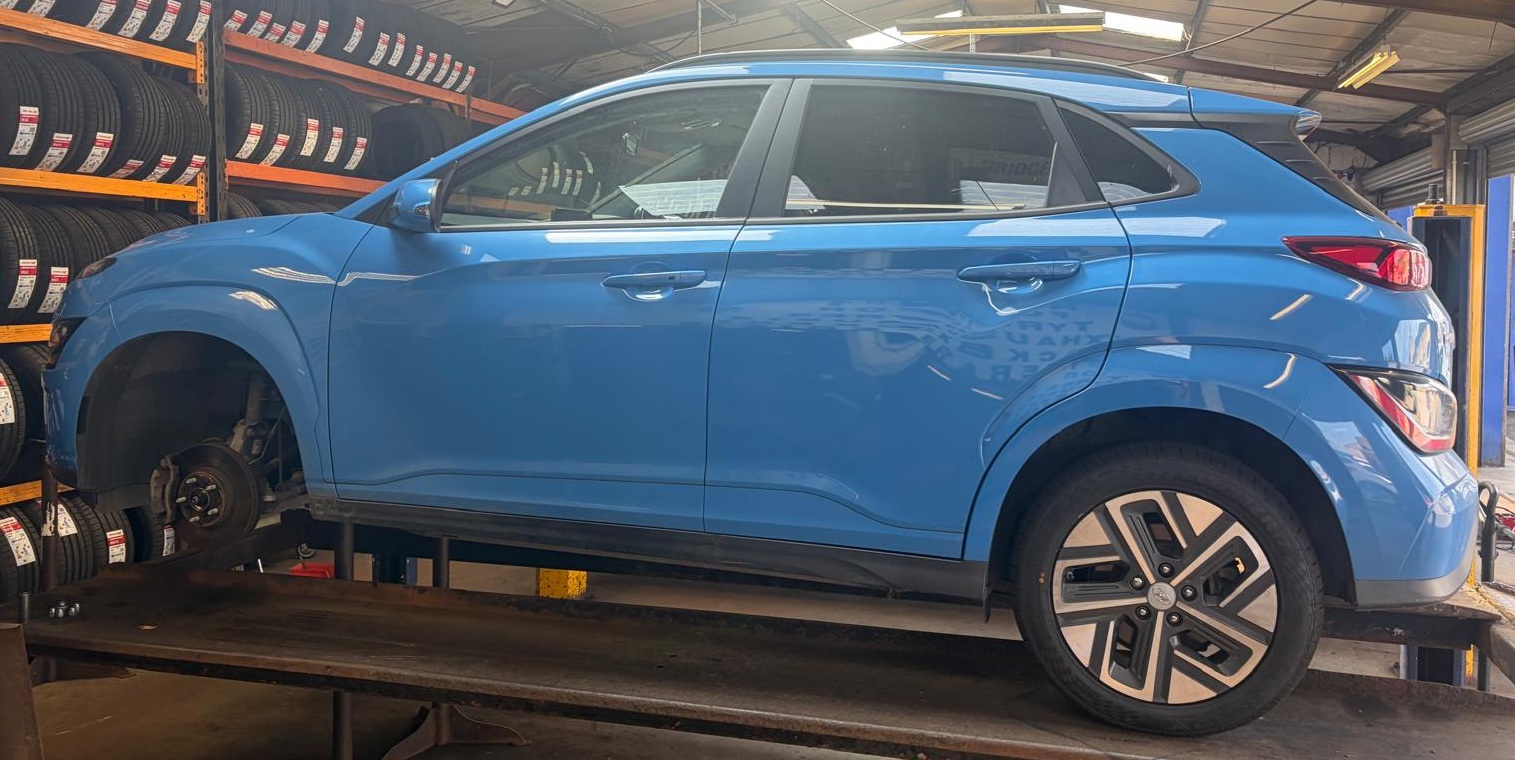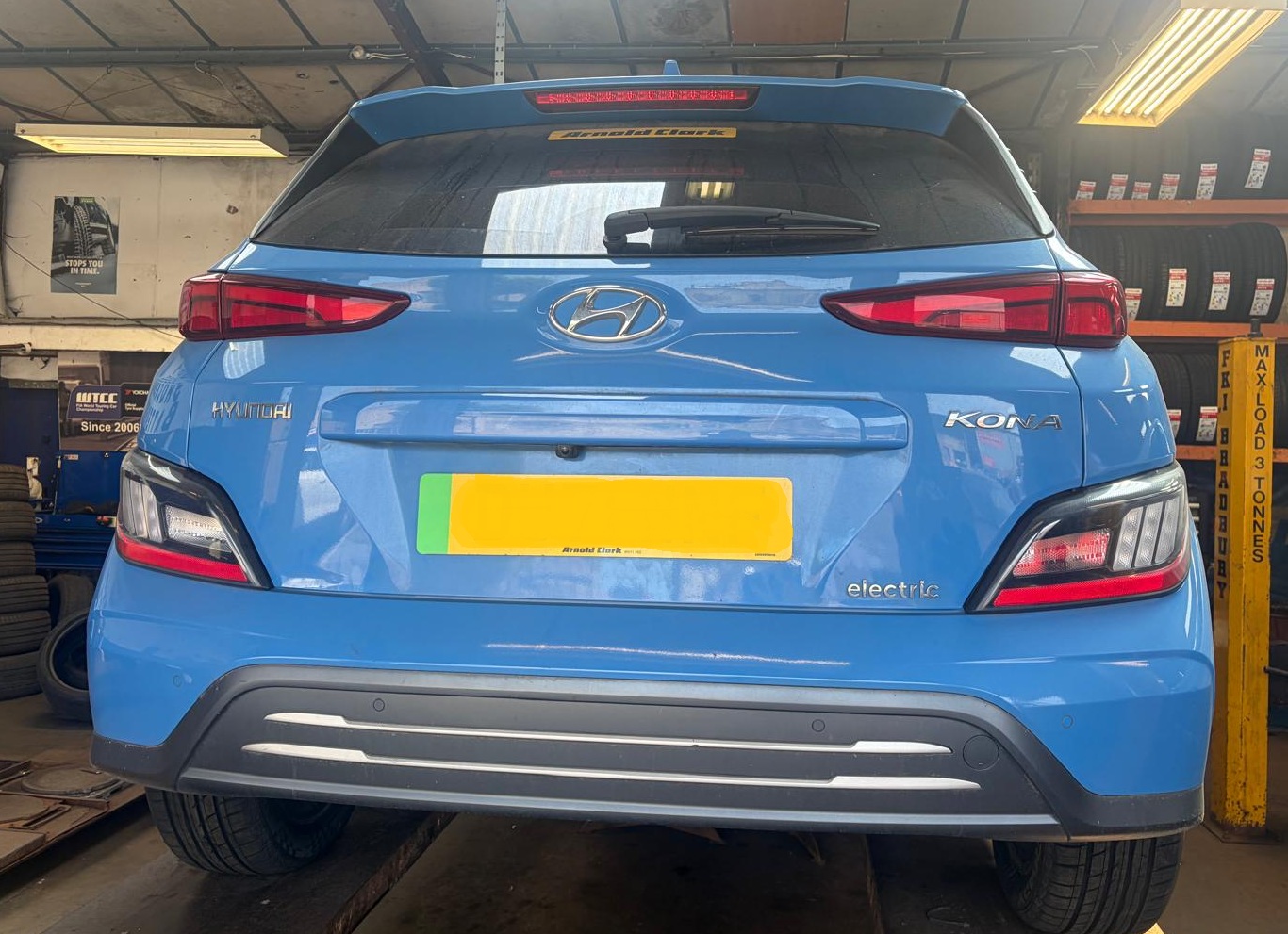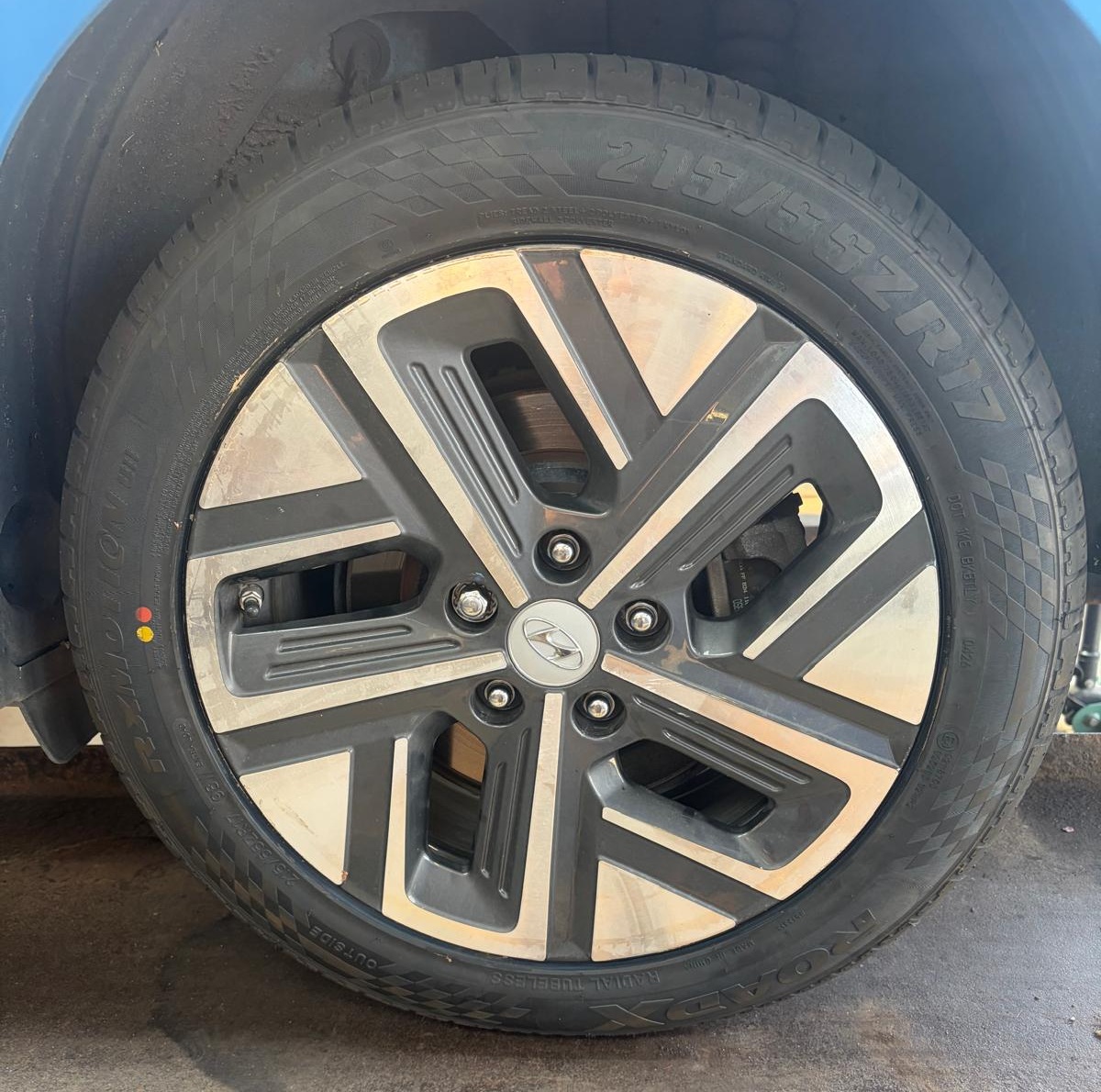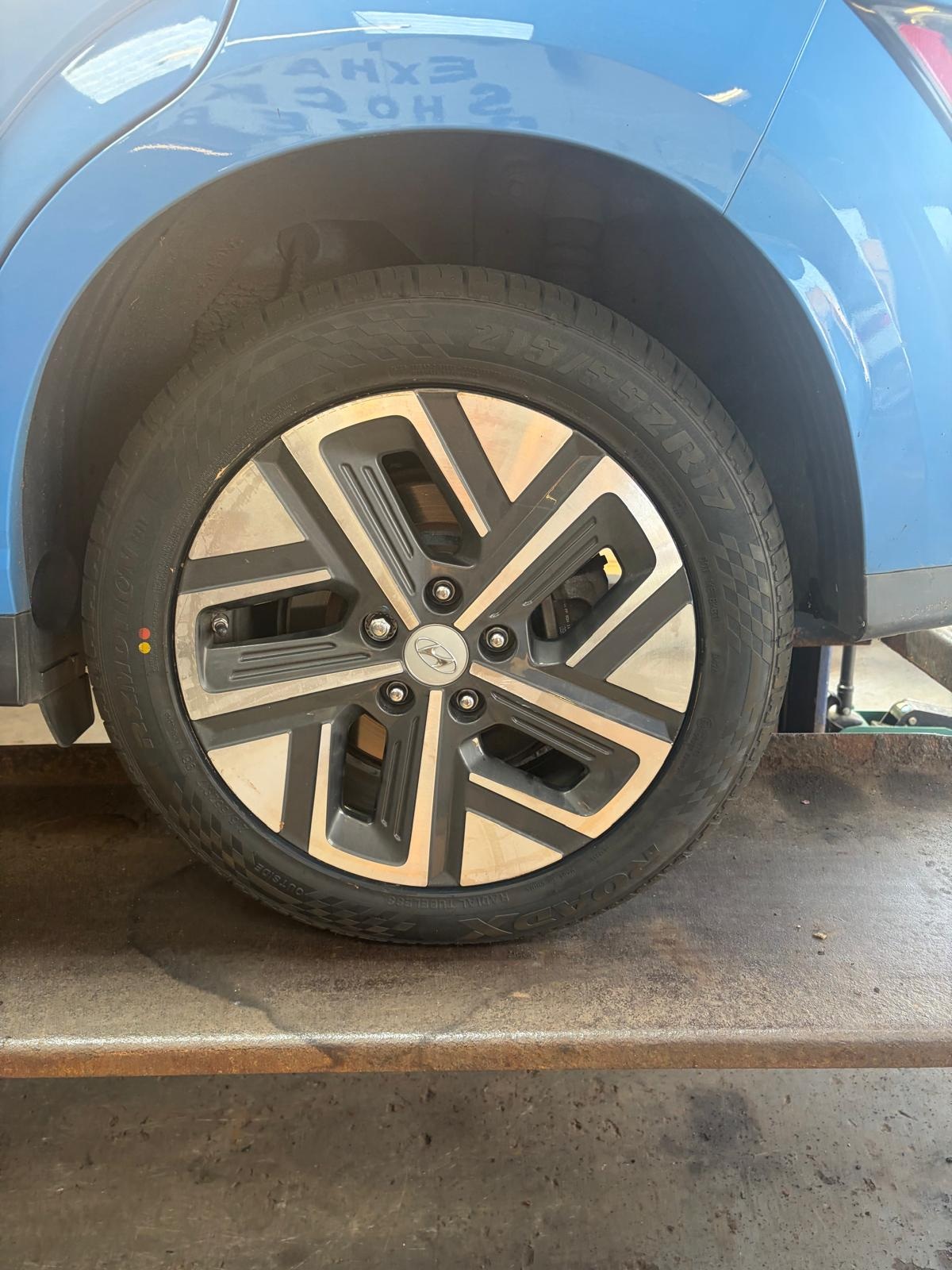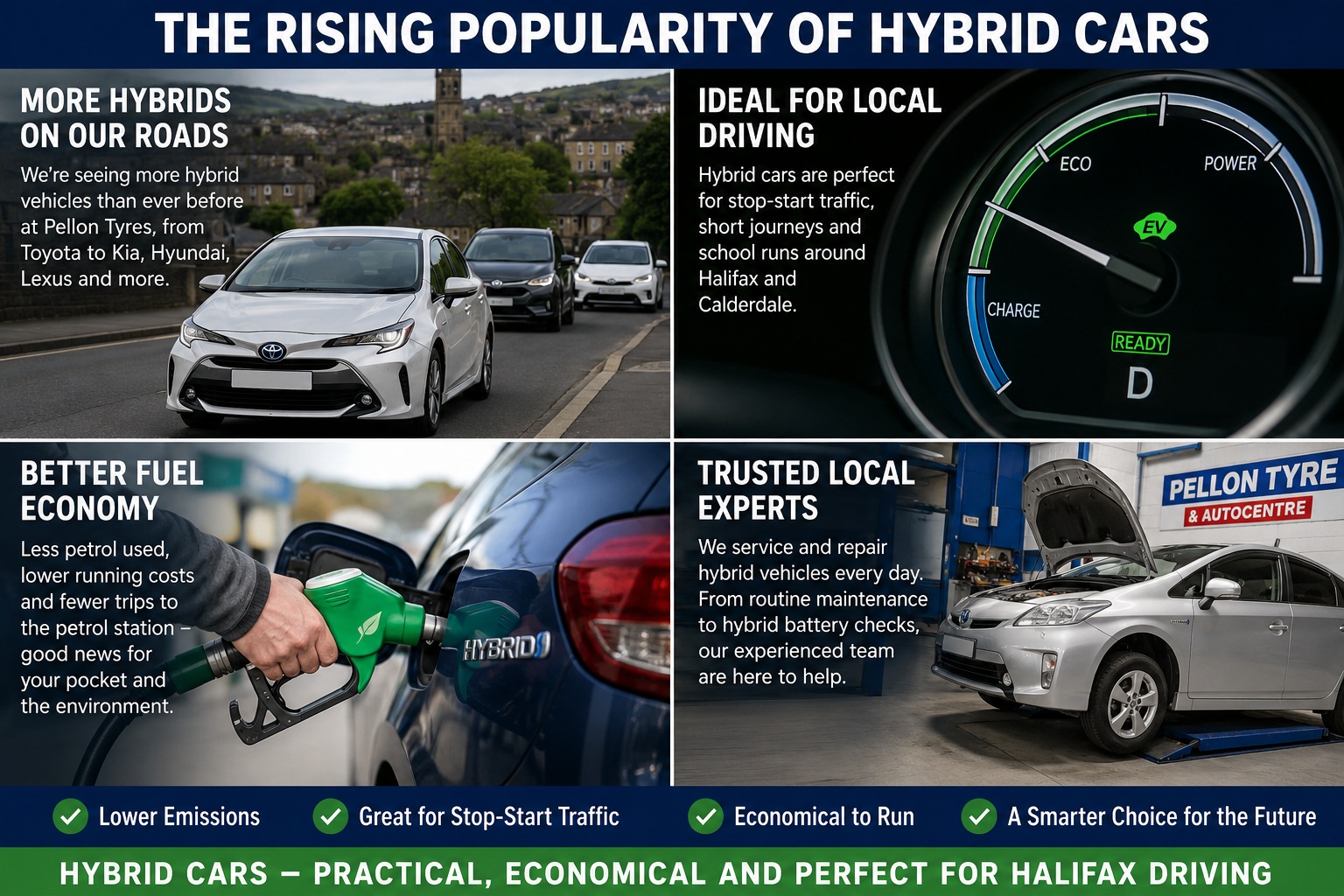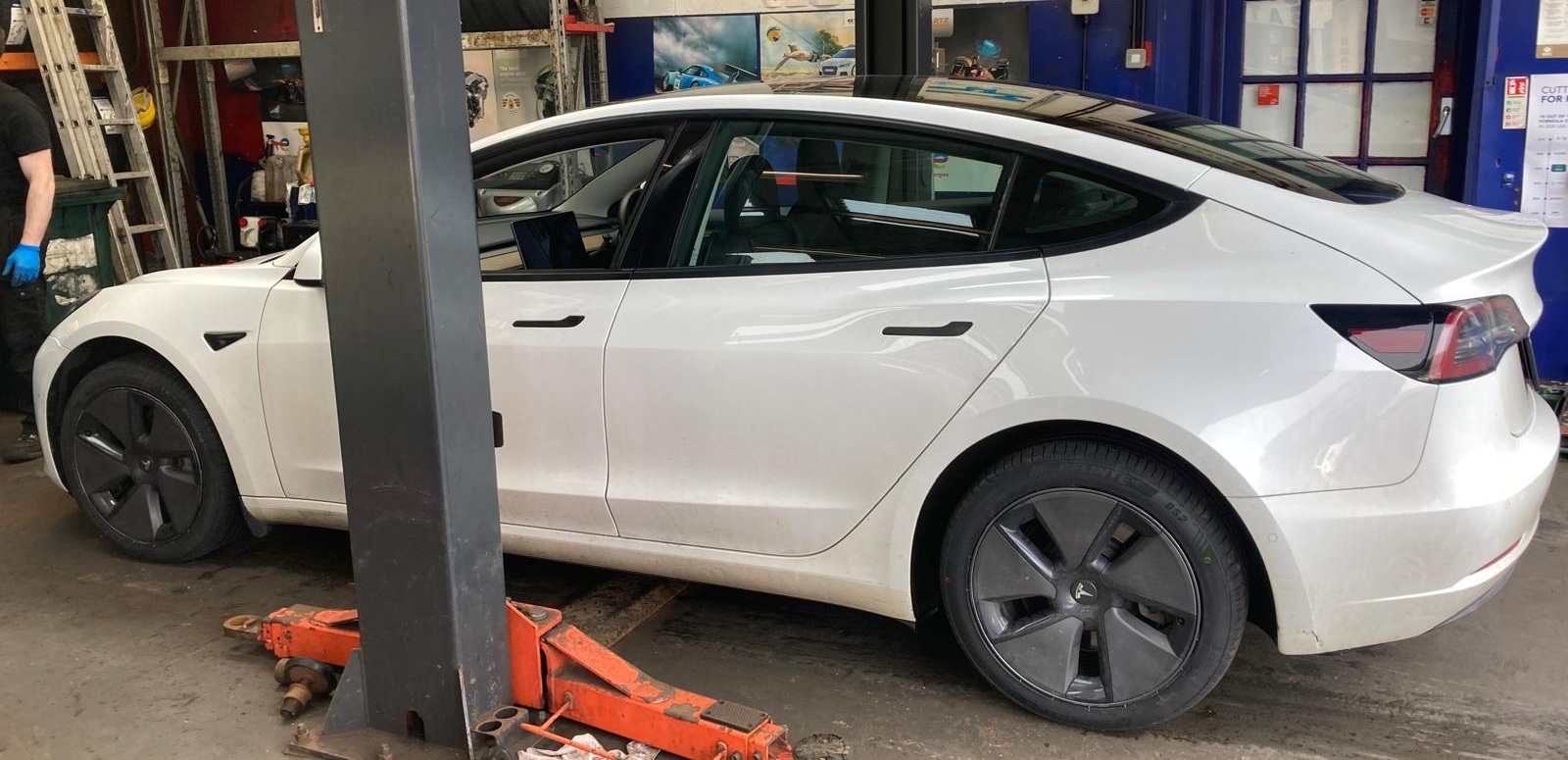
Why-Your-EV-Has-Different-Tyres

Why-Your-EV-Has-Different-Tyres

Why-Your-EV-Has-Different-Tyres 

Why-Your-EV-Has-Different-Tyres 

Why EV Has Different Tyres

Why-Your-EV-Has-Different-Tyres 

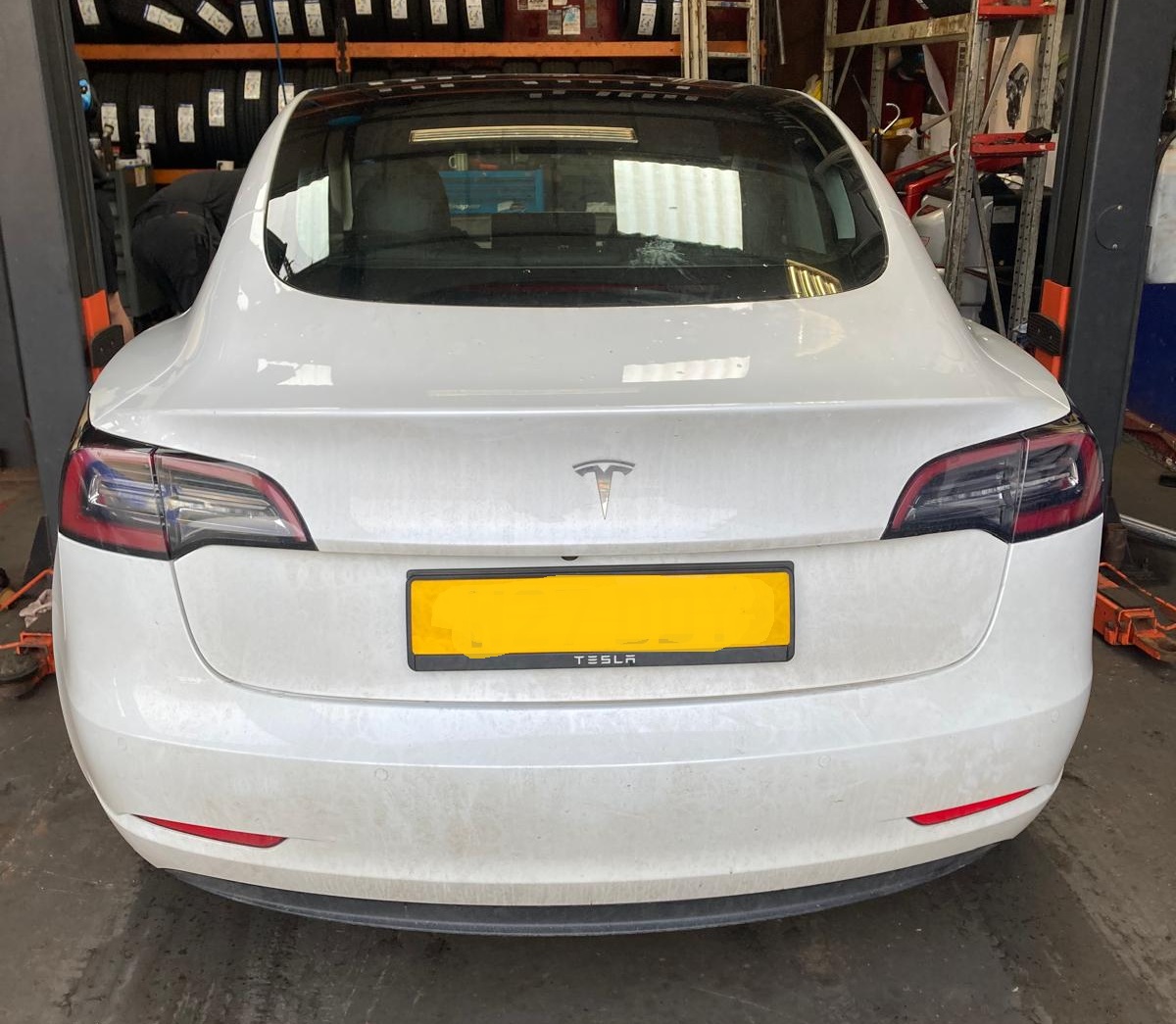
Electric vehicles bring four main challenges when it comes to tyre performance:

1. Extra Weight (20–30% more than a petrol equivalent)

Most of that extra weight comes from the battery pack. A heavier car puts more strain on the tyres, especially during cornering and braking. EV-specific tyres are built with stronger structures to cope with the extra load.

2. Range and Rolling Resistance

Every bit of drag reduces how far you can travel on a charge. EV tyres use advanced compounds and tread patterns to reduce rolling resistance, helping you squeeze every mile out of your battery.

3. Instant Torque = Faster Wear

One thing EV drivers notice straight away is how quick the acceleration is. Great fun—but very tough on tyres. EV-designed rubber uses improved compounds that resist the quick wear you get from that instant torque.

4. Quiet Running

Electric motors are whisper-quiet. That means tyre noise becomes much more noticeable. Many EV tyres include built-in noise-reducing technology to keep the cabin nice and peaceful.


What Exactly Is an EV Tyre? Why-Your-EV-Has-Different-Tyres

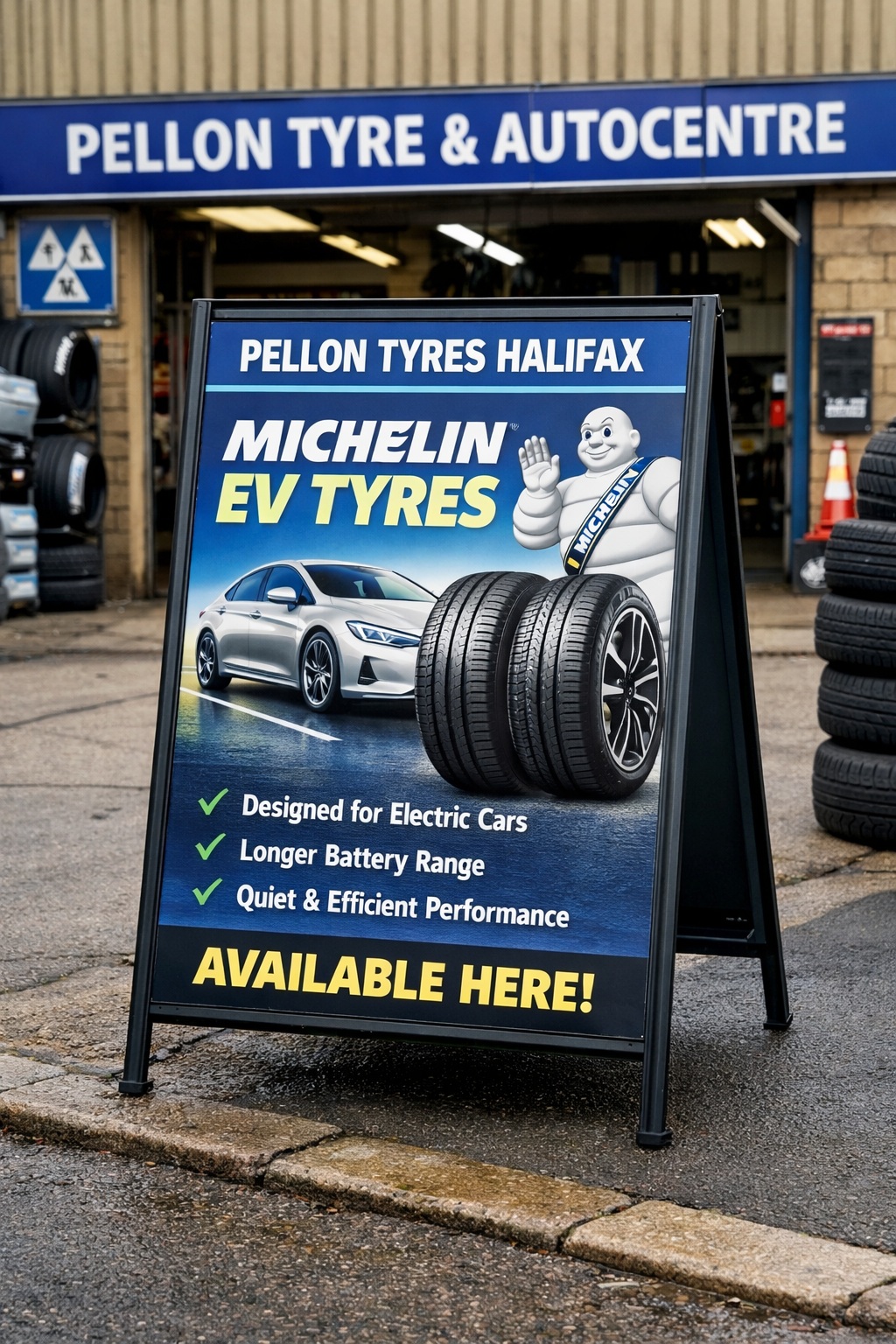
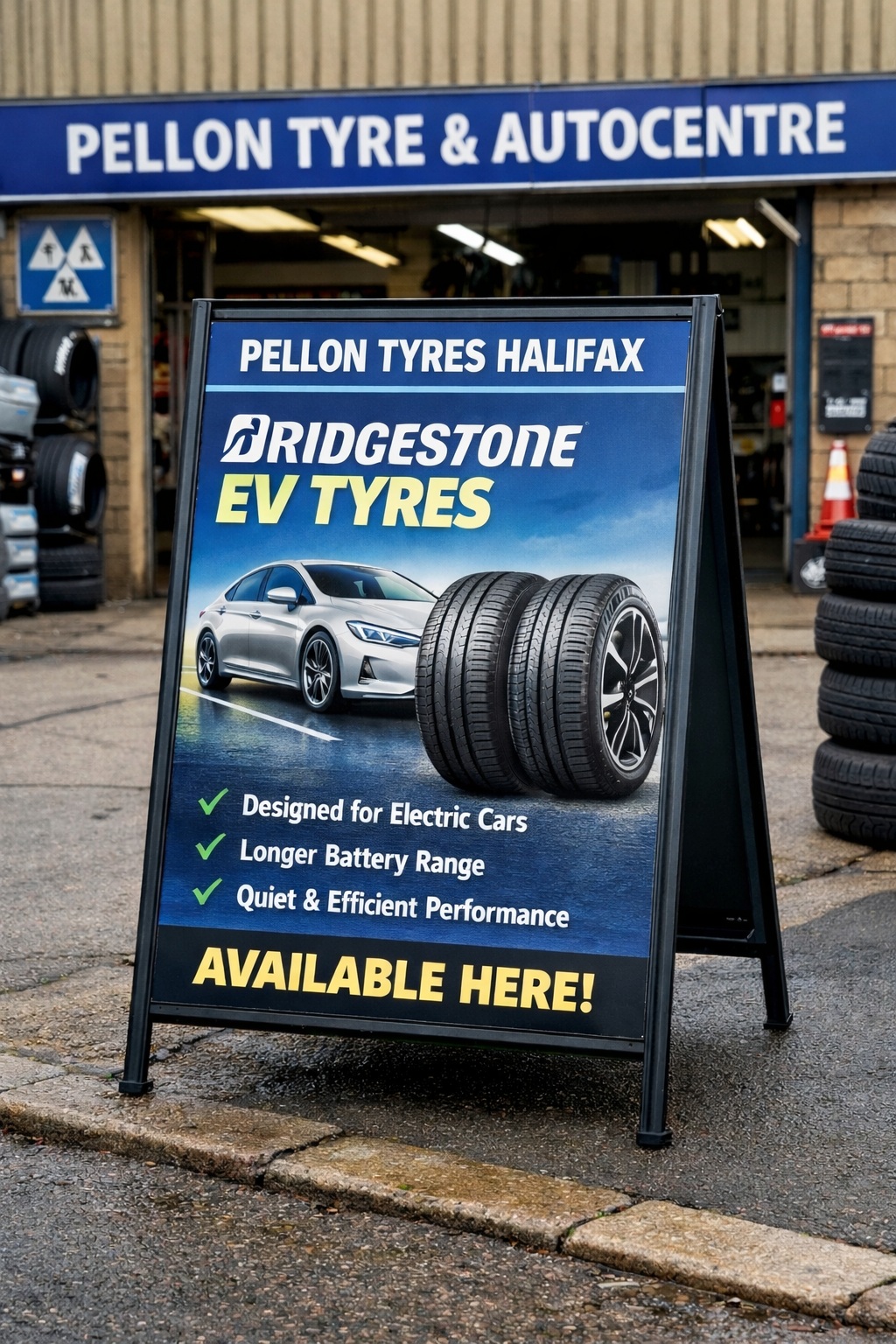
An EV tyre is specially engineered to maximize your vehicle’s efficiency. The tread pattern, compounds, and construction are all designed to:

  • Reduce rolling resistance

  • Improve grip under heavy loads

  • Handle the unique wear patterns of electric cars

  • Keep road noise to a minimum

It’s all about helping the car perform as the manufacturer intended, giving you better range and a smoother, safer drive — especially on the steep climbs and twisty roads around Halifax.


How Are EV Tyres Different from Standard Tyres? Why-Your-EV-Has-Different-Tyres

Standard tyres will fit an electric car — but they’re not designed for the job.
Most EVs weigh significantly more than their petrol or diesel equivalents, meaning:

  • Standard tyres wear out faster

  • Handling can feel heavier or less predictable

  • The car may lose more range

  • The risk of tyre damage or blowouts increases

EV tyres are built to cope with that weight while still remaining efficient. They maintain pressure better under load, which helps the battery work less and keeps you on the road longer.


Can I Just Fit Normal Tyres on My EV? Why-Your-EV-Has-Different-Tyres

Yes, you can. But you probably shouldn’t.

Fitting standard tyres on an EV can reduce your range by up to 20% and may cause irregular wear or overheating on longer journeys. In extreme cases, it can even lead to premature tyre failure.

Considering how heavy EVs are — and how quietly they run—sticking with proper EV-rated tyres is the safest choice.


What Do EV Tyres Cost? Why-Your-EV-Has-Different-Tyres

You might expect EV tyres to cost a fortune, but in reality the prices are similar to any good-quality ICE (petrol/diesel) tyre.
You pay more for premium brands with the latest tech, but budget and mid-range options are available too.

Here at Pellon Tyres, we always match the tyre to the car and customer—no upselling, just honest advice for Halifax drivers.


Do EVs Need Winter Tyres?

Winter tyres aren’t compulsory in the UK, but EV drivers can benefit from them more than most.

EV winter tyres:

  • Grip better in freezing temperatures

  • Offer shorter stopping distances on wet and icy roads

  • Keep their flexibility when standard tyres become hard and slippery

For Calderdale’s winters, they’re well worth considering.


Choosing the Right EV Tyre

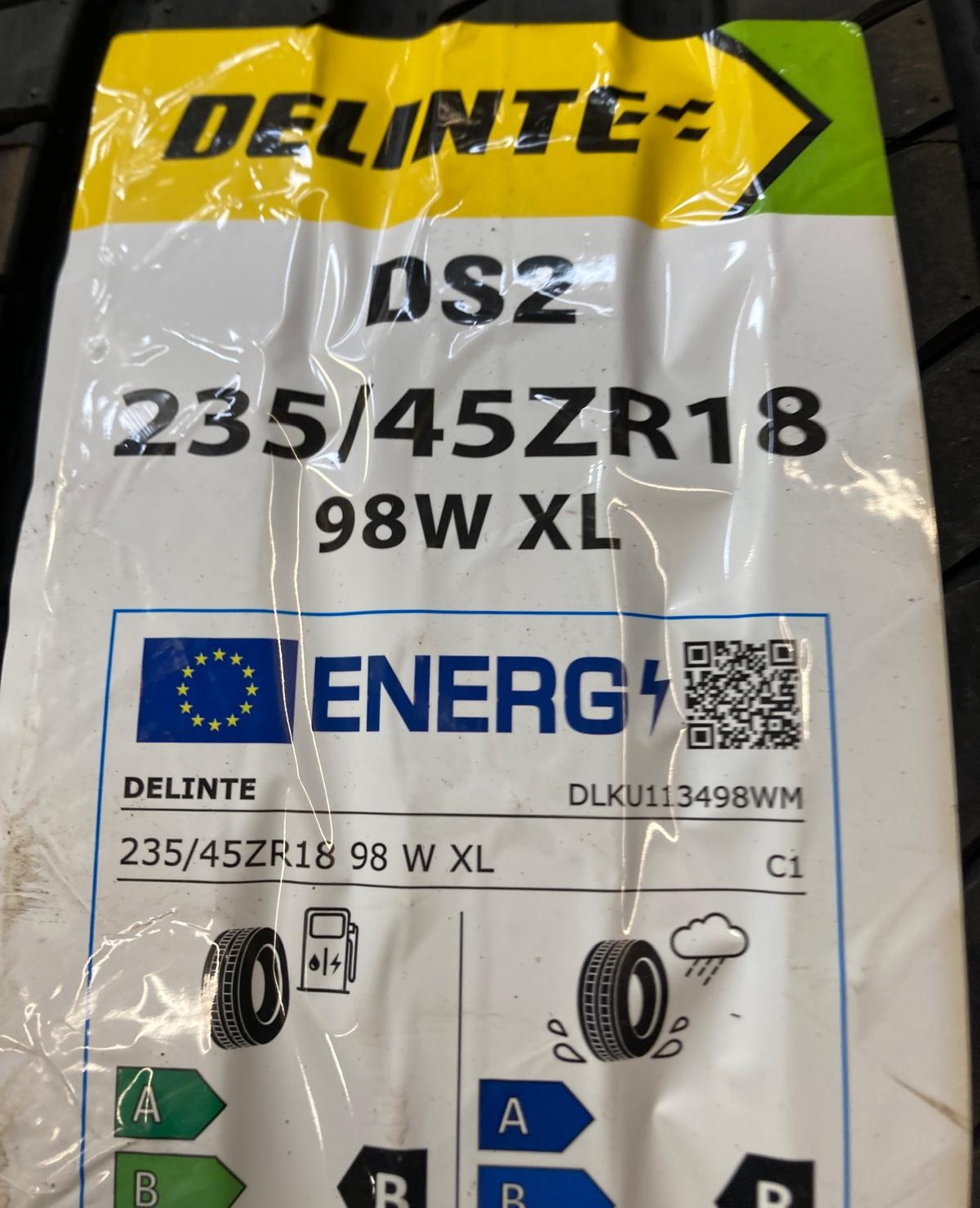
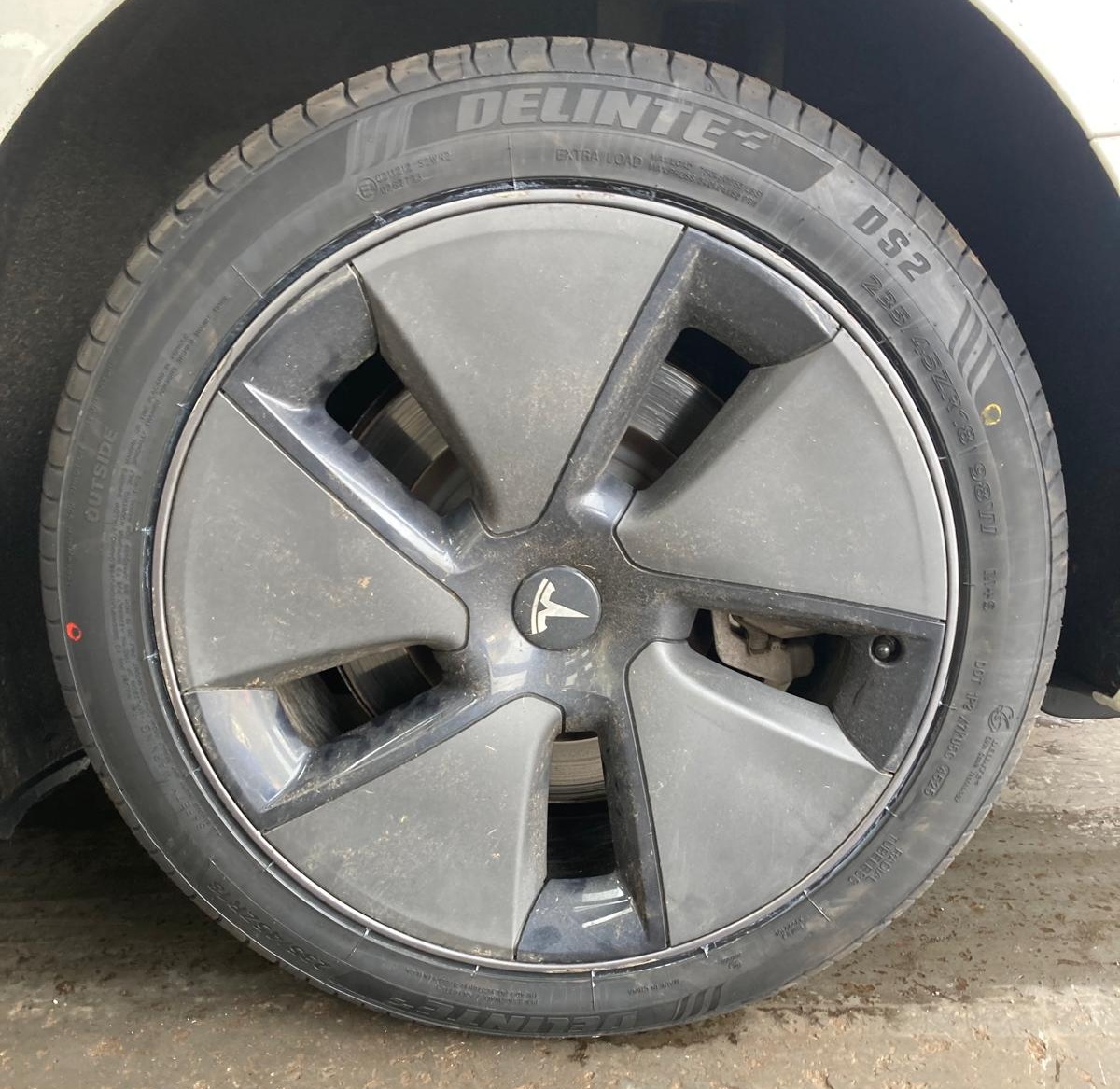
Before buying any new tyre, always check the markings on your existing tyres. These tell you the exact size, load index, and speed rating your car needs. Getting it wrong can affect:

  • Range

  • Ride comfort

  • Safety

  • Warranty conditions

If you’re unsure, just give us a call at Pellon Tyre and Autocentre, Halifax, on 01422 362030.
We’ll help you choose the right EV tyre for your car — without any fuss or flannel.

Will Energy prices kill off the Electric Car?

Will Energy prices kill off the Electric Car?

Will Energy prices kill off the Electric Car?

Will Energy prices kill off the Electric Car?

The rise of electric cars has been a long time coming. Tesla in the United States was the one who initially started it in a big way. Now spreading to most car manufacturers across the world. The cost of batteries, charging infrastructure, and the emissions they produce have all been declining over time.

A recent report from Bloomberg New Energy Finance shows that electric cars are now cheaper than petrol or diesel cars in 41% of the USA. A recent study by the London School of Economics also suggests that electric cars will account for more than two-thirds of new car sales by 2030, the UK’s target for banning the sale of fossil fuel cars.

 However, the rise of electric cars comes with its own set of risks.

The cost of electricity is something that is constantly on the minds of electric car enthusiasts. Although, in my opinion, these vehicles are a new domain for the rich drivers in our towns and cities. Primarily, they are still expensive and unaffordable for the general public to buy.

For some people, it is the only reason they would consider purchasing an electric car. The cost of electricity is a major consideration for many people, but what about hydrogen cars? Electricity and hydrogen are the fuel sources for hydrogen cars.

Including a new type of engine coming out of Australia. This is a diesel engine that adds hydrogen to the fuel mixture. This engine is carbon neutral and ticks all the boxes for everyday motorists who just want affordable cars without any fuss.

Will Energy prices kill off the Electric Car?
© Can Stock Photo /

Thanks to the UK, s constant advertising campaigns: Will Energy prices kill off the Electric Car?

Then, electric cars have been one of the most popular vehicles on the market for the past several years. They are seen as environmentally friendly. However, electric car prices may soon start to rise, putting them at a disadvantage against their hydrogen- and traditional gasoline-powered counterparts.

Electric cars have been around since the early 1900s. Firstly, use the old lead acid batteries. With the addition of other battery technologies such as lithium and Tesla, they have been slowly gaining in popularity over the past few years.

With fuel prices constantly on the rise, many people are looking for alternative ways to run their vehicles. While electric cars have their disadvantages, such as the high price of electricity. In my opinion, they could still be a successful option in the future. If the price of electricity continues to rise, many people will turn off electric cars.

Therefore, Electric cars are in a race against time: Will Energy prices kill off the Electric Car?

If the price of electricity continues to rise, electric cars will become too expensive to operate, and they may even be killed off. Right now, the price of electricity has doubled here in the UK. Of course, the future looks grimmer still.

Unless the war in Russia ends, the price of our fuel will rise even more. Until we can increase our own energy production, it is expected to increase substantially over time. This could kill off the electric car industry as we know it! Electric cars require a lot of electricity to operate, combined with the high price and availability of “Cobalt” for the manufacture of lithium batteries.

The Rumoured New EV Mileage Charge

To make matters even more uncertain for electric vehicle owners, it’s now being rumoured that the UK Chancellor is planning to introduce a mileage-based charge on EVs to replace the loss of road tax and fuel duty income. This would mean drivers of electric cars could soon pay per mile for using the roads—a move that could drastically change the appeal of owning an EV.

Up until now, one of the main advantages of electric vehicles has been the exemption from road tax and cheaper running costs. However, if a mileage charge comes in on top of already high electricity prices, the balance could shift. Drivers may start questioning whether going electric is still worth it, especially when you factor in the cost of installing home chargers and battery replacements down the line.


Will Energy prices kill off the Electric Car?

Thanks to the UK’s constant advertising campaigns, electric cars have been one of the most popular vehicles on the market for the past several years. They’re seen as environmentally friendly, but electric car prices may soon start to rise, putting them at a disadvantage against their hydrogen- and traditional petrol-powered counterparts.

Electric cars have been around since the early 1900s, first using old lead-acid batteries. With the addition of modern lithium batteries and the success of Tesla, they’ve been slowly gaining in popularity over the past few years.

With fuel prices constantly on the rise, many people are looking for alternative ways to run their vehicles. While electric cars have their disadvantages, such as the high price of electricity, in my opinion, they could still be a successful option in the future.

If the price of electricity continues to rise, many people will turn away from electric cars. They’re in a race against time — will energy prices kill off the electric car?

Right now, the price of electricity has doubled here in the UK, and the future looks grimmer still. Unless the war in Russia ends, our fuel and energy costs could rise even higher. Until we can increase our own energy production, prices will continue to climb — and that could spell real trouble for the electric car industry as we know it.

Eric Roberts is the owner of Pellon Tyre and Autocentre in Halifax, West Yorkshire. Away from the garage, he enjoys relaxing by the sea at his LuckyPaws Holiday Home in Flamborough on the beautiful Yorkshire coast.


Servicing-Hybrid-Electric Cars-Halifax

Servicing-Hybrid-Electric Cars-Halifax

Servicing-Hybrid-Electric Cars-Halifax

Servicing-Hybrid-Electric Cars-Halifax

Servicing Hybrid and Electric Cars in Halifax – Yes, We Can!

(By Eric Roberts – Pellon Tyre and Autocentre, Halifax)

As more drivers in Halifax, Elland, and Brighouse switch to electric or hybrid cars, one question keeps coming up in our reception:
“Can you service my hybrid or EV – or do I have to go to the dealer?”

The simple answer is yes, we can!

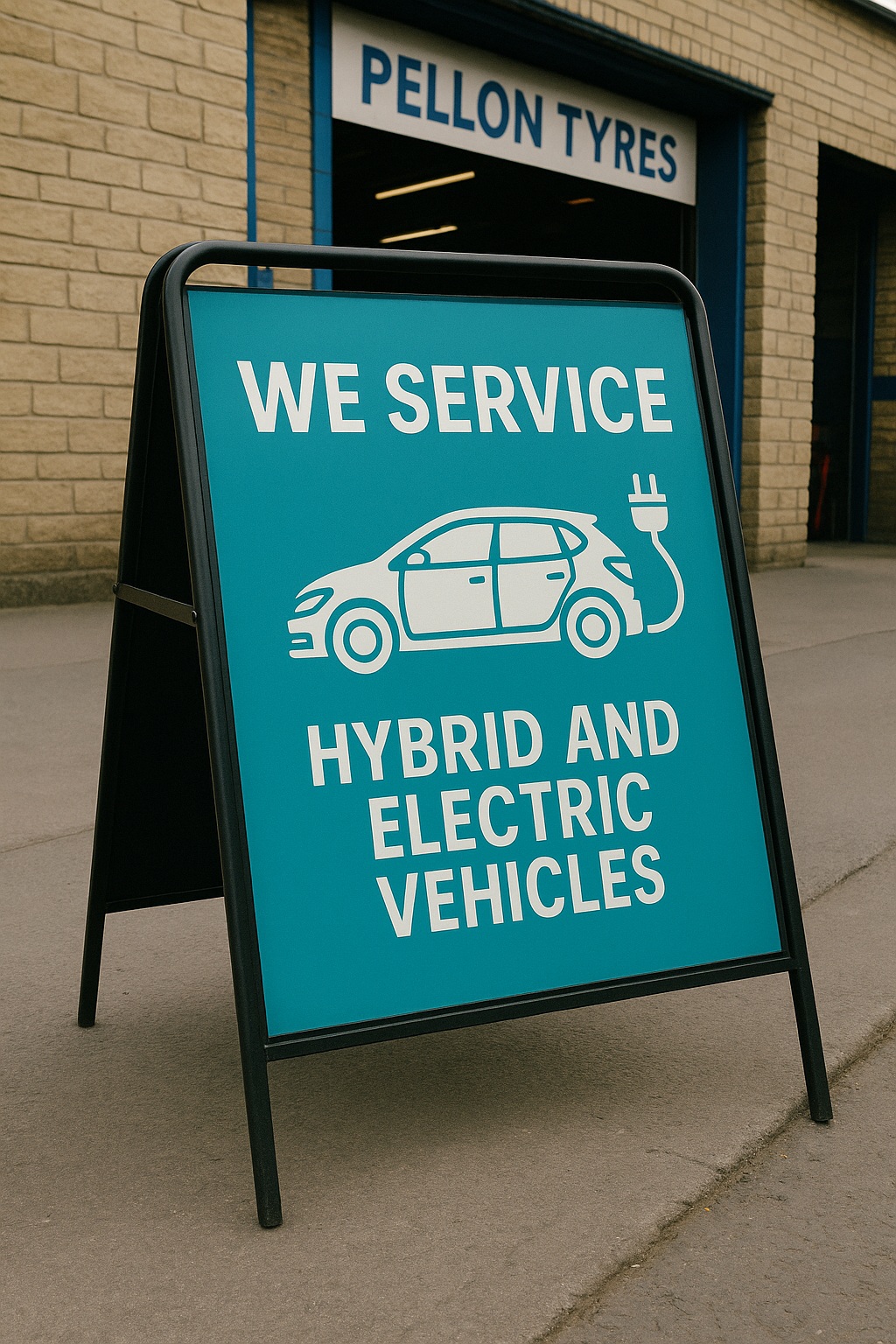
Here at Pellon Tyre and Autocentre, our technicians are fully trained to service, maintain, and repair both hybrid and fully electric vehicles, using the proper diagnostic tools, genuine parts, and manufacturer-approved oils and fluids. You don’t have to pay dealer prices to keep your warranty valid.


Hybrid and EV Servicing Explained: Servicing-Hybrid-Electric Cars-Halifax

Electric and hybrid cars might seem like new technology, but underneath, they still share plenty in common with petrol and diesel models—they’ve got suspension, brakes, tyres, filters, air conditioning, and safety systems that all need regular care.

The difference is in how the power is delivered and managed—so servicing means checking the electric motor system, high-voltage cables, charging connections, and battery condition as well as all the usual mechanical parts.

Our trained technicians use the correct insulated tools and follow high-voltage safety procedures, just as you’d expect from a professional independent garage.

👉 Learn more about our car servicing options here


🛠️ Dealer Standards, Local Prices: Servicing-Hybrid-Electric Cars-Halifax

Many hybrid and EV owners are told they must return to the main dealer for servicing. That’s no longer the case—as long as the work is carried out using bona fide parts and manufacturer-approved oils and fluids, your warranty remains intact.

At Pellon Autocentre, we only fit quality OEM-spec parts and use the correct oils and fluids recommended by your vehicle’s maker, whether it’s Toyota, Nissan, Hyundai, Kia, or BMW.

So you’ll get the same level of care you’d expect at a dealership — but at honest, local Halifax prices.


🔋 Gold and Silver Service Packages – Now for Hybrids & EVs

We now include hybrid and electric cars in our popular Gold and Silver Service packages:

  • Silver Service – ideal for vehicles that cover fewer miles. Includes a full mechanical inspection, oil and filter change (if applicable), and key safety checks.

  • Gold Service – our top-tier option, covering everything from brake inspections and fluid checks to a complete system diagnostic and battery health assessment.

If your hybrid or EV is due its MOT test, you can even book the service and MOT together — one visit, one spend a year, as we like to say here in Halifax!

👉 Book your hybrid or EV service and MOT together


🚘 Why Regular Servicing Still Matters for EVs: Servicing-Hybrid-Electric Cars-Halifax

It’s a common myth that electric cars don’t need servicing. While it’s true they don’t need oil changes or exhaust work, they still have many components that wear out or need adjusting, including:

  • Brake pads and discs (especially due to regenerative braking differences)

  • Tyres and suspension

  • Cabin filters and cooling systems

  • Software updates and diagnostics

  • Battery cooling and condition checks

Keeping your EV or hybrid serviced regularly ensures safety, performance, and battery longevity — and helps retain its resale value too.


🌍 Halifax’s Go-To Garage for Hybrid and Electric Servicing

At Pellon Tyre and Autocentre, we’ve always moved with the times. From carburettors to charging ports, we’ve been keeping Calderdale’s cars running smoothly since 1989.

We now welcome drivers from all over Halifax, Elland, Brighouse, and surrounding towns who are making the switch to greener motoring.

So whether you drive a Toyota Prius, Nissan Leaf, Hyundai Kona Electric, or a BMW i3, you can count on us for honest advice, fair pricing, and proper servicing by people who care about doing things right.

Pop in and chat with our reception team — we’ll talk you through what’s needed and book you in at a time that suits.

👉 Book your Hybrid or EV service in Halifax


🔑 The Pellon Promise: Servicing-Hybrid-Electric Cars-Halifax

  • We use genuine parts and manufacturer-approved oils.

  • We follow all EV safety standards and diagnostic procedures.

  • We offer Gold and Silver service packages for every type of car.

  • We’re local, friendly, and proud to serve Halifax, Elland, and Brighouse.


Before Getting An Electric Car: 3 Things To Consider

Before Getting An Electric Car

Before Getting An Electric Car

Before Getting An Electric Car

Now it’s more important than ever to take action in order to combat, or at least slow down, climate change.
change. If you want to do your bit and do something good for the environment, you might want to
Replace your current car with an electric vehicle.

Even though there were many stereotypes about
their power when they first entered the market, there has been significant progress. But before you
Take any specific steps; you need to take your time in order to make the right decision. Here are the
things you need to consider before getting an electric car.

Determine Whether You Want To Lease Or Buy The Vehicle

When you’re looking to get an electric vehicle, you need to think about your budget. If you decide to
If you buy the car, you might have the option to pay it off in monthly payments. However, when you opt
for the leasing option, you might be able to reduce your expenses significantly.

To get started, head
over to the website of LV ElectriX and plan your electric car leasing costs. By getting in touch with the
team of experts, you will be able to understand your options thoroughly. And when you have all the
information needed, it might be easier for you to decide if it’s the optimal choice for your situation
and needs.

Consider Your Charging Options

Unlike other cars, electric vehicles don’t need gasoline or diesel to operate. But they do need
electricity in order to get you to your desired destination. To keep the car running, you need to think
about your charging options. Research the places where you need to travel and see if there are any
public charging points.

You should also find out if there is a charging point in the vicinity of your
home. And if you want to have an electric car for the long run, you might want to consider installing
the charger on your property. That way, you might save some money on charging your EV as the
device could activate when the electricity rates are at their lowest point. With its good availability
of charging points, your driving experience might become more pleasant and efficient.

Think About The Distance You Need To Drive Daily

Finally, you need to consider the distance you need to drive every day. Every electric car has a
different operating range, and you need to take that into account. If you need to drive further than
the range allows you, you need to check if there are enough charging points along the way.


Then, you could make your travels pleasant and free of any problems. The operating range might
also be one of the factors that influence the price of the car. So, if you’re looking for a cheaper
option, you might need to compromise on the range of your travels. But if you plan your trips and
adventures in advance, you might be able to enjoy the experience with no obstacles.

Purchasing An EV Or A Fuel-Powered Car

Purchasing An EV Or A Fuel-Powered Car

Purchasing An EV Or A Fuel-Powered Ca

Purchasing An EV Or A Fuel-Powered Car

In today’s world of automotive advancements, the decision to opt for a traditional gasoline car or an electric vehicle (EV) is a significant choice for any driver. As the world gravitates towards sustainable transportation, the decision between these options requires careful consideration and a deep understanding of their unique pros and cons.

Whether you’re a seasoned driver or just stepping into the world of automobiles, here are some critical factors to mull over when deciding between a regular car and an electric vehicle, helping you make an informed choice that matches your driving preferences and needs.

Driving Range And Efficiency: Purchasing An EV Or A Fuel-Powered Car

One of the key factors to consider when choosing between a regular car and an EV is the driving range and efficiency. Traditional vehicles come with a well-established network of gas stations, offering the freedom of long-distance travel without worrying about recharging.

Meanwhile, EVs provide a cleaner and more sustainable alternative, albeit with a limited driving range per charge, making access to a robust charging infrastructure crucial for longer journeys.
Assess your typical driving patterns to determine whether an EV’s range suits your daily travel needs or if the convenience of regular refuelling better suits your lifestyle.

Environmental Impact And Sustainability: Purchasing An EV Or A Fuel-Powered Car

Making an environmentally conscious driving choice involves assessing the ecological impact of your chosen vehicle. Regular cars contribute to carbon emissions and air pollution, whereas EVs operate with minimal to zero tailpipe emissions, significantly reducing their environmental footprint.

Reflect on your commitment to sustainability and the long-term benefits of curbing greenhouse gas emissions when deciding between a regular car and an EV. Consider the potential positive impact on the environment and your contribution to a cleaner and greener planet by opting for electric vehicles and aligning your values with a sustainable and eco-friendly lifestyle.

Charging Infrastructure And Convenience

The availability and convenience of charging infrastructure play a vital role in the decision-making process between a regular car and an EV. Petrol vehicles benefit from an extensive network of petrol stations, providing quick and convenient refuelling options across various locations.

In contrast, the widespread use of EVs relies on a well-established and easily accessible charging infrastructure, including home charging solutions and public charging stations. Evaluate the convenience and reliability of charging options in your area to ensure that access to charging facilities seamlessly integrates into your daily routine and travel plans.

Purchase And Ownership Costs

Understanding the financial implications of purchasing and owning a regular car versus an EV is crucial to making a decision that fits your budget and long-term financial goals. While traditional vehicles generally have a lower upfront cost, they come with ongoing expenses for fuel and maintenance.

EVs, on the other hand, may have a higher initial purchase price, but they offer long-term savings on fuel costs and reduced maintenance requirements. Think about possible government incentives, tax breaks, and the total cost of ownership, which includes charging fees and maintenance costs, to figure out if your chosen vehicle is financially feasible and has economic benefits.

Ensuring Peace Of Mind With Comprehensive Breakdown Cover

When considering the purchase of a regular car or an electric vehicle, it’s crucial to consider the availability of comprehensive breakdown cover to ensure a smooth and worry-free driving experience. Breakdown incidents can occur unexpectedly, and having a reliable breakdown cover in place provides reassurance, particularly during long journeys or unforeseen vehicle malfunctions.

Evaluate the breakdown cover options for both regular cars and electric vehicles to determine the level of protection and assistance that suits your specific vehicle requirements and driving expectations. If you’ve decided to go down the EV route, you’ll be able to find a selection of the best breakdown covers for electric cars with the help of the Electric Car Guide.

Technological Advancements And Driving Experience

The integration of advanced technology and innovative features in both regular cars and EVs influences the overall driving experience and comfort for drivers and passengers. Regular vehicles may offer familiar features and driving dynamics, while EVs showcase cutting-edge technology, including regenerative braking, instant torque, and intuitive infotainment systems.

Consider your preferences for technological integration, driving comfort, and connectivity options to
Determine whether the advanced features of an EV enhance your driving experience or if the conventional features of a regular car better match your preferences and driving expectations.

Anticipating future market trends and the resale value of your chosen vehicle is crucial for long-term investment planning and financial security. The automotive industry is gradually shifting towards electric mobility, with an increasing demand for EVs and a growing infrastructure to support their adoption.

Assess projected market trends and potential depreciation rates for regular cars and EVs to make an informed decision that safeguards your investment and maximises the resale value of your vehicle in the years to come.

Maintenance And Servicing Considerations: Purchasing An EV Or A Fuel-Powered Car

Understanding the maintenance and servicing requirements of fuel-powered cars and EVs is essential for ensuring the longevity and optimal performance of your chosen vehicle. Traditional vehicles typically require regular oil changes, engine tune-ups, and exhaust system maintenance, while EVs have fewer moving parts and may require minimal maintenance on the electric motor and battery.

Evaluate the warranty coverage, servicing costs, and availability of qualified local technicians and service centres to secure reliable and efficient maintenance options that align with your preferred vehicle choice and long-term ownership expectations.

Lifestyle And Personal Preferences; Purchasing An EV Or A Fuel-Powered Car

Ultimately, your lifestyle and personal preferences play a significant role in determining whether a regular car or an EV suits your individual needs and priorities.
Consider factors such as daily commute distance, travel frequency, cargo space requirements, and driving comfort to align your chosen vehicle with your lifestyle and driving habits.

Evaluate the practicality and versatility of each option to ensure that your vehicle seamlessly integrates into your routine and enhances your overall driving experience, reflecting your values and aspirations as a discerning and responsible driver.


By thoughtfully contemplating these key factors, you can navigate the decision-making process between a regular car and an electric vehicle with clarity and confidence, choosing the option that best suits your unique requirements and preferences.

Porsche Taycan Electric New Tyres

Porsche Taycan Electric New Tyres

Porsche Taycan Electric New Tyres

Porsche Taycan Electric New Tyres

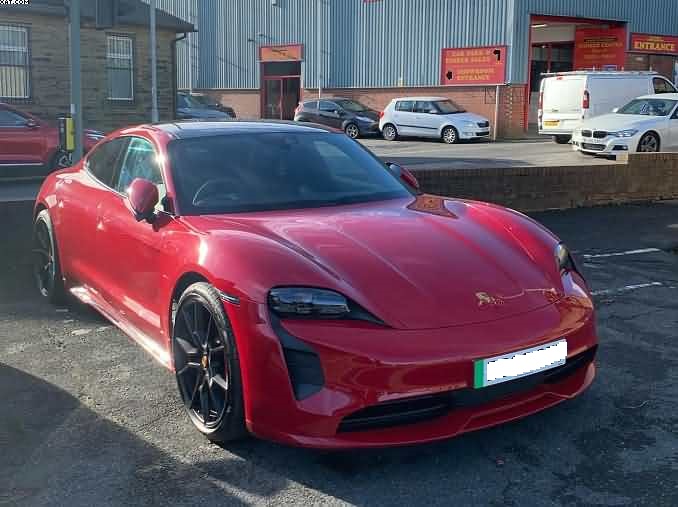
A gorgeous Porsche Taycan Electric stopped into Pellon Tyres a few days ago for some TLC, specifically a new set of tyres. You don’t see one of these svelte electric wonders parked in our Halifax garage very often. Even as an experienced garage owner, the Taycan’s sophisticated design and state-of-the-art technology never cease to wow. But this time, something a little more sobering—bubbles on the tyre sidewalls—brought it in instead of the sleek electric whir or the attractive appearance.

Identifying Tyre Bubbles on an Expensive EV-Porsche Taycan Electric New Tyres


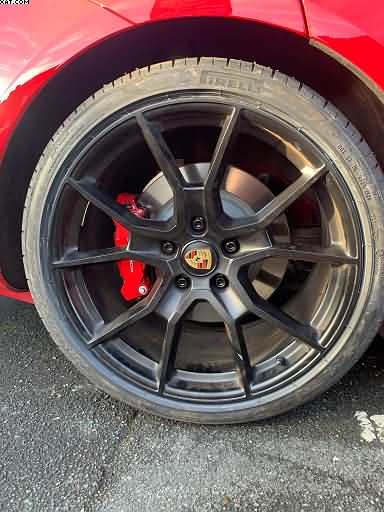
During a routine check, the Taycan’s owner reported feeling a little wobbly and spotting something strange on the tyres. A quick inspection confirmed their suspicions by revealing that both tyres had developed concerning “bubbles” or bulges on the sidewalls. Let me explain why sidewall bubbles are more than simply an aesthetic concern for those of you who are unfamiliar with them. I’m sure that many of you have heard of them before.

Porsche Taycan Electric New Tyres

The Reasons for Sidewall Bubbles in Tyres-Porsche Taycan Electric New Tyres


When the tire’s internal structure is weakened, sidewall bubbles develop. To put it simply, it’s a weak point where air from the tire’s interior has pushed its way out to the outer layers. There are several reasons for this, and although they are not unique to EVs, EVs like the Taycan are particularly vulnerable due to their increased weight.

1. Impact Damage

Impact damage is a major contributor to tyre bubbles. Potholes abound on our beautiful West Yorkshire roads, some of which are smoother than others. A bubble may result by hitting one quickly, particularly in a big vehicle like the Taycan, which can strain the tyre against the wheel and tear the internal cables. It is a frequent hazard in this area and a major annoyance for any driver.

2. Underinflation

To this problem is driving on underinflated tyres. The sidewalls of tyres bend more than they should when the air pressure is low, which puts additional strain on the tyre’s structure. The Taycan’s large battery adds weight, which makes it even more crucial to properly inflate the tyres.

3. Flaws in Manufacturing

Although they are uncommon, bubbles can occasionally result from a manufacturing error in tyres. This is less common but still conceivable with high-end tyres, such as those found on Porsches, which are subject to strict quality inspections.

4. Damage to the pavement and kerb

This issue might also arise when you misjudge a curb or brush the walls while parking. Because they run quietly, electric cars can occasionally surprise drivers by being difficult to manoeuvre in confined spaces. We have observed this problem in Halifax and elsewhere, particularly with the larger wheels on high-end EVs.

5. The Risk of Sidewall Bubbles

There is more to a tyre sidewall bubble than meets the eye. It’s a weak spot that could result in a blowout or tyre failure. Compromise tyres pose a significant concern for a powerful vehicle like the Taycan, which can accelerate like a rocket.

We installed the Porsche with two brand new high-performance tyres after informing the owner of the Taycan about the problem. We made sure the tyres matched the specifications that kept this electric sports car glued to the asphalt. It’s important to note that we always advise getting your tyres checked on a regular basis, particularly if you drive a car that uses tyres as much as the Taycan.

 The Local Perspective: Getting Around Yorkshire Roads-Porsche Taycan Electric New Tyres

Navigating roads with personality—and the occasional pothole—is a normal part of life here in Halifax. Maintaining the best possible condition of your tyres is essential for safe and pleasurable driving, whether you’re in a Peugeot or a Porsche.

No matter what you’re driving, our goal at Pellon Tyres is to keep you on the road safely. The Taycan was soon prepared to glide back into Halifax’s undulating hills and winding streets when the tyres were fixed and the pressure was perfect.

Therefore, don’t wait until it’s too late if you notice any bubbles on your tyres. As this Taycan reminded us, even the most advanced cars rely on the basic tyre, so stop by and we’ll have a look. It’s better to be safe than sorry.