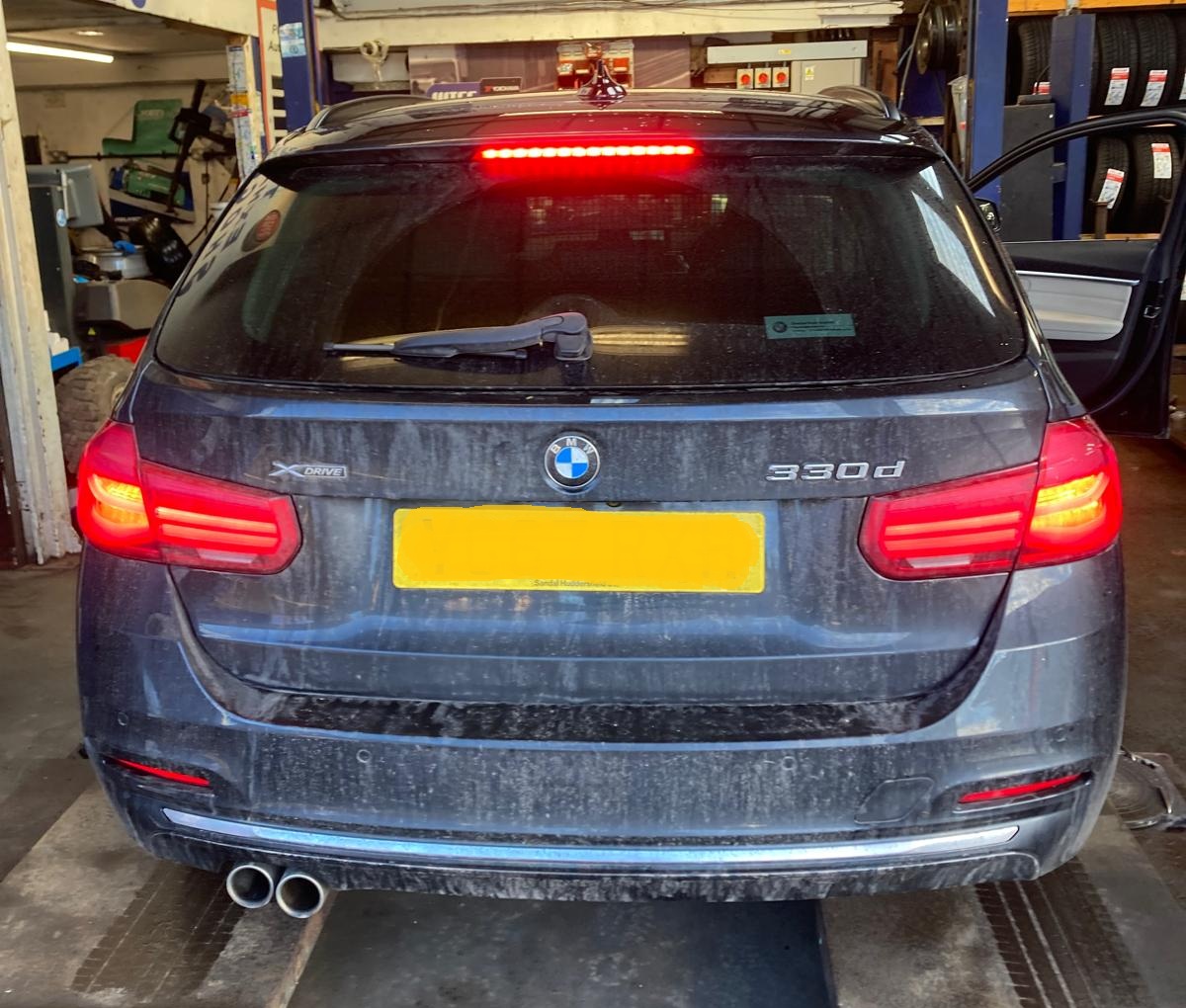
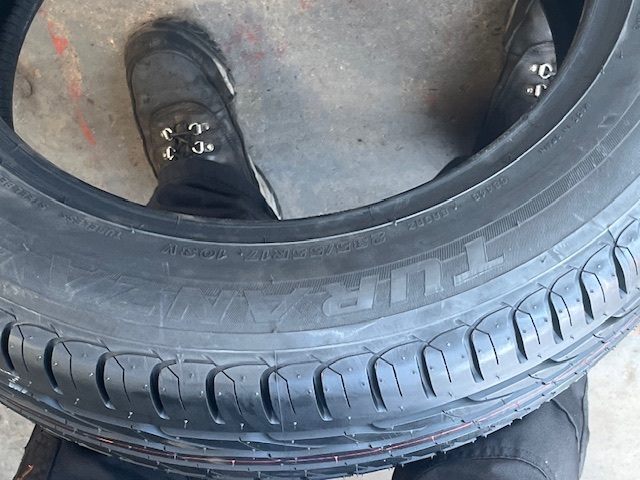
Things really do come in pairs here at Pellon Tyres. Hot on the heels of that Jaguar I-PACE pothole job, we had a BMW owner call in for what we always encourage – a free tyre check. He had a feeling the tyres were getting near the limit, and to be fair to him, his instincts were spot on.
Free tyre checks – no pressure, just honesty
The car was a BMW 330 xDrive, running on run-flat tyres all round. Like many BMW drivers around Halifax and Calderdale, the owner does a fair mix of local driving with the odd longer motorway run thrown in.
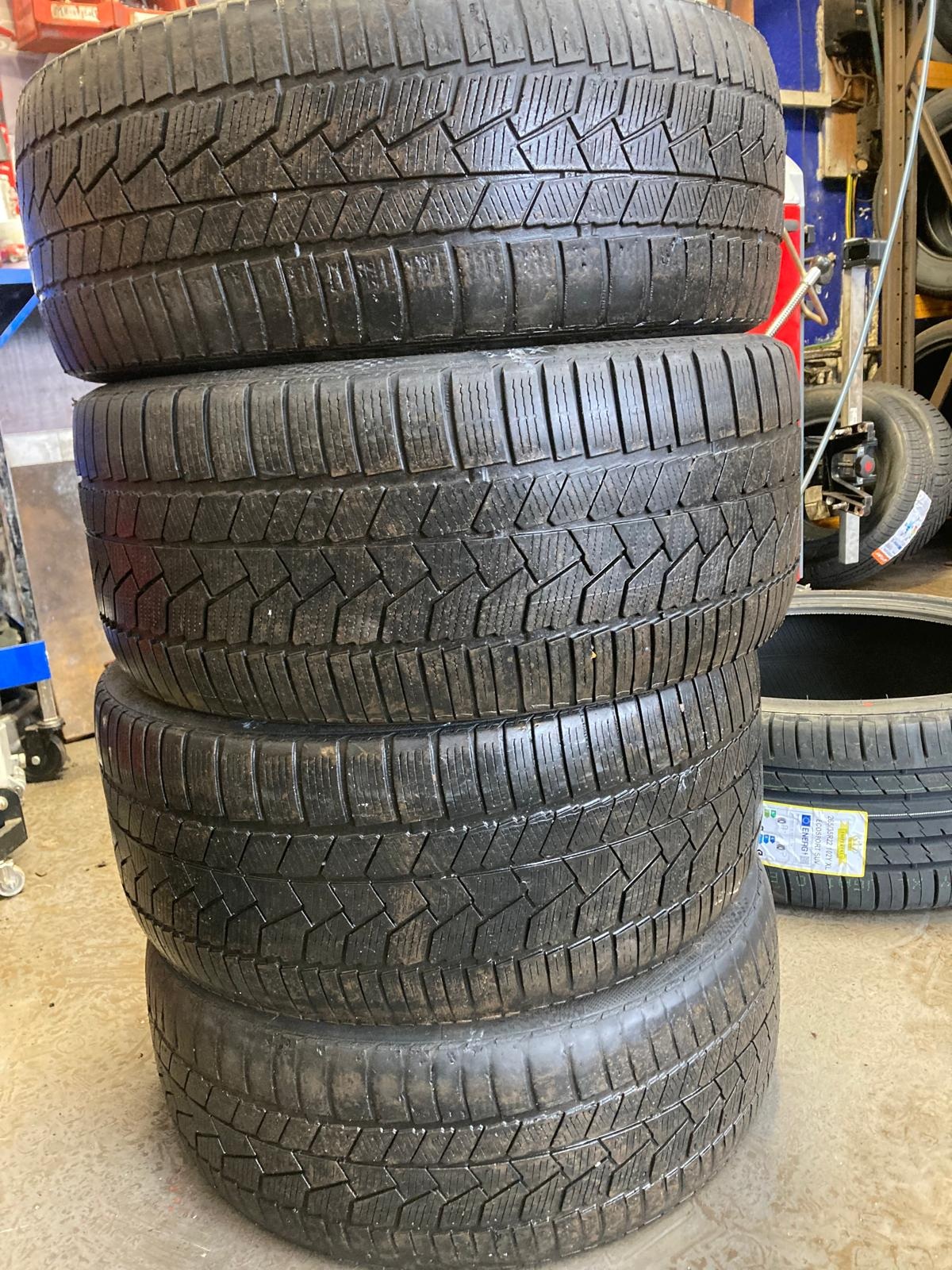
Once we’d had the car up and checked properly, it was clear that all four tyres were worn close to the legal limit. No cords showing yet, but certainly nothing we’d be happy sending someone back out onto Yorkshire roads with, especially with winter never far away up here.
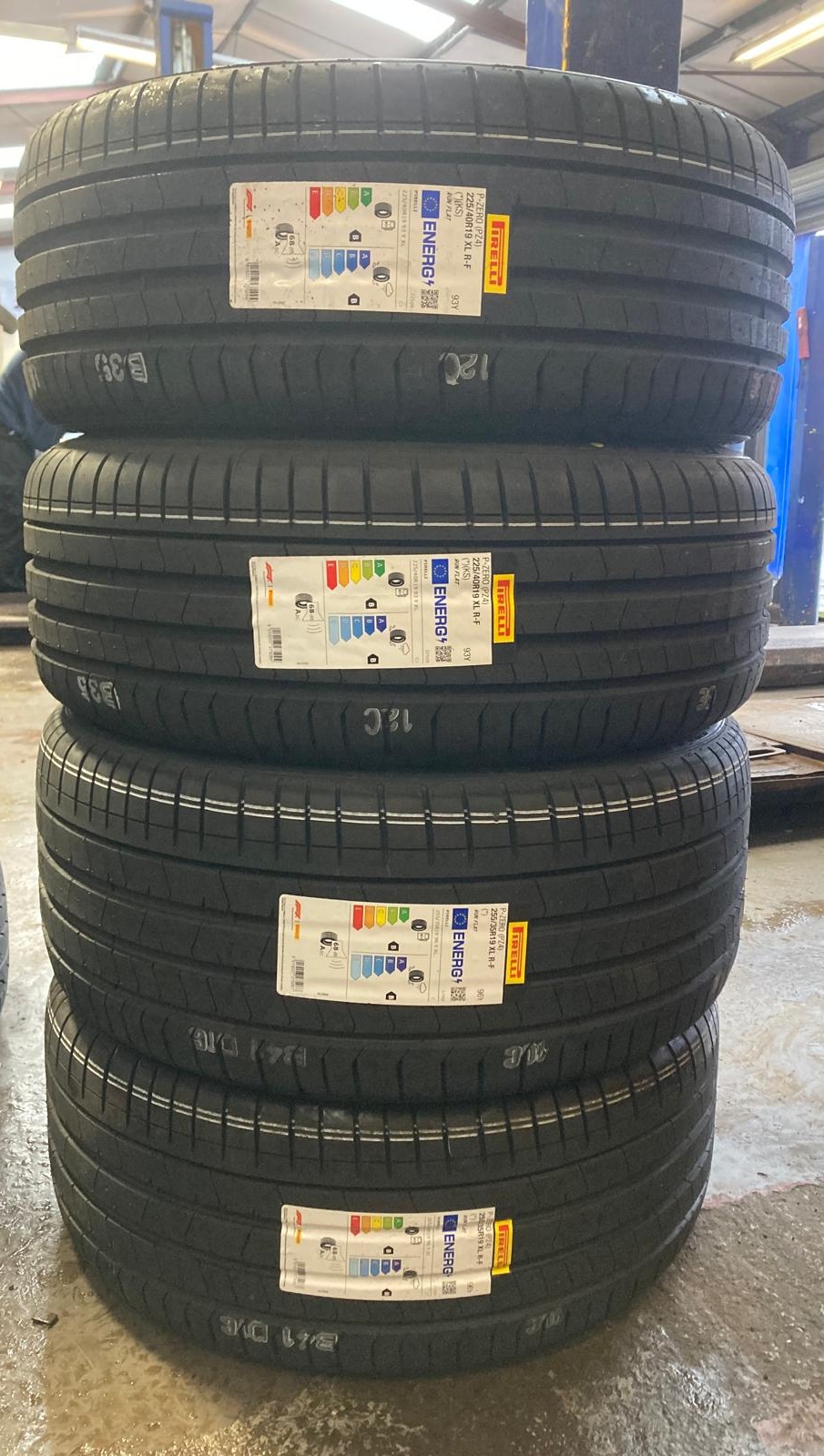
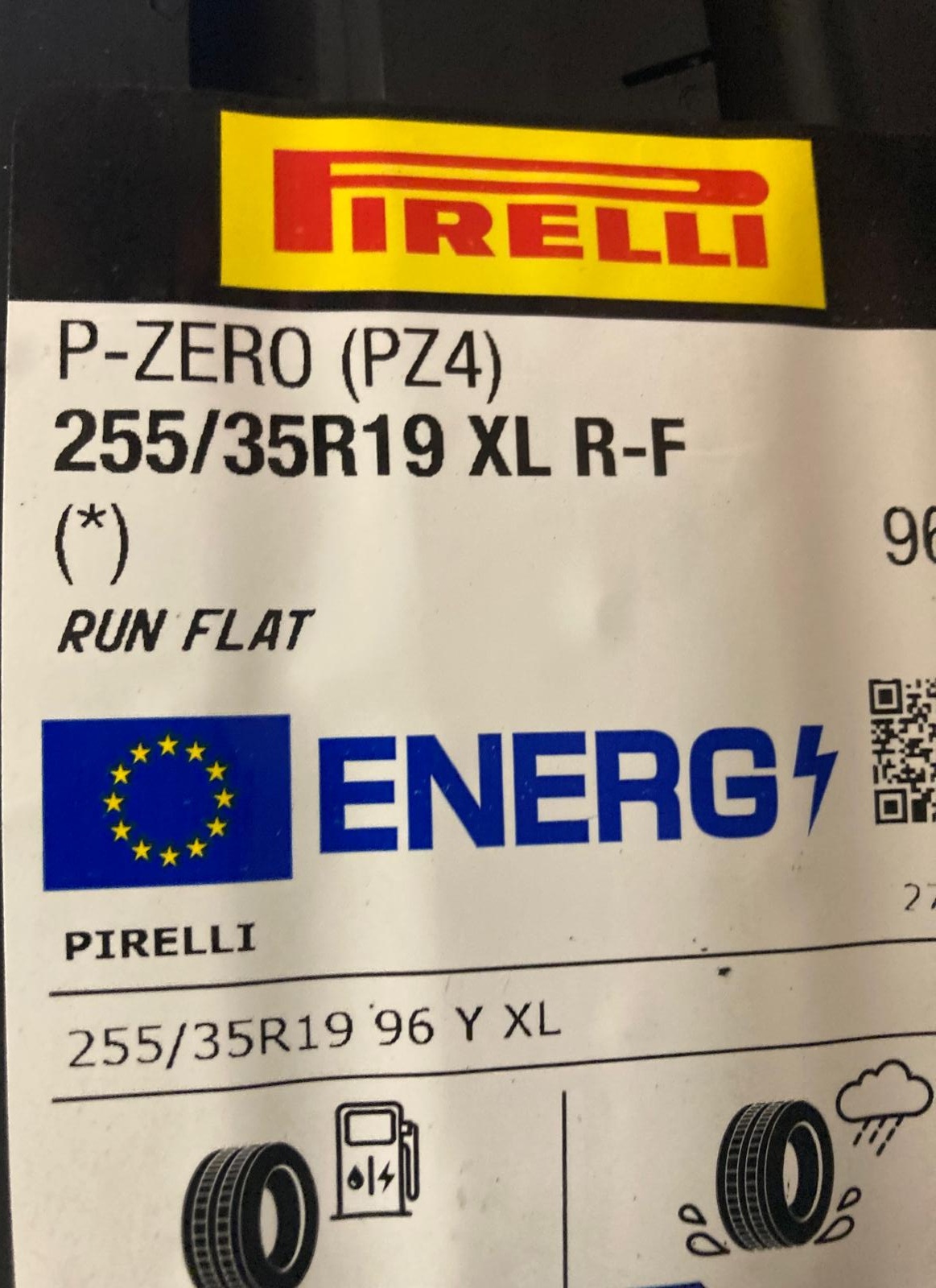
After chatting things through, the customer decided to go for Pirelli255/35 R19 XL run-flat tyres – a quality choice and well suited to that BMW.
Old tyre removed
Why all four tyres mattered on this BMW: BMW 330 For Pirelli Runflat Tyres
With the xDrive system, BMW are quite particular about tyre condition. Because it’s an all-wheel-drive setup, uneven wear between tyres can cause strain on the drivetrain over time. That’s why, in this case, replacing all four together was the sensible (and safest) option.
It’s something we often explain to customers locally – especially those driving up and down the hills around Halifax, Sowerby Bridge, Elland, and out towards Hebden Bridge, where tyres really do earn their keep.
A bit of local Yorkshire reality: BMW 330 For Pirelli Runflat Tyres
Let’s be honest, Calderdale roads aren’t exactly kind to tyres. Between:
Steep hills
Tight bends
Rough surfaces
And the odd pothole lurking in the shadows
Tyres don’t live an easy life around here. Add in modern performance cars with low-profile tyres like 255/35 R19, and wear can creep up quicker than people expect.
That’s why we’re always happy for folk to just pop in for a free check. No pressure, no sales patter – just straight talking and a brew if the kettle’s on.
New Pirelli tyres
Run-flat tyres – pros and cons: BMW 330 For Pirelli Runflat Tyres
Run-flat tyres often divide opinion, so it’s worth having a proper look at both sides.
The pros of run-flat tyres
The big selling point is safety and convenience.
You can keep driving after a puncture Usually up to around 50 miles at reduced speed, which can be a lifesaver if you’re stuck on the M62 or somewhere awkward.
No need for a spare wheel This frees up boot space and reduces vehicle weight.
Stability after a puncture Especially useful on fast roads – the car doesn’t suddenly pull or wobble like it might on a flat conventional tyre.
For many drivers, especially those commuting or doing motorway miles, that peace of mind is worth it.
Harsher ride Because the sidewalls are reinforced, run-flats can feel firmer, particularly noticeable on rough Yorkshire roads.
More expensive They generally cost more than standard tyres.
Limited repair options Once a run-flat has been driven on while deflated, it usually can’t be repaired.
Faster wear in some cases Especially on heavier or performance cars if pressures aren’t checked regularly.
We always talk this through with customers. Some choose to stay with run-flats, like this BMW owner, while others decide to switch to standard tyres with a repair kit or spare.
Why Pirelli was a good choice: BMW 330 For Pirelli Runflat Tyres
Pirelli has a long history with BMW and performance cars in general. Their run-flat tyres are well balanced, offering:
Strong grip
Predictable handling
Good wet-weather performance
Important when you’re driving through Pennine weather that can change its mind three times in one day.
Once fitted, balanced, and checked, the BMW drove out feeling tighter, quieter, and far more secure – something the owner noticed straight away.
Final thoughts from Pellon Tyres
This job is a good reminder that catching tyre wear early saves hassle later on. A quick free check can stop things turning into an MOT failure or a roadside problem.
If you’re unsure about your tyres – run-flat or not – just call in. Whether you’re pottering round Halifax town centre or heading out across Calderdale’s back roads, your tyres are the only thing keeping you in contact with the tarmac.
Rattling from the Front – Broken Spring on a Vauxhall Corsa in Halifax
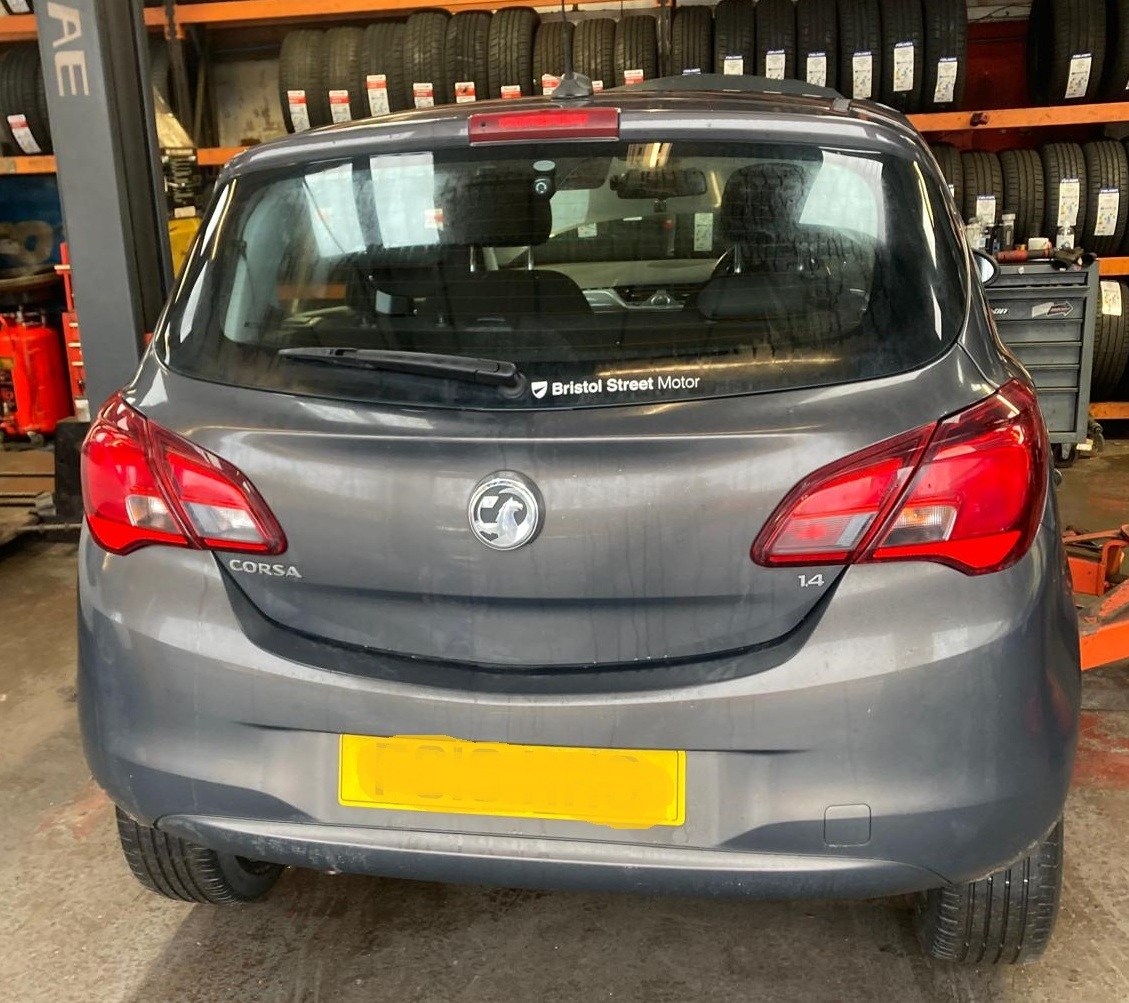
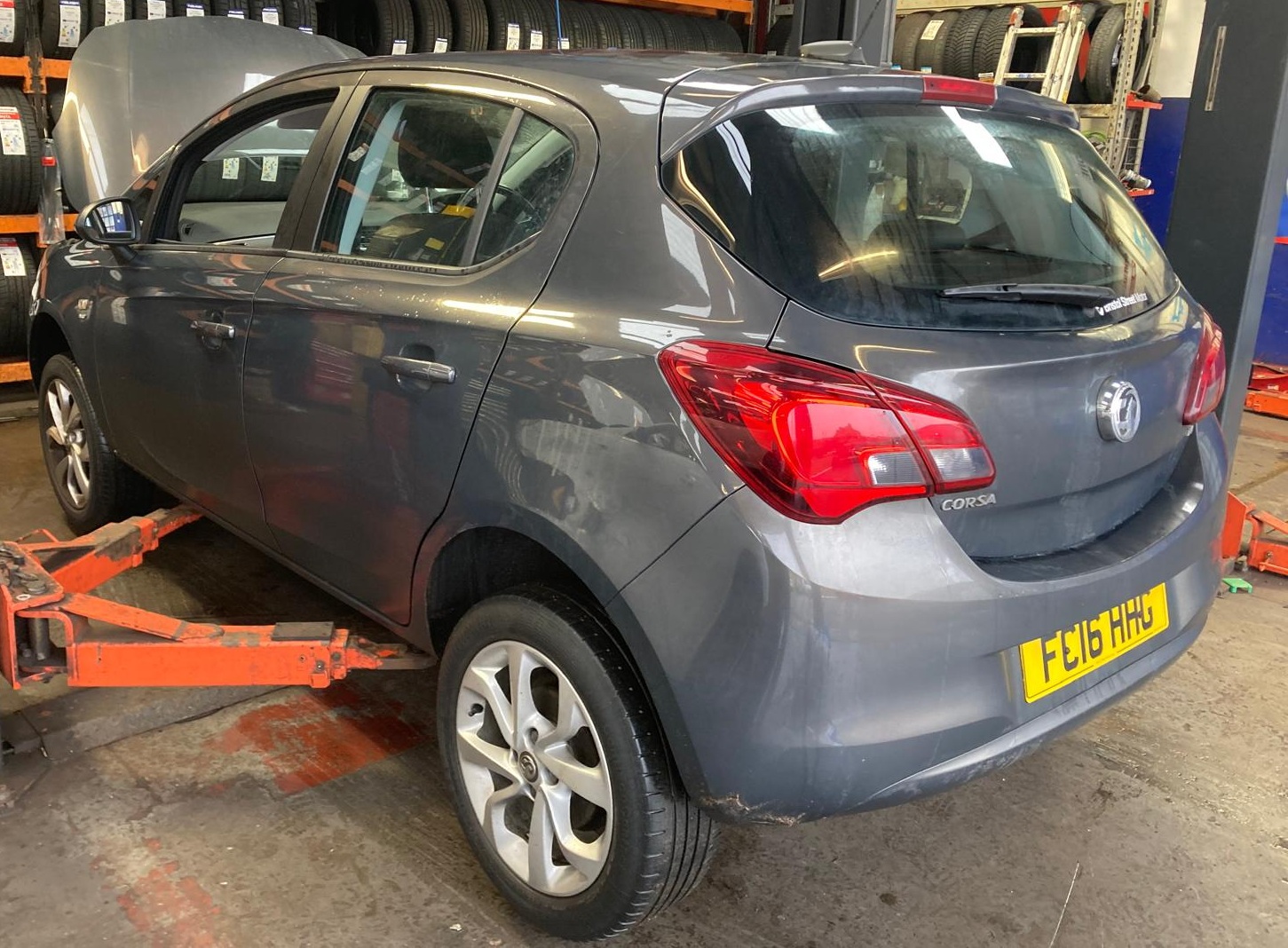
We had another fairly common job come through the doors at Pellon Tyres recently, this time involving a Vauxhall Corsa that had developed an unpleasant rattling and banging noise from the front end. The customer said it was especially noticeable over rough roads and potholes – which, let’s be honest, narrows it down to just about every road around Halifax and Calderdale these days.
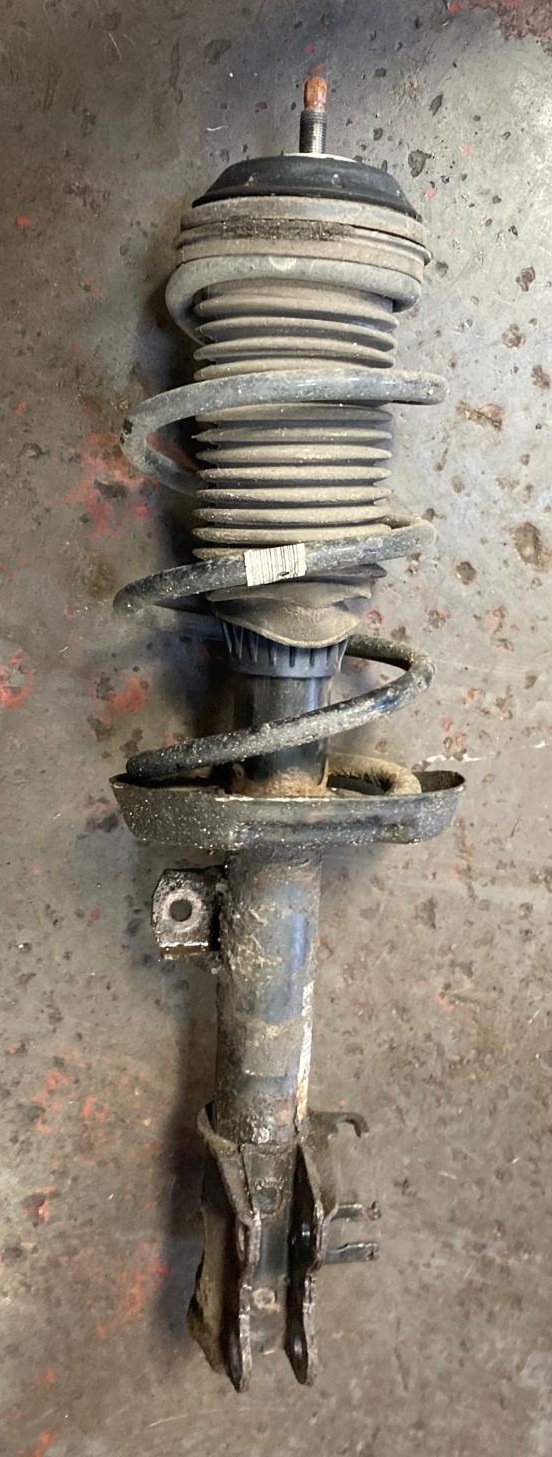
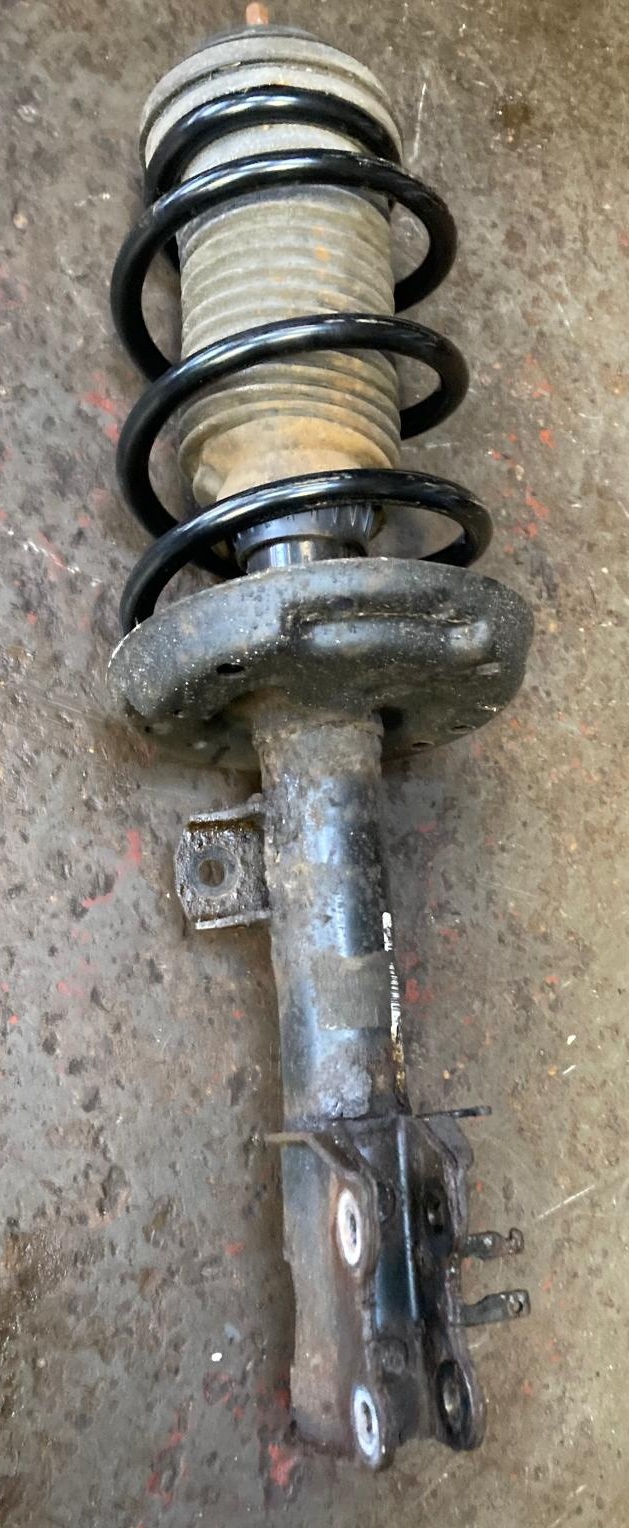
One of our technicians, Ethan, took the car in for inspection. It didn’t take long to find the cause. The Corsa had a broken front coil spring, something we see week in, week out, particularly on smaller hatchbacks that spend their lives on local stop-start journeys.
Once the problem was explained, the customer gave us the go-ahead, and Ethan got on with replacing the broken spring. Job done properly, noise gone, and the car back on the road the way it should be.
A bit of Vauxhall Corsa history in the UK: Broken Spring on a Vauxhall Corsa
The Vauxhall Corsa has been part of British motoring life since the early 1990s. First launched here in 1993, it quickly became one of the UK’s best-selling small cars. Affordable to buy, cheap to run, and easy to drive, it’s been a firm favourite with first-time drivers, commuters, and families needing a reliable second car.
Over the years, the Corsa has gone through several generations, growing slightly larger and more refined each time, but it’s always stuck to the same basic formula: practical, economical motoring that suits British roads and British driving habits.
In areas like Halifax, Sowerby Bridge, Elland, and Brighouse, the Corsa is everywhere. They’re used for school runs, local work, shopping trips, and longer motorway journeys over the Pennines. Because of that, they also see a fair amount of wear and tear underneath – especially on the suspension.
Broken Spring on a Vauxhall Corsa
Why do suspension springs break?
Broken springs are one of the most common faults we deal with, not just on Corsas but on many modern cars. There are a few main reasons why springs fail, and Calderdale’s roads don’t exactly help matters.
1. Potholes and rough road surfaces: Broken Spring on a Vauxhall Corsa
This is the big one. Hitting potholes regularly puts huge stress on suspension springs. Every sharp impact compresses the spring suddenly, and over time that constant shock loading weakens the metal. Around Halifax, with steep hills, patched roads, and winter damage, suspension parts really do take a battering.
2. Rust and corrosion
UK weather plays a big part. Road salt in winter, constant damp, and grit thrown up by tyres all attack the protective coating on the spring. Once rust sets in, the spring becomes weaker and more brittle. Eventually, it snaps – often right at the bottom coil where moisture sits.
3. Short journeys and stop-start driving: Broken Spring on a Vauxhall Corsa
Cars like the Corsa often spend their lives doing short trips. That means suspension never really gets a rest. Speed bumps, kerbs, tight parking spaces, and uneven roads all add up, especially in town driving around places like King Cross or Illingworth.
4. Age and mileage
Even without potholes, springs don’t last forever. Metal fatigues over time. A car might seem fine one day, then suddenly develop a knock or bang as the spring finally gives up.
Old coil spring in place
What does a broken spring sound like?
Customers often describe it as:
A rattling noise over bumps
A banging or clunking when turning
A scraping sound if the broken end rubs on the tyre
In some cases, the car may sit slightly lower on one corner. Left unchecked, a broken spring can cause tyre damage, affect steering, and lead to an MOT failure.
new coil spring fitted
The repair at Pellon Tyres
In this case, Ethan confirmed the broken spring during inspection and advised replacement. Springs should always be replaced carefully and using the correct tools – they store a lot of energy and aren’t something to mess about with.
Once the new spring was fitted, everything was reassembled and checked properly. The result was exactly what you’d expect: no more rattling, improved ride quality, and a safer car all round.
Final thoughts: Broken Spring on a Vauxhall Corsa
If your car starts making new noises from the suspension, especially after hitting potholes, it’s always worth getting it checked sooner rather than later. What starts as a small rattle can quickly turn into a bigger (and more expensive) problem.
Cars like the Vauxhall Corsa are tough little workhorses, but Calderdale roads are tough on cars. Regular checks and catching issues early can save a lot of hassle.
If you’re hearing knocks, bangs, or rattles from your car around Halifax, pop down to Pellon Tyres and we’ll take a proper look. As this Corsa proves, the right diagnosis makes all the difference.
https://www.pellonautocentre.com/wp-content/uploads/2024/07/pellon-tyres-logo-509x321.jpg00Eric Robertshttps://www.pellonautocentre.com/wp-content/uploads/2024/07/pellon-tyres-logo-509x321.jpgEric Roberts2026-01-10 10:35:262026-01-10 10:38:50Broken Spring on a Vauxhall Corsa
Nissan Juke Tyre Wear Problem – Why Wheel Alignment Matters More Than Ever
We recently had another customer come into Pellon Tyres here in Halifax with what they thought was a simple tyre problem on their Nissan Juke. The tyres were wearing badly on one side, and they were understandably worried about how quickly the rubber seemed to be disappearing.
A quick look told us straight away this wasn’t just “one of those tyres”. The wear pattern was classic wheel alignment trouble – excessive wear along one edge, while the rest of the tyre still had plenty of tread left.
What we found
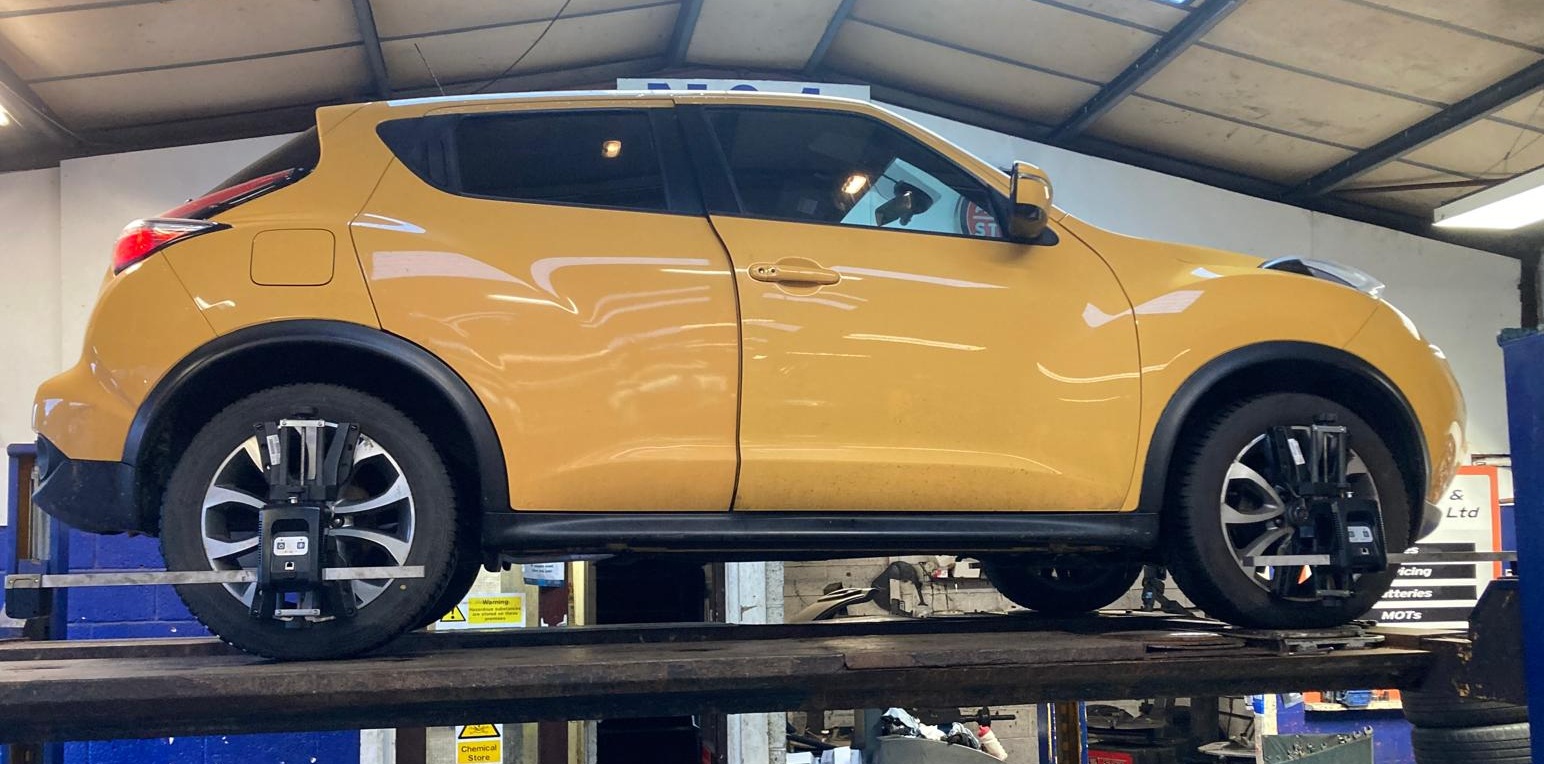
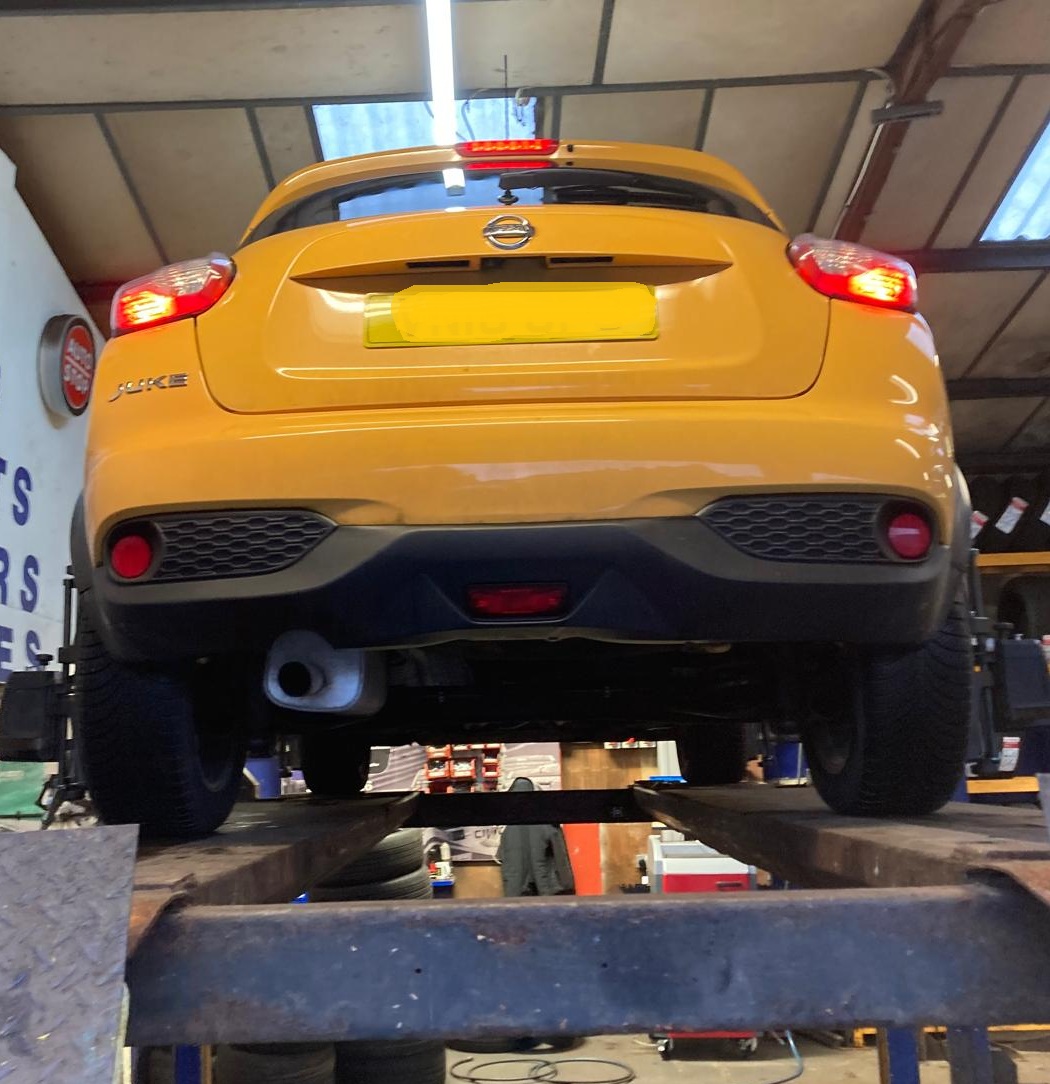
Once the Juke was in the workshop, we inspected all four tyres and suspension components. There were no obvious mechanical faults, no knocks or bangs reported, and nothing loose. The next step was to get the car properly tracked using our alignment equipment.
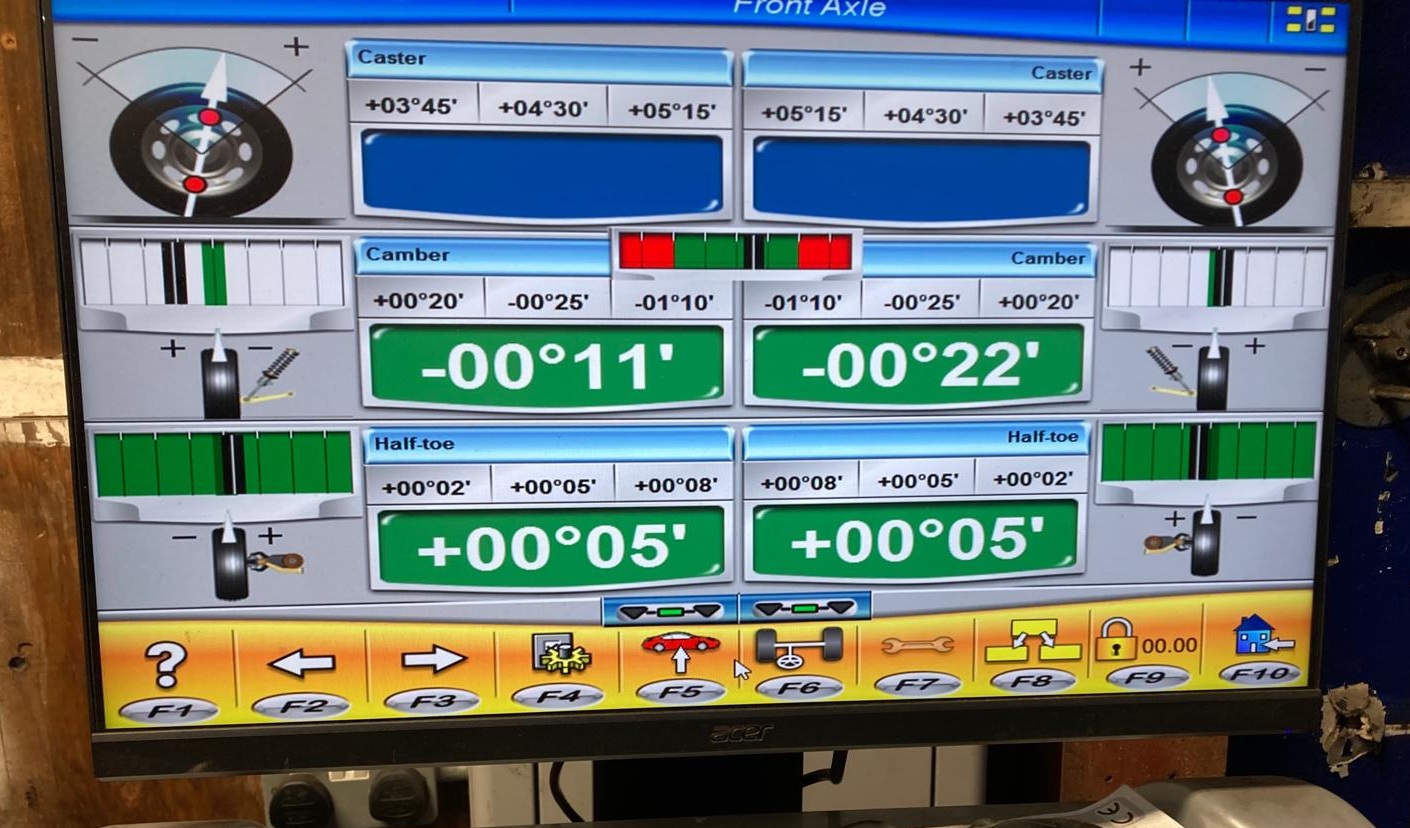
After the alignment check, it was clear the wheels were running out of specification. We corrected the alignment, then took the car out for a proper road test to make sure there was no steering pull and that everything felt straight and stable. Once done, the difference was immediate – steering centred correctly and no pulling to one side.
It’s a job we see week in, week out, especially on cars like the Nissan Juke.
Nissan Juke Tyre Wear Problem
A bit about the Nissan Juke in the UK: Nissan Juke Tyre Wear Problem
The Nissan Juke first appeared on UK roads in 2010, and love it or hate it, it certainly stood out. With its high driving position, compact size, and quirky looks, it quickly became popular with drivers wanting something practical but a bit different.
Around Halifax and Calderdale, the Juke makes a lot of sense:
Easy to park in town
Comfortable for longer runs over the tops
Good visibility on narrow lanes
Handles well in winter with the right tyres
Because they’re used for a mix of town driving, hill starts, school runs, and longer motorway trips, suspension and steering components do get a fair workout.
What causes wheel alignment problems?
Wheel alignment doesn’t usually go out overnight for no reason. In our area, there are some very common causes:
Potholes – and we’ve got no shortage of those around Calderdale
Hitting kerbs when parking
Speed bumps taken a bit too quickly
General wear and tear on suspension joints
Rough road surfaces, especially after winter
Even one decent pothole can be enough to knock alignment out slightly. The trouble is, you don’t always feel it straight away.
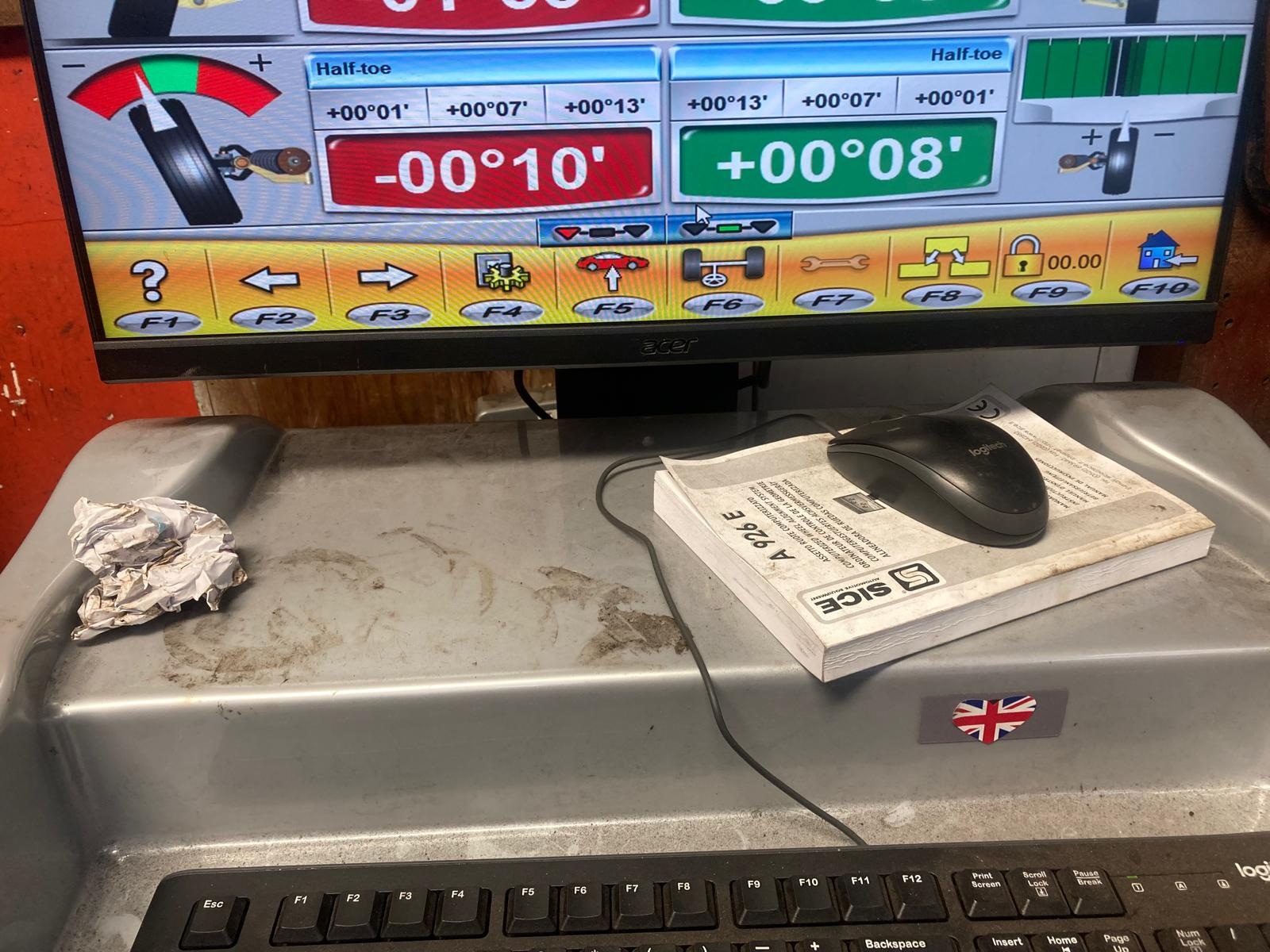
All’s good and green? Good to go
The signs to look out for: Nissan Juke Tyre Wear Problem
Uneven tyre wear is the biggest giveaway, but there are others:
Tyres wearing on one edge
The steering wheel not sitting straight
Car pulling left or right
Steering feeling vague or nervous
Poor fuel economy
On this Nissan Juke, the customer hadn’t noticed much difference in how it drove – but the tyres were telling the real story.
Why wheel alignment is so important now
With the price of new tyres these days, wheel alignment has never been more important. A tyre that should last 20–30,000 miles can be ruined in a few thousand if the alignment is out.
That means:
Money wasted
More frequent tyre replacements
Reduced safety, especially in wet weather
A simple alignment check costs a fraction of a new set of tyres and can save you hundreds of pounds in the long run.
Nissan Juke Tyre Wear Problem
Halifax roads and tyre wear – a local reality
Driving around Halifax, Elland, and Sowerby Bridge, or heading over towards Huddersfield, isn’t easy on cars. Steep hills, tight bends, rough surfaces, and constant stop-start driving all add up.
Throw in winter grit, frost damage, and the odd surprise pothole, and it’s no wonder we see so many alignment issues locally.
Cars like the Nissan Juke cope well with our roads, but they still need regular checks to keep them running properly and safely.
Our advice to local drivers: Nissan Juke Tyre Wear Problem
We always recommend a wheel alignment check if:
You’re fitting new tyres
You notice uneven wear
The car pulls to one side
You’ve hit a pothole or kerb
The steering wheel isn’t straight
As with this Juke, catching the problem early can mean the difference between saving tyres and replacing them far too soon.
At Pellon Tyres, we know the roads, we know the cars, and we know how quickly tyre wear can get out of hand if alignment is ignored. A quick check now can save a lot of money later.
https://www.pellonautocentre.com/wp-content/uploads/2024/07/pellon-tyres-logo-509x321.jpg00Eric Robertshttps://www.pellonautocentre.com/wp-content/uploads/2024/07/pellon-tyres-logo-509x321.jpgEric Roberts2025-12-24 13:55:112025-12-24 14:13:54Nissan Juke Tyre Wear Problem
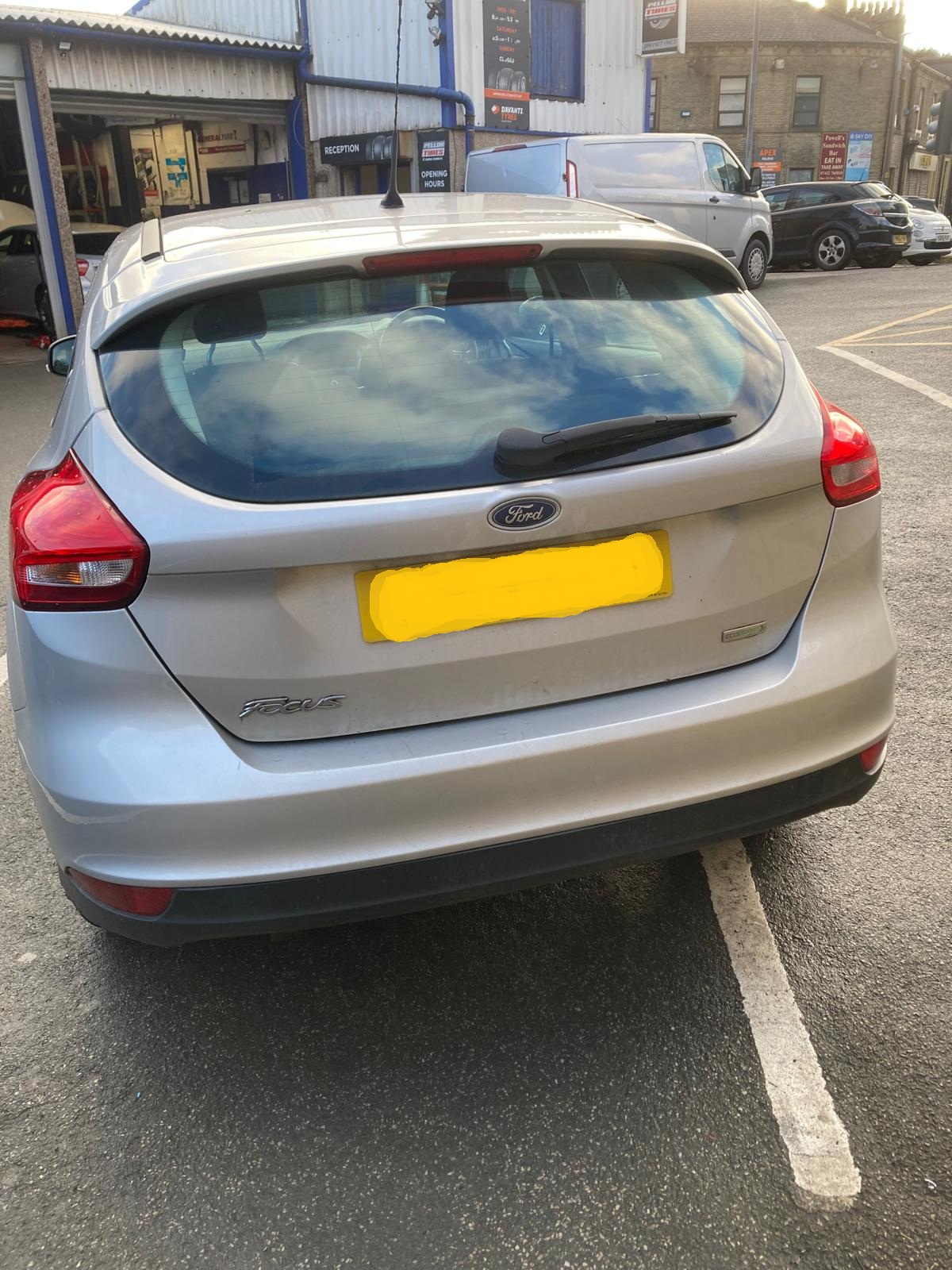
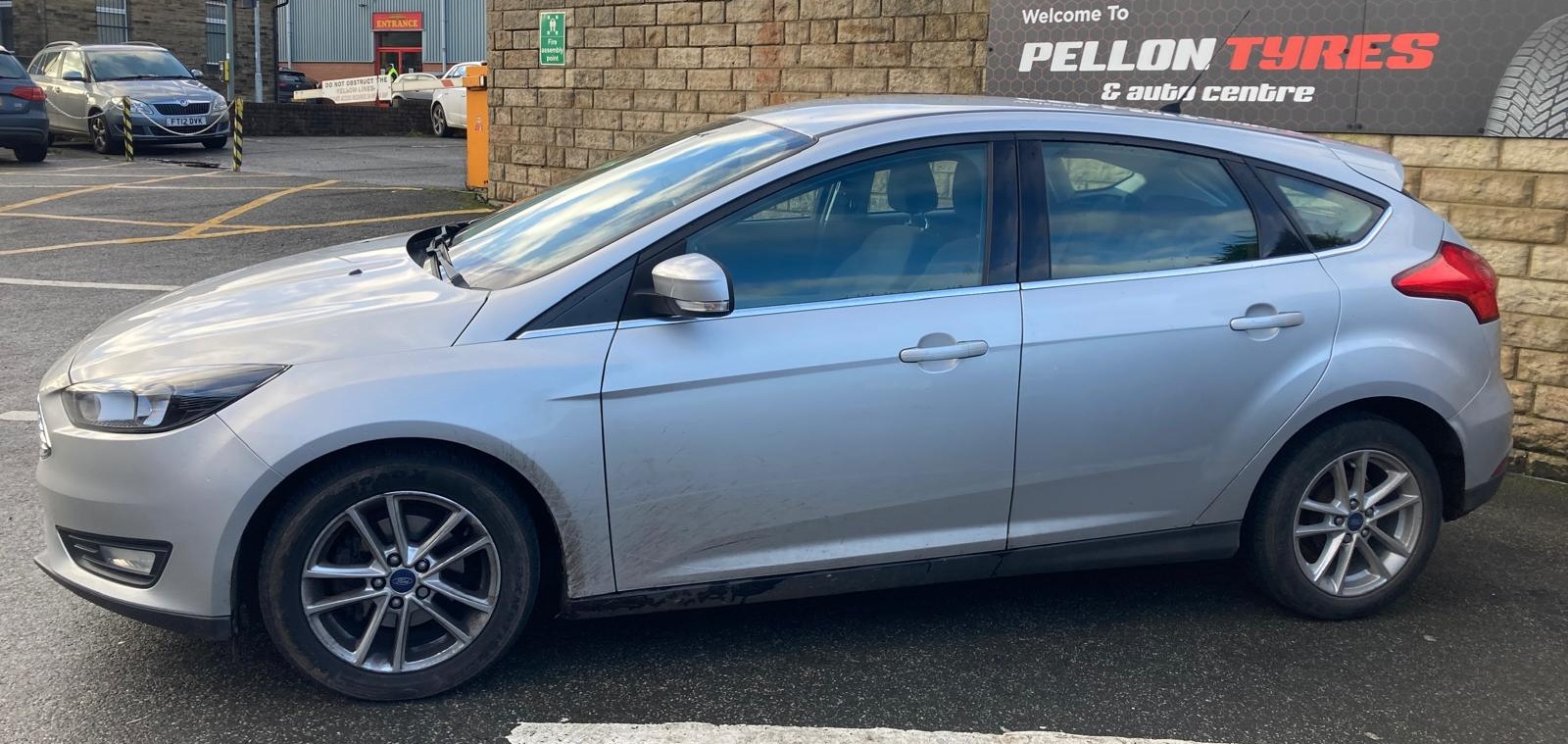
Ford Focus TPMS Warning Light – A Simple Fault with an Interesting History
We recently had a Ford Focus come into the workshop at Pellon Tyres with a warning light glowing away on the dashboard. One of those lights that worries drivers, even though the car still feels perfectly fine to drive.
The warning was for the TPMS system – that’s the Tyre Pressure Monitoring System – and as with most modern cars, it’s there to warn the driver if one or more tyres is losing pressure.
What was the problem?
On this Focus, the customer had already checked the tyres and couldn’t see anything obviously wrong. Pressures looked roughly OK, no nails visible, and no obvious flat tyre.
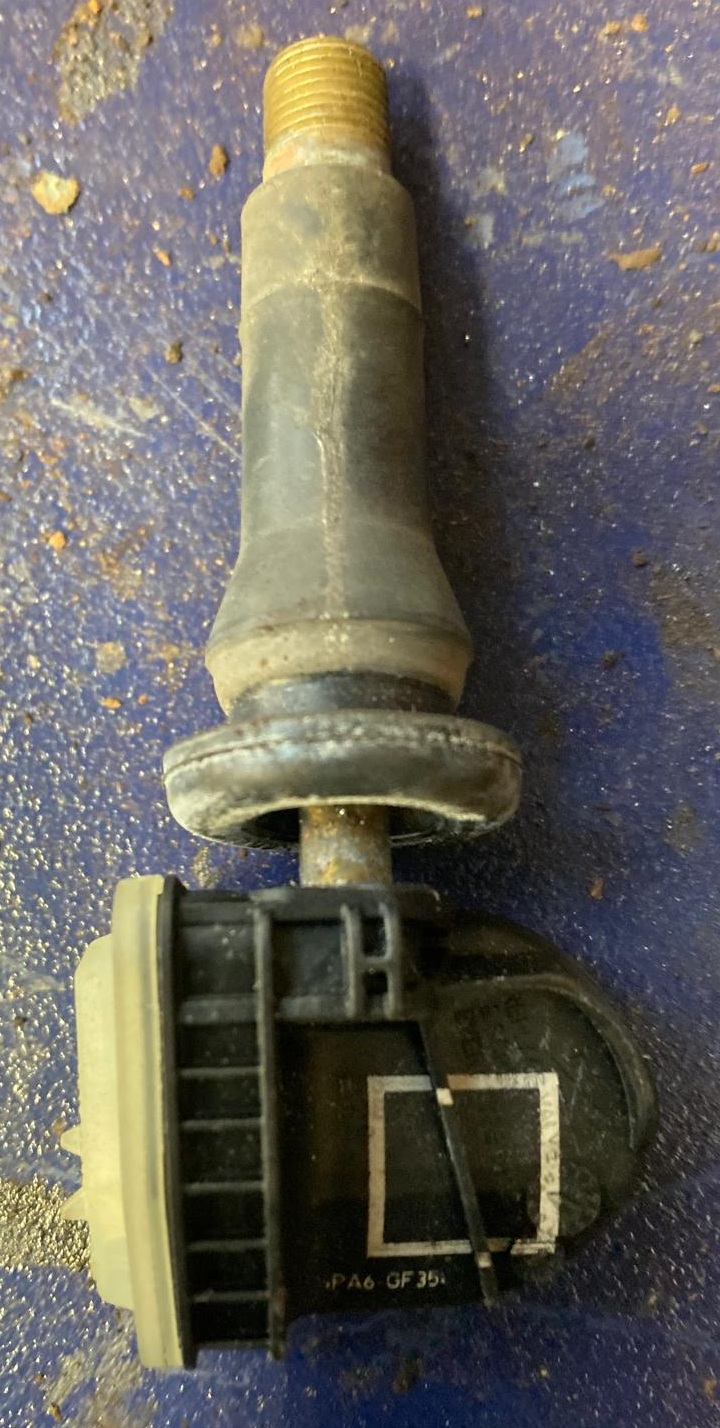
Once we got the car into the workshop and plugged in our diagnostic equipment, the fault became clear fairly quickly. The TPMS warning wasn’t actually caused by a puncture at all – it turned out to be a faulty TPMS valve sensor.
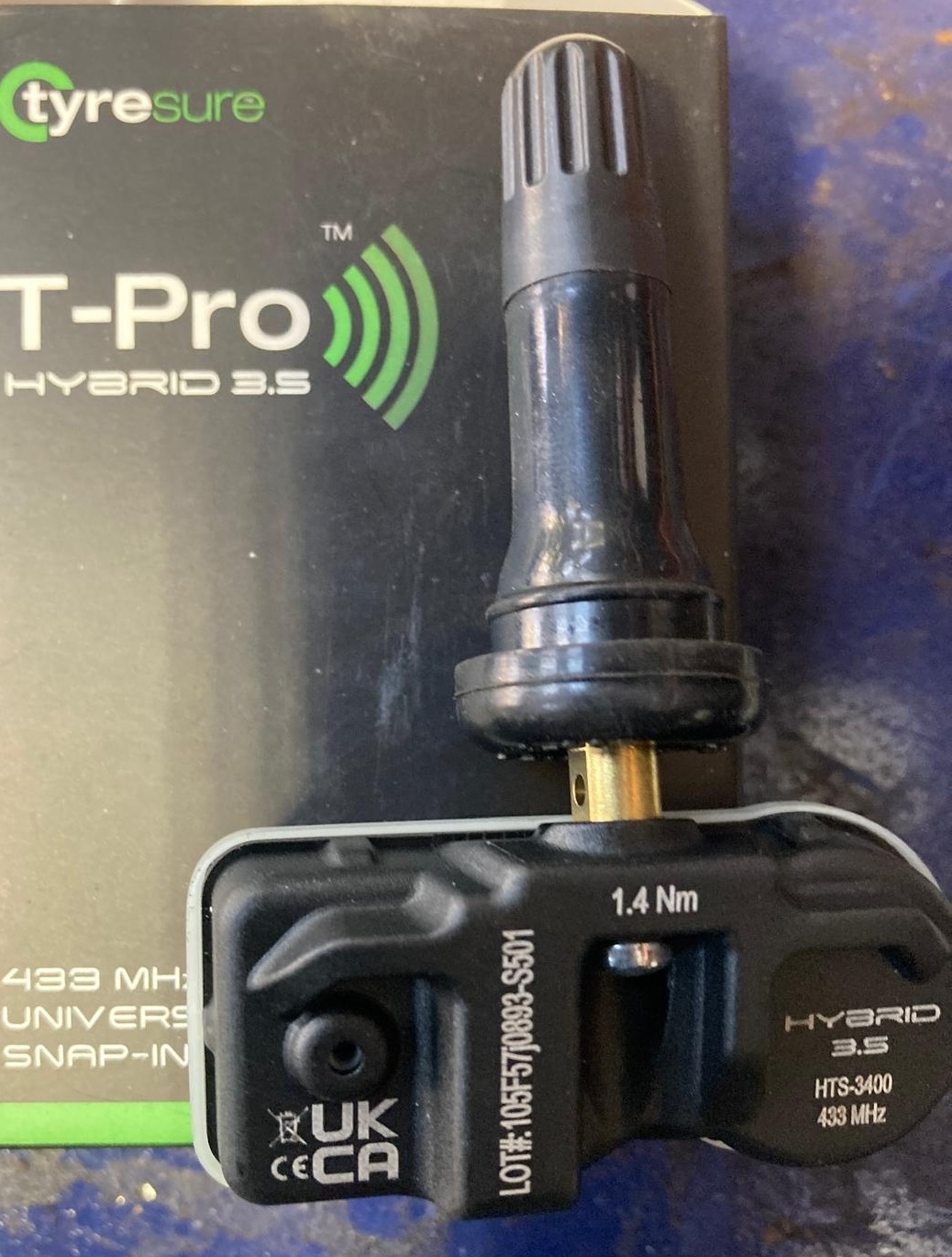
These valves sit inside the wheel and do two jobs at once:
They act as the tyre valve you inflate through
They contain a small electronic sensor and battery
In this case, the valve itself had failed. That can happen through age, corrosion, or sometimes just bad luck – especially on UK roads where salt, grit and potholes take their toll.
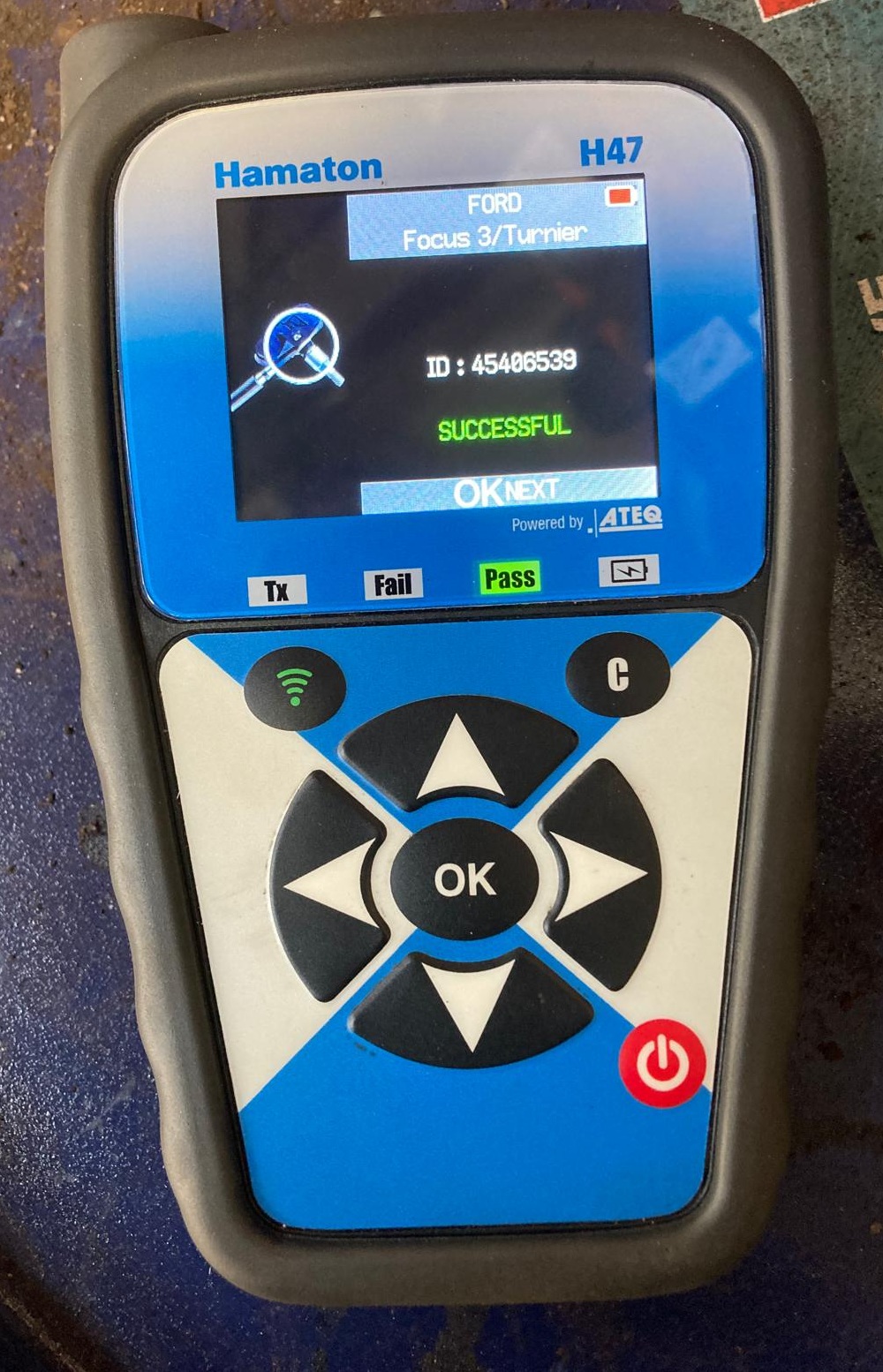
The fix was straightforward. We removed the tyre, replaced the faulty TPMS valve with a new one, rebalanced the wheel, and reset the system. Job done, warning light out, and one relieved customer.
Ford Focus TPMS Warning Light
A quick look at where TPMS came from: Ford Focus TPMS Warning Light
TPMS might feel like a modern nuisance at times, but it was actually invented for a very good reason – safety.
The idea of monitoring tyre pressure electronically dates back to the 1980s, but it really started to gain momentum in the 1990s, particularly in the United States. Serious accidents were being linked to under-inflated tyres, which can overheat, wear quickly, and in worst cases fail at speed.
After several high-profile tyre-related accidents, laws were introduced that pushed manufacturers to fit tyre pressure monitoring as standard.
In Europe and the UK, TPMS became mandatory on all new cars from November 2014. Since then, virtually every new car sold has some form of tyre pressure monitoring fitted.
Old broken TPMS valve
How TPMS works on cars like the Ford Focus
There are two main types of TPMS systems, but the Ford Focus uses the direct system, which means:
Each wheel has its own sensor built into the valve
The sensor measures tyre pressure directly
Data is sent wirelessly to the car’s computer
When pressure drops – or when a sensor fails – the warning light comes on.
The downside? Those little sensors have batteries sealed inside them. Over time, usually after 5–8 years, they can fail, just like the one on this Focus.
New TPMS valve ready to be fitted
Why TPMS is actually a good thing: Ford Focus TPMS Warning Light
Even though warning lights can be annoying, TPMS has definitely improved road safety. Correct tyre pressures mean:
Better braking
Improved fuel economy
Even tyre wear
Safer handling, especially in wet Yorkshire weather
Many drivers don’t routinely check tyre pressures anymore, so TPMS acts as a useful backup.
Quite often, as with this Ford Focus, it’s not a puncture at all – just a valve or sensor that’s reached the end of its life.
At Pellon Tyres, we deal with TPMS faults every week. Most are quick, affordable fixes once the real cause is identified.
TPMS Valve tester and reset machine
Ford Focus TPMS Warning Light – A Modern Fault on a Proper British Favourite
We recently had a Ford Focus booked in at Pellon Tyres here in Halifax with a warning light showing on the dashboard. It was the TPMS light – the tyre pressure monitoring system – one of those warnings that can make your heart sink even though the car feels perfectly fine to drive.
The customer had done what most sensible drivers do. They’d checked the tyres, couldn’t see anything flat, and the pressures looked about right. But the light wouldn’t go out, so they did the right thing and brought it down to us.
Finding the real fault
Once the Focus was in the workshop, we carried out a proper check and quickly narrowed it down to a faulty TPMS valve sensor. These valves are a bit cleverer than the old rubber ones many of us grew up with. They sit inside the wheel and constantly monitor tyre pressure, sending signals back to the car.
In this case, the valve itself had failed – not uncommon on UK roads. Between potholes, winter salt, grit, and plenty of stop-start driving around Calderdale, these components do take a hammering over time.
We removed the tyre, replaced the faulty valve with a new TPMS sensor, rebalanced the wheel, and reset the system. Warning light off, job sorted, and the Focus back on the road the same day.
A bit of history – where TPMS came from: Ford Focus TPMS Warning Light
Tyre Pressure Monitoring Systems might feel like a modern annoyance at times, but they were introduced for safety reasons. The technology began appearing in the 1990s, mainly in response to accidents caused by under-inflated tyres.
In the UK and across Europe, TPMS became mandatory on all new cars from November 2014. Since then, nearly every car we see through the doors at Pellon Tyres has some form of tyre pressure monitoring fitted.
The system is designed to:
Warn drivers of slow punctures
Improve road safety
Help reduce tyre wear and fuel consumption
The downside is that TPMS valves contain sealed batteries. After around 5 to 8 years, they can simply wear out – exactly what happened on this Focus.
The Ford Focus – a proper part of UK motoring history
The Ford Focus has been a familiar sight on British roads for over 25 years now. First launched in the UK in 1998, it replaced the much-loved Ford Escort – no small task at the time.
Early Focus models were a bit of a shock visually, but drivers soon warmed to them. They handled well, were comfortable, and were ideal for everything from commuting to family trips. Before long, they were everywhere – from Halifax town centre to the winding roads up towards Ogden and beyond.
Over the years, the Focus has gone through several generations, but it’s always kept the same basic appeal:
Sensible size
Good road manners
Affordable running costs
Easy availability of parts
That’s why we still see so many of them locally around Calderdale. They’re practical cars for real life, whether you’re nipping down to Sainsbury’s, heading over the tops in winter, or commuting out towards Huddersfield or Bradford.
Why TPMS matters in places like Halifax
Driving around Halifax and the wider Calderdale area isn’t always gentle on cars. Steep hills, sharp bends, rough road surfaces, and cold winters all put extra strain on tyres.
Correct tyre pressures make a real difference here:
Better grip on wet hill starts
More predictable braking
Reduced tyre wear on uneven roads
TPMS is there as a backup, especially for drivers who don’t regularly check pressures themselves. When it works properly, it’s a useful bit of kit.
Our advice to local drivers: Ford Focus TPMS Warning Light
As this Ford Focus showed, it isn’t always a puncture. Quite often it’s just a valve sensor that’s reached the end of its life.
At Pellon Tyres, we see these faults every week. We know the cars, we know the roads, and we know what Halifax driving does to them over time. Most TPMS problems are straightforward to fix once diagnosed properly.
If in doubt, pop in and have a word – that’s what we’re here for.
VW up! Rear Brake Problems – A Common Cause of Poor Braking and Noises
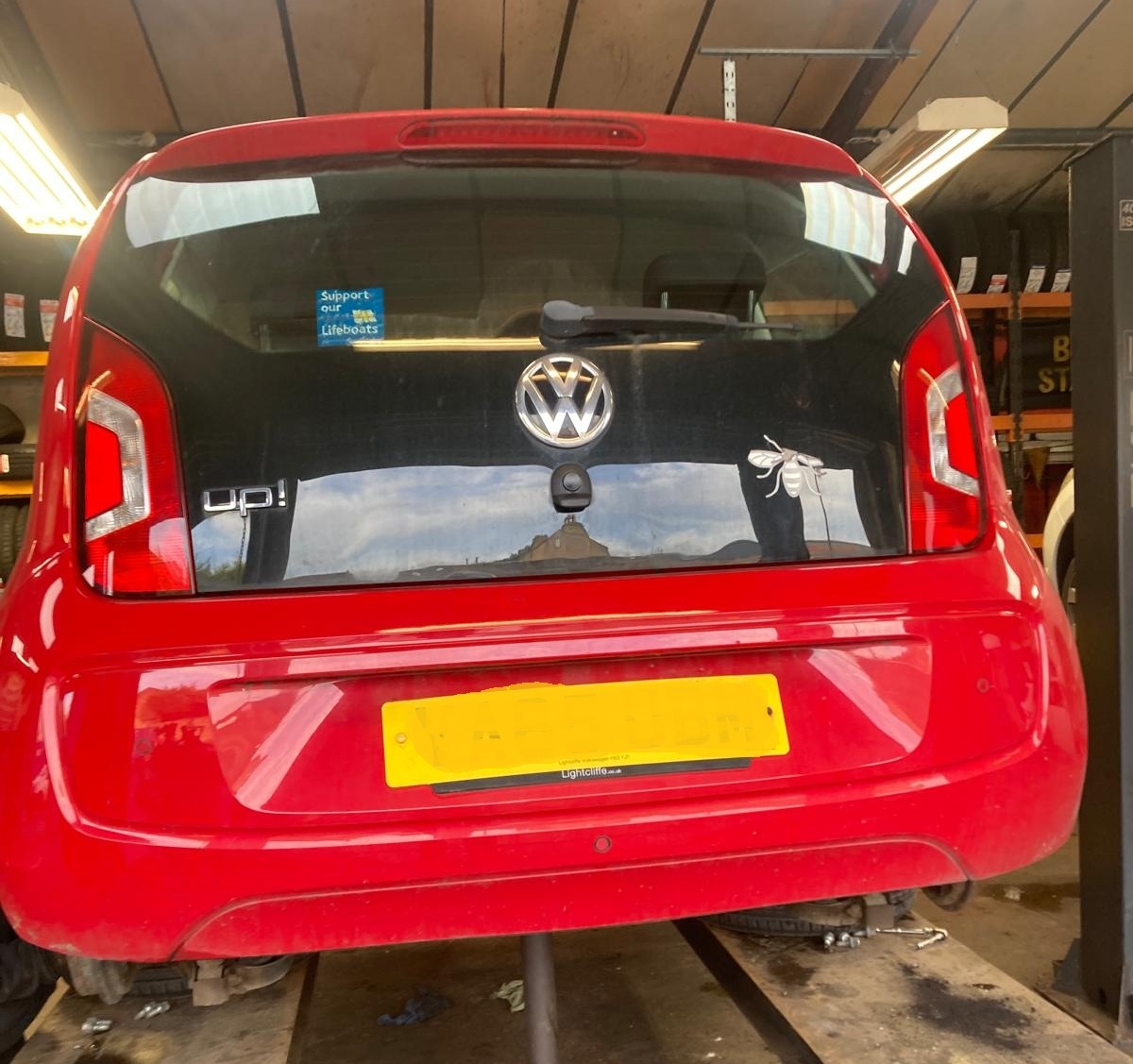
The other day at Pellon Tyres in Halifax, we had a VW up! brought in by a worried driver. The car just didn’t feel right. There were odd noises coming from the rear when braking, and the overall performance felt sluggish and unpredictable.
Like many motorists around Calderdale, the customer was concerned it might turn into a big repair bill – and with Christmas just around the corner, that’s the last thing anyone wants.
Thankfully, after a proper inspection by Ethan, the issue turned out to be something we see quite regularly on smaller cars, especially ones used for local driving.
What Was the Problem? VW Up with Seized brakes
Once the wheels were off and the rear brakes inspected, the fault became clear straight away.
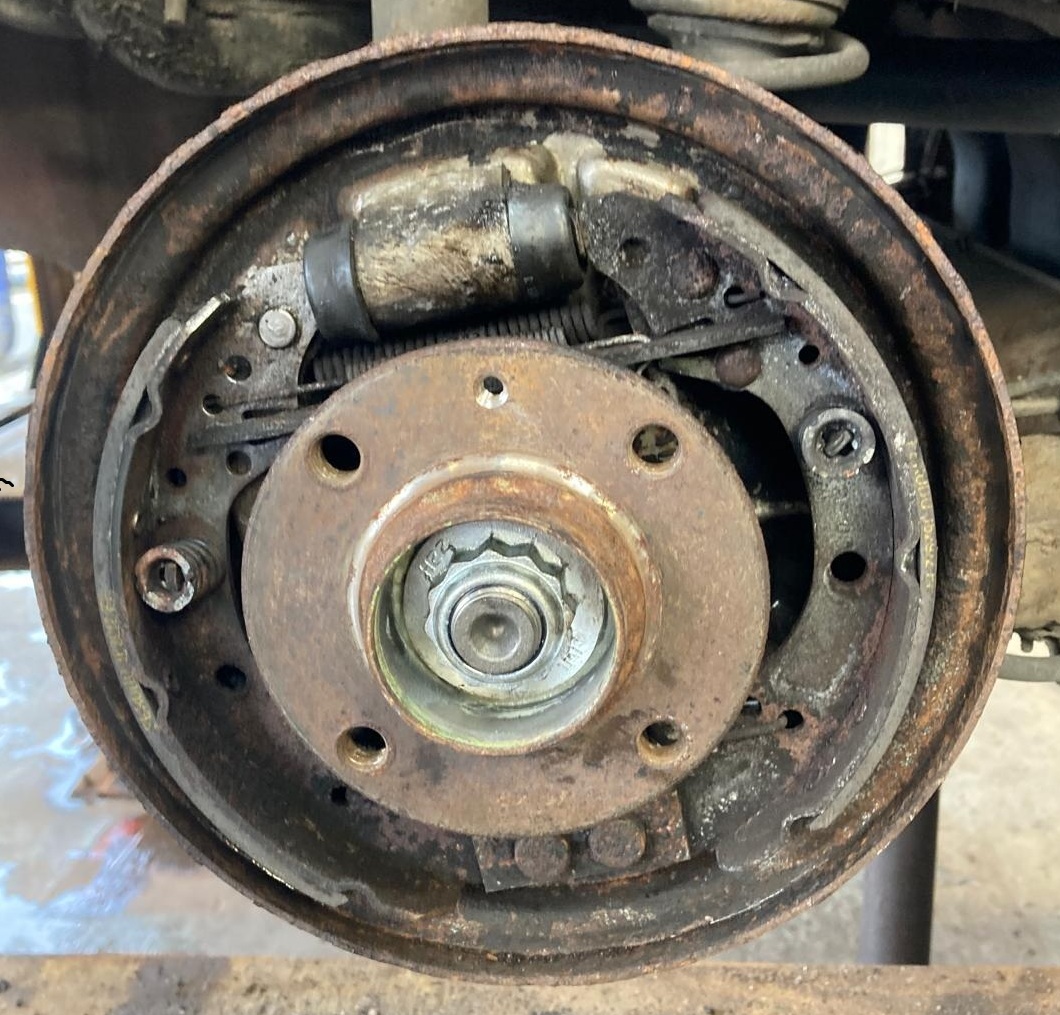
The rear brake shoes were completely seized.
On the VW up!, the rear brakes use drum brakes rather than discs. Inside the drum is a set of brake shoes, springs, adjusters and handbrake mechanisms. Over time, especially in areas like Halifax where we get plenty of rain, road salt, and hills, these components can:
Corrode
Dry out
Stick in place
Seize completely
In this case, the shoes weren’t releasing properly after braking. That causes:
Noises from the rear
Poor braking performance
Dragging brakes
Reduced fuel economy
A car that just doesn’t feel right to drive
Left untreated, seized rear shoes can also lead to overheating and even brake failure.
VW Up with Seized brakes
Why Rear Brakes Seize Up on Cars Like the VW up!
Small city cars like the VW up! are often used for:
Short journeys
School runs
Shopping trips
Local commuting around town
That means the rear brakes don’t always get worked as hard as the fronts. Add in Calderdale’s damp climate and winter road salt, and the rear brake mechanisms can quietly seize up without the driver realising.
We see this a lot on cars that:
Sit unused for a few days
Are driven gently most of the time
Haven’t had the rear brakes stripped and serviced for a while
VW Up with Seized brakes
The Repair – No Massive Bill, Just Proper Garage Work
Rather than replacing everything unnecessarily, Ethan did what good garages should always do first.
We:
Stripped down the rear brake assemblies
Removed all the shoes and hardware
Cleaned everything thoroughly
Freed off the seized adjusters and handbrake mechanism
Lubricated the correct contact points using special high-temperature brake grease
Reassembled and adjusted the brakes properly
Once rebuilt, everything moved freely again.
Eureka! The brakes were back to normal, the noises had gone, and the car drove exactly as it should.
Best of all, the customer avoided a large repair bill – something we know is hugely appreciated, especially in the run-up to Christmas.
A Bit of History – The VW up! in the UK: VW Up with Seized brakes
The Volkswagen up! was introduced to the UK in 2012 as a compact, economical city car. It quickly became popular with:
First-time drivers
Older motorists
People needing a reliable second car
Drivers doing lots of town driving
Its strengths include:
Low running costs
Good fuel economy
Simple, reliable engineering
Surprisingly solid build quality for a small car
However, like all cars, the up! still needs proper maintenance – and brakes are a big part of that.
VW Up with Seized brakes
Why Regular Brake Checks Matter in Halifax & Calderdale
Driving around Halifax and the surrounding Calderdale area puts extra strain on brakes:
Steep hills
Stop-start traffic
Wet roads
Cold winter weather
Gritted roads
Rear brakes in particular can quietly deteriorate because drivers don’t always feel the problem straight away.
That’s why we always recommend:
Regular brake inspections
Servicing rear brakes, not just replacing pads
Checking handbrake operation
Sorting small issues before they become big ones
A Happy Customer – The Best Result: VW Up with Seized brakes
After the repair, the customer left knowing:
The problem had been properly diagnosed
The brakes were safe and working correctly
There was no massive bill
The car was ready for winter driving
That’s what we aim for at Pellon Tyres – honest advice, sensible repairs, and keeping people safely on the road without spending money they don’t need to.
VW Up! Rear Brake Problems in Halifax – A Common Issue with a Happy Ending
Just before Christmas, we had a driver bring in their VW Up! to us here at Pellon Tyres & Autocentre in Halifax. The owner was worried the car wasn’t performing as it should and had started making worrying noises from the rear when braking. It’s the sort of thing that instantly sets alarm bells ringing, especially at this time of year when nobody wants an unexpected repair bill.
The VW Up! is a popular little car around Halifax and Calderdale. It’s compact, economical, easy to park on tight streets, and ideal for town driving. You see plenty of them pottering about locally, from Sowerby Bridge to Illingworth, often used as a daily runabout or first car. Because they’re generally very reliable, unusual noises tend to worry owners more than usual.
First Checks in the Workshop
One of our technicians, Ethan, got the VW Up! straight onto the ramp to have a proper look. The customer explained that the noise seemed to come from the back of the car, especially when braking, and that the car didn’t feel quite right.
Rear brake noises are something we see fairly often, particularly on cars that use rear drum brakes, like the VW Up!. These systems are robust and long-lasting, but they do have one weakness – they don’t always get enough use to keep everything moving freely.
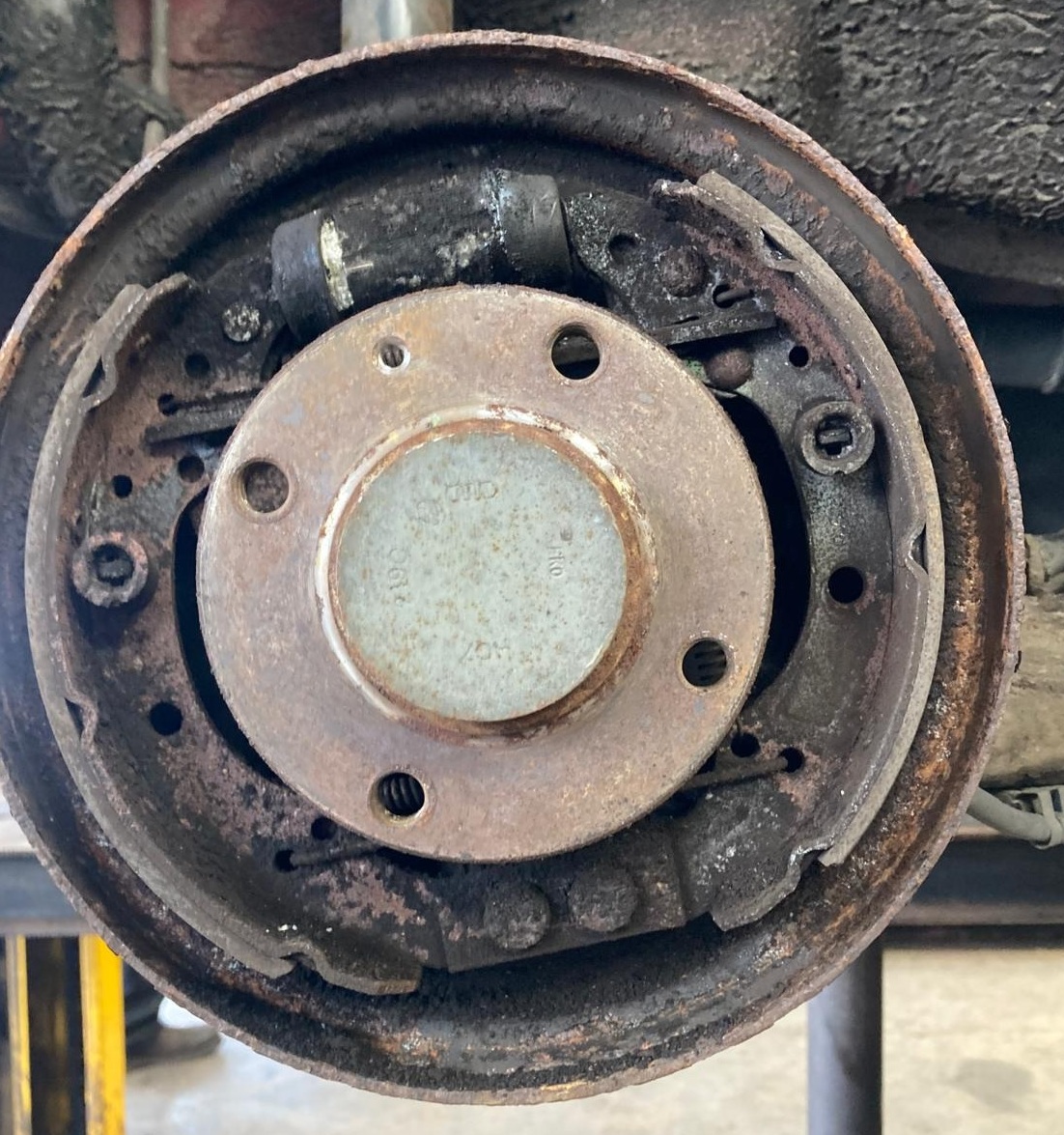
Once the rear wheels and drums were removed, the problem became clear straight away.
Rear Brake Shoes Completely Seized
Both rear brake shoes and the operating mechanism were completely seized. This meant the brakes weren’t releasing properly, causing drag, noise, and poor performance. In some cases, this can even lead to overheating or uneven braking if left unchecked.
This kind of fault doesn’t usually happen overnight. It builds up gradually due to a combination of:
Moisture getting inside the brake drums
Road salt (especially in Calderdale winters)
Light usage of the rear brakes
The handbrake mechanism sticking over time
Many VW Up! cars are driven gently around town, and the rear brakes don’t always get a proper workout. Over time, the internal components dry out, corrode slightly, and eventually seize.
The Good News – No Massive Bill: VW Up with Seized brakes
Here’s where the relief kicked in for the customer.
Instead of needing brand new brake shoes, wheel cylinders, or a full rebuild, Ethan was able to strip everything down, clean all the components thoroughly, and free off the seized parts. The mechanism was carefully cleaned and then lubricated using special high-temperature brake grease, designed specifically for brake systems.
Once everything was rebuilt and adjusted correctly, the brakes were tested and worked exactly as they should.
Eureka! The noise had gone, the brakes were operating smoothly, and the handbrake felt right again.
Best of all, the customer avoided a big repair bill just before Christmas – something we know makes a huge difference at this time of year.
A Bit of History – The VW Up! in the UK
The VW Up! was introduced to the UK in 2012 as Volkswagen’s answer to small city cars. Built to be simple, economical, and practical, it quickly became popular with first-time drivers, older motorists, and families needing a second car.
In areas like Halifax and Calderdale, where roads can be narrow, hilly, and busy, the Up! fits in perfectly. It’s easy to drive, cheap to run, and generally very dependable – provided it’s looked after properly.
However, like many modern small cars, rear drum brakes can suffer from lack of movement, especially if the car does short journeys or sits unused for periods.
Why Regular Brake Checks Matter: VW Up with Seized brakes
This job is a perfect example of why regular brake inspections are so important. A seized rear brake doesn’t always show obvious symptoms straight away. Often it’s a slight noise, reduced performance, or increased fuel consumption.
Catching the problem early meant we could fix it properly and affordably.
Here at Pellon Tyres & Autocentre, we always try to repair rather than replace where it’s safe to do so. It saves our customers money and keeps perfectly good parts in use.
A Happy Customer on the Road Again: VW Up with Seized brakes
The customer left happy, relieved, and confident that their VW Up! was back to normal. No scary warning lights, no grinding noises, and no massive bill – just a well-sorted car ready for winter driving around Calderdale.
If your car is making unusual noises, especially when braking, it’s always worth getting it checked sooner rather than later. Often, like this one, the solution is simpler than you might think.
https://www.pellonautocentre.com/wp-content/uploads/2024/07/pellon-tyres-logo-509x321.jpg00Eric Robertshttps://www.pellonautocentre.com/wp-content/uploads/2024/07/pellon-tyres-logo-509x321.jpgEric Roberts2025-12-20 09:29:192025-12-20 09:49:11VW Up with Seized brakes
Bridgestone Tyres for Honda Civic – A Trusted Combination on Yorkshire Roads
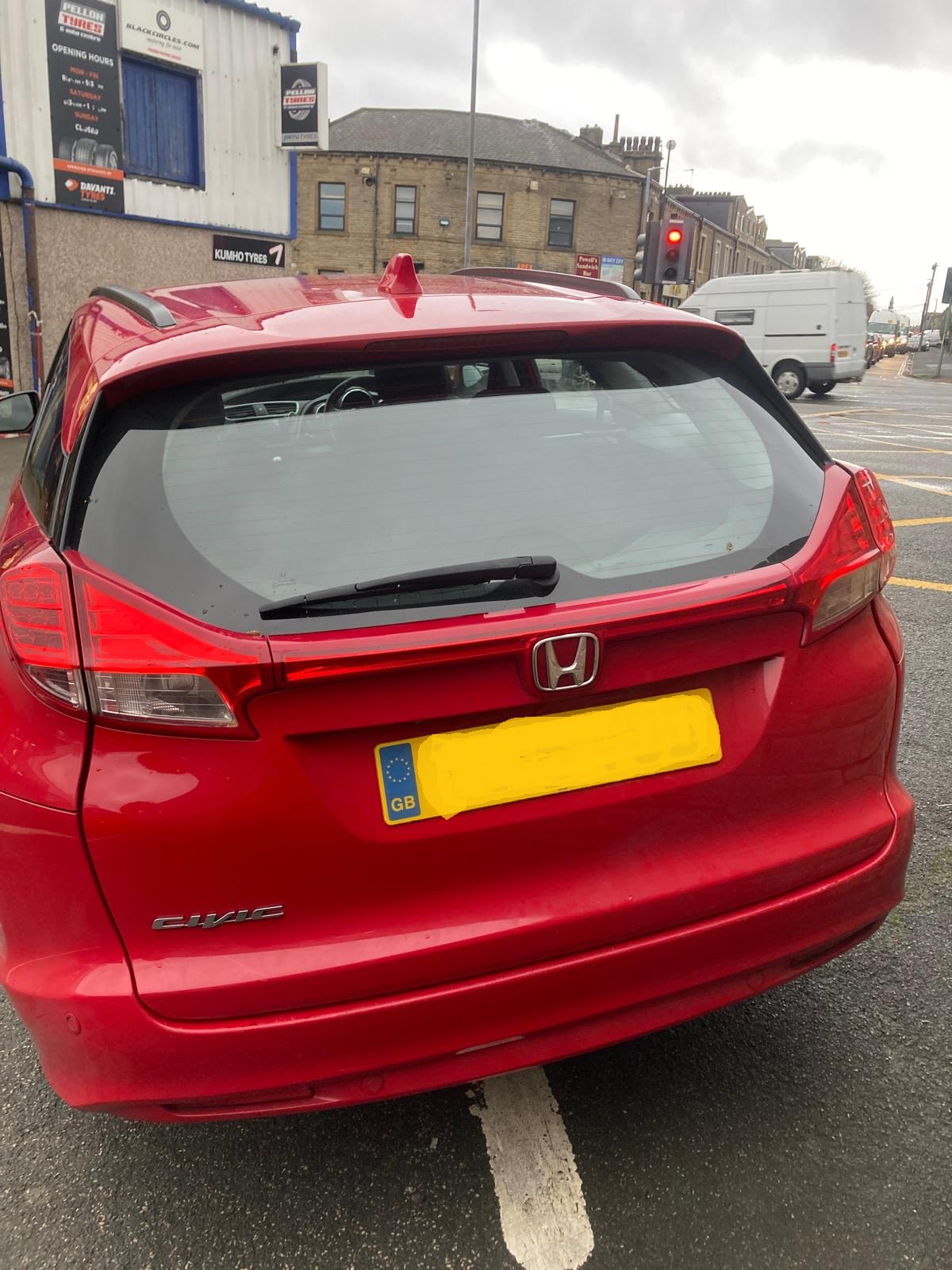
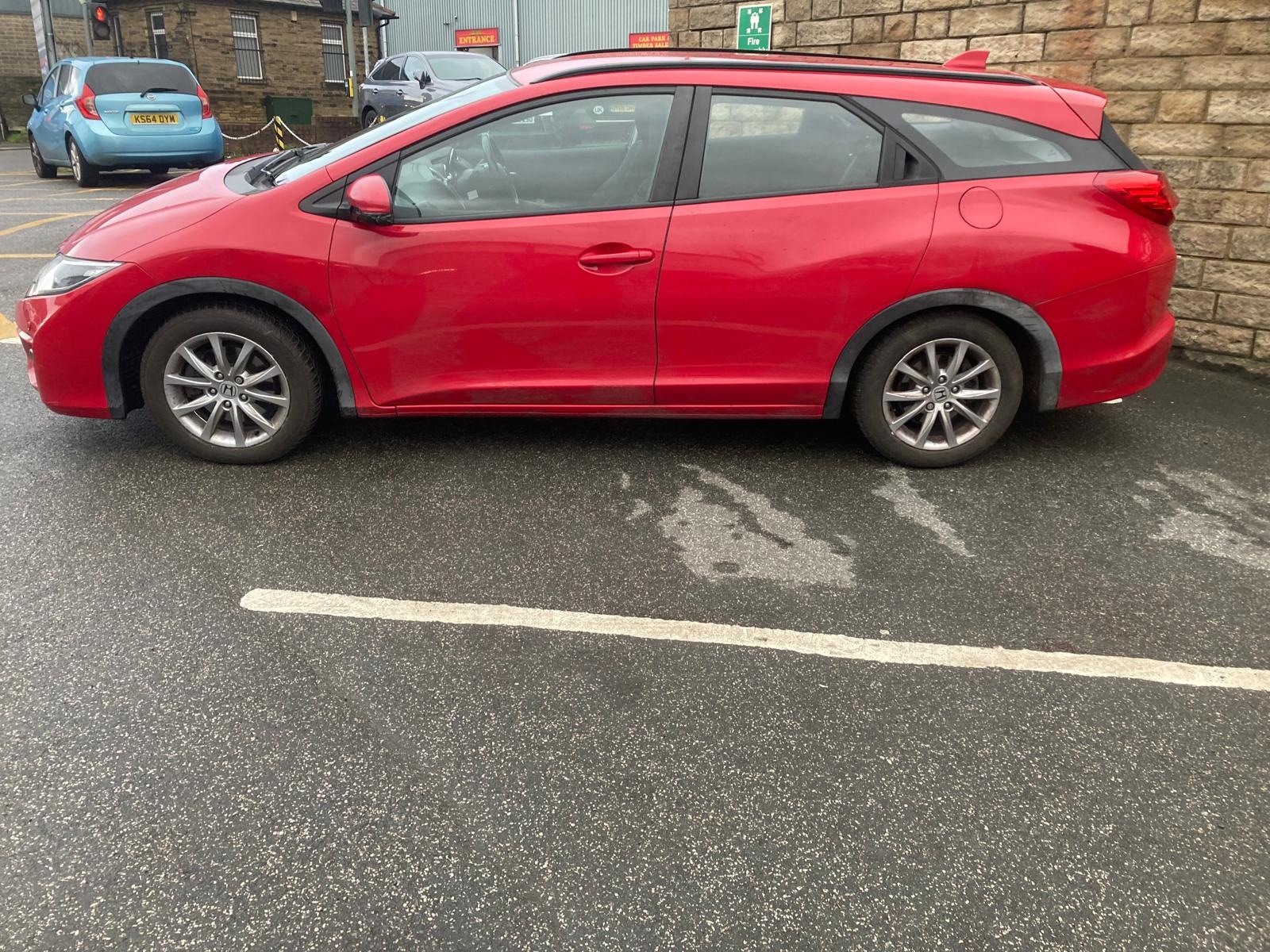
The other day we were visited at Pellon Tyres & Autocentre in Halifax by the owner of a Honda Civic, who had popped in for a free tyre check. It’s something we encourage, especially with the state of our local roads around Calderdale — potholes, worn surfaces, and plenty of standing water when the weather turns.
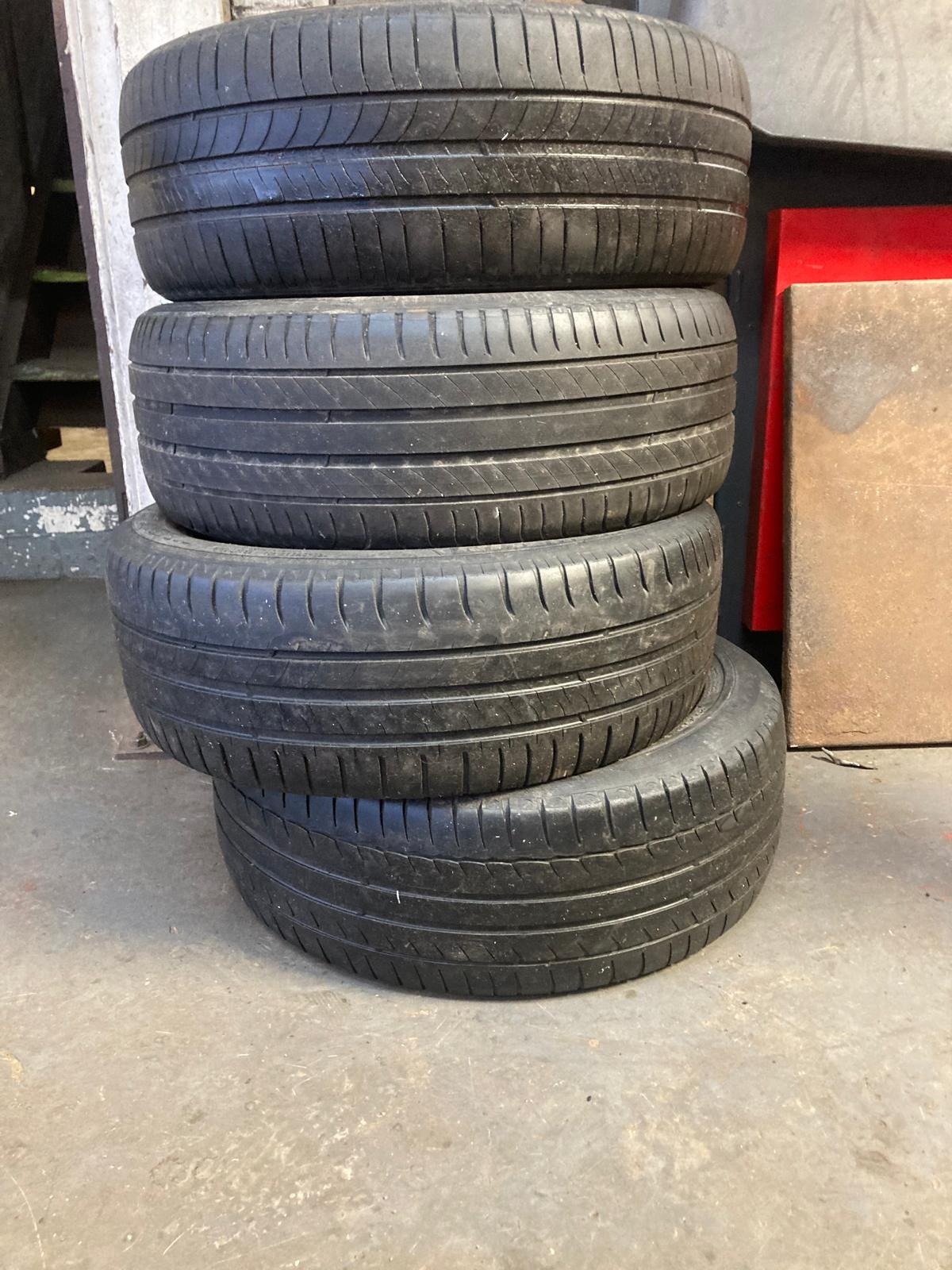
On inspection, it was clear the Civic needed four new tyres. There was no messing about or hesitation from the driver — he already knew what he wanted.
“I’ll have Bridgestones,” he said. “I’ve had good mileage out of them before.”
That sort of comment is something we hear time and time again, and it’s a perfect starting point for talking about why Bridgestone tyres and the Honda Civic make such a good pairing, especially on UK roads — and particularly here in West Yorkshire.
Bridgestone Tyres for Honda Civic
A Bit About Bridgestone – Built on Longevity: Bridgestone Tyres for Honda Civic
Bridgestone isn’t a new name that’s popped up overnight. The company was founded in Japan back in 1931, and over the decades it’s grown into one of the world’s largest tyre manufacturers.
What Bridgestone has always focused on is:
Long tread life
Consistent performance
Strong wet-weather grip
Reliability over thousands of miles
That’s why many drivers, once they’ve had a good set, stick with the brand.
Here in Halifax, where we see plenty of stop-start driving, steep hills, and wet roads most of the year, a tyre that wears evenly and keeps its grip is worth its weight in gold.
Bridgestone and the UK Market: Bridgestone Tyres for Honda Civic
Bridgestone has been a familiar sight on UK cars for decades. You’ll find them:
As original equipment on many new cars
Widely used in motorsport
Fitted to everyday family cars, company vehicles, and commuters
They’ve invested heavily in UK-specific tyre development, taking into account:
Our damp climate
Cooler temperatures
Rougher road surfaces
Motorway and town driving combined
That’s particularly relevant around Calderdale, where a typical journey might involve tight town roads, dual carriageways, and steep Pennine routes all in one trip.
old tyres removed
The Honda Civic – A British Favourite
The Honda Civic has a long and loyal following in the UK. Since the 1970s, it’s been known for being:
Reliable
Economical
Comfortable
Well-built
Many Civics sold in the UK were manufactured at Honda’s Swindon plant, which gave the car a strong British connection until production ended there in 2021.
Around Halifax and Calderdale, the Civic has always been popular with:
Commuters
Young families
Older drivers wanting reliability
Tradespeople who want a dependable runabout
We see Civics of all ages come through our doors — some immaculate, some a bit battle-scarred by Yorkshire roads, but many still going strong well past the 100,000-mile mark.
Why Bridgestone Works So Well on a Civic: Bridgestone Tyres for Honda Civic
The Honda Civic is well balanced, with responsive steering and a fairly firm suspension setup. Because of that, tyre choice makes a noticeable difference.
Bridgestone tyres complement the Civic by offering:
Good steering feedback
Strong braking performance in the wet
Even wear across the tread
Reduced road noise compared to cheaper alternatives
For drivers who do a mix of town driving in Halifax, A-road runs, and the odd motorway trip, Bridgestone tyres tend to give a long service life, which is exactly what our customer was talking about.
Bridgestone Tyres for Honda Civic
Mileage Matters – Especially These Days
Let’s be honest — tyres aren’t cheap, and nobody wants to be replacing them any more often than necessary.
One of the main reasons customers choose Bridgestone again is mileage. We regularly see Bridgestone tyres coming off cars with:
Good tread depth remaining
Even wear patterns
No premature shoulder wear
That tells us the tyre has been doing its job properly.
In an area like Calderdale, where road surfaces can be unforgiving and potholes are a daily worry, a well-constructed tyre can save money in the long run.
Free Tyre Checks – Why They Matter
This particular customer came in for a free tyre check, and it’s a good reminder of why we offer them.
Many drivers don’t realise how quickly tyres can wear, especially:
Front tyres on front-wheel-drive cars like the Civic
Cars driven regularly up and down hills
Vehicles used for short journeys with lots of steering input
And sometimes, as in this case, it simply helps the driver plan ahead and choose the tyres they trust.
A Local Approach at Pellon Tyres
At Pellon Tyres & Autocentre, we don’t push tyres people don’t want. If a customer comes in asking for Bridgestones because they’ve had a good experience before, we’re happy to supply and fit them.
We also understand the driving conditions around Halifax, Calderdale, and the surrounding villages, and we’ll always give honest advice based on how and where the car is used.
Whether it’s a Honda Civic, a family hatchback, or a work vehicle, the aim is the same:
Fit the right tyres for the right car for the right roads.
Final Thoughts: Bridgestone Tyres for Honda Civic
The combination of Bridgestone tyres on a Honda Civic is a proven one. It’s built on years of real-world driving, not marketing slogans.
For drivers around Halifax who want:
Reliability
Good mileage
Strong wet-weather performance
Peace of mind
…it’s easy to see why Bridgestone remains such a popular choice.
And if you’re ever unsure about the condition of your tyres, just pop in—a free tyre check could save you trouble and money further down the road.
Peugeot 207 Brake Warning Light – When an ABS Fault Is the Real Problem
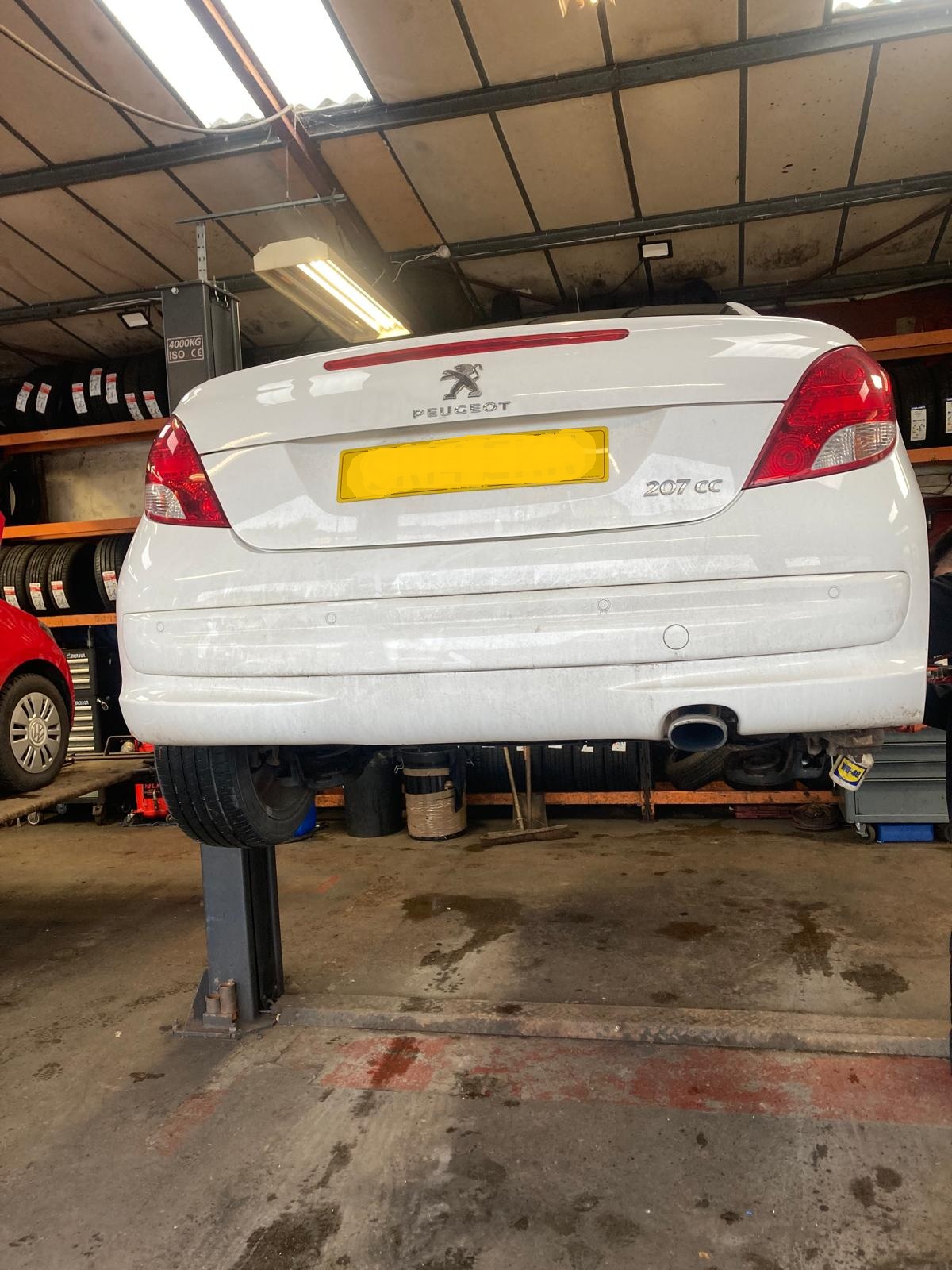
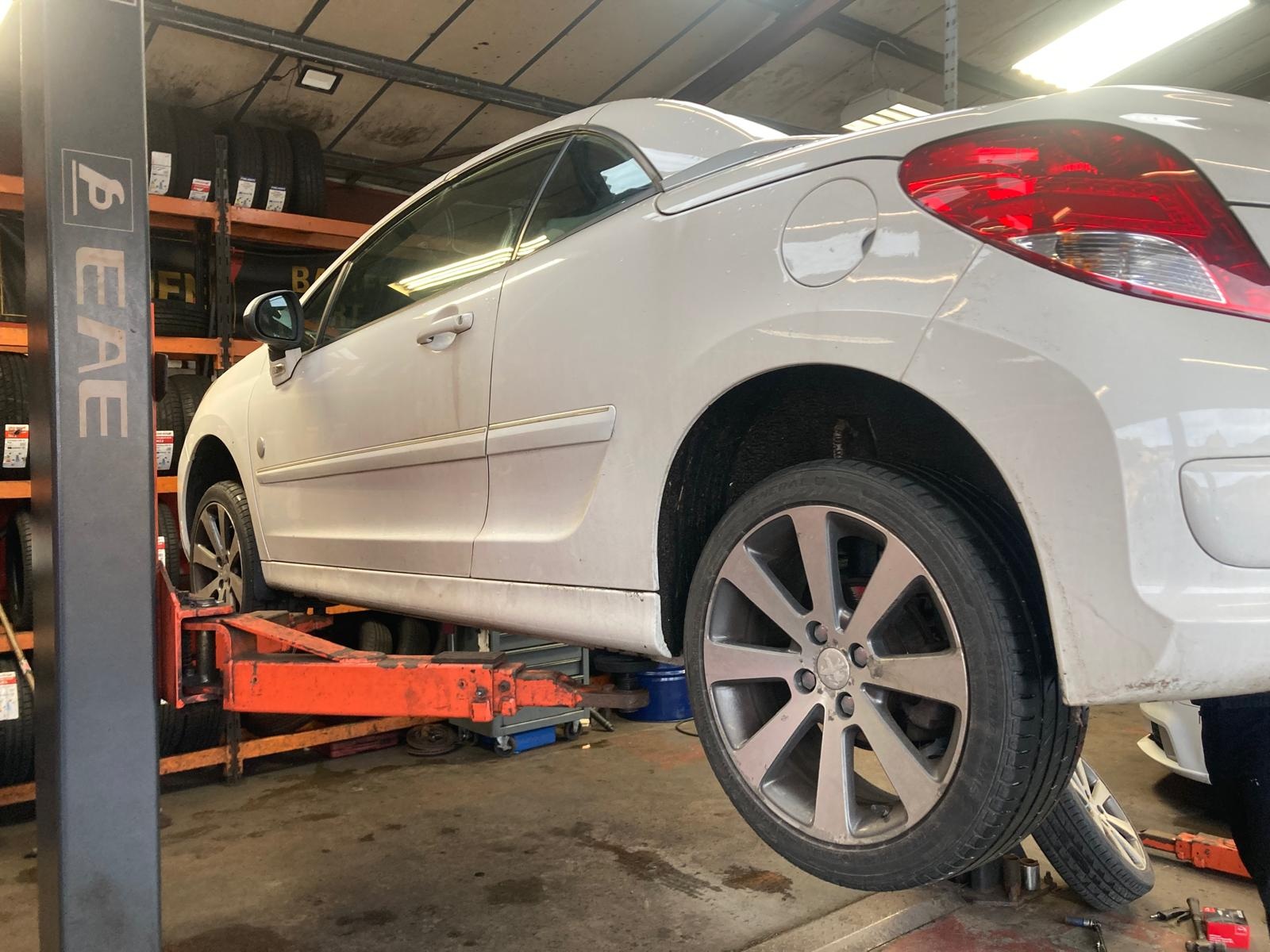
Yesterday here at Pellon Tyres & Autocentre in Halifax, we had a Peugeot 207 brought in with a brake warning light glowing on the dashboard. The driver was understandably concerned — and quite right too — because when a brake warning light comes on, it’s never something to ignore.
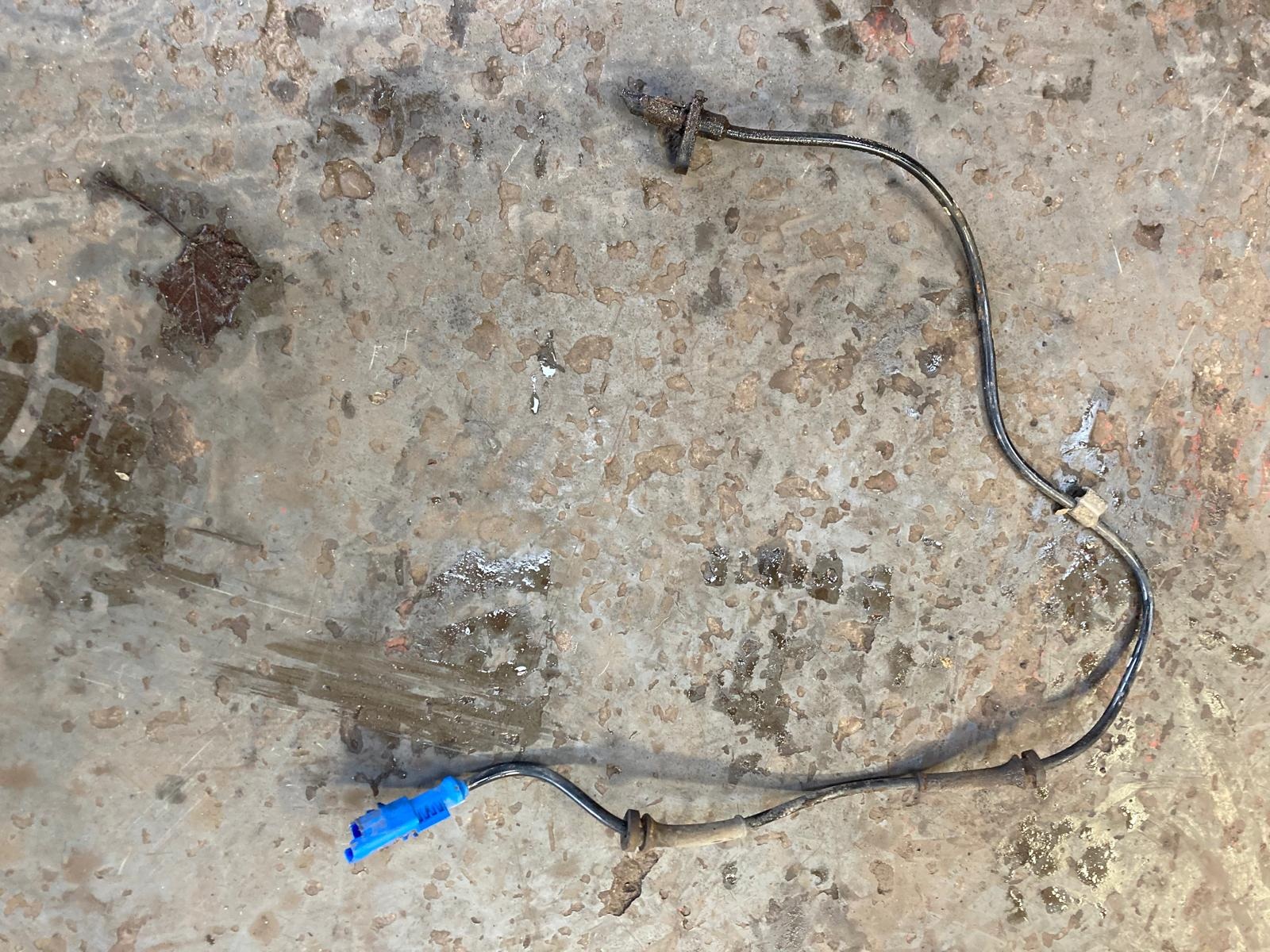
After a full inspection, it turned out the car had developed a fault with the ABS unit on one side of the braking system, a problem we see fairly regularly on Peugeot 207s here in the UK.
This article explains what that warning light really means, what can cause ABS faults, why Peugeot 207s are prone to it, and what drivers around Halifax and Calderdale should look out for.
Peugeot 207 with Brakes Problem
Understanding the Brake Warning Lights in a Peugeot 207
Modern cars like the Peugeot 207 don’t just have one brake warning light — they have several, and each means something slightly different.
In the Peugeot 207 cabin you’ll usually see:
A red brake warning light
An amber ABS warning light
Sometimes both lights together
Each tells a different story.
Red Brake Warning Light
This usually relates to:
Low brake fluid
Worn brake pads
A serious braking system fault
If this light stays on while driving, the car needs checking immediately.
Amber ABS Warning Light
This points directly to the Anti-lock Braking System. When this light comes on:
Normal braking still works
ABS assistance is disabled
Emergency braking and wet-road safety are reduced
This is exactly what we found on the Peugeot 207 that came into the workshop.
new unit in place
What Is the ABS System, and Why Does It Matter?
ABS (Anti-lock Braking System) prevents the wheels from locking under heavy braking. Instead of skidding, the wheels continue to rotate, allowing the driver to steer while braking.
This is especially important in:
Heavy Calderdale rain
Steep Halifax hills
Slippery winter roads
Emergency stop situations
Without ABS:
Wheels can lock
Steering control is reduced
Stopping distances can increase
The Peugeot 207 ABS Problem – What We Found
On this particular Peugeot 207, diagnostic testing showed a fault within the ABS unit on one side of the braking system.
https://www.pellonautocentre.com/wp-content/uploads/2024/07/pellon-tyres-logo-509x321.jpg00Eric Robertshttps://www.pellonautocentre.com/wp-content/uploads/2024/07/pellon-tyres-logo-509x321.jpgEric Roberts2025-12-19 10:18:162026-09-04 03:04:04Peugeot 207 with Brakes Problem
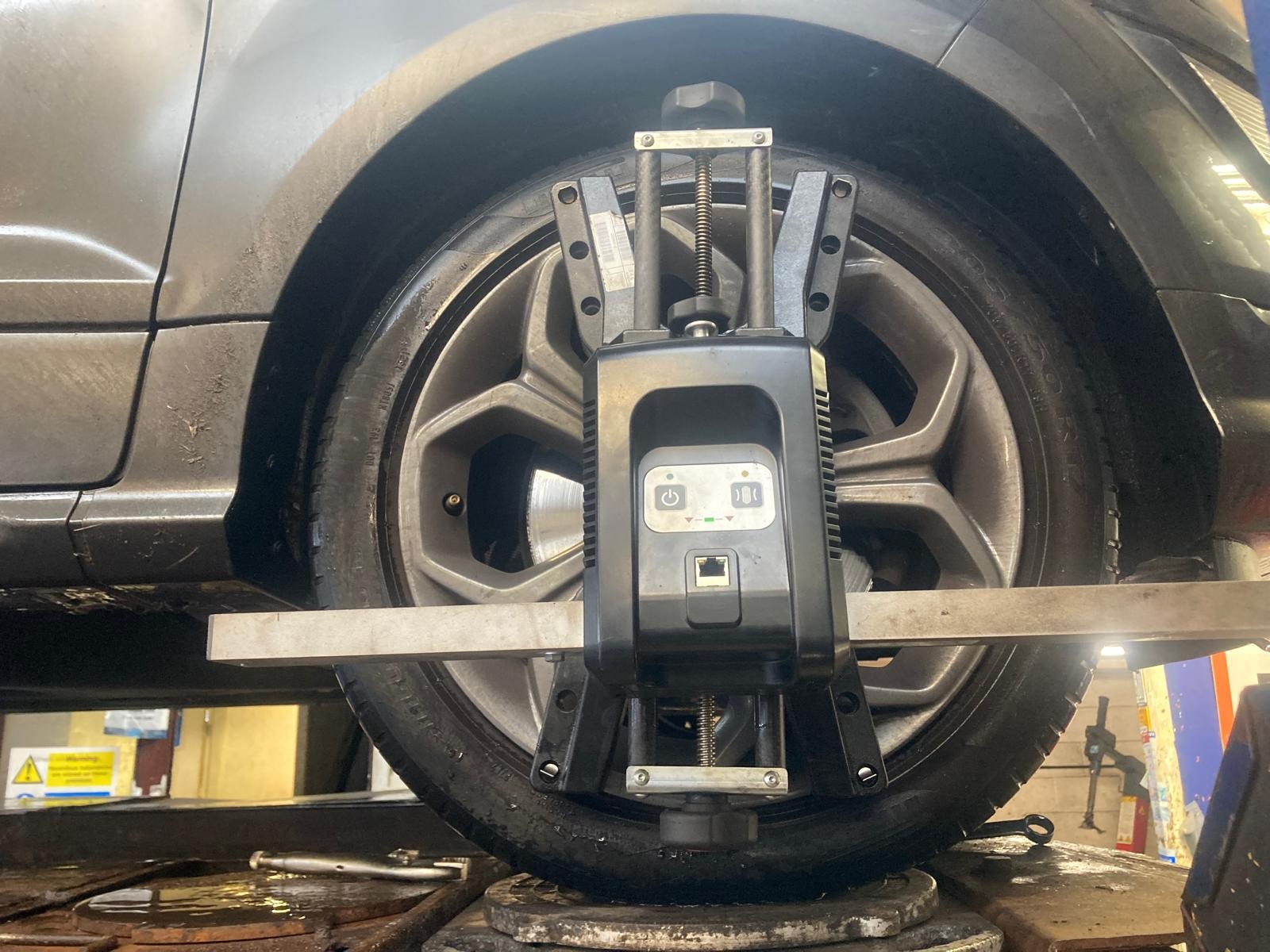
Wheel alignment isn’t just about straight steering wheels – it’s about making sure all four wheels are pointing in the right direction, exactly as the manufacturer intended.
When alignment is out, you may notice:
The car pulling to one side
The steering wheel not sitting straight
Uneven or rapid tyre wear
The car feeling unsettled on the road
Around Halifax, where roads like Pellon Lane, Ovenden Road and the A629 get plenty of wear and tear, it doesn’t take much to knock alignment out.
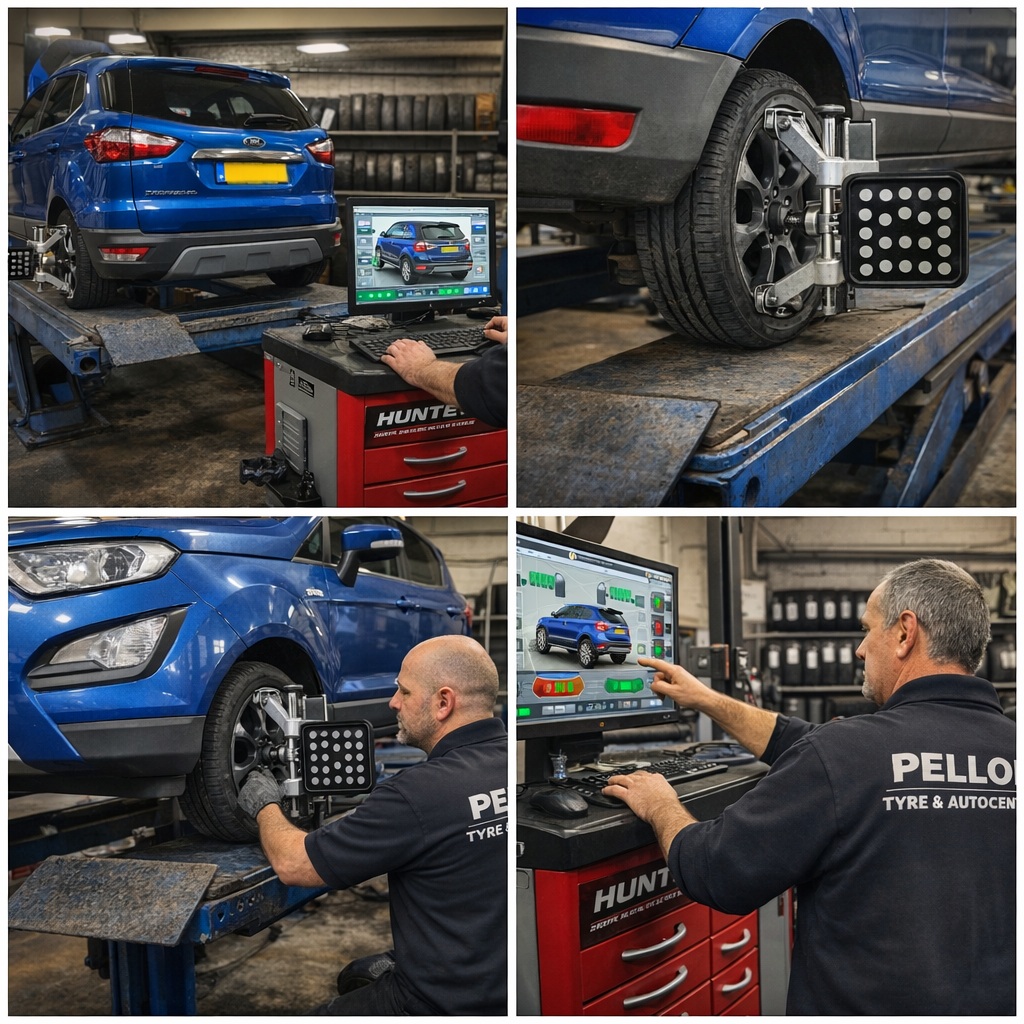
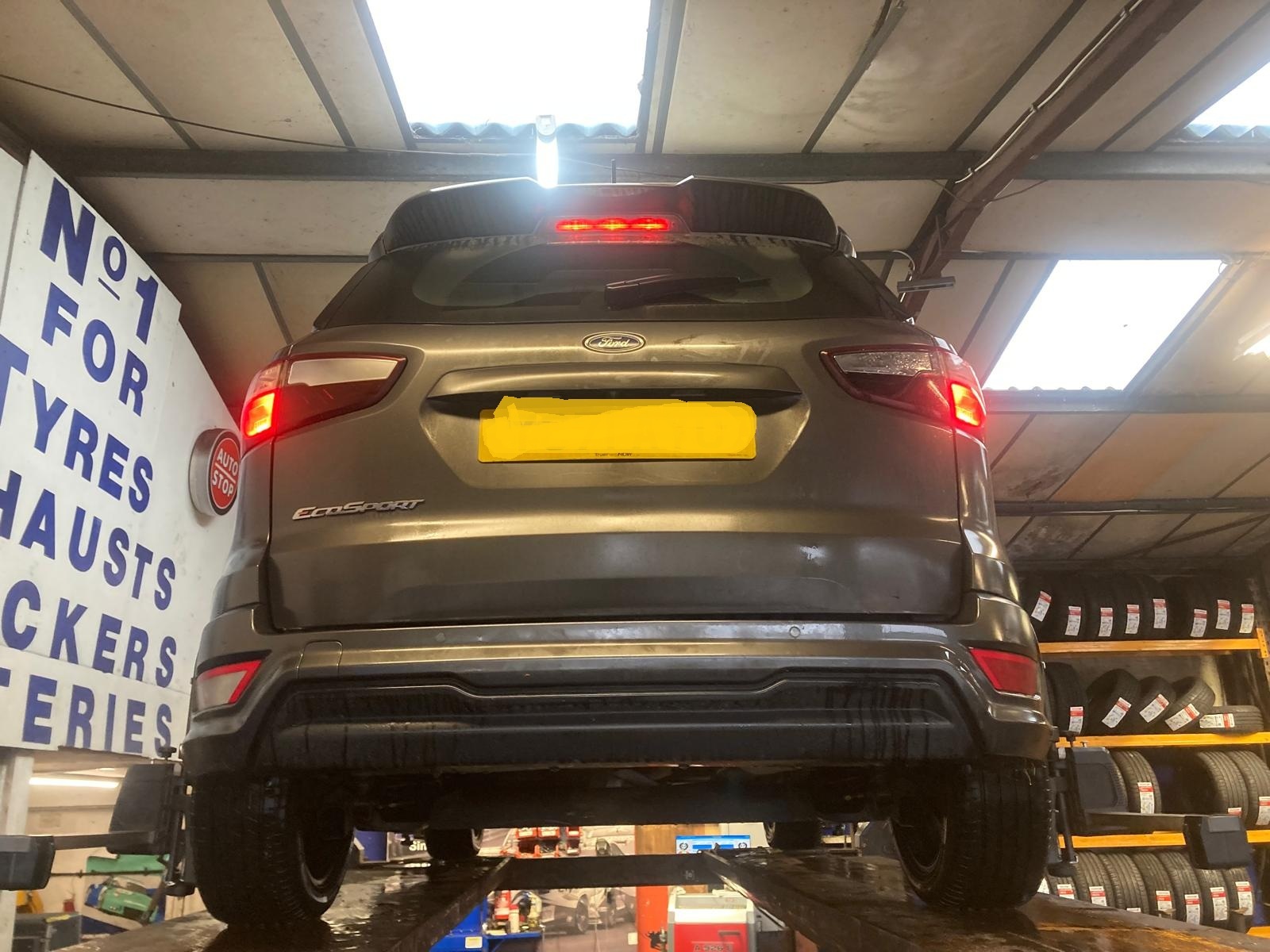
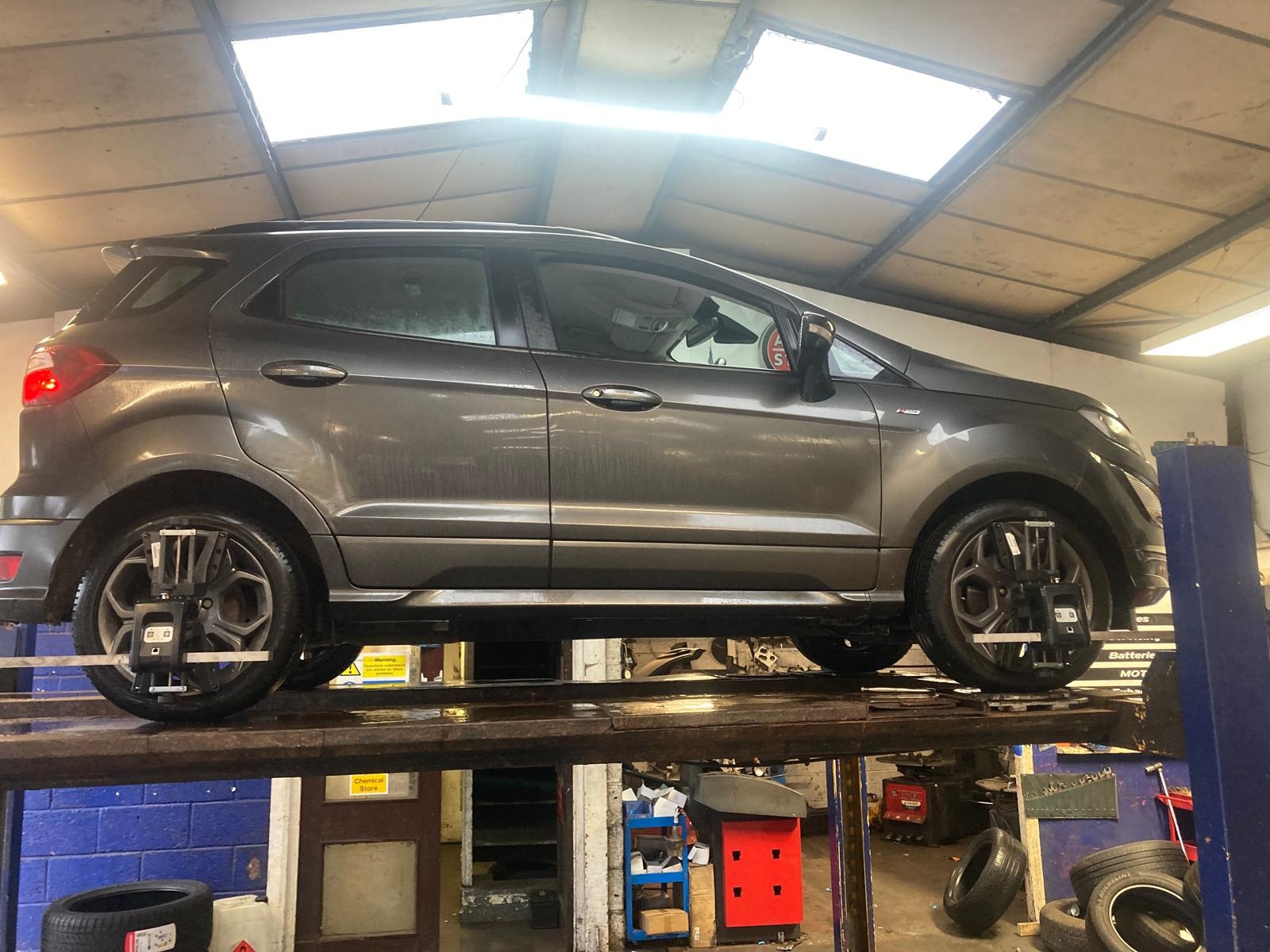
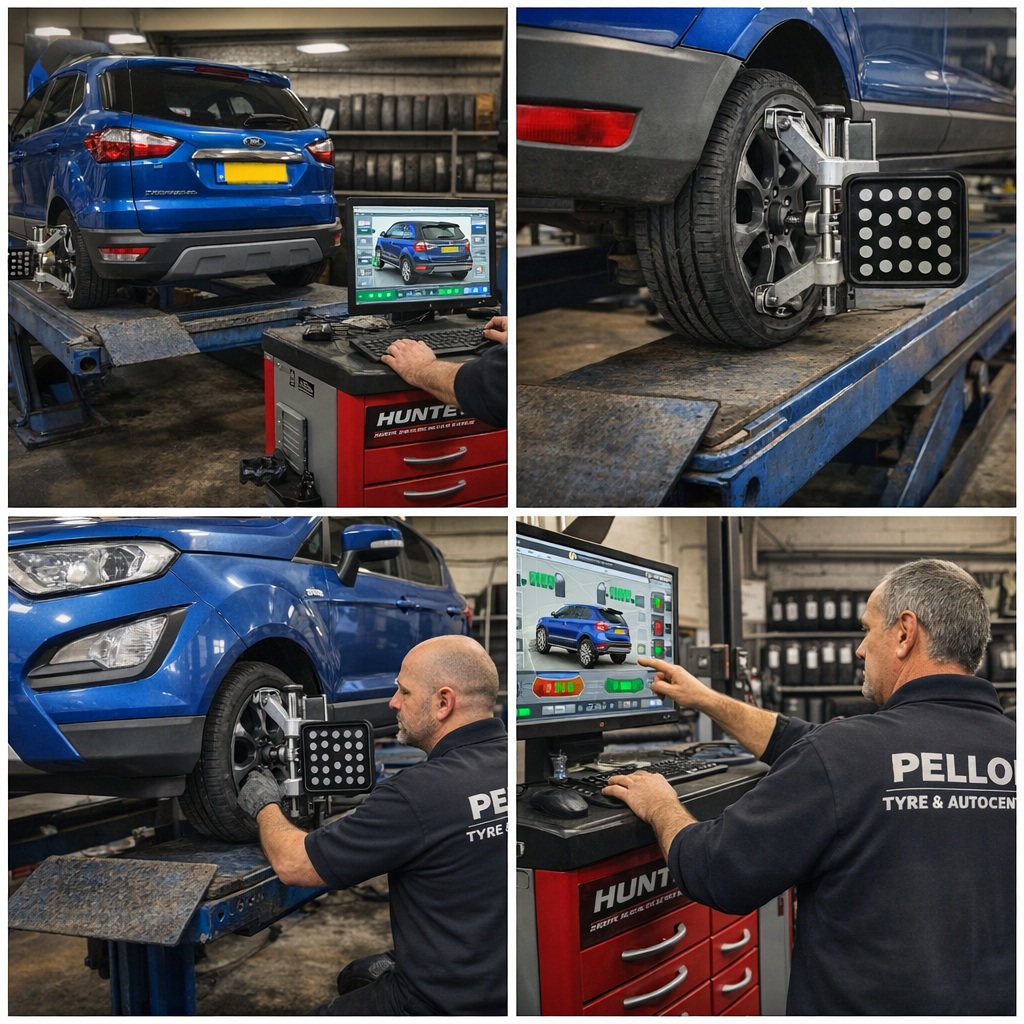
Ford EcoSport for Wheel Alignment
Common Causes of Alignment Problems in Calderdale: Ford EcoSport for Wheel Alignment
We see alignment issues every week, often caused by:
Final Thoughts from Pellon Tyre & Autocentre: Ford EcoSport for Wheel Alignment
If your car is pulling to one side, don’t ignore it. Around Calderdale, it won’t fix itself – and it’ll only get worse.
This Ford EcoSport is a perfect example of how wheel alignment should always be the first step. No parts replaced, no fuss – just proper diagnostics and the right equipment.
If something doesn’t feel right with your steering, pop in and let us take a look.
One thing that often surprises customers is just how quickly wheel alignment can be knocked out on local roads. Around Halifax and Calderdale, we’ve got a mix of steep hills, worn tarmac, speed humps and the odd unavoidable pothole, and it only takes one sharp knock to affect the steering geometry.
Even careful drivers can end up with misalignment through no fault of their own. That’s why we always recommend an alignment check if the car doesn’t feel quite right, especially after winter or if tyres seem to be wearing unevenly. Catching it early not only makes the car nicer and safer to drive, but can save a fair bit of money in the long run.
Grinding Brakes on an Audi A1 – What’s Causing the Noise?
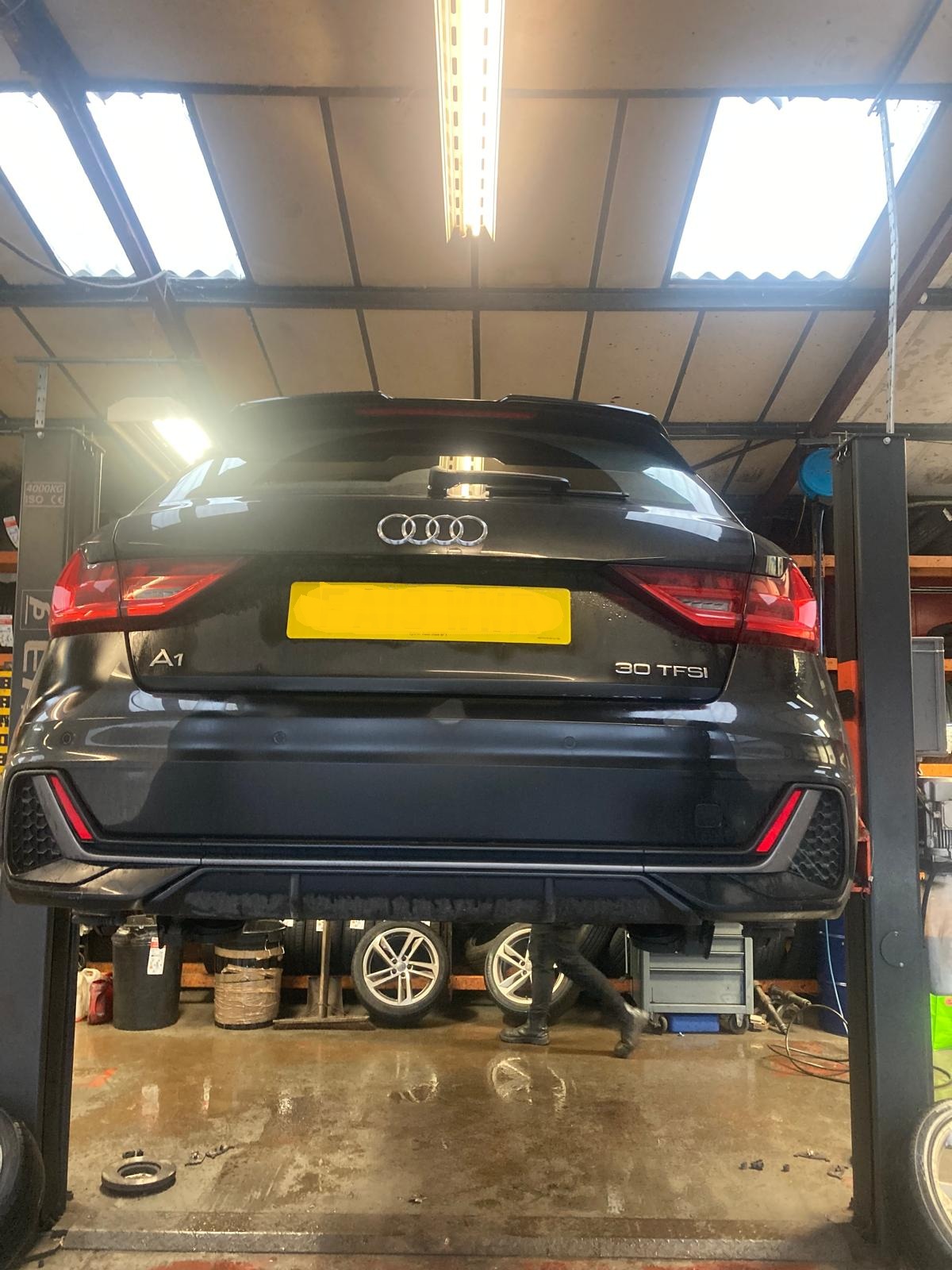
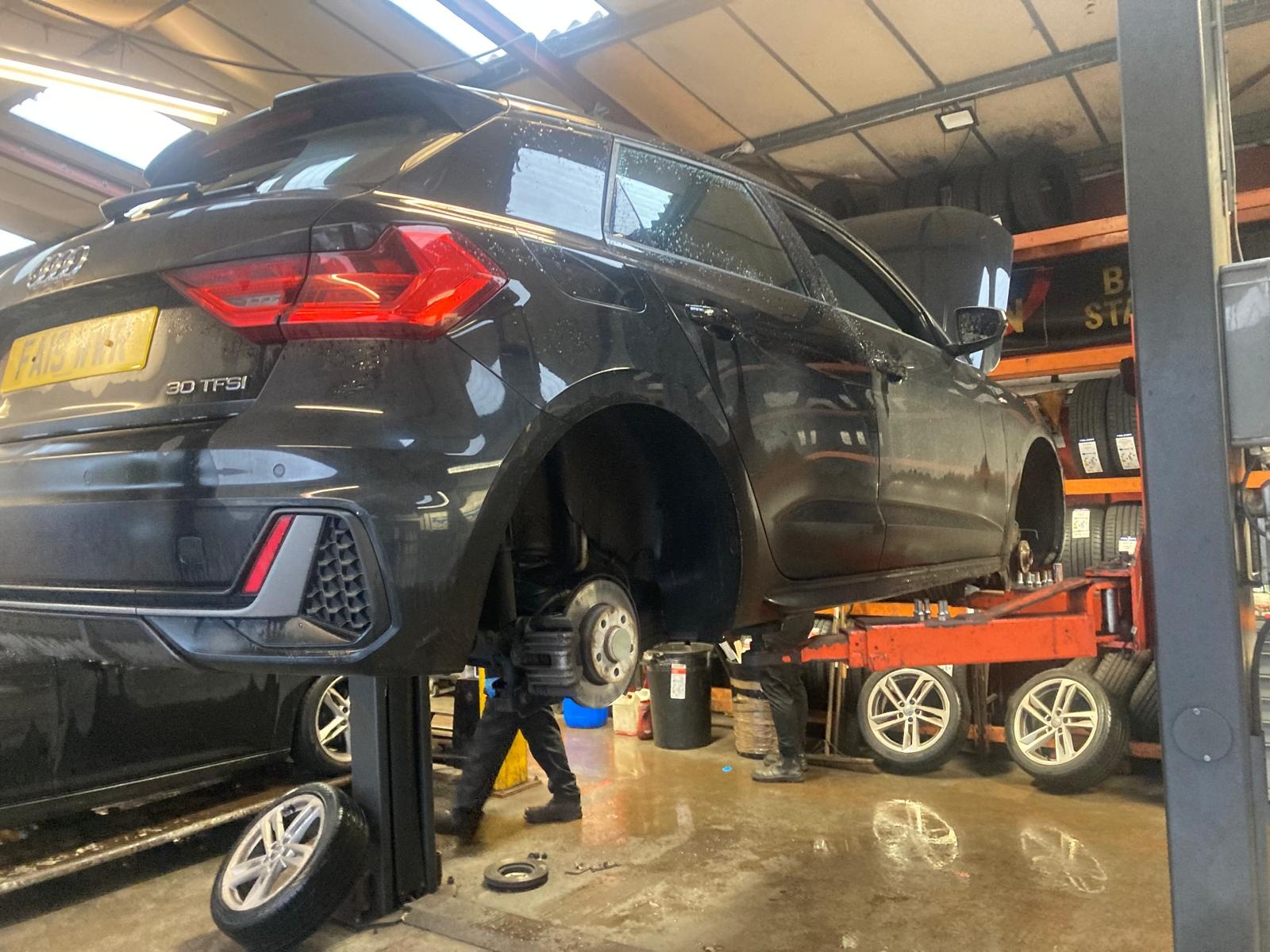
Yesterday at Pellon Tyre & Autocentre in Halifax, we were presented with an Audi A1 whose owner was worried about a nasty grinding noise every time the brakes were applied. It’s a sound that makes most drivers wince, and for good reason.
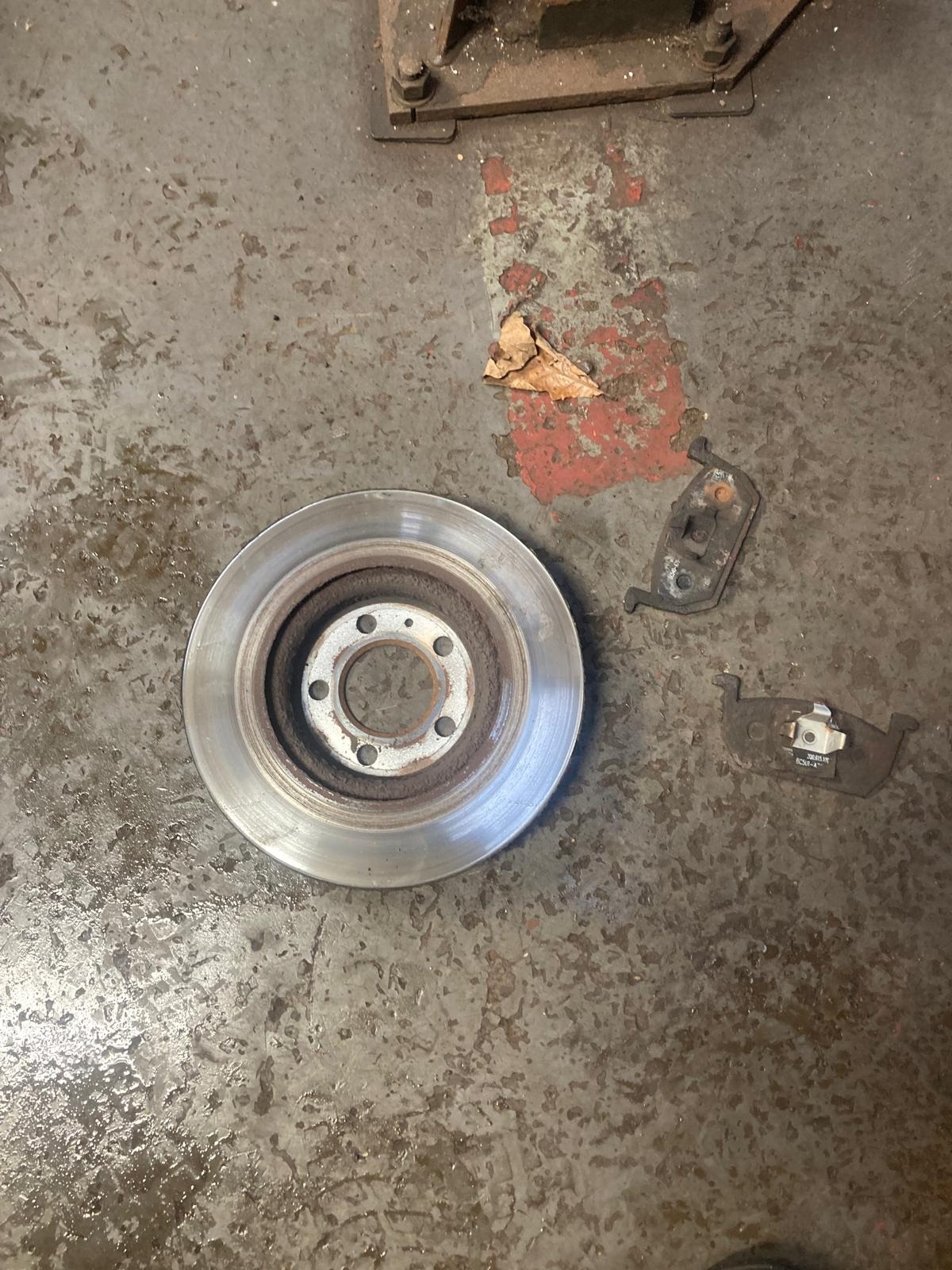
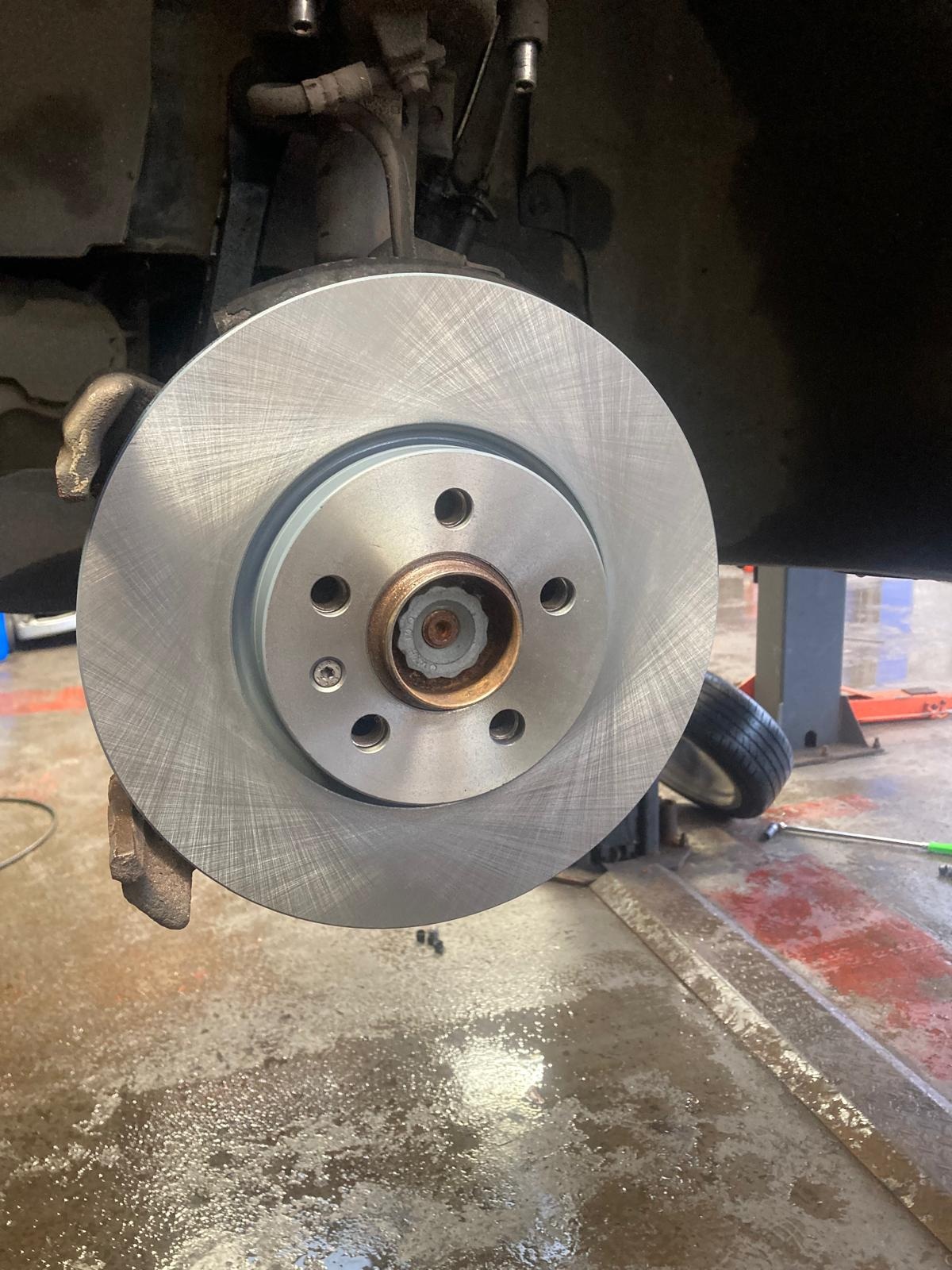
A quick inspection soon showed the cause – the car needed new brake discs all round, along with a full set of brake pads. Sadly, this is something we see quite often, not just on Audi A1s but on many modern cars driven around Calderdale’s hills, traffic lights, and stop-start town driving.
So let’s look at why brakes grind, what it means for your car, and a bit of background on the Audi A1 here in the UK.
Audi A1 for new Brake Discs
Why Do Brakes Make a Grinding Noise?
A grinding noise when braking is never something to ignore. Around Halifax, with steep hills like Pellon Lane, Boothtown Road, and the run down into the town centre, brakes work hard – and problems show themselves quickly.
1. Worn Brake Pads
The most common cause is brake pads worn right down. Once the friction material is gone, you’re left with metal scraping on metal. That grinding sound is your brake pad backing plate eating into the disc.
At this stage:
Braking performance is reduced
Discs get damaged very quickly
Repair costs rise sharply
What could have been pads only often turns into pads and discs.
old worn out disc
2. Discs Worn or Corroded
In Calderdale, cars often sit overnight in damp air, especially near the River Calder. This leads to surface rust on brake discs.
Short journeys around Halifax, Sowerby Bridge or Illingworth mean:
Brakes don’t get hot enough to clean themselves
Rust builds up
Discs wear unevenly
Once discs are badly worn or lipped, they’ll grind even with new pads fitted.
Audi A1 for new Brake Discs
3. Cheap or Incorrect Brake Parts
Some budget pads are:
Too hard
Poorly matched to the disc material
This can cause grinding, squealing, or vibration. At Pellon, we always fit quality, correctly specified parts, because cheap brakes are false economy.
new disc fitted
4. Seized Brake Components: Audi A1 for new Brake Discs
Salted winter roads around Halifax don’t help. Brake callipers and sliders can seize, causing:
Pads to stay in contact with the disc
Overheating
Premature wear and grinding noises
Regular brake servicing helps prevent this.
5. Ignoring Early Warning Signs: Audi A1 for new Brake Discs
Most cars give you plenty of notice:
Squealing
Slight vibration
Pulling to one side
Sadly, many drivers wait until the noise becomes a full-on grind – by then, damage is already done.
A Bit of History – The Audi A1 in the UK
The Audi A1 first arrived in the UK around 2010, aimed at drivers wanting Audi quality in a small, stylish package. It was Audi’s answer to cars like the MINI and VW Polo, but with that familiar German premium feel.
Over the years, the A1 has been popular with:
Younger drivers
Town and city commuters
Drivers wanting something compact but well built
Here in Halifax and Calderdale, they’re ideal for:
Narrow streets
Busy town centres
Tight parking spots
But like all modern cars, they rely heavily on well-maintained braking systems, especially with hill starts, traffic queues, and roundabouts being part of daily life around here.
Why Regular Brake Checks Matter in Calderdale: Audi A1 for new Brake Discs
Local driving conditions really do take their toll:
Hills increase brake wear
Short journeys encourage corrosion
Wet weather speeds up rust
We recommend having your brakes checked:
At least once a year
Or whenever you hear a new noise
A quick inspection can save a lot of money – and a lot of worry.
https://www.pellonautocentre.com/wp-content/uploads/2024/07/pellon-tyres-logo-509x321.jpg00Eric Robertshttps://www.pellonautocentre.com/wp-content/uploads/2024/07/pellon-tyres-logo-509x321.jpgEric Roberts2025-12-16 07:52:572025-12-16 07:59:54Audi A1 for new Brake Discs
Bridgestone Tyres Fitted to a VW Tiguan at Pellon Tyres
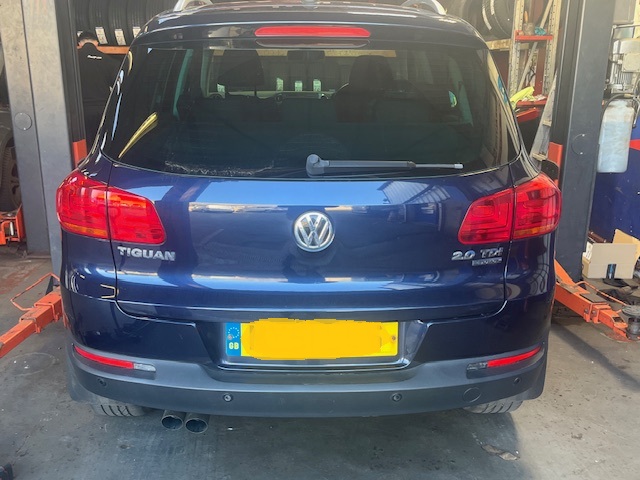
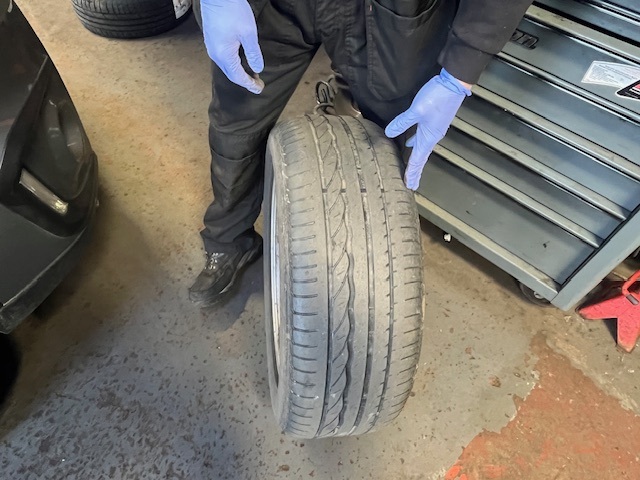
We had a Volkswagen Tiguan in the workshop recently for a pair of new Bridgestone tyres. The customer had spotted their front tyres wearing down and, knowing how changeable the Yorkshire weather can be, wanted something reliable for year-round driving.
Supplying and Fitting the New Tyres
As usual, we got stuck in straight away. The correct Bridgestones were brought out, fitted, and balanced properly on our machines so the Tiguan would run smoothly the moment it left the depot. Quick, tidy, and done the right way.
Why Wheel Alignment Matters
The customer wasn’t daft either — they knew that fitting new tyres is only half the job. Before heading off, they asked for a wheel alignment, which is exactly the right call.
Many drivers overlook how important correct alignment is, especially on heavier SUVs like the Tiguan. Even a small amount of misalignment can lead to:
Uneven tyre wear
Poor fuel economy
Wobbly or vague handling
Not ideal when you’re dealing with the bends and hills around West Yorkshire, that’s for sure.
Back on the Road, Safe and Ready for Anything
Once everything had been checked, adjusted, and tightened up, the customer left happy knowing their Tiguan was set up properly for the coming months. A fresh pair of Bridgestones and a spot-on alignment make a big difference—and they were soon safely back on the road.
VW Tiguan for New Bridgestone Tyres
A Brief Look at the VW Tiguan’s UK Journey
The Volkswagen Tiguan first arrived in the UK back in 2008, and it didn’t take long to make its mark. Built on the popular Golf platform, it was Volkswagen’s answer to the growing demand for compact SUVs — something roomy enough for families but still enjoyable to drive day-to-day.
Early Competition and Rapid Popularity
When it landed, the Tiguan found itself up against strong rivals like the Ford Kuga and Nissan Qashqai, both already well established in the SUV market. But the Tiguan quickly carved out its own corner.
UK drivers praised it for:
solid German build quality
good fuel efficiency
a comfortable ride on long motorway journeys
and steady, predictable handling on our twisty B-roads around Halifax and Calderdale
It soon became a very common sight on our roads.
The 2016 Second-Generation Model
Volkswagen stepped things up again in 2016 with a second-generation Tiguan. This version brought:
sharper, more modern styling
updated technology
more interior space
and improved efficiency
Volkswagen also launched the Tiguan Allspace, a stretched seven-seat model built for bigger families or anyone needing extra room.
A Best-Seller Around the World
By 2020, the Tiguan had become VW’s best-selling vehicle globally, which tells you everything you need to know about how well it fits into modern life.
Whether you choose the everyday versions, the frugal hybrid options, or the sporty R models, the Tiguan continues to be one of the UK’s favourite SUVs — and a regular visitor to our workshop whenever a fresh set of tyres is needed
Bridgestone is one of the most respected names in the premium tyre world. Founded in Japan back in 1931, the brand has built a strong reputation here in the UK tyre market, supplying dependable tyres for just about every type of driver — from high-performance models to eco-friendly designs and all-season options.
Innovation That Suits British Roads: VW Tiguan for New Bridgestone Tyres
One of Bridgestone’s standout developments is the DriveGuard system. This clever technology lets you carry on driving safely even after a puncture, which is ideal for the UK’s never-ending battle with potholes. You can limp home or reach a safe spot for repair without being stranded at the roadside.
Bridgestone also has deep roots in motorsport, including years supplying tyres to Formula 1. That racing heritage plays a big part in pushing their everyday tyre technology forward.
A Great Match for the VW Tiguan: VW Tiguan for New Bridgestone Tyres
For vehicles like the Volkswagen Tiguan, Bridgestone tyres tick all the boxes. They offer:
Excellent grip in wet and dry conditions
Strong durability for both motorway and rural driving
Comfortable handling for UK roads, whether you’re on the M62 or weaving through the Calder Valley
They’re a popular and trusted choice for SUV drivers, and we fit plenty of them here at Pellon Tyres.
Get the Best from Your New Tyres: VW Tiguan for New Bridgestone Tyres
Whichever Bridgestones you go for, it’s important to have them fitted correctly and aligned properly. A good alignment not only protects your tyres but also improves handling and fuel economy — exactly what you want from a quality SUV like the Tiguan.
So, just like our recent customer, if your Tiguan (or any SUV) needs new tyres, you’re welcome to call in and see us at Pellon Tyres, Halifax. We’ll get you sorted quickly and professionally. 🚗🔧
https://www.pellonautocentre.com/wp-content/uploads/2024/07/pellon-tyres-logo-509x321.jpg00Eric Robertshttps://www.pellonautocentre.com/wp-content/uploads/2024/07/pellon-tyres-logo-509x321.jpgEric Roberts2025-12-05 18:39:442025-12-06 09:44:10VW Tiguan for New Bridgestone Tyres
We may request cookies to be set on your device. We use cookies to let us know when you visit our websites, how you interact with us, to enrich your user experience, and to customize your relationship with our website.
Click on the different category headings to find out more. You can also change some of your preferences. Note that blocking some types of cookies may impact your experience on our websites and the services we are able to offer.
Essential Website Cookies
These cookies are strictly necessary to provide you with services available through our website and to use some of its features.
Because these cookies are strictly necessary to deliver the website, refusing them will have impact how our site functions. You always can block or delete cookies by changing your browser settings and force blocking all cookies on this website. But this will always prompt you to accept/refuse cookies when revisiting our site.
We fully respect if you want to refuse cookies but to avoid asking you again and again kindly allow us to store a cookie for that. You are free to opt out any time or opt in for other cookies to get a better experience. If you refuse cookies we will remove all set cookies in our domain.
We provide you with a list of stored cookies on your computer in our domain so you can check what we stored. Due to security reasons we are not able to show or modify cookies from other domains. You can check these in your browser security settings.
Other external services
We also use different external services like Google Webfonts, Google Maps, and external Video providers. Since these providers may collect personal data like your IP address we allow you to block them here. Please be aware that this might heavily reduce the functionality and appearance of our site. Changes will take effect once you reload the page.