Posts

Electric Vehicle Tyres

Electric Vehicle Tyres

Electric Vehicle Tyres

Electric Vehicle Tyres

Tyres Designed for Electric Vehicles – Why They Are Different

Electric cars are becoming a much more common sight on British roads. Only a few years ago they were something of a novelty, but today vehicles such as the Nissan Leaf, Tesla models, and many electric versions of popular cars are appearing everywhere.

While most drivers focus on things like battery range and charging points, one important part of electric vehicle design often gets overlooked – the tyres.

In fact, tyres designed for electric vehicles are quite different from those fitted to traditional petrol or diesel cars. Over the past few years, tyre manufacturers have had to develop new technology to cope with the unique characteristics of electric vehicles.


Electric Cars Are Heavier

One of the biggest challenges with electric vehicles is weight.

The large battery packs needed to power the car can add several hundred kilograms to the vehicle. This means that many electric cars weigh significantly more than their petrol or diesel equivalents.

Because of this, the tyres fitted to electric vehicles need to be stronger and more durable. Manufacturers have developed reinforced tyre structures and stronger sidewalls to cope with the extra load.

Without these improvements, tyres could wear out much faster under the extra weight.
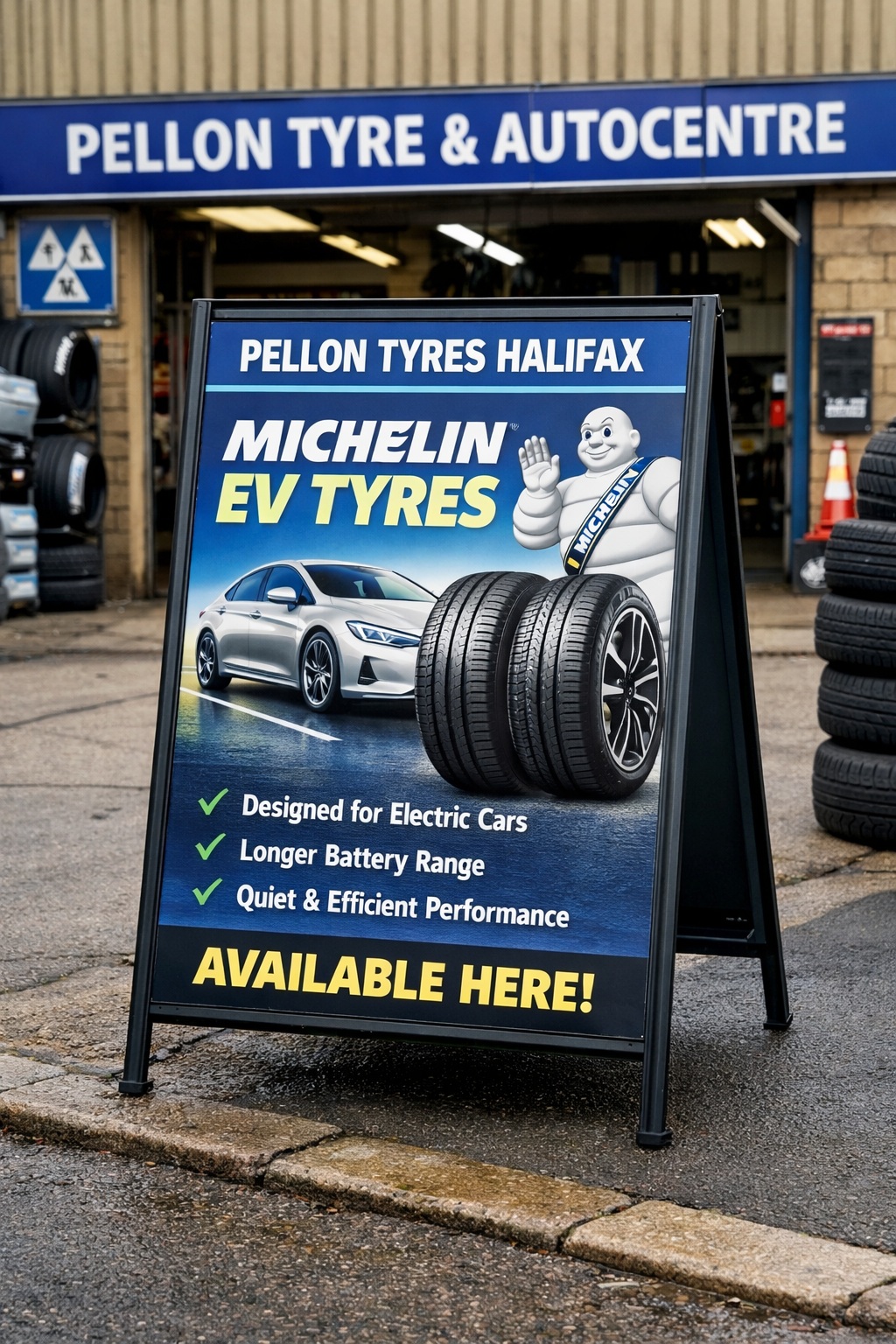
Electric Vehicle Tyres
Michelin EV tyres for sale here at Pellon Tyres.

Instant Torque From Electric Motors: Electric Vehicle Tyres

Another characteristic of electric cars is the way they deliver power.

Unlike traditional engines that gradually build up power, electric motors produce instant torque the moment the driver presses the accelerator.

This gives electric vehicles their quick acceleration, which many drivers enjoy. However, it also puts extra stress on the tyres.

To handle this, EV tyres are designed with special tread compounds and stronger construction so they can cope with the sudden delivery of power without excessive wear.


Reducing Rolling Resistance

One of the biggest concerns for electric vehicle drivers is driving range.

Every bit of energy used by the car reduces the distance it can travel before needing to recharge. Tyres play a big role in this because they create something called rolling resistance.

Rolling resistance is the energy needed to keep the tyres turning as the car moves along the road.

Tyre manufacturers have spent years developing compounds and designs that reduce rolling resistance, allowing electric vehicles to travel further on a single charge.

These tyres help maximise battery efficiency while still maintaining good levels of grip and safety.
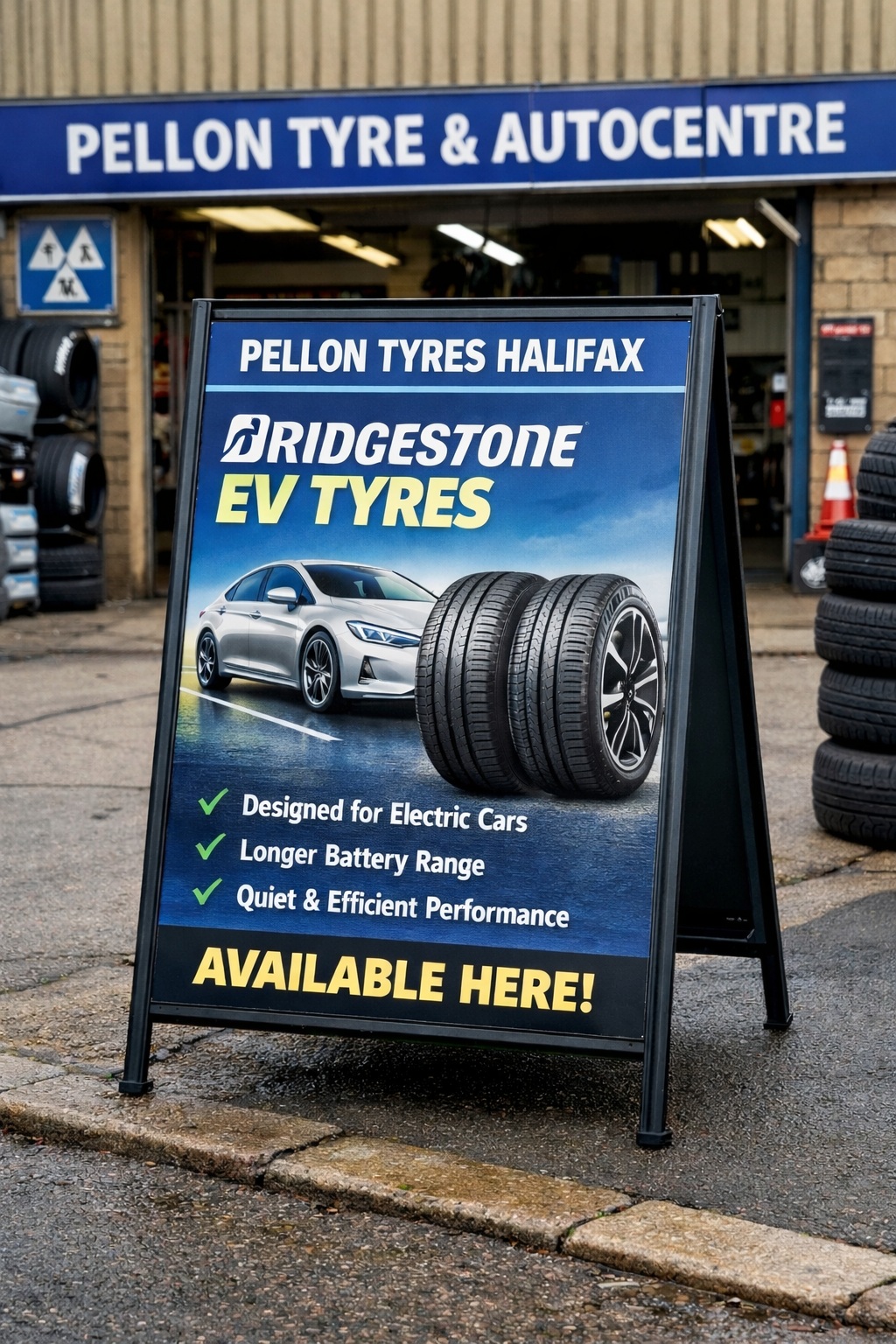
Electric Vehicle Tyres
Bridgestone EV tyres for sale at Pellon Tyres Halifax

Quieter Tyres for Quieter Cars: Electric Vehicle Tyres

Another difference with electric vehicles is how quiet they are.

With no traditional engine noise, drivers often notice road and tyre noise much more than they would in a petrol or diesel car.

To reduce this, many EV tyres include special features designed to minimise road noise.

Some tyres even use foam inserts inside the tyre itself, which help absorb vibration and reduce noise levels inside the vehicle.

This helps keep the smooth and quiet driving experience that electric cars are known for.


Improved Grip and Safety: Electric Vehicle Tyres

Despite focusing on efficiency and noise reduction, safety is still the most important factor in tyre design.

Electric vehicle tyres are developed to provide excellent grip in both dry and wet conditions, especially as many EVs are capable of strong acceleration.

Advanced rubber compounds, modern tread patterns and stronger construction all work together to ensure that electric vehicles maintain good braking and handling performance.

Many of these tyre technologies have been developed over the past twenty years as tyre companies continue to improve safety for all vehicles.


Most of the major tyre manufacturers now produce tyres specifically designed for electric vehicles.

Companies such as Michelin, Bridgestone, Continental, Goodyear and Pirelli have invested heavily in research and development for EV tyre technology.

Many tyres are now marked with special EV ratings or symbols showing they have been designed to meet the demands of electric cars.

In many cases, these tyres can also be fitted to conventional vehicles, where they may offer improvements in efficiency and comfort.


Choosing the Right Tyres for Your Electric Car

If you own an electric vehicle, it’s important to choose tyres that are suitable for the vehicle’s weight and performance.

Fitting the correct tyres helps ensure:

  • Good driving range
  • Safe braking performance
  • Reduced tyre wear
  • Lower road noise

At Pellon Tyre and Autocentre, we are always happy to advise customers on the best tyres for their particular vehicle.

Whether you drive a traditional petrol car, a diesel, or one of the newer electric models, making sure your tyres are in good condition is one of the most important safety checks you can make.

After all, tyres are the only part of the car that actually touches the road.


The Future of Tyre Technology: Electric Vehicle Tyres

Electric vehicles are pushing tyre technology forward faster than ever before.

Manufacturers are already working on new developments such as:

  • Smart tyres with built-in sensors
  • Self-sealing tyres that repair small punctures
  • Airless tyres that cannot go flat

As electric cars become more popular, we can expect tyres to continue evolving to meet the needs of modern vehicles.

One thing is certain – tyre technology will remain a vital part of keeping drivers safe, comfortable and efficient on the road.


Eric Roberts
Pellon Tyre and Autocentre
Halifax, West Yorkshire

History of Car Tyres

History of Car Tyres

History of Car Tyres

History of Car Tyres

As a guy working in the tyre industry all my life, this subject fascinates me.

Especially when I was young and working on tyres for the very first time. Little did I know then, but my interest in tyres and the surrounding industry was to last the rest of my life. I even sometimes lie on my back in bed and try to reel off the tyre types that say ‘Michelin’ or ‘Pirelli’ that I produced when I was a young tyre fitter in Dewsbury, West Yorkshire, UK.

The guys in the paragraphs below don’t know what they started all those years ago, in different parts of the world. The pneumatic tyre was first invented by Robert William Thomson in 1845. However, it was John Boyd Dunlop who developed the first practical pneumatic tyre for use on bicycles in 1888.

Thomson, a Scottish inventor, came up with the idea for the pneumatic tyre as a way to improve the ride comfort of carriages. He filed a patent for his design, which consisted of an inner tube made of India rubber, filled with compressed air and surrounded by a casing. However, the patent was not granted, and the invention was not developed further.

Dunlop, a Scottish veterinarian, was motivated to develop the pneumatic tyre for his son’s tricycle.

He observed that the solid rubber tyres on the tricycle caused a rough and uncomfortable ride and sought to improve the situation. It is also great to know that once again it was the British who were at the forefront of yet another great world invention.

He experimented with different designs and eventually came up with a tyre made of canvas, filled with compressed air and sealed with a layer of rubber. He filed a patent for this design in 1888 and established the Dunlop Pneumatic Tyre Company to manufacture and sell the tyres. Dunlop was the first tyre company that I worked for, and I still have fond recollections of this great British icon.

The pneumatic tyre was a significant improvement – History of Car Tyres

over solid rubber tyres, providing a much smoother and more comfortable ride. It also had better traction and durability. The invention of the pneumatic tyre revolutionised the transportation industry and is still in use today.

Dunlop’s invention was not the first attempt at pneumatic tyres, but it was the first practical one that could be mass-produced and that would work well in real-world use. The invention was a response to the need for better tyres for vehicles, which would provide a more comfortable ride and increased safety.

Profound impact- History of Car Tyres

This invention has had a profound impact on the transportation industry, making it possible to travel faster, longer, and more comfortably than ever before. A great story from Scotland. Who would have thought the car tyre would keep rolling on right up to today?

  • 1845: Robert William Thomson patents the first design for a pneumatic tyre
  • 1888: John Boyd Dunlop patents the first practical pneumatic tyre for use on bicycles
  • 1891: The Michelin brothers begin producing their own version of pneumatic tyres under the brand name “Michelin”
  • 1895: The pneumatic tyre is first used on automobiles
  • 1908: The first pneumatic tyre for motorcycles is developed by Dunlop
  • 1946: Michelin develops the radial tyre
  • 1971: Radial tyres become the standard for cars and light trucks

As you can see, the development of pneumatic tyres was a gradual process, with several key inventors and companies contributing to its evolution over the course of many decades.

Significant advancements in tyre technology during the last ten years have revolutionised driving efficiency. History of Car Tyres

Modern Tyre Technology – How Tyres Have Become Safer Over the Past 20 Years

When we look back at the early days of tyre development, the main focus was simply on making tyres that lasted longer and gave a reasonable amount of grip on the road. But over the past twenty years or so, tyre technology has moved on enormously.

In fact, the tyres fitted to modern cars today are far more advanced than many drivers realise. A huge amount of research and development goes into them, and the improvements have made driving both safer and more comfortable than ever before.

Advanced Rubber Compounds: History of Car Tyres

One of the biggest developments has been in rubber compound technology.

In the past, tyre manufacturers mainly used natural rubber mixed with carbon black. While this worked well enough, the grip levels were limited, especially in wet conditions.

Today’s tyres use silica-based compounds, which dramatically improve grip on wet roads. Silica helps the tyre remain flexible at lower temperatures while also reducing rolling resistance.

This means modern tyres can provide:

  • Better wet braking performance
  • Improved fuel economy
  • Longer tyre life

It’s a clever balance that engineers have spent years perfecting.

Improved Tread Patterns: History of Car Tyres

Another area where tyres have improved dramatically is in tread design.

Older tyres often had fairly simple tread patterns, but modern tyres are designed using computer modelling and testing on specialist tracks.

The grooves and channels in the tread are carefully shaped to move water away from the contact patch, reducing the risk of aquaplaning.

Some tyres now feature:

  • Wide water-dispersing grooves
  • Multi-directional tread blocks
  • 3D sipes that open and close during braking

All these features help the tyre maintain better contact with the road surface in wet conditions.

Stronger Tyre Construction: History of Car Tyres

Tyre construction itself has also improved.

Modern tyres are built with advanced steel belts and reinforced sidewalls, which give them greater strength and durability.

This helps tyres cope with the extra weight and power of modern vehicles. Cars today are heavier than they were twenty or thirty years ago, especially with the rise of SUVs and electric vehicles.

Despite this, tyres today are able to handle these loads safely while still providing good comfort and handling.

Run-Flat Technology

Another innovation that has appeared on many modern vehicles is the run-flat tyre.

Run-flat tyres are designed so that if the tyre loses pressure due to a puncture, the reinforced sidewalls allow the vehicle to continue driving for a limited distance.

In most cases, drivers can travel around 50 miles at reduced speed before the tyre needs replacing.

This technology means drivers do not have to stop immediately at the roadside, which is particularly useful on busy motorways.

Tyre Pressure Monitoring Systems (TPMS): History of Car Tyres

Over the past decade, many vehicles have also been fitted with Tyre Pressure Monitoring Systems, commonly known as TPMS.

These systems monitor the air pressure inside each tyre and warn the driver if the pressure drops below a safe level.

Under-inflated tyres can cause several problems, including:

  • Increased tyre wear
  • Poor fuel economy
  • Reduced braking performance
  • Risk of tyre failure

By alerting the driver early, TPMS helps prevent many of these issues before they become dangerous.

Reduced Rolling Resistance

carmakersAnother area where tyre technology has improved is rolling resistance.

Tyres that roll more easily require less energy to move the vehicle, which improves fuel efficiency and reduces emissions.

Manufacturers now design tyres that offer low rolling resistance without sacrificing grip or safety. This is particularly important today as car makers try to meet stricter environmental regulations.

For electric vehicles, efficient tyres are even more important because they help extend battery range.

Tyre Labelling and Safety Standards

In recent years, tyre safety has also improved through European tyre labelling regulations.

These labels give drivers useful information about tyre performance in areas such as:

  • Wet grip
  • Fuel efficiency
  • External noise

This helps motorists make better choices when purchasing new tyres.

It has also encouraged manufacturers to keep improving their products in order to achieve higher ratings.

Continuous Development

What many people do not realise is that tyre companies continue to spend millions of pounds every year on research and testing.

Companies like Michelin, Bridgestone, Continental, Goodyear, Pirelli and others run extensive development programmes. Tyres are tested in extreme conditions, from freezing winter tracks in Scandinavia to hot test tracks in southern Europe.

The aim is always the same: to produce tyres that offer maximum grip, safety, durability and efficiency.


A Quiet Safety Hero

Tyres rarely get the attention they deserve. Drivers often focus on engines, brakes and electronics, but the truth is that tyres are the only part of the car that actually touches the road.

Over the past twenty years, tyre technology has quietly become one of the most important safety developments in modern motoring.

From advanced rubber compounds to intelligent pressure monitoring systems, today’s tyres are far more capable than those fitted to cars in the past.

So while tyres may look much the same as they always have, the technology inside them has changed enormously — and that has helped make driving far safer for everyone on the road.