Pellon Tyres And Auto Centre Halifax
  • Home
  • Tyres
    • Buy Tyres Online
    • Falken Tyres
    • Electric Vehicle Tyres
    • 4×4 tyres
    • Run Flat Tyres
    • All-Season Tyres
    • Winter Tyres
  • Servicing
  • Book an MOT
  • Our Blog
  • Contact
  • Environment
  • Click to open the search input field Click to open the search input field Search
  • Menu Menu

Archive for category: Eric Roberts’ Motoring News

You are here: Home1 / Our Blog2 / Automotive industry3 / Eric Roberts' Motoring News

Welcome to Eric Roberts’ Motoring News, a brand-new section of the Pellon Tyres website where I share the latest developments from the motor industry, explained in plain English.

Having worked in the tyre and motor trade for almost 60 years, I have seen enormous changes. When I first started as a young apprentice in Yorkshire during the 1960s, cars were simple machines. There were no computers, no electric vehicles, no driver assistance systems and certainly no internet.

Today, modern vehicles are packed with technology. Electric cars, hybrid systems, advanced safety equipment, connected diagnostics and ever-changing Government regulations are all transforming the way we drive and maintain our vehicles.

The Rise of Chinese Cars

1st August 2026/0 Comments/in Eric Roberts' Motoring News/by Eric Roberts

The Rise of Chinese Cars

Table of Contents

  • The Rise of Chinese Cars
  • A Changing Car Market: The Rise of Chinese Cars
  • Why Are Chinese Cars Becoming Popular?
  • The Electric Vehicle Revolution: The Rise of Chinese Cars
  • Should Drivers Be Concerned?
  • Parts Availability: The Rise of Chinese Cars
  • Independent Garages Face New Challenges
  • Will They Last? The Rise of Chinese Cars
  • Competition Benefits Everyone
  • Could China Build Cars in Britain? The Rise of Chinese Cars
  • What About British Jobs? The Rise of Chinese Cars
  • Servicing Will Always Be Needed
  • Looking Ahead: The Rise of Chinese Cars
  • Final Thoughts

The Rise of Chinese Cars

The Rise of Chinese Cars – Should UK Drivers Be Concerned?

The Rise of Chinese Cars

If you’ve been looking around the roads of Halifax, Calderdale or anywhere else in the UK recently, you may have noticed a growing number of unfamiliar car badges. Brands that many of us had never heard of just a few years ago are now appearing in supermarket car parks, outside schools and even at local garages.

So, should UK motorists be worried about the rapid rise of Chinese-built cars, or is this simply another chapter in the ever-changing story of the motor industry?

As someone who has spent over 50 years in the motor trade and has seen manufacturers come and go, I believe the answer lies somewhere in the middle. Like most major changes, there are both advantages and disadvantages, and understanding both sides helps motorists make informed decisions.

A Changing Car Market: The Rise of Chinese Cars

Not so long ago, British motorists mainly chose between British, German, French, Italian or Japanese manufacturers. During the 1980s and 1990s, Korean manufacturers gradually earned the trust of UK drivers, with brands such as Hyundai and Kia becoming household names.

Many people were initially sceptical about Korean cars, yet today they are among the most reliable and best-selling vehicles on British roads.

Now history appears to be repeating itself with Chinese manufacturers.

Companies such as MG, BYD, OMODA, JAECOO, GWM and Leapmotor are investing heavily in the UK market, offering well-equipped vehicles at highly competitive prices.

Why Are Chinese Cars Becoming Popular?

One of the biggest reasons is value for money.

Many Chinese-built vehicles come packed with features that would normally cost thousands of pounds extra on more established European brands.

Drivers often receive:

  • Large touchscreens
  • Heated seats
  • Advanced safety technology
  • Excellent warranty packages
  • Modern styling
  • Electric or hybrid powertrains

For many families, this represents excellent value during a time when household budgets are under pressure.

The Electric Vehicle Revolution: The Rise of Chinese Cars

China has become one of the world’s biggest producers of electric vehicles.

Rather than relying on traditional petrol and diesel engines, many Chinese manufacturers invested early in battery technology and electric vehicle production.

As demand for electric cars has increased throughout Europe, Chinese companies have been perfectly placed to supply affordable alternatives.

Whether electric vehicles become the long-term answer remains to be seen, but there is little doubt that China has become a major player in this rapidly growing market.

Should Drivers Be Concerned?

Not necessarily.

Every manufacturer entering the UK market must comply with strict British and European safety regulations.

Before a new vehicle can be sold here, it must meet demanding crash testing, emissions and safety standards.

That should give motorists reassurance that these vehicles are not simply arriving without proper testing.

However, there are still sensible questions buyers should ask.

Parts Availability: The Rise of Chinese Cars

One of the biggest concerns for independent garages is replacement parts.

When a manufacturer first enters the UK, its dealer network and parts distribution system may still be developing.

If a vehicle requires accident repairs or replacement components, owners may occasionally experience longer waiting times compared with well-established manufacturers.

Fortunately, this situation usually improves as sales increase and manufacturers expand their UK operations.

Independent Garages Face New Challenges

Here at Pellon Tyres in Halifax, we’ve always believed that garages must move with the times.

Years ago we invested in modern diagnostic equipment because vehicles were becoming increasingly computer controlled.

Today we continue investing in training because every new generation of vehicles brings fresh technology.

Chinese manufacturers are no different.

Independent garages throughout Calderdale and across Yorkshire will gradually learn these vehicles, invest in the correct equipment and continue providing professional servicing and repairs.

It’s simply another stage in the evolution of the motor industry.

Will They Last? The Rise of Chinese Cars

This is perhaps the biggest unknown.

Japanese manufacturers earned their reputation over decades.

Korean manufacturers also took many years to prove themselves.

Chinese manufacturers now face exactly the same challenge.

Only time will reveal how these vehicles perform after ten or fifteen years of British weather, motorway driving and everyday family use.

The first signs are encouraging, but long-term durability can only be judged with experience.

Competition Benefits Everyone

Healthy competition is usually good news for motorists.

When new manufacturers enter the market, established brands are encouraged to improve their products, increase equipment levels and offer better value.

Competition also encourages innovation.

Many of today’s safety systems, hybrid technologies and electric developments have accelerated because manufacturers compete fiercely for customers.

Ultimately, drivers benefit from that competition.

Could China Build Cars in Britain? The Rise of Chinese Cars

This is an interesting question.

At first glance, many people would probably say no.

However, history tells us something rather different.

Japanese manufacturers once surprised many people by building successful factories here in Britain.

Nissan established its Sunderland factory, which has become one of Europe’s most productive car manufacturing plants.

Toyota also invested heavily in the UK, while Honda operated a major factory for many years.

So could Chinese manufacturers follow the same path?

Possibly.

If sales continue to grow and Britain remains an attractive market, establishing assembly or manufacturing facilities here could reduce shipping costs, shorten delivery times and create valuable British jobs.

It would also allow manufacturers to work more closely with UK suppliers and engineers.

Although nothing is guaranteed, it certainly isn’t impossible.

What About British Jobs? The Rise of Chinese Cars

Some people worry that increasing imports could threaten British manufacturing.

That concern is understandable.

However, foreign investment has often created employment rather than reduced it.

Factories require engineers, production staff, transport companies, suppliers, dealerships and service centres.

If Chinese investment were ever directed towards UK manufacturing, thousands of jobs could potentially be created, just as previous overseas investment has done.

Servicing Will Always Be Needed

Whatever badge appears on the bonnet, every vehicle still requires tyres, brakes, suspension repairs, batteries, wheel alignment and MOT testing.

Technology may change, but routine maintenance remains essential.

Independent garages have successfully adapted to fuel injection, computer diagnostics, hybrids and electric vehicles.

There is every reason to believe they will also adapt to Chinese-built cars.

Looking Ahead: The Rise of Chinese Cars

The rise of Chinese manufacturers is unlikely to be a passing trend.

Instead, it appears to be one of the biggest changes to affect the motor industry for many years.

Some motorists will happily embrace these new brands, while others may prefer to remain with manufacturers they already know and trust.

Both views are perfectly understandable.

The important thing is that motorists research carefully, compare warranty cover, read independent reviews and ensure servicing can be carried out properly throughout ownership. These days a Chinese car is likely to be your First Childs Car.

Final Thoughts

Living and working here in Halifax, in the heart of Calderdale, I’ve watched the motor trade change beyond recognition during my lifetime.

I’ve seen British manufacturers dominate the roads, Japanese cars arrive with something to prove, Korean brands become respected household names, and now Chinese manufacturers are beginning their own journey.

Whether these new arrivals become permanent fixtures on Britain’s roads remains to be seen.

What seems certain is that they are here to stay for the foreseeable future, bringing fresh competition, new technology and more choice for motorists.

Rather than fearing change, perhaps the best approach is to keep an open mind.

After all, every successful manufacturer was once the “new kid on the block”.

Only time will decide which of today’s emerging Chinese brands will become tomorrow’s trusted household names.

Another interesting China post: Chinese Tyres Hit With 45% EU Tax
  • Peugeot 3008 Fitted with Falken
  • Citroën C3 Aircross Falken All-Season Tyres
  • A 2006 Vauxhall Astra VXR
  • Peugeot 2008 Exhaust Repair in Halifax
  • Why Does My Car Pull to One Side When Braking?
https://www.pellonautocentre.com/wp-content/uploads/2024/07/pellon-tyres-logo-509x321.jpg 0 0 Eric Roberts https://www.pellonautocentre.com/wp-content/uploads/2024/07/pellon-tyres-logo-509x321.jpg Eric Roberts2026-08-01 08:13:572026-09-04 06:51:56The Rise of Chinese Cars

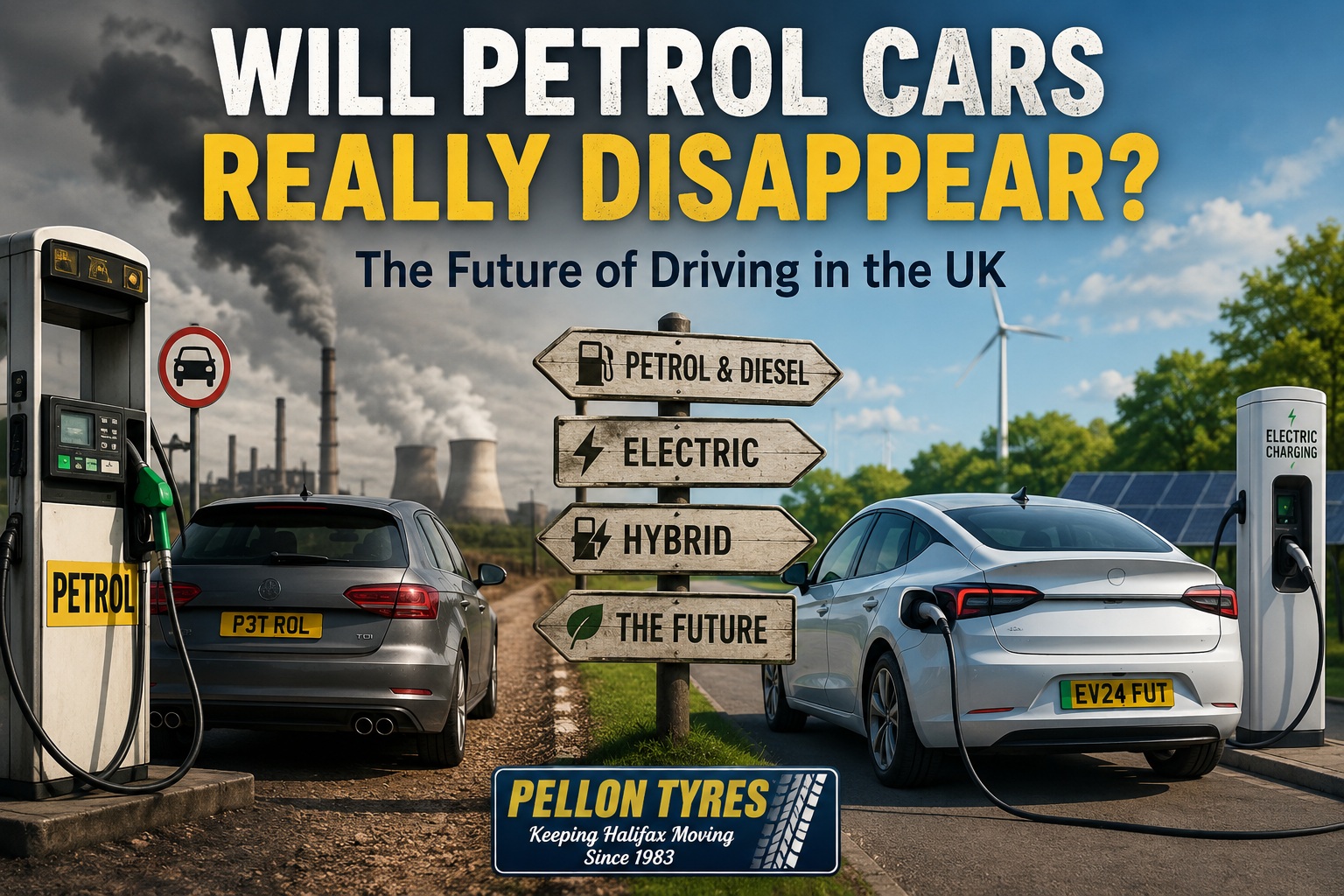
Will Petrol Cars Really Disappear

30th July 2026/0 Comments/in Eric Roberts' Motoring News/by Eric Roberts

Will Petrol Cars Really Disappear

Table of Contents

  • Will Petrol Cars Really Disappear
  • Will Petrol Cars Really Disappear
    • A Century of Petrol Power: Will Petrol Cars Really Disappear
    • Why Are Governments Encouraging Electric Cars? Will Petrol Cars Really Disappear
    • But Petrol Cars Aren’t Going Anywhere Soon
    • The Rise of the Hybrid: Will Petrol Cars Really Disappear
      • What About Classic Cars?
      • The Independent Garage Will Still Be Needed: Will Petrol Cars Really Disappear
      • Looking Back Helps Us Look Forward
      • Choice Is Good for Motorists: Will Petrol Cars Really Disappear
      • My View After Sixty Years

Will Petrol Cars Really Disappear

Will Petrol Cars Really Disappear

Will Petrol Cars Really Disappear

The Future of Motoring—An Independent Garage Owner’s View

For over sixty years, I have watched the motor industry evolve at a remarkable pace. During that time I’ve seen carburettors replaced by fuel injection, drum brakes make way for discs, manual chokes disappear almost overnight, and simple ignition systems replaced by computers more powerful than the ones that put astronauts on the Moon.

Every few years someone predicts the end of something.

“The diesel engine is finished.”

“Manual gearboxes are disappearing.”

“Independent garages won’t survive.”

Yet here we are in 2026, and motorists are still driving petrol cars, diesel cars, hybrids, and electric vehicles, all sharing the same roads around Halifax and Calderdale.

So, will petrol cars really disappear?

Personally, I don’t believe they will. I think their role will simply change over time.

A Century of Petrol Power: Will Petrol Cars Really Disappear

The petrol engine has served motorists incredibly well for well over one hundred years.

It has powered everything from the tiny original Mini to Formula One racing cars, family saloons, sports cars, and millions of reliable hatchbacks that have faithfully taken families to work, school, and holidays.

Here in Yorkshire, we’ve relied on petrol cars to climb our steep hills, travel across the Pennines, and cope with every type of weather imaginable.

Like many motorists, I’ve worked on thousands of them throughout my career.

They’ve become quieter, cleaner, safer, and far more economical than anyone could have imagined back in the 1960s when I first entered the tyre trade.

Why Are Governments Encouraging Electric Cars? Will Petrol Cars Really Disappear

There are several reasons.

One of the biggest is reducing carbon emissions.

Governments around the world want cleaner air and lower greenhouse gas emissions. Electric vehicles produce no exhaust emissions while being driven, particularly helping improve air quality in busy towns and cities.

Technology has also moved forward rapidly.

Battery range continues to improve; charging is becoming quicker, and more public charging points appear every year.

Here at Pellon Tyres we’ve certainly noticed many more electric vehicles arriving for tyres, wheel alignments, suspension work and MOTs.

But Petrol Cars Aren’t Going Anywhere Soon

This is where many headlines can be misleading.

The UK’s planned ban applies to the sale of most new petrol and diesel cars, not to the millions already on our roads.

If you own a petrol car today, nobody is coming to take it away.

You will still be able to drive it, insure it, service it and maintain it for many years to come.

In fact, I wouldn’t be surprised if well-maintained petrol cars are still travelling around Yorkshire twenty years from now.

The Rise of the Hybrid: Will Petrol Cars Really Disappear

If you ask me, hybrids represent one of the biggest success stories of recent years.

As many readers know, I recently changed my own car to a self-charging hybrid Hyundai Tucson.

It combines a petrol engine with an electric motor, giving excellent fuel economy without worrying about plugging it in every evening.

For many families, hybrids offer the best of both worlds.

They are quieter around town, economical on fuel and still perfectly suited to longer journeys across Britain.

I think they will remain extremely popular for many years.

What About Classic Cars?

One question I’m asked regularly is whether classic cars will disappear.

I honestly don’t think they will.

People still lovingly restore Morris Minors, Jaguars, Triumphs and old Fords because they are part of our motoring heritage.

Just as steam locomotives still run on preserved railways, I believe classic petrol cars will continue to appear at rallies, shows and weekend events for generations to come.

Motoring history is far too important simply to disappear.

The Independent Garage Will Still Be Needed: Will Petrol Cars Really Disappear

One thing I can say with complete confidence is that independent garages will continue to play a vital role.

Cars may be changing, but they still need:

  • tyres
  • brakes
  • steering repairs
  • suspension work
  • air conditioning servicing
  • wheel alignment
  • batteries
  • MOT testing
  • diagnostics

Even electric vehicles require skilled technicians and specialist equipment.

That’s why garages across Halifax and Calderdale continue investing in training and modern diagnostic equipment.

Our industry has always adapted.

Looking Back Helps Us Look Forward

When I first started work, many cars needed servicing every 3,000 miles.

Oil leaks were common.

Rust could destroy a vehicle in just a few years.

Engines were noisy, unreliable by today’s standards and nowhere near as efficient.

Today’s petrol engines are cleaner, more powerful and considerably more reliable.

Who knows what another twenty years will bring?

Perhaps synthetic fuels will become more common.

Hydrogen may find its place.

Battery technology will undoubtedly improve.

The future is unlikely to belong to just one solution.

Choice Is Good for Motorists: Will Petrol Cars Really Disappear

One thing I’ve learnt during my lifetime is that motorists like choice.

Some people enjoy driving electric cars.

Others prefer hybrids.

Many still love the sound and character of a petrol engine.

There is room for all of them.

The motor industry has always evolved rather than changed overnight.

My View After Sixty Years

If someone asked me whether petrol cars will completely disappear, my answer would be no.

Their numbers will gradually reduce, especially as electric vehicles become more popular, but millions of petrol-powered cars will remain on our roads for many years.

As an independent garage owner, I believe our job isn’t to tell customers what they should drive.

Our job is to keep whatever they choose safe, reliable and economical.

Whether that means servicing a tiny Citroën C1, fitting tyres to a family SUV, repairing a hybrid or carrying out diagnostics on an electric vehicle, the principle remains exactly the same.

Technology will continue to change.

Good workmanship, honest advice and friendly customer service never will.

Here at Pellon Tyres, we’re looking forward to whatever the future brings, just as we’ve embraced every change over the past six decades.

After all, motoring has always been about moving forward.

  • Peugeot 3008 Fitted with Falken
  • Citroën C3 Aircross Falken All-Season Tyres
  • A 2006 Vauxhall Astra VXR
  • Peugeot 2008 Exhaust Repair in Halifax
  • Why Does My Car Pull to One Side When Braking?
https://www.pellonautocentre.com/wp-content/uploads/2024/07/pellon-tyres-logo-509x321.jpg 0 0 Eric Roberts https://www.pellonautocentre.com/wp-content/uploads/2024/07/pellon-tyres-logo-509x321.jpg Eric Roberts2026-07-30 11:51:032026-07-30 11:54:07Will Petrol Cars Really Disappear

Wet Belt Engines

22nd July 2026/0 Comments/in Eric Roberts' Motoring News, All Car Servicing/by Eric Roberts

Wet Belt Engines

Table of Contents

  • Wet Belt Engines
  • What Is a Wet Belt? Wet Belt Engines
  • Why Were Wet Belts Introduced?
  • The Theory Was Sound: Wet Belt Engines
  • Where Things Started Going Wrong
  • Some manufacturers were more affected than others. Wet Belt Engines
  • Servicing Became More Important Than Ever
  • Independent Garages Had to Adapt: Wet Belt Engines
  • Customers Are Asking More Questions
  • Legal Action and Customer Claims: Wet Belt Engines
  • Every New Technology Has Challenges
  • Looking to the Future: Wet Belt Engines
  • Our Advice at Pellon Tyres
  • Our Recommendation for Wet Belt Owners: Wet Belt Engines

Wet Belt Engines

Wet Belt Engines – A Clever Idea That Didn’t Always Go to Plan

Wet Belt Engines

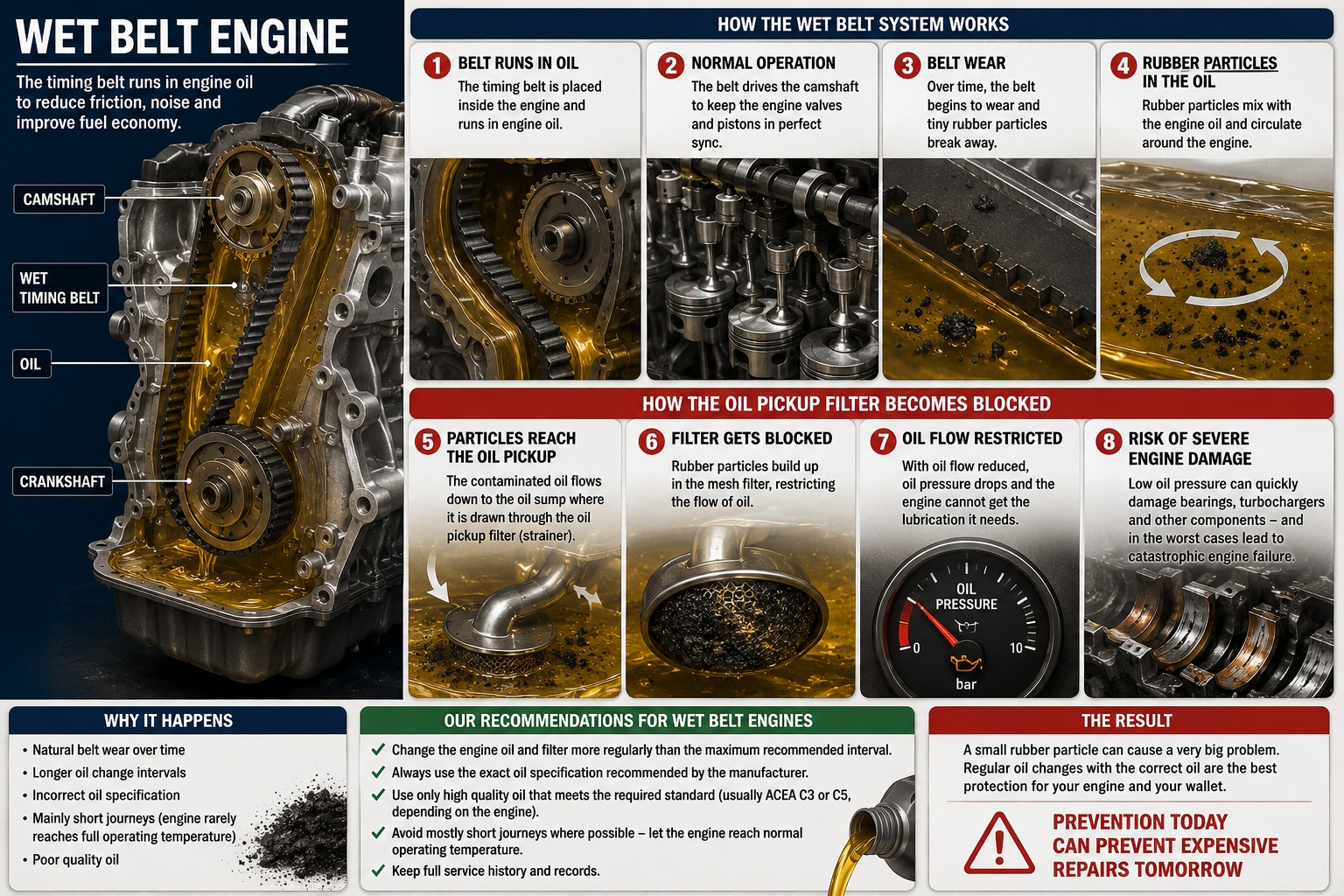
There have been many clever ideas introduced into the motor industry over the years. Some have transformed the way we drive, while others have taught engineers valuable lessons for the future.

One development that has certainly divided opinion is the wet timing belt. If you’ve owned or looked at buying certain modern petrol cars, you’ve probably heard people talking about wet belt problems. As garage owners, we’ve certainly seen more and more customers asking about them over the past few years.

At Pellon Tyres in Halifax, we believe it’s always better to understand why something was introduced before deciding whether it was a success or failure.

What Is a Wet Belt? Wet Belt Engines

For decades, most engines used either a timing chain or a dry timing belt.

A dry timing belt runs outside the engine oil and is protected by plastic covers. Manufacturers recommend replacing it at certain mileage or age intervals because, like any rubber component, it gradually wears out.

A wet belt works differently.

Instead of running outside the engine, the belt actually runs inside the engine and is lubricated by engine oil.

When engineers first developed the system, it sounded like an excellent idea.

Why Were Wet Belts Introduced?

During the last twenty years, car manufacturers have faced enormous pressure to reduce emissions and improve fuel economy.

Governments across Europe introduced increasingly strict emissions regulations, meaning every manufacturer was searching for ways to make engines cleaner and more efficient.

Engineers believed a wet belt offered several advantages.

It could:

  • Reduce internal engine friction.
  • Run more quietly than some traditional systems.
  • Improve fuel economy slightly.
  • Help lower CO₂ emissions.
  • Reduce manufacturing costs and weight.

On paper, it looked like another clever step forward in engine design.

Making driving more comfortable at a cost.

The Theory Was Sound: Wet Belt Engines

Many people assume manufacturers simply made a mistake.

The truth is rather different.

Every major manufacturer spends millions of pounds testing new technology before it reaches production.

Laboratory testing showed the wet belt system could last for many years while helping improve engine efficiency.

Unfortunately, life outside the laboratory isn’t always so predictable.

Millions of vehicles are driven in very different conditions.

Some cover long motorway journeys.

Others spend their lives making short trips around towns like Halifax, Bradford or Huddersfield.

Different climates, different driving styles, missed servicing and varying oil quality all affect how an engine performs over time.

Where Things Started Going Wrong

The biggest problem with some early wet belt engines was exactly what many mechanics feared.

Rubber and engine oil don’t always make happy companions.

Over time, some belts began to deteriorate earlier than expected.

Tiny particles of rubber entered the engine oil.

These particles could eventually block the oil pickup strainer.

Once oil circulation becomes restricted, serious engine damage can quickly follow.

Low oil pressure can damage bearings, turbochargers and other expensive engine components.

In the worst cases, complete engine failure followed.

Needless to say, repair bills could run into several thousands of pounds.

Some manufacturers were more affected than others. Wet Belt Engines

Not every wet-belt engine has experienced problems.

However, several manufacturers have faced well-publicised issues with particular engine designs.

Perhaps the best-known example is the 1.2-litre PureTech petrol engine, fitted to millions of vehicles across several brands including Peugeot, Citroën, DS, Vauxhall and Fiat.

Earlier versions of these engines became widely known for premature wet belt wear.

Ford’s early 1.0-litre EcoBoost engines also attracted attention because of wet belt concerns on certain versions.

Many owners have experienced years of reliable motoring, while others unfortunately suffered expensive failures.

As a result, manufacturers introduced revised servicing schedules, improved replacement parts and technical updates to reduce future problems.

Servicing Became More Important Than Ever

One lesson learned from wet belt engines is that regular servicing really does matter.

Modern engines are far less forgiving than older designs.

Using the correct oil specification isn’t simply a recommendation anymore.

It can be essential.

Even using an oil that almost meets the specification may not provide the protection the engine was designed around.

Missed oil changes, poor-quality oil or incorrect servicing intervals may all contribute to premature belt deterioration.

At Pellon Tyres, we always stress the importance of following the manufacturer’s servicing schedule and using the correct grade and specification of engine oil.

It might cost slightly more today, but it could save thousands of pounds later.

Independent Garages Had to Adapt: Wet Belt Engines

Like many developments in the motor trade, wet belts created fresh challenges for independent garages.

Technicians needed additional training.

Special tools became necessary.

Repair procedures became more complicated.

Diagnostic equipment continued to evolve.

Many garages invested heavily in training and equipment simply to keep pace with modern vehicle technology.

It’s another reminder that today’s independent garages are very different from those of thirty or forty years ago.

Modern mechanics need as much computer knowledge as mechanical ability.

Customers Are Asking More Questions

One positive outcome is that motorists are becoming much more interested in how their cars work.

People researching used cars now regularly ask:

“Does it have a wet belt?”

“When should it be replaced?”

“Has it been serviced properly?”

Those are sensible questions.

A fully documented service history has never been more valuable than it is today.

Legal Action and Customer Claims: Wet Belt Engines

As problems became more widely known, many owners sought compensation for expensive engine repairs.

In several countries, groups of motorists have taken legal action or joined collective claims relating to particular engine designs.

Manufacturers have also introduced warranty extensions, revised maintenance guidance and customer support programmes in some cases.

These developments show how seriously the industry has taken the concerns raised by customers.

Every New Technology Has Challenges

Wet belts certainly aren’t the only modern development that has caused debate.

Over recent years we’ve also seen the following:

  • Diesel Particulate Filters (DPFs)
  • Exhaust Gas Recirculation (EGR) valves
  • AdBlue systems
  • Dual-mass flywheels
  • Start-stop technology
  • Complex turbocharging systems

All were introduced with good intentions.

Most help reduce emissions or improve fuel economy.

Some have also introduced extra maintenance costs for vehicle owners.

That’s simply the price of engineering becoming increasingly sophisticated.

Looking to the Future: Wet Belt Engines

Many manufacturers have already modified their engine designs.

Some have improved belt materials.

Others have revised servicing recommendations.

A number have returned to timing chains on newer engines.

Engineering never stands still.

Every generation learns from the previous one.

As hybrid and electric vehicles become more common, entirely different engineering challenges will appear.

Our Advice at Pellon Tyres

If your car has a wet belt, don’t panic.

Many owners enjoy years of trouble-free motoring.

The key is simple.

Service the vehicle on time.

Use the exact engine oil recommended by the manufacturer.

Keep every service receipt.

If you are buying a used car fitted with a wet belt engine, check the service history carefully and ask whether any recommended belt replacement has already been carried out.

A little homework today could prevent a very expensive repair tomorrow.

Here at Pellon Tyres in Halifax, we see modern vehicle technology changing every year. While innovations like wet-belt engines have certainly created challenges, they have also reminded us of something we’ve always believed.

Looking after your car properly is still the best investment you can make. Regular servicing, quality parts, and expert advice remain just as important today as they were when I first entered the tyre trade over fifty years ago.

Our Recommendation for Wet Belt Owners: Wet Belt Engines

If you own a vehicle fitted with a wet belt engine, our advice is quite straightforward.

Don’t wait until the very last moment to have the engine oil changed, even if the manufacturer’s service schedule allows for longer intervals. Fresh, clean engine oil is one of the best ways of helping to protect both the belt and the rest of the engine.

Just as importantly, always make sure the garage uses the exact engine oil specification recommended by the manufacturer. Modern engine oils are carefully formulated to meet the needs of specific engines, and using the wrong oil or a cheaper alternative may increase the risk of premature belt deterioration.

Many independent specialists now believe that changing the oil and filter a little more frequently than the maximum recommended interval is sensible preventative maintenance, particularly if the vehicle is mainly used for short local journeys around towns such as Halifax and Calderdale, where the engine may rarely reach its optimum operating temperature.

The cost of an extra oil service is tiny when compared with the cost of replacing a damaged engine. At Pellon Tyres, we’ve always believed that preventative maintenance is money well spent. Looking after your car before problems develop is nearly always cheaper than repairing it afterwards.

  • Peugeot 3008 Fitted with Falken
  • Citroën C3 Aircross Falken All-Season Tyres
  • A 2006 Vauxhall Astra VXR
  • Peugeot 2008 Exhaust Repair in Halifax
  • Why Does My Car Pull to One Side When Braking?
https://www.pellonautocentre.com/wp-content/uploads/2024/07/pellon-tyres-logo-509x321.jpg 0 0 Eric Roberts https://www.pellonautocentre.com/wp-content/uploads/2024/07/pellon-tyres-logo-509x321.jpg Eric Roberts2026-07-22 07:43:032026-09-05 12:09:37Wet Belt Engines

Warning Lights A Garage Revolution

22nd July 2026/0 Comments/in Eric Roberts' Motoring News/by Eric Roberts

Warning Lights A Garage Revolution

Table of Contents

  • Warning Lights A Garage Revolution
  • How Modern Vehicle Diagnostics Have Changed the Independent Garage Trade
  • Cars Have Become Cleverer Than Ever: Warning Lights A Garage Revolution
  • Warning Lights Have Helped Garages
  • Reading Fault Codes Is Only The Beginning: Warning Lights A Garage Revolution
  • Investing In Equipment
  • Investing In People: Warning Lights A Garage Revolution
  • My Own Hyundai Experience
  • Vehicle Recalls Are Becoming More Common: Warning Lights A Garage Revolution
  • Check Your Own Vehicle
  • Looking to the Future: Warning Lights A Garage Revolution
  • Our Commitment at Pellon Tyres

Warning Lights A Garage Revolution

Warning Lights: A Garage Revolution

Warning Lights A Garage Revolution

How Modern Vehicle Diagnostics Have Changed the Independent Garage Trade

For those of us who have spent a lifetime in the motor trade, it’s amazing to think just how much our industry has changed.

When I first started working on cars over fifty years ago, there were no dashboard warning lights telling us what was wrong. There were no diagnostic computers, fault codes or software updates. If a customer arrived with a poorly running engine, we relied on experience, instinct and plenty of detective work to find the problem.

Fast forward to 2026, and the picture couldn’t be more different.

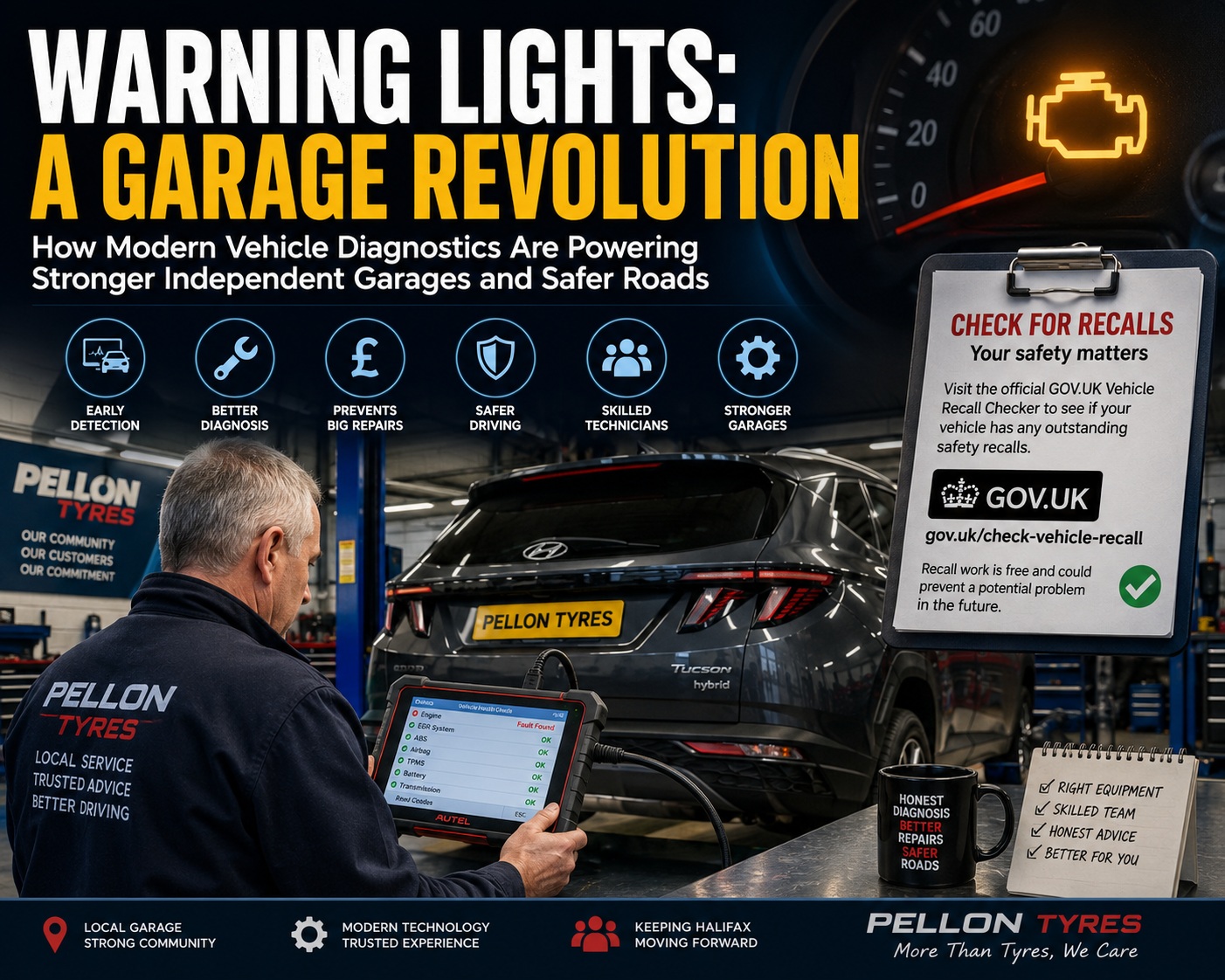
Today’s vehicles are packed with electronic control units, sensors and computers that constantly monitor almost every system on the car. If something isn’t quite right, a warning light appears on the dashboard, prompting the driver to seek professional advice.

As the owner of Pellon Tyres in Halifax, I genuinely believe these warning systems have transformed not only modern motoring but also the future of independent garages like ours.

Cars Have Become Cleverer Than Ever: Warning Lights A Garage Revolution

Modern vehicles monitor hundreds of different components every second.

The engine management system checks fuel delivery, emissions and ignition timing.

The ABS constantly monitors each wheel.

Airbag systems carry out their own safety checks every time you switch on the ignition.

Tyre pressure monitoring systems (TPMS) watch for any drop in pressure.

Hybrid vehicles, like my own recently purchased Hyundai Tucson Hybrid, monitor everything from battery temperatures to electric motors and petrol engine performance.

It’s remarkable technology.

Many motorists worry when they see a warning light appear, but in reality, these systems are there to protect both the driver and the vehicle.

Warning Lights Have Helped Garages

Some people think modern electronics have made life harder for garages.

I actually see it differently.

Over the years, warning lights have encouraged motorists to visit their local garage much sooner than they once did.

Instead of driving for months with an unnoticed fault, customers now come to us while the problem is still relatively small.

That often prevents expensive repairs later.

A failing oxygen sensor.

An EGR valve beginning to stick.

A faulty ignition coil.

A wheel speed sensor affecting the ABS system.

A blocked diesel particulate filter.

All of these can now be detected far earlier than they could twenty or thirty years ago.

Reading Fault Codes Is Only The Beginning: Warning Lights A Garage Revolution

One of the biggest misconceptions is that plugging a diagnostic computer into a vehicle instantly tells the mechanic exactly which part needs replacing.

If only it were that simple!

In reality, the fault code is simply a starting point.

A diagnostic machine may tell us there is a fault within the EGR system.

It doesn’t necessarily mean the EGR valve itself has failed.

It could be:

  • Damaged wiring.
  • A poor electrical connection.
  • A faulty sensor.
  • A sticking valve.
  • A software issue.
  • Carbon build-up.

This is where experience still matters.

A good technician doesn’t simply replace parts until the warning light disappears.

They investigate the fault properly.

That’s exactly the approach we’ve always taken here at Pellon Tyres.

We’ve never believed in replacing parts that don’t need replacing.

Investing In Equipment

Over the years, independent garages have had to invest heavily.

Modern diagnostic equipment doesn’t come cheaply.

Neither does the software required to keep it updated.

Then there’s specialist testing equipment for the following:

  • Hybrid vehicles.
  • TPMS systems. More reading: tyre pressure monitoring system problems
  • Battery registration.
  • ABS diagnosis.
  • Electronic parking brakes.
  • Air conditioning systems.
  • Wheel alignment.
  • ADAS safety systems.

These investments are substantial, but they allow independent garages to compete with main dealers while offering the personal service that customers appreciate.

Investing In People: Warning Lights A Garage Revolution

Of course, equipment on its own isn’t enough.

The most important investment any garage can make is in its technicians.

Modern mechanics need a completely different skill set compared with those of my generation.

They still need to understand engines, brakes, suspension and steering.

But they must also understand electronics.

Computer systems.

Communication networks.

Software.

Hybrid technology.

Battery management.

Electrical testing.

Today’s technician is every bit as much an electrical engineer as a traditional mechanic.

That’s why ongoing staff training has become essential.

The independent garages that continue investing in their people are the ones that will thrive over the coming years.

My Own Hyundai Experience

Ironically, I’ve recently experienced this myself.

After purchasing my Hyundai Tucson Hybrid, the engine management light appeared.

Like many motorists, my first thought was,

“I wonder what that’s all about?”

Hyundai’s diagnostic equipment identified an issue with the EGR valve, and it’s now booked in for replacement.

Without modern diagnostics, that fault could have gone unnoticed for many months.

Instead, it was detected early before it had a chance to develop into something much more serious.

That’s exactly what these systems are designed to do.

Vehicle Recalls Are Becoming More Common: Warning Lights A Garage Revolution

Another interesting development is the increasing number of vehicle recalls.

You only have to look online to see headlines talking about manufacturers recalling thousands of vehicles.

At first glance, that sounds worrying.

In reality, I think it’s actually reassuring.

Manufacturers today monitor vehicle performance far more closely than they did years ago.

If they identify a potential safety issue—even if it affects only a small number of vehicles—they are much more likely to issue a recall before problems become widespread.

That demonstrates just how seriously vehicle safety is now taken.

Check Your Own Vehicle

While researching this subject, I decided to check my own Hyundai.

It only took a couple of minutes.

I’d encourage every motorist to do exactly the same.

Visit the official GOV.UK Vehicle Recall Checker and enter your registration number.

If your vehicle has an outstanding safety recall, the manufacturer will normally carry out the work free of charge.

You can also contact your vehicle manufacturer or local main dealer, who can check your vehicle identification number (VIN) for any outstanding recalls.

It’s a simple check that offers valuable peace of mind.

Looking to the Future: Warning Lights A Garage Revolution

As I approach nearly six decades in the tyre and garage industry, I still find modern vehicle technology fascinating.

Cars have changed enormously since I first picked up a spanner.

Yet one thing hasn’t changed.

People still need a garage they can trust.

Technology will continue advancing.

Artificial intelligence will become part of vehicle diagnostics.

Electric vehicles will become increasingly common.

Software updates will become routine.

But there will always be a need for experienced technicians who understand how vehicles actually work.

Here is a related article: Toyota Aygo Light Unit Fitted

Our Commitment at Pellon Tyres

Here at Pellon Tyres in Halifax, we’ve always believed in moving with the times.

We’ve invested in modern equipment.

We’ve invested in staff training.

Most importantly, we’ve always believed in honest advice.

If your vehicle displays a warning light, don’t ignore it—but don’t panic either.

Many faults are relatively minor when caught early.

Bring your vehicle to someone who has the right equipment, the right training, and the right experience to diagnose it properly.

After all, warning lights aren’t there to frighten us.

They’re there to help keep our cars safer, more reliable, and on the road for longer.

And that’s good news for every motorist across Halifax, Calderdale, and beyond.

  • Peugeot 3008 Fitted with Falken
  • Citroën C3 Aircross Falken All-Season Tyres
  • A 2006 Vauxhall Astra VXR
  • Peugeot 2008 Exhaust Repair in Halifax
  • Why Does My Car Pull to One Side When Braking?
https://www.pellonautocentre.com/wp-content/uploads/2024/07/pellon-tyres-logo-509x321.jpg 0 0 Eric Roberts https://www.pellonautocentre.com/wp-content/uploads/2024/07/pellon-tyres-logo-509x321.jpg Eric Roberts2026-07-22 04:22:052026-09-19 10:54:55Warning Lights A Garage Revolution

Police and Drivers Eye Test

21st July 2026/0 Comments/in Eric Roberts' Motoring News/by Eric Roberts

Police and Drivers Eye Test

Table of Contents

  • Police and Drivers Eye Test
  • Does This Rule Only Apply to Older Drivers? Police and Drivers Eye Test
  • Why Do Police Carry Out Eyesight Tests? Police and Drivers Eye Test
  • What Is the Legal Requirement? Police and Drivers Eye Test
  • Don’t Forget Your Glasses! Police and Drivers Eye Test
  • At Pellon Tyres We Think About Safety Every Day
  • A Simple Tip: Police and Drivers Eye Test
  • Looking After Yourself Is Looking After Your Car
  • Safe Motoring Starts With You: Police and Drivers Eye Test

Police and Drivers Eye Test


Can the Police Ask You to Read a Number Plate? The answer may surprise you.

Police and Drivers Eye Test

Many years ago, when I first started driving, one of the first things we were told was that good eyesight is one of the most important safety features on any car.

Today, modern vehicles are packed with technology. We have automatic emergency braking, lane-keeping systems, adaptive cruise control and reversing cameras.

But none of those clever gadgets can replace one thing…

The driver’s eyesight.

Recently, someone asked me an interesting question.

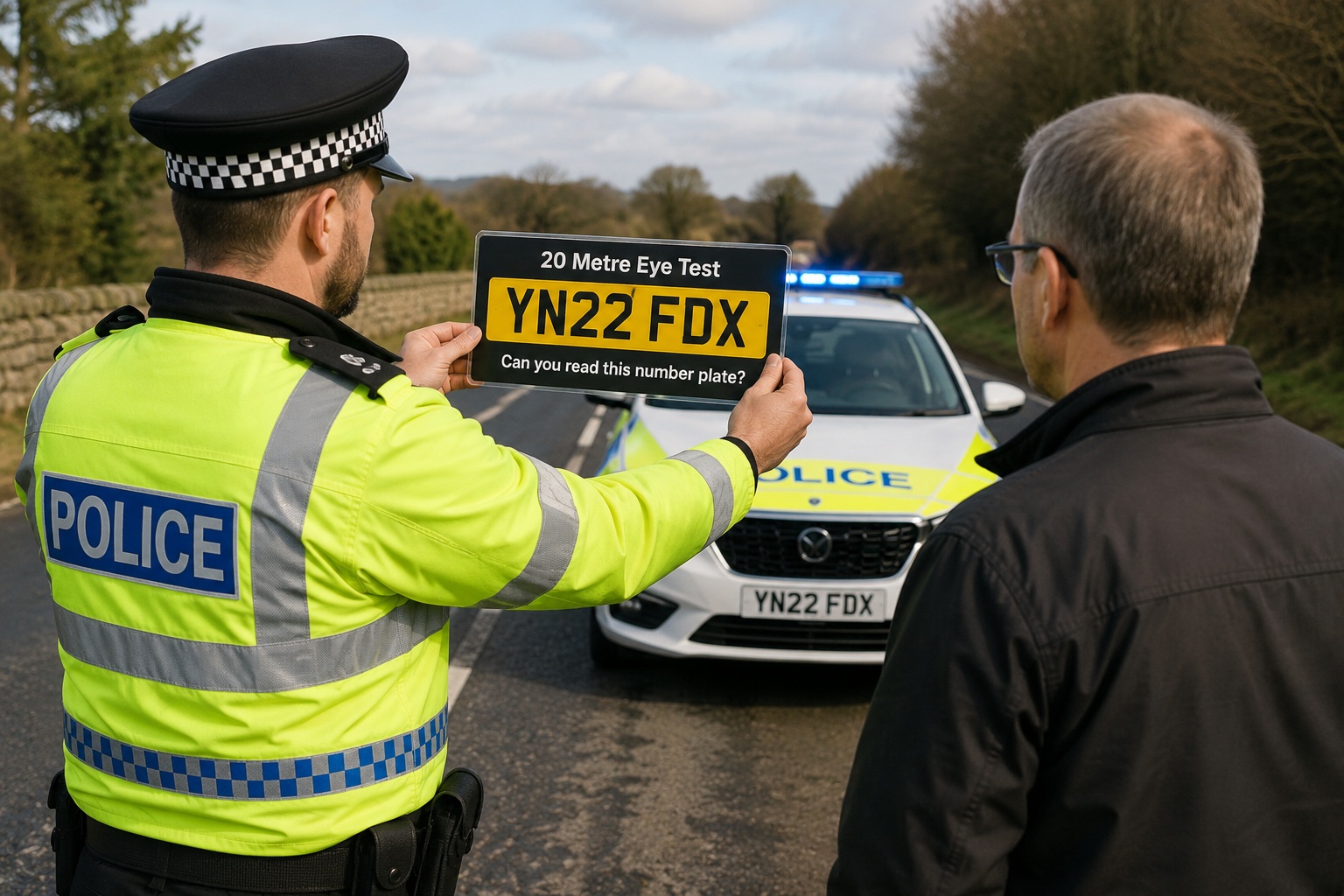
“If the police stop me and ask me to read a number plate, can I wear my driving glasses?”

The answer is a simple yes.

If you normally wear glasses or contact lenses for driving, you should wear them during the eyesight test.

Does This Rule Only Apply to Older Drivers? Police and Drivers Eye Test

No, it doesn’t.

This is one of the biggest misconceptions about UK driving law.

Many people believe the police only carry out eyesight tests on older motorists.

That simply isn’t true.

The legal eyesight standard applies to every driver, whether you’ve just passed your driving test at 17 or you’ve been driving for 60 years.

If a police officer has reason to believe your eyesight may not meet the legal standard, they can ask any driver, regardless of age, to complete a roadside eyesight check.

So whether you’re 18, 38, 58 or 78…

The rules are exactly the same.

Why Do Police Carry Out Eyesight Tests? Police and Drivers Eye Test

Most motorists will never experience one.

However, police officers still have the power to ask a driver to read a vehicle registration plate if they have concerns about their eyesight.

It is a quick and simple roadside check that helps ensure drivers can see clearly enough to drive safely.

After all, if you can’t clearly see a number plate ahead of you…

…how will you spot a child stepping into the road?

Or a cyclist?

Or a motorcyclist filtering through traffic?

What Is the Legal Requirement? Police and Drivers Eye Test

In the UK, drivers must be able to read a standard vehicle registration plate from 20 metres away.

If you need glasses or contact lenses to do this…

That’s perfectly acceptable.

In fact, you should be wearing them.

Many people wear glasses only for distance vision.

Others wear contact lenses.

Some drivers don’t need either.

The important thing is that every driver must be able to meet the legal eyesight standard whenever they drive.

Don’t Forget Your Glasses! Police and Drivers Eye Test

This is where some motorists come unstuck.

They leave their glasses at home.

Or they forget them in another jacket.

Or perhaps they think,

“I’m only driving around the corner.”

Unfortunately, your eyesight doesn’t know how far you’re travelling.

Whether you’re driving to the local supermarket or heading across Yorkshire, you still need to meet the legal eyesight standard.

At Pellon Tyres We Think About Safety Every Day

When customers visit Pellon Tyres, they naturally expect us to talk about tyres, brakes, suspension and wheel alignment.

But road safety is much bigger than mechanical parts.

Good tyres help your car stop.

Good brakes help avoid collisions.

Correct wheel alignment keeps your vehicle stable.

Yet none of these matter if the driver cannot clearly see the road ahead.

A Simple Tip: Police and Drivers Eye Test

If you wear driving glasses…

Keep a spare pair in the car.

It could save your journey one day if your main glasses are damaged or misplaced.

Looking After Yourself Is Looking After Your Car

Many of us find our eyesight changes as we get older.

That’s perfectly normal.

Equally, thousands of younger drivers also wear glasses or contact lenses every day.

The law doesn’t judge your age.

It simply asks one question:

Can you see well enough to drive safely?

Regular eye tests are just as important as having your car serviced.

After all, your eyes are every bit as important as your tyres.

Safe Motoring Starts With You: Police and Drivers Eye Test

At Pellon Tyres, we’ve always believed that safe motoring is about more than simply fitting quality tyres.

It’s about helping local motorists stay safe on Yorkshire’s roads.

So next time you climb behind the wheel…

Check your tyres.

Check your lights.

Fasten your seatbelt.

And if you wear driving glasses…

Don’t forget to put them on.

Because the most important safety feature in any vehicle isn’t the latest technology…

It’s the driver being able to see clearly.

  • Peugeot 3008 Fitted with Falken
  • Citroën C3 Aircross Falken All-Season Tyres
  • A 2006 Vauxhall Astra VXR
  • Peugeot 2008 Exhaust Repair in Halifax
  • Why Does My Car Pull to One Side When Braking?
https://www.pellonautocentre.com/wp-content/uploads/2024/07/pellon-tyres-logo-509x321.jpg 0 0 Eric Roberts https://www.pellonautocentre.com/wp-content/uploads/2024/07/pellon-tyres-logo-509x321.jpg Eric Roberts2026-07-21 12:19:332026-07-21 12:20:57Police and Drivers Eye Test

Electric Cars and the MOT Test

10th July 2026/0 Comments/in Eric Roberts' Motoring News/by Eric Roberts

Electric Cars and the MOT Test

Table of Contents

  1. Electric Cars and the MOT Test
  2. I’ve Seen Enormous Changes in My Lifetime: Electric Cars and the MOT Test
  3. EVs Still Need Looking After
  4. Tyres Will Become Even More Important: Electric Cars and the MOT Test
  5. Regenerative Braking Doesn’t Mean Brakes Last Forever
  6. Suspension Will Remain Big Business for Garages: Electric Cars and the MOT Test
  7. Diagnostics are becoming more important.
  8. Battery Health Could Become the New Engine Health: Electric Cars and the MOT Test
  9. ADAS Is Another Growing Area
  10. The MOT Will Have to Evolve Too: Electric Cars and the MOT Test
  11. Will Electric Cars Kill the Independent Garage?
  12. Garages Must Move with the Times: Electric Cars and the MOT Test
  13. My Own Experience with Hybrid Motoring
  14. Halifax Garages Will Continue to Have an Important Role
  15. The Next Ten Years Will Be Fascinating: Electric Cars and the MOT Test

Electric Cars and the MOT Test

Electric Cars and the MOT Test

Electric Cars Are Changing the UK Garage Trade – But Independent Garages Aren’t Going Anywhere

There is no getting away from it now.

Electric cars are becoming an increasingly common sight on British roads.

Here in Halifax and across Calderdale, we’re seeing more electric and hybrid vehicles every year. Some people love them, others aren’t so sure, and plenty of motorists are still perfectly happy with their petrol or diesel cars.

That’s fine by me.

I’ve spent most of my life in the motor trade, and if there’s one thing I’ve learnt, it’s that the industry never stands still.

Cars change.

Technology changes.

Garages have to change with them.

The electric vehicle revolution is simply the latest chapter in a story that’s been evolving ever since the first motor cars appeared on British roads.

I’ve Seen Enormous Changes in My Lifetime: Electric Cars and the MOT Test

When I first entered the motor trade, cars were incredibly simple compared with today’s vehicles.

There were no computers controlling the engine.

No touchscreen displays.

No lane-keeping systems.

No cameras watching the road.

Certainly no enormous battery underneath the floor powering the entire vehicle!

A good mechanic could often diagnose a fault simply by listening to the engine.

Those days haven’t completely disappeared, but modern vehicle repair is increasingly about combining traditional mechanical knowledge with computers, electronics and sophisticated diagnostic equipment.

Electric cars are accelerating that change.

Electric Cars and the MOT Test

EVs Still Need Looking After

One of the biggest myths about electric cars is that they don’t need servicing or maintenance.

It’s true that a fully electric vehicle doesn’t have engine oil, spark plugs, a conventional exhaust system or a timing belt.

There’s also no traditional clutch.

But an electric car still has plenty of components that require inspection and maintenance.

It still has tyres.

It still has brakes.

It still has suspension.

It still has steering.

It still has air conditioning.

And it still needs an MOT once it reaches the required age.

In fact, because many electric vehicles are considerably heavier than equivalent petrol cars, tyres and suspension components can face additional demands.

Tyres Will Become Even More Important: Electric Cars and the MOT Test

Naturally, this is something we know plenty about here at Pellon Tyres.

Electric cars produce instant torque.

Put your foot down and the power arrives immediately.

Combine that with the additional weight of a large battery pack, and you can understand why tyres have such an important job to do.

Tyre manufacturers have responded by developing products specifically suited to electric vehicles.

These tyres may be designed to carry heavier loads, reduce rolling resistance and keep road noise to a minimum.

That last point is especially interesting.

When there’s no petrol or diesel engine making noise, you suddenly notice the sound of the tyres much more.

That’s why companies such as Michelin, Continental, Falken and other leading manufacturers continue developing quieter tyre technology.

Regenerative Braking Doesn’t Mean Brakes Last Forever

Many electric and hybrid vehicles use regenerative braking.

Instead of relying entirely on conventional brakes, the electric motor helps slow the vehicle while recovering energy and returning it to the battery.

This can reduce wear on brake pads and discs.

However, there’s another side to the story.

Because the conventional brakes may be used less frequently, corrosion can sometimes become a problem.

Brake discs can develop rust, and components can become stiff if they aren’t regularly inspected.

So while EV brakes may wear differently, they still need checking.

Suspension Will Remain Big Business for Garages: Electric Cars and the MOT Test

Suspension is another area where electric vehicles still require traditional garage expertise.

A heavy battery pack adds considerable weight.

That weight has to be supported by springs, shock absorbers, bushes, ball joints and other suspension components.

Add our Yorkshire potholes into the equation and you’ve got a recipe for wear and tear!

Anyone who regularly drives around Halifax and Calderdale knows exactly what I mean.

It only takes one deep pothole to damage a tyre, knock out the wheel alignment or put additional strain on suspension components.

Electric or petrol, the laws of physics remain the same.

Diagnostics are becoming more important.

This is probably one of the biggest changes facing the motor trade.

Modern cars are effectively computers on wheels.

They contain numerous electronic control units constantly monitoring the vehicle.

Electric vehicles take this even further.

Battery management systems monitor battery temperature, voltage and charging performance.

Other systems control electric motors, thermal management, regenerative braking and charging.

When something goes wrong, technicians increasingly need advanced diagnostic equipment to identify the problem.

The days of simply lifting the bonnet and spotting a broken wire are disappearing fast.

Battery Health Could Become the New Engine Health: Electric Cars and the MOT Test

This is something I find particularly interesting.

When buying a used petrol or diesel car, people traditionally ask about the engine.

Does it burn oil?

Has the timing belt been changed?

Is there a full service history?

With electric vehicles, the big question will increasingly become:

What’s the condition of the battery?

Battery health could become one of the most important factors determining the value of a used electric car.

Customers will want to know how much capacity remains and whether the expected driving range has deteriorated.

I can easily imagine battery health reports becoming a normal part of buying and selling used electric vehicles.

ADAS Is Another Growing Area

Another major development is Advanced Driver Assistance Systems, usually known as ADAS.

Modern vehicles can now have automatic emergency braking, lane-keeping assistance, adaptive cruise control, parking systems and numerous cameras and sensors.

These systems can require recalibration after certain repairs.

For example, replacing a windscreen, carrying out suspension repairs or adjusting wheel alignment may affect sensors and cameras.

This creates another new area of work for modern garages.

The equipment isn’t cheap, and technicians need proper training, but it’s another example of how the motor trade is evolving rather than disappearing.

The MOT Will Have to Evolve Too: Electric Cars and the MOT Test

Electric vehicles still require an MOT once they reach the appropriate age.

Many of the familiar safety checks remain exactly the same.

Tyres must be legal.

Brakes must work properly.

Suspension must be safe.

Lights, seatbelts, steering and windscreens still need inspecting.

However, as the number of electric vehicles grows, I expect MOT testing will continue evolving to reflect changes in vehicle technology.

Battery safety, electronic systems and advanced driver assistance features could become increasingly important in the future.

The MOT has changed many times over the years, and I’m sure it will change many more times yet.

Will Electric Cars Kill the Independent Garage?

Personally, I don’t think so.

The work will change, certainly.

Electric vehicles have fewer traditional engine components.

There are no oil changes on fully electric cars.

No exhaust systems.

No spark plugs.

No conventional timing belts.

But cars will always need maintaining.

They’ll still hit potholes.

They’ll still need tyres.

Suspension components will still wear.

Air-conditioning systems will still require servicing.

Electronic faults will still occur.

And as vehicles become increasingly complex, skilled technicians could become more valuable than ever.

Garages Must Move with the Times: Electric Cars and the MOT Test

The independent garages that succeed will be the ones willing to adapt.

That’s always been the case.

When fuel injection arrived, garages had to learn about it.

When catalytic converters became standard, we adapted.

When computer diagnostics became essential, we invested in equipment.

When tyre pressure monitoring systems arrived, we learnt how to diagnose and repair them.

Electric vehicles are simply the next stage.

Garages that invest sensibly in training and technology will continue looking after their customers for many years to come.

My Own Experience with Hybrid Motoring

I’ve recently joined the hybrid world myself after buying a Hyundai Tucson self-charging hybrid.

And I must say, it’s a lovely car that drives like a dream.

The technology is impressive.

Driving around town, the vehicle can move quietly using electric assistance, while the petrol engine takes over when required.

Regenerative braking helps recover energy that would otherwise be wasted.

Of course, mine isn’t a fully electric car, but it has certainly given me a greater appreciation of how quickly vehicle technology is changing.

Having spent a lifetime around cars, I find these developments fascinating.

Halifax Garages Will Continue to Have an Important Role

People sometimes talk about the future as though every independent garage will suddenly disappear.

I don’t believe that for one minute.

Motorists still value local businesses they can trust.

They want someone to explain a problem in straightforward language.

They want honest advice.

And they want to know that work will only be carried out when it’s genuinely needed.

That’s always been our philosophy at Pellon Tyres.

Whether the car runs on petrol, diesel, electricity or a combination of both doesn’t change that basic principle.

The Next Ten Years Will Be Fascinating: Electric Cars and the MOT Test

I think we’re entering one of the most interesting periods the motor trade has ever experienced.

Petrol and diesel cars will remain on British roads for many years.

Hybrids will continue growing in popularity.

Fully electric cars will become increasingly common.

And garages will adapt to look after all of them.

The tools may change.

The training may change.

The diagnostic equipment will certainly change.

But the basic job remains the same.

Keeping customers’ vehicles safe, reliable and roadworthy.

After spending most of my working life in the motor trade, I’ve witnessed incredible changes.

And I suspect there are plenty more still to come.

Here at Pellon Tyres in Halifax, we’ll continue doing what we’ve always done: moving with the times, learning about new technology and providing honest advice to motorists throughout Halifax, Calderdale and the surrounding Yorkshire area.

Because cars may change enormously, but good customer service never goes out of date.

A Polestar electric car gets 4 new tyres

  • Peugeot 3008 Fitted with Falken
  • Citroën C3 Aircross Falken All-Season Tyres
  • A 2006 Vauxhall Astra VXR
  • Peugeot 2008 Exhaust Repair in Halifax
  • Why Does My Car Pull to One Side When Braking?
https://www.pellonautocentre.com/wp-content/uploads/2024/07/pellon-tyres-logo-509x321.jpg 0 0 Eric Roberts https://www.pellonautocentre.com/wp-content/uploads/2024/07/pellon-tyres-logo-509x321.jpg Eric Roberts2026-07-10 13:32:092026-09-15 07:19:08Electric Cars and the MOT Test

Why Tyre Safety Is Everyone’s Responsibility

8th July 2026/0 Comments/in Eric Roberts' Motoring News/by Eric Roberts

Why Tyre Safety Is Everyone’s Responsibility

Table of Contents

  • Why Tyre Safety Is Everyone’s Responsibility
  • Cars Have Changed Dramatically: Why Tyre Safety Is Everyone’s Responsibility
  • Technology Has Moved Forward
  • What We See Every Day: Why Tyre Safety Is Everyone’s Responsibility
  • Modern Life Is Busy
  • The Importance of Regular Checks: Why Tyre Safety Is Everyone’s Responsibility
  • Education Is Improving
  • Premium Tyres Are About More Than Price: Why Tyre Safety Is Everyone’s Responsibility
  • Yorkshire Roads Can Be Demanding
  • It’s a shared responsibility. Why Tyre Safety Is Everyone’s Responsibility
  • Looking Ahead

Why Tyre Safety Is Everyone’s Responsibility

Why Tyre Safety Is Everyone’s Responsibility

Why Tyre Safety Is Everyone's Responsibility

After more than forty years in the tyre trade, I’ve come to one simple conclusion.

Most motorists genuinely want to look after their cars.

The trouble is, modern life gets in the way.

Between work, family commitments, shopping, school runs, and everything else that fills our busy lives, tyres often become one of those things we only think about when the MOT is due or a garage points out that they need replacing.

Here at Pellon Tyres in Halifax, we completely understand that.

Tyres aren’t the most exciting part of owning a car, but they are certainly one of the most important.

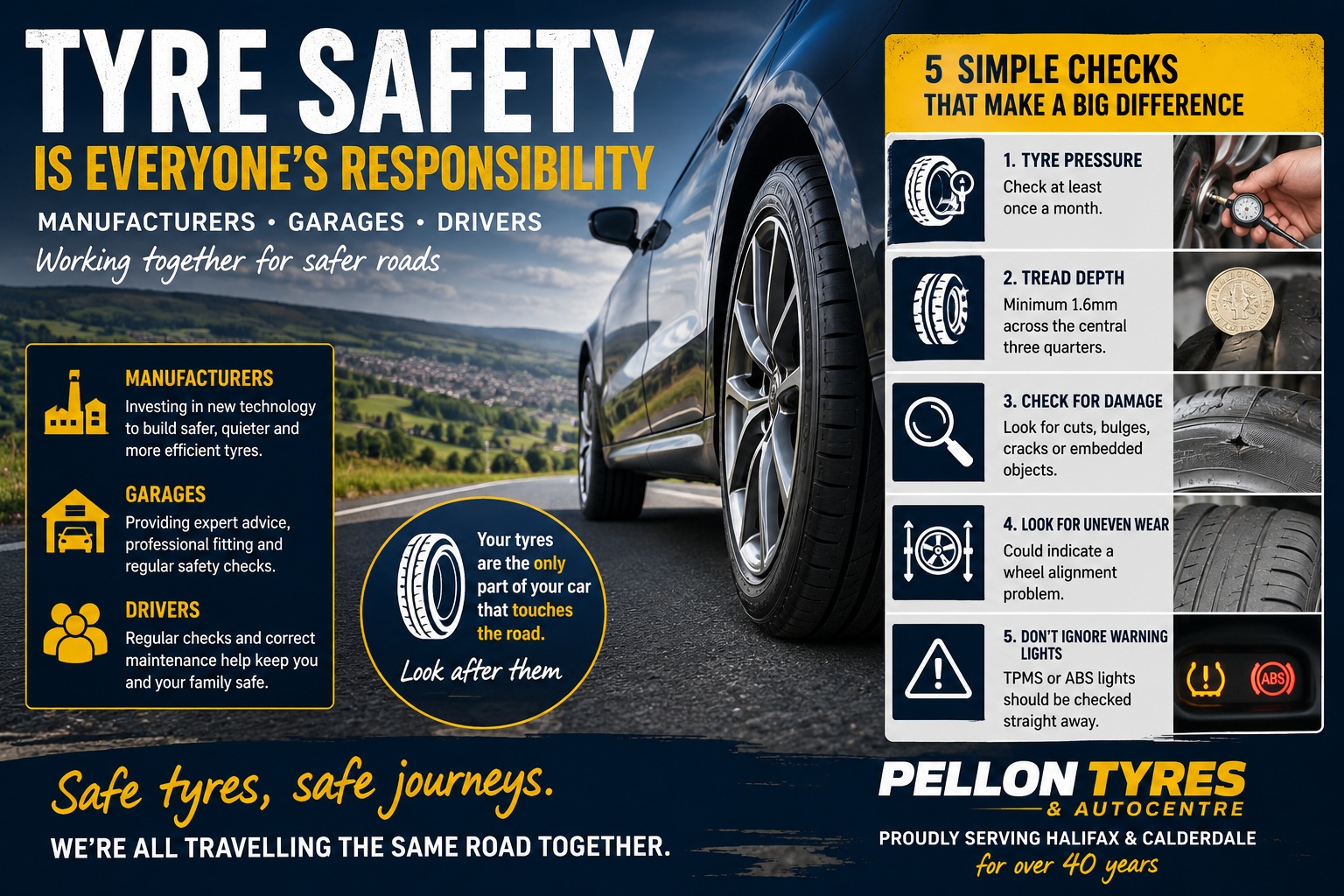
After all, your tyres are the only part of your vehicle that actually touches the road.

Everything else—your steering, suspension, and brakes—depends on those four small contact patches, each about the size of the palm of your hand.

That’s why I believe tyre safety isn’t just the responsibility of one person or one company.

It’s something we all share.

Cars Have Changed Dramatically: Why Tyre Safety Is Everyone’s Responsibility

When I first entered the tyre industry, cars were much smaller and much lighter than they are today.

Many family cars had relatively narrow tyres, modest engine power, and very little in the way of electronic safety systems.

Fast forward to today and everything has changed.

Modern SUVs have become one of the UK’s favourite types of vehicle.

Hybrid and electric cars are becoming increasingly common, and many vehicles produce two or three times more power than their predecessors.

All of this places greater demands on modern tyres.

Manufacturers have responded by developing stronger carcasses, improved tread compounds, shorter braking distances and better wet-weather performance.

Tyres today are remarkable pieces of engineering.

Technology Has Moved Forward

Many motorists are surprised when they discover just how much technology now goes into a modern tyre.

Over recent years we’ve seen the introduction of the following:

  • Run-flat tyres.
  • Self-sealing tyres.
  • Tyres designed specifically for electric vehicles.
  • Low rolling resistance tyres for improved fuel economy.
  • Noise-reducing tyre technology.
  • Advanced silica and rubber compounds for better grip.

These innovations make driving safer, quieter and more economical.

Unfortunately, many drivers have never had these improvements properly explained.

That’s no criticism of motorists.

Sometimes the tyre industry itself hasn’t always done enough to explain why modern tyres have become such sophisticated products.

What We See Every Day: Why Tyre Safety Is Everyone’s Responsibility

Working at Pellon Tyres gives us a unique view of what is happening on Britain’s roads.

Every single day we inspect tyres from motorists throughout Halifax, Calderdale and the surrounding areas.

Most are perfectly acceptable.

Some simply need replacing because they’ve reached the end of their useful life.

Occasionally, however, we remove tyres that have worn right down to the steel reinforcing cords.

Whenever I see that, I still find it worrying.

Usually the customer is genuinely surprised.

They simply hadn’t realised how badly worn the tyres had become.

Tyres wear away so gradually that it can happen almost without people noticing.

That’s why regular checks are so important.

Modern Life Is Busy

Life moves at a tremendous pace these days.

People are working longer hours.

Families are constantly on the move.

Cars are covering more miles than ever before.

It’s hardly surprising that checking tyre pressures or measuring tread depth isn’t always at the top of the weekend jobs list.

But spending just a few minutes checking your tyres every month could make a huge difference.

It’s one of the easiest safety checks any driver can carry out.

The Importance of Regular Checks: Why Tyre Safety Is Everyone’s Responsibility

Fortunately, tyre maintenance doesn’t need to be complicated.

A few simple checks can help keep both you and your family safe.

Check your tyre pressures regularly.

Look at the tread depth.

Inspect the tyres for cuts, bulges or damage.

Keep an eye out for uneven wear that could indicate a wheel alignment problem.

These simple habits not only improve safety but can also help your tyres last longer and improve your vehicle’s fuel economy.

Education Is Improving

Thankfully, organisations such as TyreSafe continue doing excellent work educating motorists about tyre safety.

Their campaigns have undoubtedly helped raise awareness over recent years.

Garages also have an important role to play.

Here at Pellon Tyres we’ve always believed that our job isn’t simply fitting tyres.

We also like explaining why a tyre needs replacing, what caused the wear and how customers can get the very best from their next set.

An informed customer is almost always a safer customer.

Premium Tyres Are About More Than Price: Why Tyre Safety Is Everyone’s Responsibility

One question we’re often asked is why premium tyres cost more than budget brands.

The answer isn’t simply the name on the sidewall.

Premium manufacturers invest millions of pounds every year developing safer tread patterns, quieter tyres and rubber compounds that improve grip in both wet and dry conditions.

They also spend enormous amounts of time testing their products under every conceivable driving condition.

That investment eventually reaches the motorist in the form of improved braking, better handling and increased safety.

Yorkshire Roads Can Be Demanding

Living and working in Halifax means we experience some challenging road conditions.

One minute you’re driving through town.

The next you’re climbing towards Ripponden, Hebden Bridge or the Pennine roads where heavy rain, fog and winter frost can quickly change the conditions.

Good tyres provide valuable reassurance in situations like these.

They help shorten braking distances, improve steering response and reduce the likelihood of aquaplaning during heavy rain.

It’s a shared responsibility. Why Tyre Safety Is Everyone’s Responsibility

I don’t believe tyre safety is solely the responsibility of tyre manufacturers.

Nor is it entirely down to garages.

Drivers also have an important role to play.

Manufacturers continue developing better and safer tyres.

Independent garages provide honest advice, professional fitting, and regular inspections.

Motorists can help by checking their tyres regularly and asking questions whenever they’re unsure.

When all three work together, everyone benefits.

Looking Ahead

The tyre industry will continue evolving.

New compounds, quieter tread patterns and tyres designed specifically for hybrid and electric vehicles are already becoming increasingly common.

As technology moves forward, education becomes even more important.

After more than four decades fitting tyres here in Halifax, one thing has never changed.

Tyres remain one of the most important safety features on any vehicle.

They deserve a little more attention than they often receive.

Here at Pellon Tyres we’ll continue doing our part by offering honest advice, quality products and professional workmanship to motorists throughout Halifax, Calderdale and the surrounding areas.

Because when it comes to tyre safety, we’re all travelling the same road together.

  • Peugeot 3008 Fitted with Falken
  • Citroën C3 Aircross Falken All-Season Tyres
  • A 2006 Vauxhall Astra VXR
  • Peugeot 2008 Exhaust Repair in Halifax
  • Why Does My Car Pull to One Side When Braking?
https://www.pellonautocentre.com/wp-content/uploads/2024/07/pellon-tyres-logo-509x321.jpg 0 0 Eric Roberts https://www.pellonautocentre.com/wp-content/uploads/2024/07/pellon-tyres-logo-509x321.jpg Eric Roberts2026-07-08 10:18:322026-07-08 10:19:37Why Tyre Safety Is Everyone’s Responsibility

Kumho Tyres Update

7th July 2026/0 Comments/in Eric Roberts' Motoring News/by Eric Roberts

Kumho Tyres Update

Table of Contents

  • Kumho Tyres Update
  • A South Korean Success Story: Kumho Tyres Update
  • Quality Without the Premium Price
  • Motorsport Helps Build Better Tyres: Kumho Tyres Update
  • More Than Just Performance
  • Why Garages Can’t Sell Every Brand: Kumho Tyres Update
  • Choosing the Right Tyre
  • Yorkshire Roads Demand Good Tyres: Kumho Tyres Update
  • Technology Never Stands Still
  • Honest Advice Comes First: Kumho Tyres Update
  • Looking Towards the Future

Kumho Tyres Update

Kumho Tyres Update

Kumho Tyres – From South Korea to the Roads of Yorkshire

There are hundreds of tyre brands available around the world today, but only a handful have managed to build a reputation for offering quality, reliability and value for money all at the same time. One of those manufacturers is Kumho Tyres.

Although we don’t currently supply Kumho tyres here at Pellon Tyres in Halifax, it is still a brand that many motorists ask about. Over the years I have stocked and supplied many different tyre manufacturers, and Kumho has certainly earned its place as one of the better-known names in the mid-range tyre market.

One thing I’ve learnt during more than forty years in the tyre industry is that manufacturers come and go, brands change direction and dealer agreements evolve. A tyre we sell today may not be part of our range in five years’ time, while another manufacturer may become one of our best sellers. That’s simply the way the tyre business works.

A South Korean Success Story: Kumho Tyres Update

Kumho Tyres began life in South Korea during the early 1960s. Like many of today’s successful tyre manufacturers, the company started modestly before steadily expanding into overseas markets.

South Korea has become one of the world’s leading automotive manufacturing nations. Alongside famous vehicle manufacturers, the country also developed several internationally respected tyre companies.

Today, Kumho exports tyres to well over one hundred countries and has built manufacturing plants across several continents. Their products can be found on everything from small family hatchbacks to executive saloons, SUVs and light commercial vehicles.

Many motorists are surprised when they discover just how large the company has become.

Kumho Tyres Update

Quality Without the Premium Price

One reason Kumho has grown so successfully is its ability to offer an excellent balance between quality and affordability.

Not every driver wants or needs the most expensive premium tyre available.

Many customers simply want a tyre that performs well in all weather conditions, lasts a respectable number of miles and offers good value for money.

Kumho has spent many years developing products that fit comfortably into this market.

The company has invested heavily in research and development, producing tyres that offer excellent wet-weather grip, reduced road noise and improved fuel efficiency.

Modern motorists also expect tyres to perform well throughout their entire lifespan, and Kumho has worked hard to achieve this.

Motorsport Helps Build Better Tyres: Kumho Tyres Update

Like many leading tyre manufacturers, Kumho has long recognised the importance of motorsport.

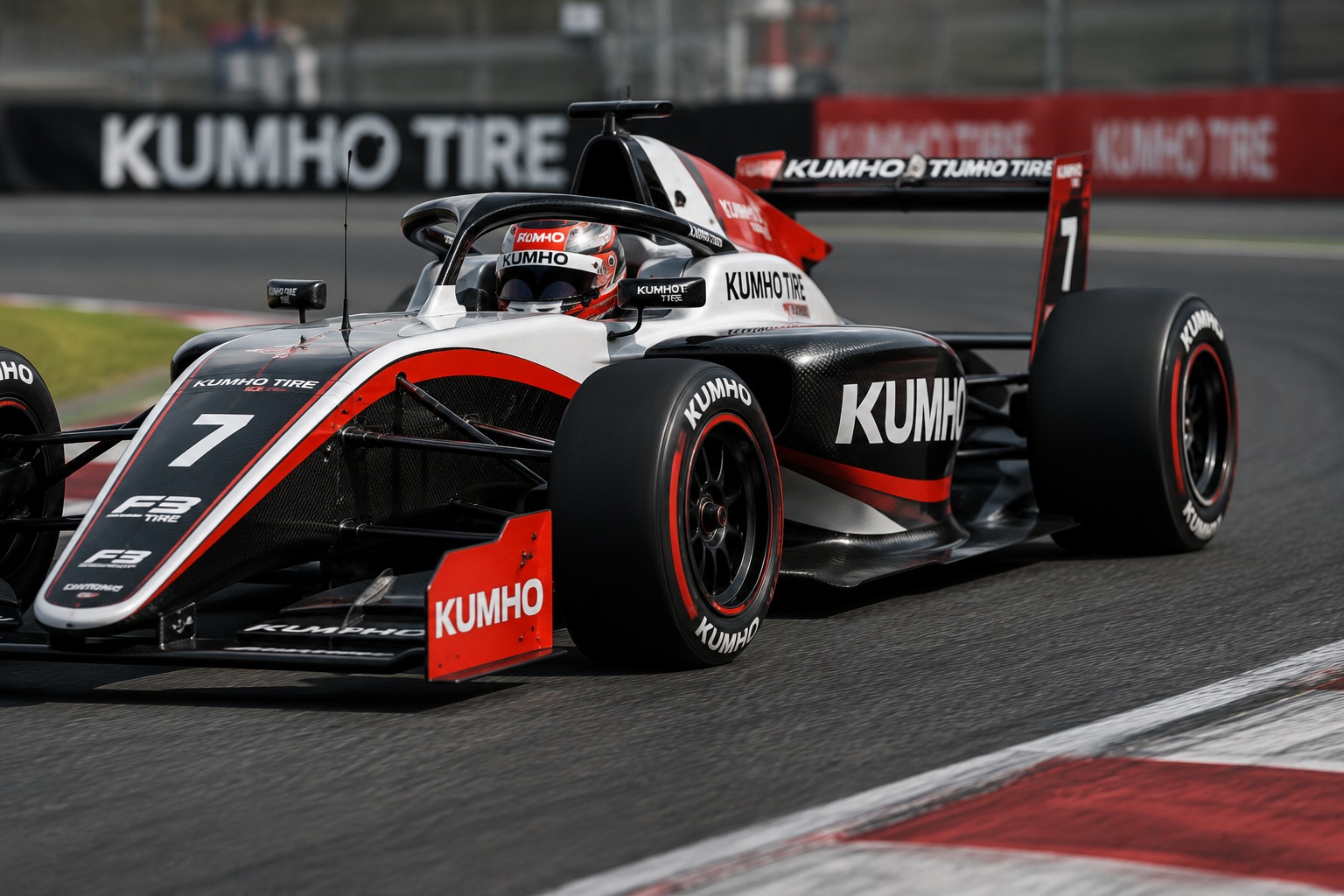
Over the years the company has supplied tyres for various racing championships, circuit racing, rallying and Formula 3 events throughout Europe.

Some people wonder why tyre manufacturers spend millions supporting motorsport.

The answer is actually quite simple.

Motor racing places incredible demands on tyres. High speeds, heavy braking, rapid acceleration and extreme cornering all create valuable information that engineers can use when designing future road tyres.

Technology developed on the race circuit often finds its way onto everyday family cars a few years later.

That is one reason motorsport continues to play such an important role in tyre development.

More Than Just Performance

While Kumho’s motorsport activities often grab the headlines, the vast majority of their tyres spend their lives carrying ordinary families safely to work, school or on holiday.

Their range now includes tyres for:

  • Small city cars
  • Family hatchbacks
  • Executive vehicles
  • SUVs
  • Four-wheel drives
  • Electric vehicles
  • Light commercial vans

As vehicle technology has changed, tyre manufacturers like Kumho have had to keep pace.

Electric vehicles, for example, produce instant torque and are generally heavier because of their battery packs. This means tyres have to cope with greater loads while remaining quiet and energy-efficient.

Modern tyre design is becoming more complicated every year.

Why Garages Can’t Sell Every Brand: Kumho Tyres Update

Customers occasionally ask why we don’t stock every tyre manufacturer.

The simple answer is that it would be impossible.

There are literally hundreds of tyre brands available worldwide.

Every one of them has different tread patterns, speed ratings, load ratings, seasonal products and vehicle applications.

To keep every size from every manufacturer in stock would require a warehouse the size of a football stadium!

Instead, independent garages like Pellon Tyres carefully select manufacturers that offer dependable quality, excellent availability and strong support.

As customer demand changes, so do the brands we choose to recommend.

That doesn’t mean other manufacturers are poor products.

Far from it.

It simply reflects the changing nature of the tyre industry.

Choosing the Right Tyre

One thing I always tell customers is not to become too focused on one particular brand.

The most important thing is fitting the correct tyre for both the vehicle and the driver’s needs.

Here in Halifax we see every type of driving imaginable.

Some customers only drive locally between Halifax town centre and nearby villages.

Others commute daily towards Leeds, Bradford or Manchester using the M62.

Many of our customers regularly travel across the Pennines, where heavy rain, standing water and winter frost can quickly test any tyre.

The right tyre depends upon how and where you drive.

Yorkshire Roads Demand Good Tyres: Kumho Tyres Update

Anyone who lives around Calderdale knows just how demanding our roads can be.

Steep hills, twisting country lanes, rough road surfaces and rapidly changing weather all place extra demands on your tyres.

One moment you’re driving through bright sunshine.

Ten minutes later you’re climbing towards Ogden, Ripponden or Oxenhope in thick mist or heavy rain.

Good tyres really do make a difference.

That’s why we always encourage customers to have their tyres checked regularly.

Correct tyre pressures, good tread depth and even wear all help improve braking, steering and fuel economy.

Technology Never Stands Still

The tyre industry has changed enormously since I first entered the trade.

Back then tyres were much simpler products.

Today’s tyres use sophisticated silica compounds, computer-designed tread patterns and advanced manufacturing techniques that simply didn’t exist a few decades ago.

Manufacturers like Kumho continue investing heavily in new technology.

Their engineers work constantly to improve grip, reduce rolling resistance, lower road noise and increase tyre life.

The result is a safer, quieter and more economical driving experience for motorists.

Honest Advice Comes First: Kumho Tyres Update

Whether we’re fitting premium tyres, mid-range products or budget brands, our advice remains exactly the same.

We only recommend tyres that we would be happy to fit to our own vehicles.

If a customer asks about Kumho tyres, we’ll happily discuss the brand and explain where it sits within today’s tyre market.

If another manufacturer offers a better solution for that particular vehicle, we’ll explain why.

That’s one of the advantages of visiting an independent garage.

Our recommendations aren’t based on selling one particular brand.

They’re based on helping customers choose the tyre that’s right for them.

Looking Towards the Future

The tyre market never stands still.

Manufacturers introduce new products every year, dealer agreements change and customer demand evolves alongside modern vehicle technology.

Although Pellon Tyres doesn’t currently stock Kumho, that could always change in the future. The tyre industry is constantly evolving, and we always keep an open mind when reviewing the brands we offer our customers.

What never changes is our commitment to honest advice, quality workmanship and looking after motorists throughout Halifax, Calderdale and the surrounding areas.

After all these years, that’s still the most important part of our business.

Whether you’re driving a small hatchback, a family SUV or the latest electric vehicle, choosing the right tyres remains one of the best investments you can make in your safety.

Here at Pellon Tyres, we’ll always be happy to point you in the right direction.

  • Peugeot 3008 Fitted with Falken
  • Citroën C3 Aircross Falken All-Season Tyres
  • A 2006 Vauxhall Astra VXR
  • Peugeot 2008 Exhaust Repair in Halifax
  • Why Does My Car Pull to One Side When Braking?
https://www.pellonautocentre.com/wp-content/uploads/2024/07/pellon-tyres-logo-509x321.jpg 0 0 Eric Roberts https://www.pellonautocentre.com/wp-content/uploads/2024/07/pellon-tyres-logo-509x321.jpg Eric Roberts2026-07-07 01:03:462026-07-07 01:05:31Kumho Tyres Update

What happens to Scrap Tyres

4th July 2026/0 Comments/in Eric Roberts' Motoring News/by Eric Roberts

What happens to Scrap Tyres

Table of Contents

  • What happens to Scrap Tyres
  • Tyres Are Built to Last
  • Modern Tyre Recycling: What happens to scrap tyres?
  • Better Roads Through Recycling
  • Creative Uses at Home: What Happens to Scrap Tyres
  • Rubber Mulch Is Becoming More Popular
  • New Technologies Continue to Develop: What Happens to Scrap Tyres
  • Looking After Our Environment
  • Every Little Helps: What happens to Scrap Tyres
  • A Tyreman’s Thoughts

What happens to Scrap Tyres

What happens to Scrap Tyres – Giving Yesterday’s Tyres a New Lease of Life

What happens to Scrap Tyres

Every year, millions of tyres reach the end of their working lives, and one of the biggest challenges facing the tyre industry is deciding what to do with them once they’ve been removed from our cars.

Fortunately, things have changed enormously over the past twenty years.

When I first started fitting tyres over sixty years ago, worn tyres often ended up in landfill or simply piled up in huge waste dumps. Thankfully, those days are largely behind us. Today, the tyre industry has become far more environmentally responsible, with modern recycling techniques finding exciting new uses for old tyres that would otherwise become waste.

As someone who has spent a lifetime fitting tyres here at Pellon Tyres in Halifax, I find it fascinating to see how something that was once considered worthless is now being transformed into valuable new products.

Tyres Are Built to Last

Modern tyres are incredibly strong.

They have to withstand thousands of miles of driving, heavy braking, potholes, wet roads and changing weather conditions throughout the year.

That strength makes them brilliant for motorists, but it also means they don’t simply break down once they’ve been removed from a vehicle.

For that reason, responsible recycling is essential.

Modern Tyre Recycling: What happens to scrap tyres?

Today, the majority of scrap tyres collected from garages like Pellon Tyres are sent to specialist recycling facilities.

There, the tyres are carefully processed using powerful machinery that separates the rubber from the steel reinforcement and textile fibres.

The recycled rubber can then be turned into hundreds of useful products.

Some of the most common include the following:

  • Rubber crumb for sports pitches.
  • Children’s playground safety surfaces.
  • Equestrian arenas.
  • Landscaping products.
  • Rubber mats.
  • Industrial flooring.
  • Road surfacing.
  • Construction materials.

It’s remarkable just how many second lives an old tyre can have.

Better Roads Through Recycling

One development I particularly like is the increasing use of recycled rubber in road construction.

Small pieces of recycled tyre rubber are blended into certain road surfaces.

The result can be:

  • Reduced road noise.
  • Improved flexibility.
  • Better resistance to cracking.
  • Longer-lasting road surfaces.

Considering the amount of traffic we see around Halifax and Calderdale every day, anything that helps roads last longer has to be good news.

Creative Uses at Home: What Happens to Scrap Tyres

Of course, not every old tyre has to be processed by industry.

Over the years I’ve seen some wonderfully imaginative ideas for reusing old tyres in gardens.

In fact, I’ve even painted a few tyres myself and used them around my own garden.

People often laugh and ask whether I ever get fed up of looking at tyres after spending all day at work.

The answer is no!

With a little imagination, an old tyre can become the following:

  • A colourful flower planter.
  • A raised vegetable bed.
  • A garden feature.
  • A swing for the grandchildren.
  • A decorative pond surround.
  • Outdoor seating.
  • A compost bin.
  • A wildlife habitat.

It’s amazing what a coat of paint and a little creativity can achieve.

Rubber Mulch Is Becoming More Popular

One of the fastest-growing uses for recycled tyres is rubber mulch.

Unlike traditional bark chippings, rubber mulch doesn’t rot away and requires very little maintenance.

It can be used around flower beds, pathways and children’s play areas where it provides a soft, durable surface.

Many local councils now use recycled rubber in parks because it offers excellent cushioning while making productive use of waste materials.

New Technologies Continue to Develop: What Happens to Scrap Tyres

The tyre industry never stands still.

Manufacturers and recycling companies are continually finding better ways to recover valuable materials from old tyres.

One particularly exciting process is known as pyrolysis.

Without becoming too technical, this involves heating tyres in a controlled environment without oxygen.

The process produces valuable materials that can be reused in manufacturing, helping reduce waste while recovering useful resources from worn-out tyres.

It’s another example of how innovation continues to improve the environmental performance of our industry.

Looking After Our Environment

At Pellon Tyres, we take our environmental responsibilities seriously.

Every tyre we remove from a customer’s vehicle is handled responsibly and collected through approved waste management companies.

Tyres should never be fly-tipped or burnt illegally.

Not only can this damage the environment, but it can also create serious pollution and safety risks.

Responsible disposal protects both our countryside and future generations.

Every Little Helps: What happens to Scrap Tyres

I’ve always believed that small improvements add up.

Whether it’s fitting fuel-efficient tyres, maintaining the correct tyre pressures, recycling worn tyres or finding new uses for old materials, every positive step helps reduce waste and protect our environment.

As motorists, we all have a part to play.

A Tyreman’s Thoughts

When I first entered the tyre trade, I never imagined I’d one day be writing about recycled playgrounds, quieter roads or environmentally friendly tyre recycling.

Yet here we are.

The tyre industry has transformed itself over the years, not only producing safer and better-performing tyres but also finding increasingly clever ways to recycle them once they’ve reached the end of their useful life.

It’s another example of how engineering, innovation and common sense can work together.

The next time you have a new set of tyres fitted at Pellon Tyres in Halifax, you can be reassured that your old tyres won’t simply become waste.

Instead, there’s every chance they’ll begin a brand-new life, helping to build safer roads, softer playgrounds or perhaps even brighten somebody’s garden with a splash of colour.

After all, even an old tyre deserves a second chance.

Check out our waste environmental procedures.

  • Peugeot 3008 Fitted with Falken
  • Citroën C3 Aircross Falken All-Season Tyres
  • A 2006 Vauxhall Astra VXR
  • Peugeot 2008 Exhaust Repair in Halifax
  • Why Does My Car Pull to One Side When Braking?
https://www.pellonautocentre.com/wp-content/uploads/2024/07/pellon-tyres-logo-509x321.jpg 0 0 Eric Roberts https://www.pellonautocentre.com/wp-content/uploads/2024/07/pellon-tyres-logo-509x321.jpg Eric Roberts2026-07-04 07:53:582026-09-15 06:16:03What happens to Scrap Tyres

Cameras and the MOT Test

4th July 2026/0 Comments/in All MOT Matters, Eric Roberts' Motoring News/by Eric Roberts

Cameras and the MOT Test

Table of Contents

  • Cameras and the MOT Test
  • Why Use Cameras? Cameras and the MOT Test
  • Protecting Honest Motorists
  • Security Comes First: Cameras and the MOT Test
  • Technology Has Changed the Motor Trade
  • It Doesn’t Replace the Tester: Cameras and the MOT Test
  • Looking After Our Customers in Halifax
  • The Future Looks Bright: Cameras and the MOT Test

Cameras and the MOT Test

“I was recently reading the DVSA’s ‘Matters of Testing’ blog and came across an interesting article about the possible use of connected cameras during MOT testing. As someone who has been involved with MOT testing for many years, I thought it would be worth sharing my thoughts.”

Cameras and the MOT Test

MOT Testing in the Digital Age – Why Cameras Could Make the System Even Better

Technology never stands still, and that certainly applies to the UK’s MOT testing system. During my many years in the motor trade, I’ve seen huge changes in the way vehicles are inspected. From handwritten MOT certificates and paper records to today’s fully computerised system, the industry has come a very long way.

Now it looks as though another important step is on the horizon.

The Driver and Vehicle Standards Agency (DVSA) has been trialling the use of connected cameras within garages. The idea is simple but very clever. Instead of manually entering vehicle details into the MOT Testing Service (MTS), an MOT tester would use a secure camera built into a tablet or smartphone to photograph the vehicle’s registration plate. The image would then be uploaded directly into the MOT system.

Although the next stage of the trial has been delayed slightly while additional security measures are put in place, I believe this is another example of how the MOT scheme continues to improve.

Why Use Cameras? Cameras and the MOT Test

Many motorists may wonder why a photograph of the number plate is needed in the first place.

The answer is accuracy.

Every MOT test begins by identifying the correct vehicle. A simple typing mistake when entering a registration number could potentially cause delays or confusion. Using a camera to capture the registration directly from the vehicle helps reduce the chance of human error.

It also creates another layer of confidence that the vehicle being tested is the correct one.

Protecting Honest Motorists

One thing I have always supported throughout my career is maintaining the integrity of the MOT system.

At Pellon Tyres in Halifax, we have always believed that an MOT should be carried out properly and fairly. We never look for work that isn’t needed, but equally we will never pass a vehicle that doesn’t meet the required safety standards.

Using connected cameras could help strengthen that process even further by providing additional verification during testing.

For honest motorists, that’s good news.

Security Comes First: Cameras and the MOT Test

One thing that impressed me in the DVSA announcement was that they have delayed the next stage of the trial in order to improve security.

Whenever images are uploaded into any computer system, cybersecurity has to be taken seriously. Nobody wants viruses or malicious software affecting a system that garages across the country rely on every day.

Taking extra time to make sure everything is secure is exactly the right decision.

Technology Has Changed the Motor Trade

Looking back over more than sixty years in the motor industry, the changes have been remarkable.

When I first started work, many records were handwritten, and vehicle inspections relied almost entirely on paperwork.

Today, MOT equipment communicates directly with the DVSA. Brake testers, emissions analysers and headlamp testers all provide accurate electronic results. Many garages now use sophisticated diagnostic equipment that would have seemed like science fiction when I first entered the trade.

Adding secure photographic identification is simply another natural step forward.

It Doesn’t Replace the Tester: Cameras and the MOT Test

One important point to remember is that technology doesn’t replace the skills and experience of a qualified MOT tester.

A camera can confirm a registration number, but it can’t assess worn suspension bushes, corroded brake pipes, damaged tyres or excessive steering play.

That still depends upon a trained tester carrying out a careful inspection using their knowledge and experience.

Technology is there to support the tester, not replace them.

Looking After Our Customers in Halifax

Here at Pellon Tyres, we welcome improvements that make the MOT system even more reliable and transparent.

Our customers trust us because they know we’ll always carry out a proper inspection and explain any faults honestly. If your vehicle passes, we’ll tell you. If it needs repairs, we’ll explain exactly why, show you the problem whenever possible and only recommend work that genuinely needs doing.

That has always been our approach and always will be.

The Future Looks Bright: Cameras and the MOT Test

Cars continue to become more advanced every year, and it’s only right that the systems used to inspect them continue to develop too.

Whether it’s improved diagnostic equipment, better record keeping or secure camera technology, every improvement helps make the UK’s roads safer for everyone.

After all, the MOT test isn’t there to catch motorists out. It’s there to help ensure that every vehicle on our roads is as safe as it can possibly be.

As someone who has spent a lifetime in the motor trade, I find it fascinating to watch these changes take place. The tools may change, but the aim remains exactly the same as it was when I first picked up a spanner all those years ago – keeping Britain’s motorists safe on the road.

If your MOT is due and you’d like friendly, honest advice from an experienced local garage, we’d be delighted to help. Here at Pellon Tyres in Halifax, we’re proud to combine traditional customer service with the latest MOT technology to give every vehicle the thorough inspection it deserves.

  • Peugeot 3008 Fitted with Falken
  • Citroën C3 Aircross Falken All-Season Tyres
  • A 2006 Vauxhall Astra VXR
  • Peugeot 2008 Exhaust Repair in Halifax
  • Why Does My Car Pull to One Side When Braking?
https://www.pellonautocentre.com/wp-content/uploads/2024/07/pellon-tyres-logo-509x321.jpg 0 0 Eric Roberts https://www.pellonautocentre.com/wp-content/uploads/2024/07/pellon-tyres-logo-509x321.jpg Eric Roberts2026-07-04 05:48:332026-07-04 06:07:14Cameras and the MOT Test
Page 2 of 3123
X Logo X Logo Followon X RSS Feed Logo RSS Feed Logo Subscribeto RSS Feed
Search Search

Recent Posts

  • Peugeot 3008 Fitted with Falken
  • Citroën C3 Aircross Falken All-Season Tyres
  • A 2006 Vauxhall Astra VXR
  • Peugeot 2008 Exhaust Repair in Halifax
  • Why Does My Car Pull to One Side When Braking?

Recent Comments

  • Car Inspection Edmonton on Bad Weather Car Tips

The Motor Ombudsman

Independent advice and dispute resolution for motorists. Visit The Motor Ombudsman.

Contact Pellon

Pellon Tyre & Autocentre
Pellon Lane
Halifax
HX1 4PZ

Tyres: 01422 351314

MOT and servicing: 01422 362030

Email: pellonautocentre@gmail.com

Monday–Friday: 8:30am–5:30pm
Saturday: 8:30am–12:30pm
Sunday: Closed

© Copyright - Pellon Tyres And Auto Centre Halifax - Enfold WordPress Theme by Kriesi
  • Link to X
  • Link to Facebook
Scroll to top Scroll to top Scroll to top

This site uses cookies. By continuing to browse the site, you are agreeing to our use of cookies.

Accept settingsHide notification onlySettings

Cookie and Privacy Settings


How we use cookies

We may request cookies to be set on your device. We use cookies to let us know when you visit our websites, how you interact with us, to enrich your user experience, and to customize your relationship with our website.

Click on the different category headings to find out more. You can also change some of your preferences. Note that blocking some types of cookies may impact your experience on our websites and the services we are able to offer.

Essential Website Cookies

These cookies are strictly necessary to provide you with services available through our website and to use some of its features.

Because these cookies are strictly necessary to deliver the website, refusing them will have impact how our site functions. You always can block or delete cookies by changing your browser settings and force blocking all cookies on this website. But this will always prompt you to accept/refuse cookies when revisiting our site.

We fully respect if you want to refuse cookies but to avoid asking you again and again kindly allow us to store a cookie for that. You are free to opt out any time or opt in for other cookies to get a better experience. If you refuse cookies we will remove all set cookies in our domain.

We provide you with a list of stored cookies on your computer in our domain so you can check what we stored. Due to security reasons we are not able to show or modify cookies from other domains. You can check these in your browser security settings.

Other external services

We also use different external services like Google Webfonts, Google Maps, and external Video providers. Since these providers may collect personal data like your IP address we allow you to block them here. Please be aware that this might heavily reduce the functionality and appearance of our site. Changes will take effect once you reload the page.

Google Webfont Settings:

Google Map Settings:

Google reCaptcha Settings:

Vimeo and Youtube video embeds:

Accept settingsHide notification only