
Motorhome Tyres
Table of Contents
Motorhome Tyres
Motorhome Tyres
This problem is nothing new. Back in the day, when vans were becoming more popular, we had a similar problem. People who bought these small and medium vans were unsure which type of tyres to use.
Vans used for small businesses could carry some real weight. They would load their van with all sorts of equipment that was used to carry out their jobs. Caravans were also becoming more popular, but I will leave that for another article.
The popular van sizes in those days
ranged from 155×13 radial to 185×14 radial. Each of these sizes was made as a van tyre or a car tyre. The van tyres were made with a heavier ply rating to enable the tyres to carry more (or the correct) weight.
Our customers would always go for a cheap car tyre option and not worry about the consequences of having a tyre blowout because their van was overloaded. This also happened on caravans—overloaded caravans fitted with car tyres that had the incorrect load rating. With a little knowledge, the owners of these vans started to fit the correct motorhome tyres for the job. Vans became faster and were able to carry heavier loads, so they were fitted with low-profile tyres, and it became necessary for them to fit the correct tyres.Enter the motorhome tyres.
The caravan people also had problems fitting the wrong tyres. I would go straight to the motorhome problem, because it is a more current problem. Because of the massive increase in motorhome ownership, there will be more motorhome/camping tyres sold.
This is something that is happening as I write this article.
The thing is, though, is that the same problem as with the early van tyres? Drivers of these vehicles want to scrimp when it comes to buying the correct tyres for the job. In my opinion, there are two options for motorhome tyres. The first is to fit a van tyre. The van tyre should be the same size, speed, and load rating as the original tyre that is being replaced.
If everything is the same, then you are within the law. Whatever you do, do not try to revert to fitting a car tyre of the same size, because the load rating will not be the same. Lower load ratings are what cause a blowout. This is one of the main reasons that you will see a caravan rolled over onto its side or in a ditch.
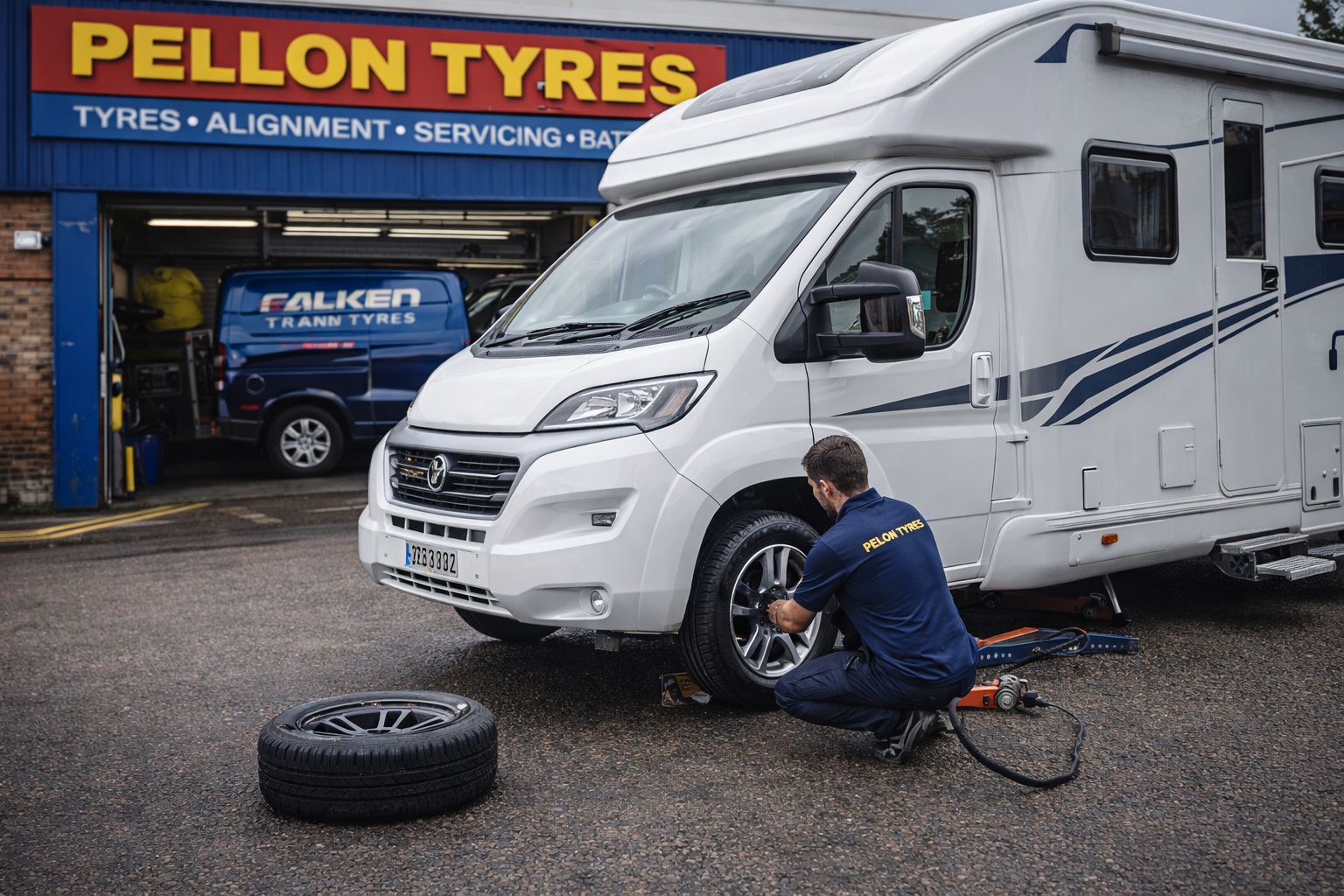
As motorhomes became more popular, some of the leading tyre manufacturers introduced specific motorhome tyres for camper motorhome owners. Michelin tyres, Continental tyres, and Pirelli tyres all brought out a specific niche market for camper/motorhome tyres.
When entering the camper tyre market,. Tyre makers were looking at the strong tyre casing with a high load rating, the same as a van tyre. Strong casings enable the tyre to carry much more weight. They can also cope with cornering and different terrains. After all, you can see motorhomes anywhere. Not just on tarmac roads. This rigidity comes from a stronger sidewall. As a result, it also prevents the motorhome tyres from swaying. We have all seen this when following an overloaded caravan.
It is also very good advice to drive within the speed limit and to avoid swerving.
My understanding is that the correct motorhome tyres are made with a different tyre compound than the regular van tyres, and this could be one of the reasons that the correct motorhome tyres are a little more expensive. Certainly do not be tempted to fit regular car tyres; this has been asked of us a few times by the
owners of older motorhomes, but this is a no-go area.
Here in Halifax at Pellon Tyres, we find that Continental and Michelin are the two most popular brands of motorhome tyres that we fit, and we thoroughly recommend them for your camper van or motorhome.
I would recommend that you look at excellent advice about motorhome tyres from the tyre safety organisation that I fully support. http://www.tyresafe.org/
Motorhome Tyres – Why the Correct Load Rating Really Matters
Motorhome tyres are not just “big car tyres”.
And that’s something we’ve been explaining to customers here in Halifax for many years.
This isn’t a new problem either. I can remember back when small and medium vans were becoming more popular for tradesmen and small businesses across West Yorkshire. Suddenly, more people were driving vehicles that carried serious weight — tools, equipment, stock, sometimes right up to their maximum capacity.
Back then, tyre sizes ranged from 155×13 radial right up to 185×14 radial. And here was the important bit:
Those sizes were available as both car tyres and van tyres.
They looked similar.
They fitted the wheel.
But they were not the same.
Van Tyres vs Car Tyres – The Important Difference
The van tyre versions were built with a higher ply rating and stronger internal construction. That meant they were designed to carry heavier loads safely.
Car tyres, on the other hand, were built for comfort and lighter vehicles.
Time and time again, customers would come in asking for the cheaper car tyre option. It was tempting — it saved a few pounds at the time.
But when a van is carrying heavy tools, ladders, plumbing equipment or building materials, fitting a tyre with the wrong load rating is asking for trouble.
We saw:
- Overheating tyres
- Sidewall bulges
- Uneven wear
- And in some cases, blowouts
And when a loaded van has a blowout at speed, it’s not a minor inconvenience.
The Same Issue Applies to Motorhomes
Fast forward to today, and we see exactly the same misunderstanding with motorhomes.
Motorhomes may look like large vans with windows, but they are often:
- Heavier than standard panel vans
- Loaded close to their maximum weight
- Carrying water tanks, gas bottles and holiday equipment
- Running for long motorway journeys
And yet some owners still assume that if a tyre fits, it must be suitable.
It isn’t just about size.
It’s about load rating and specification.
Why Motorhomes Need the Correct Tyres
Motorhomes place particular demands on tyres because:
- They sit stationary for long periods
- They often run near maximum weight
- They can have uneven weight distribution
- They may not wear tyres out quickly due to low mileage
Using a standard car tyre on a heavy motorhome can lead to:
- Sidewall stress
- Excess heat build-up
- Structural weakness
- Poor stability
And stability matters enormously on Yorkshire roads — especially when you’re coming down from the moors or travelling on exposed A-roads in crosswinds.
Load Index and Ply Rating – What It Means
Modern tyres use a load index instead of old ply ratings, but the principle remains the same.
Every tyre has a load rating marked on the sidewall.
That rating tells you how much weight the tyre can safely carry.
If your motorhome requires a load index of, say, 109, and you fit a tyre rated 95, you are under-specifying the tyre.
That can:
- Invalidate insurance
- Lead to MOT advisories or failures
- Increase risk of tyre failure
It’s not something to guess at.
Vans Became Faster – The Tyres Had to Change
Years ago, vans were slower and lighter. But as engines became more powerful and vehicles more capable, tyre design had to keep up.
Low-profile tyres, reinforced sidewalls, and higher load ratings — all became necessary.
The same applies to modern motorhomes.
They are heavier, faster, and more comfortable than ever before. But that means the tyres must be up to the job.
What We See in Halifax and Calderdale
Here at Pellon Tyres, we’ve had motorhomes come in fitted with:
- Incorrect load-rated tyres
- Old perished tyres with good tread
- Cheap replacements not designed for the weight
Motorhome tyres can look fine from the outside. Plenty of tread. No obvious damage.
But age and load matter more than tread depth.
Because many motorhomes do low annual mileage, tyres can age before they wear out. Rubber hardens. Sidewalls weaken.
That’s why checking date codes and specifications is just as important as checking tread depth.
The Yorkshire Way of Looking at It
When you’re heading off on holiday—maybe down to the coast or across to the Lakes — the last thing you want is a tyre failure on a fully loaded motorhome.
It’s not about cutting corners.
It’s about fitting the right tyre for the job.
Just like we explained to van owners years ago, a few pounds saved on the wrong tyre can cost far more later.
Final Thoughts
Motorhome tyres must:
✔ Have the correct load rating
✔ Be designed for commercial or reinforced use
✔ Be within safe age limits
✔ Be inflated correctly for the weight
Tyres are the only thing connecting your motorhome to the road.
If you’re unsure whether your tyres are suitable, it’s always worth getting them checked before your next trip.
At Pellon Tyres in Halifax, we’re always happy to give straight advice.
Because holidays should start with excitement — not a breakdown on the hard shoulder.