Posts

Ford Ranger for 4 New Tyres

Ford Ranger for 4 New Tyres

Ford Ranger for 4 New Tyres

Ford Ranger for 4 New Tyres


Heavy-Duty Tyres for the Ford Ranger – A Tough Choice for a Tough Truck

Last week, we were presented with a Ford Ranger that needed four brand new tyres. These big workhorses are a familiar sight on UK roads now, and it got me thinking about how important the right choice of tyres is for vehicles like these. After all, the Ford Ranger isn’t just a run-around – it’s a proper pickup that often has to cope with carrying heavy loads, towing trailers, or tackling muddy tracks and building sites.

A Short History of the Ford Ranger in the UK Ford Ranger for 4 New Tyres

The Ford Ranger has been around in one form or another since the early 1980s, though we didn’t see it here in Britain until much later. Ford originally developed the Ranger as a small pick-up for the American market, and it quickly became a best-seller over there.

It wasn’t until 1998 that the Ranger arrived officially in the UK, replacing the old Ford Courier. Straightaway, it found its place with builders, farmers, and outdoor enthusiasts who needed a vehicle that was more versatile than a van but still practical for day-to-day driving. Over the years, the Ranger has grown in size, comfort, and capability.

The real breakthrough came in 2012 when Ford launched a completely new Ranger that was designed to compete with the likes of the Toyota Hilux, Nissan Navara, and Mitsubishi L200. Suddenly, it wasn’t just a working truck – it became a lifestyle vehicle too. With modern tech, car-like interiors, and a bold look, the Ranger appealed to everyone from tradespeople to families wanting a vehicle that could tow a caravan or a horsebox with ease.

Today, the Ford Ranger is one of the UK’s best-selling pick-ups. It’s been voted International Pick-Up of the Year more than once, and Ford even teamed up with Volkswagen recently to share the platform with the new VW Amarok. That’s how good it’s become – even rivals want a piece of the action.

Ford Ranger for 4 New Tyres

Tyres That Work as Hard as the Ranger Ford Ranger for 4 New Tyres

Because of the Ranger’s versatility, tyre choice is critical. A heavy-duty pickup like this demands tyres that can handle weight, torque, and sometimes extremely tough conditions. Not all Rangers are used the same way, so the right tyre depends on the job at hand.

  1. Highway Terrain (H/T) Tyres
    These tyres are great if the Ranger is primarily used for on-road driving. They’re designed for comfort, lower road noise, and excellent grip in both wet and dry conditions. Many Ranger drivers who use their trucks as everyday vehicles stick with these because they balance performance with durability.

  2. All-Terrain (A/T) Tyres
    This is the go-to choice for many. All-terrain tyres combine excellent road performance with the ability to navigate gravel tracks, muddy fields, and construction sites. They usually have a stronger tread pattern than highway tyres, which means they have more grip off-road without being too noisy on tarmac.

  3. Mud-Terrain (M/T) Tyres
    If the Ranger spends most of its life off-road, then mud-terrain tyres are the answer. These have aggressive tread patterns with deep blocks to dig into mud, sand, and loose ground. The trade-off is they’re noisier on the road and don’t last as long when used on tarmac, but if you’re a farmer or working on rough ground daily, they’re worth it.

  4. Load Ratings and Strength
    With a truck like the Ranger, it’s not just about tread pattern – the tyre’s construction matters too. Heavy-duty tyres come with reinforced sidewalls and higher load ratings. That means they can carry the weight without overheating or wearing too quickly. Always check the load index when buying new tyres for a pickup, especially if towing or carrying heavy loads is part of the job.


The Right Fit for the Job Ford Ranger for 4 New Tyres

Ford Ranger for 4 New Tyres

When this Ranger rolled into our garage, the customer wanted tyres that could handle both daily driving and occasional off-road work. We recommended a set of premium all-terrain tyres—strong enough for the tougher jobs but still comfortable and quiet for highway driving.

The Ford Ranger has grown into one of the UK’s most trusted pick-ups, and with the right set of tyres, it’ll keep working hard for years to come. Whether it’s hauling materials, towing, or just cruising the roads of Halifax, the right tyre choice makes all the difference.


Hyundai Tucson New Track Rod End

Hyundai Tucson New Track Rod End

Hyundai Tucson New Track Rod End

Hyundai Tucson New Track Rod End

Hyundai Tucson with a Worn Track Rod End at Pellon Tyres

At Pellon Tyres in Halifax, we see all sorts of cars come through our doors, from little city run-arounds to family SUVs. One of our recent visitors was a Hyundai Tucson, a popular SUV that’s become a common sight on British roads.

The owner came in with a simple but worrying complaint – “my steering doesn’t feel right.” Now, if there’s one thing you shouldn’t ignore on a car, it’s steering issues. We got the Tucson straight up on the ramp to investigate.

After a good check over, we found the culprit: a worn track rod end. Once we replaced the part and carried out a wheel alignment, the Tucson was back to driving smoothly, and the owner left the garage happy and reassured.


What is a Track Rod End?

The track rod end is one of those parts that most drivers never think about until something goes wrong. It’s a small ball-jointed component that links the steering rack to the wheel hub assembly. In simple terms, it’s what allows the wheels to pivot when you turn the steering wheel.

Without it, the car simply wouldn’t steer.

Because of its job, the track rod end is under constant stress. Every bump in the road, every pothole, every turn of the wheel – it all goes through this little joint. Over time, they naturally wear out, which is exactly what had happened on this Tucson.

Hyundai Tucson New Track Rod End

Common Symptoms of a Worn Track Rod End

Drivers often don’t realise what’s wrong until the steering just feels “off”. Some of the typical signs include:

  • Loose or vague steering – it feels like the car isn’t responding properly.

  • Uneven tyre wear – often the inside or outside edge of the tyre scrubs away quicker.

  • Clunking or knocking noises – especially when going over bumps.

  • Steering wheel vibration – particularly at higher speeds.


Our Tucson driver had spotted the vague steering, which was wise, as this can quickly get worse and even become dangerous.


What Causes Track Rod Ends to Wear Out?

There are several reasons why a track rod end doesn’t last forever:

  1. General wear and tear – Every time you drive, the track rod end is moving. After thousands of miles, it will eventually wear out.

  2. Potholes and rough roads – Living in West Yorkshire, we don’t need reminding how hazardous the roads can be! Hitting potholes puts huge strain on steering components.

  3. Dirt, water, and salt – The joint is protected by a small rubber boot, but once that splits, grit and moisture get inside, leading to corrosion.

  4. Vehicle weight – SUVs like the Hyundai Tucson are heavier than small hatchbacks, which means steering components often work harder. – Even if a car hasn’t done high mileage, time itself can weaken rubber seals and joints.

At Pellon Tyres, we see worn track rod ends on cars of all ages, but SUVs and vehicles used on rougher roads seem particularly prone.

Hyundai Tucson New Track Rod End

The Hyundai Tucson’s Place in the UK Hyundai Tucson New Track Rod End

The Hyundai Tucson first arrived in the UK in 2004. At that time, Hyundai was still considered a budget brand, but the Tucson began to change that reputation. Hyundai’s renowned long warranty, coupled with its affordability and reliability, provided buyers with genuine peace of mind.

In 2010, the Tucson name briefly disappeared, replaced by the Hyundai ix35. That car was a big hit here in the UK, becoming a rival to the Nissan Qashqai – the car that pretty much invented the family crossover market.

By 2015, Hyundai brought the Tucson name back, and the model has only grown in popularity since. Modern Tucsons are stylish, full of technology, and even available as hybrids, but they’ve kept that reputation for reliability.

Today, it’s one of Hyundai’s best-selling models in Britain and a regular sight in our workshop for everything from tyres and MOTs to steering and suspension work.


Why Steering Problems Shouldn’t Be Ignored

A worn track rod end might sound like a small problem, but it’s far from it. Left unchecked, it can:

  • Affect your car’s handling and safety.

  • Lead to severe tyre wear, costing you money in new tyres.

  • Cause your car to fail its MOT test.

  • The good news is that it’s usually a straightforward fix. On this Tucson, replacing the worn track rod end and carrying out a wheel alignment solved the problem quickly and cost-effectively.

Final Thoughts Hyundai Tucson New Track Rod End

This Hyundai Tucson was a reminder of just how important regular checks are. Steering components may be small, but they play a huge part in keeping you safe on the road.

If your steering feels loose, your car is pulling to one side, or your tyres are wearing unevenly, don’t ignore it. Bring it in for a check – it could be something as simple as a worn track rod end, and catching it early will save you money and keep your car handling as it should.

At Pellon Tyres in Halifax, we’re here to help with everything from steering and suspension repairs to wheel alignment and MOTs.

👉 Find out more about our services at Pellon Tyres.

Potholes are damaging alloy wheels.

Potholes are damaging alloy wheels.

Potholes are damaging alloy wheels

Potholes are damaging alloy wheels.

See on detroit.cbslocal.com

EricRoberts‘s insight:

Potholes Damaging Alloy Wheels and tyres are a major problem everywhere? But you can claim your money back

Of course, this is a story that I have been harping on about for a few years now. It seems that local government highway departments and city government departments are struggling with the enormity of the problem.

Originally, this excellent article was from the Detroit metropolis in Canada, but the story could be from any city in the “Western World.” including here in little old Halifax, UK. From a local point of view, we have the same problems across the whole of the UK. We are also benefiting from the extra business that this problem is bringing to us: damage to the wheels, damage to the  wheelsdamage to the tyres, and many broken springs.

Of course, the condition of our roads is a hot issue for us drivers.

We appear to be riding a bumpier ride the more we talk about it. You’re driving along, taking in the odd glimpse of sunshine, when suddenly another pothole appears. It’s a real threat to alloys and tyres equally, not simply a bother.

Everyone is aware that the UK has many beautiful drives and historical charm, but our roads? Given all the fissures and craters that dot them, they could narrate a few historical stories themselves. It is like trying to drive through a poorly written novel’s plot holes.

Here in Halifax and around the UK, the problem is quite acute.

Potholes deep enough to cook a Sunday feast are what we are discussing! And the promise of smooth tarmac is still just that, a promise, with the council’s finances tighter than a gnat’s chuff. It hurts, especially for those of us who deal with batteries and tyres on a regular basis. You could wind up with a charge for a wheel alignment, a new tyre, or both after one poor turn.

Why, then, is there a crack? As it happens, the funding and prioritisation of maintenance are part of the issue. Apparently, rather than appropriate, long-term improvements, our roadways become victims of band-aid treatments. It’s not really as effective as slapping a plaster on a broken leg. When the frost arrives each winter, those plasters simply fall off.

The effect is on our finances as well as our safety.

Avoiding potholes may make a routine commute seem like an obstacle course. And it causes serious difficulty for companies like ours, where daily operations include customer visits and delivery. It detracts from our service and, to be honest, is a little embarrassing when a customer arrives to pick up a brand-new battery and leaves with a dented alloy.

It was about time we chatted about things other than band-aid solutions. Putting money into our roads is putting money into our health, safety, and scones—after all, no one wants a scone that has endured a seismic tremble in a pothole.

The next time you’re out and about negotiating the lunar terrain of our neighbourhood lanes, consider how a little investment in our roads could make your trip safer, smoother, and a little more enjoyable. Keep an eye on things and keep your tyres inflated until then. You know where to find us if you need a battery that can withstand the highs and lows of British roads. I hope for a more comfortable journey ahead, and be careful out there.

What to do if your wheels/tyres are damaged !

The potholes also cause damage to the car’s suspension and often knock out the wheel alignment. Some of the damage can be claimed back from your local authority here in the UK.

Unfortunately, I do not know how the law works in other countries. However, if you do have pot-hole damage. Firstly, then you should take a picture of the potholes.  Secondly get an invoice for the work carried out on your car. Thirdly, then you can put in a claim for compensation. Of course, to recover your losses from the damage that the potholes have caused.

A few of our customers did this after our advice and were successful with their claim.

Because of the rise in the number of damaged alloy wheels. So, we have purchased an alloy wheel straightening machine. I feel that this, along with a new tyre vulcanizing machine, will give our customers better all-round service !

Importantly, improving customer services is always one of my business priorities. Consequently, many damaged tyres can be repaired with the correct equipment ! So, large tyres that are now used on many SUV family cars are very expensive. Getting a nail in the side wall normally means a new tyre.

However, we have now invested in equipment to be able to repair such damage! Significantly, these repairs are both safe and legal.

Hyundai i10 with Radiator leak

Hyundai i10 with Radiator leak

Hyundai i10 with Radiator leak

Hyundai i10 with Radiator leak


Why Car Radiators Fail – And a Bit About the Hyundai i10

The other day in the workshop, we had a Hyundai i10 roll in with a poor radiator. It wasn’t just a little dribble either – it was leaking like a teapot with a hole in the bottom. The old radiator had reached its end, and, as is often the case, the only option was to replace it with a new one.

Radiators are among the unsung heroes of the engine. They just sit there quietly doing their job, keeping the engine comfortable and cool while you’re bombing up the M62 or crawling through traffic in Halifax town centre. But when they fail, you soon know about it – steam out the bonnet, engine temperature needle climbing quicker than a pint disappearing in a Dewsbury pub, and before you know it, you’re stuck at the side of the road, ringing the AA.

So, what actually makes radiators pack in?

Hyundai i10 with Radiator leak

Common Causes of Radiator Failure

1. Corrosion

Radiators are full of coolant and metal. Metal plus liquid usually equals rust if you don’t keep things topped up properly. The inside of the radiator can corrode over time, particularly if the coolant hasn’t been changed in a long time. That corrosion weakens the metal, and before long, you’ve got a leak.

2. Physical Damage

Radiators sit right at the front of the car, which makes them prime targets for stones, grit, and the occasional pheasant if you’re unlucky. Even a little stone chip can start a crack or a pinhole leak.

3. Poor maintenance.

A radiator relies on a steady flow of coolant. If the coolant level drops too often, or if someone keeps topping it up with plain tap water instead of the proper mix, it can cause all sorts of trouble – from overheating to freezing in winter. (Yes, we still see cars with plain water in the system. It’s true!

4. Old Age

Like anything else on a motor, radiators don’t last forever. The seals can perish, the metal can weaken, and after years of heat cycles, they just decide enough is enough.

5. Faulty Thermostat or Water Pump

Sometimes, it’s not the radiator’s fault at all. If the thermostat sticks or the water pump fails, the radiator ends up with boiling hot coolant under pressure it just can’t cope with. Eventually, a leak will occur.

Hyundai i10 with Radiator leak

Signs Your Radiator’s on the Way Out: Hyundai i10 with Radiator leak

  • There is a pool of coolant beneath the car, typically consisting of green, red, or blue liquid, which should not be mistaken for rainwater dripping from the air conditioner.

  • The engine may be overheating, or the temperature gauge may be gradually increasing.

  • The engine is emitting steam.

  • The car’s sweet smell indicates coolant leakage, which is not a good sign.


If you spot any of these, it’s best not to ignore it. A radiator is cheaper than a new engine, and we’ve seen a few customers learn that the hard way.


The Hyundai i10—a little gem Hyundai i10 with Radiator leak

Now, about that i10 we fixed. The Hyundai i10 has been knocking about in the UK since 2008, replacing the older Hyundai Atos. It was Hyundai’s answer to the city car market – small, nippy, and cheap to run, perfect for nipping down to Morrisons or tackling those tight little parking spaces in Halifax town centre.

The i10 has always had a favourable reputation as a no-nonsense motor. A proper Yorkshire brew is not flashy, but it is reliable and great value, doing the job without any fuss.

In fact, it’s been one of Hyundai’s best sellers in the UK. The first generation was built in India and shipped over here, and it quickly became a favourite with new drivers and older folk who just wanted something straightforward and dependable. The later versions have got posher with more tech, but the original charm is still there.

Plenty of i10s are still on the road today, which just shows how tough they are – though, like the one we had in the workshop, even the best little cars need a new radiator from time to time.


Final Word Hyundai i10 with Radiator leak

So, if your car starts overheating, don’t just turn the radio up and hope for the best. The radiator is one of the most important parts of keeping your engine alive. Look after it with proper coolant, regular servicing, and a bit of TLC, and it’ll look after you.

And if it does spring a leak, well, that’s where we come in at Pellon Tyres & Autocentre. We’ll get you sorted and back on the road before you can say “Hyundai i10 with a hole in its radiator!”

Damaged Alloy Wheels Repaired

Damaged Alloy Wheels Repaired

Damaged Alloy Wheels Repaired

Damaged Alloy Wheels Repaired

Relaxing. Last week, I was sitting in my small office . Daydreaming and  just looking out of the window. So. I noticed a breakdown recovery truck with a blue car on the back. I never thought more about it, as we have these broken down cars brought into us all of the time, as most busy auto centres do.

About ten minutes later

A member of my staff came in, shouting for me to have a look at this wheel. The damaged alloy wheel had come off the car that was brought in on the back of a transporter, a Ford Focus with a sport conversion, up-rated brakes, and an oversized cheap alloy. You know the thing I mean; this was a young guy’s car and a bit sporty.

However, the guy had been going at speed and hit a massive pothole in the road. The impact had caused a massive blowout out to both his offside (driver’s side) alloy wheel and completely

wrecked the tyres and caused severe damage

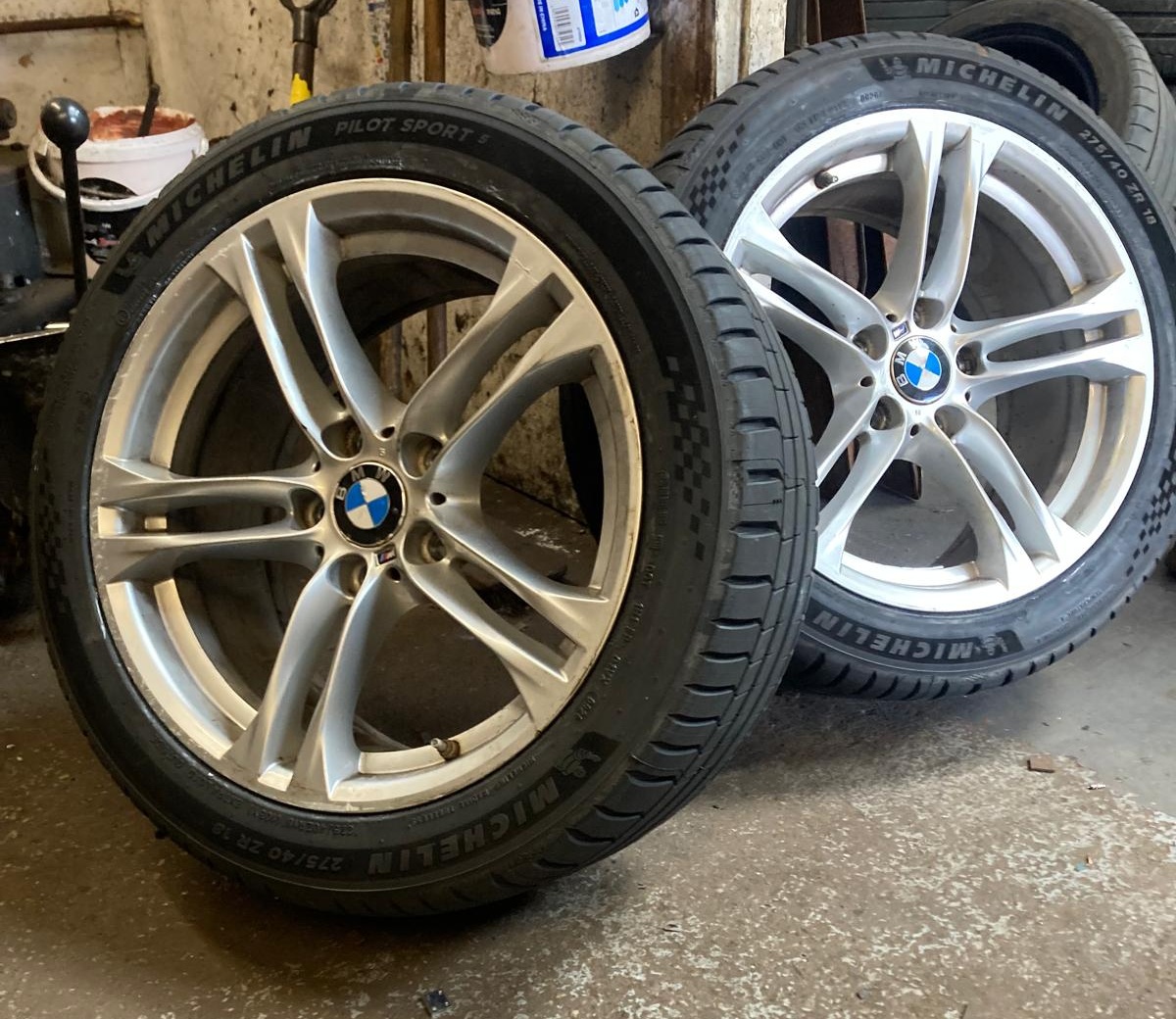
to the alloy wheels. We can have small damages repaired by a local alloy wheel welding specialist. These are very often small cracks that appear on the rims and start to leak air from the wheel and tyre assembly. This is most common on some BMW models, and sometimes we have known BMW to replace wheels free of charge.

These small cracks can be repaired successfully, much to the pleasure of many of our customers. It has been a bad time for broken and cracked alloy wheels recently due to the large increase of potholes on our roads, and so it is good to be able to give our customers the good news when they do not have to buy a new wheel, but we can have their damaged refurbished Alloy Wheels repaired.

I had not seen alloy wheel so badly damaged ? Damaged Alloy Wheels Repaired

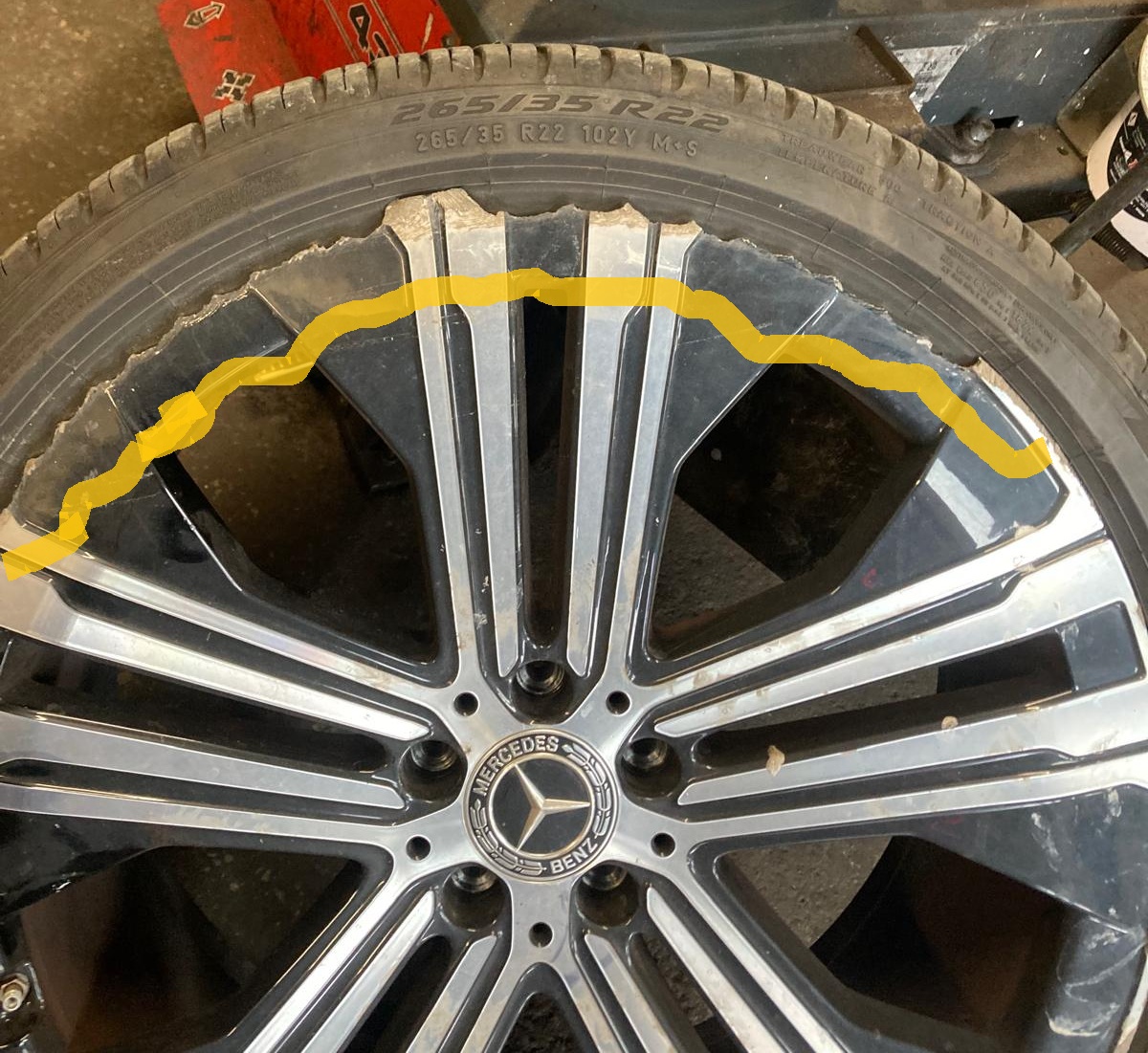
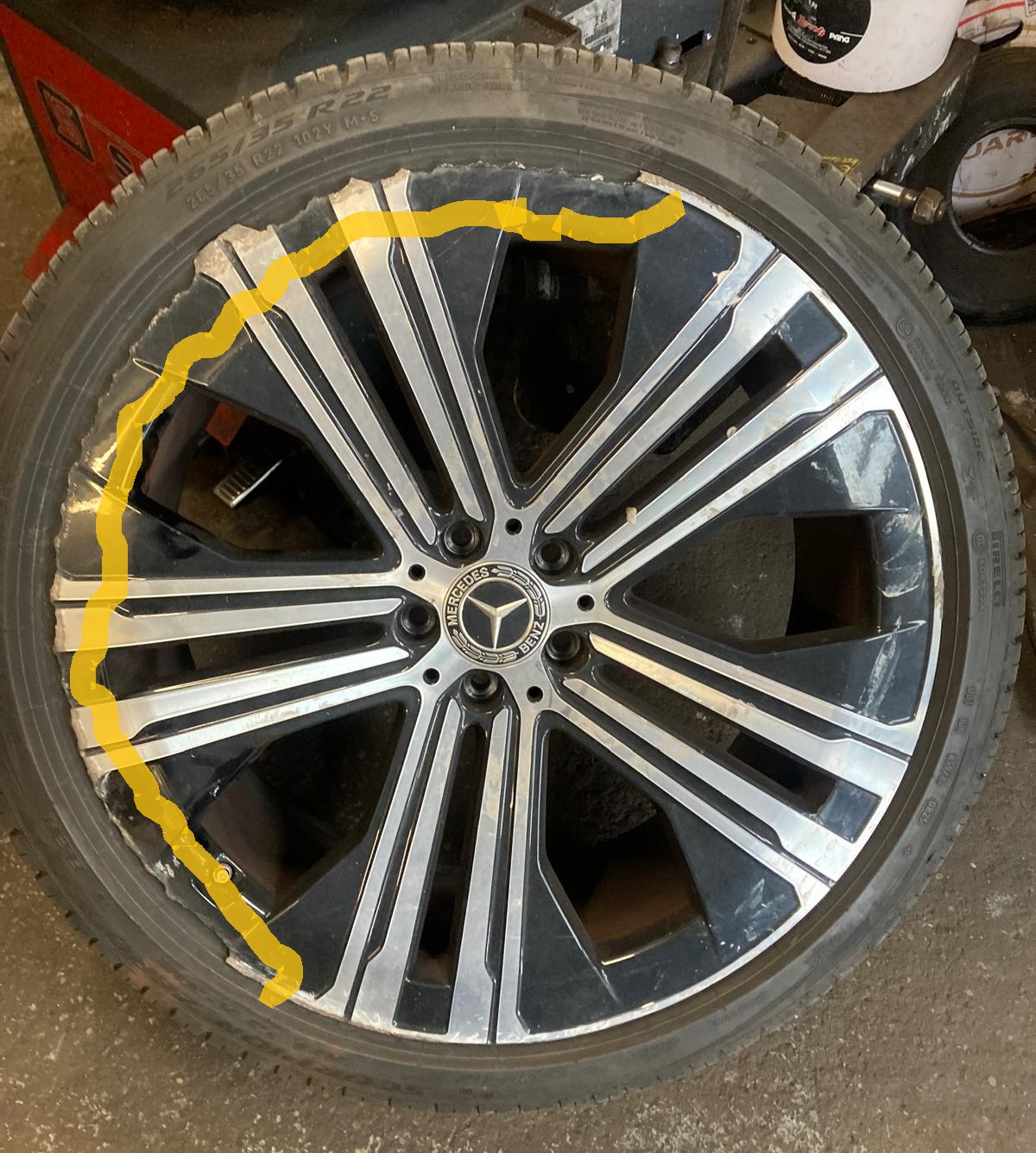
We were all amazed at the massive split in the Pothole Damaged wheel that came off the front. Shockingly, I have never seen one so bad. Splitting was almost all around the circumference of the wheel. If you look at the image below, then  you can see what I mean. Luckily for the customer, we have just become members of a buying group. Now, here in the UK, it’s called MD . Fortunately, this is one of the suppliers we can deal with. Hence, TSW Wheels sells alloy wheel and tyre packages. We were able to supply four new wheels along with two new Falken Tyres, and the guy went on his way, a happy driver.

Pellon Tyre and Auto-Centre offer car and van servicing and repairs

now including “wheel repairs” for all makes of vehicles.  Also, we sell Falken tyres online from our website.  Using the tyre selector and choosing your tyre size. Offering courtesy cars to local motorists who need to go to work. Leaving their car with us for work. Of course, we are also an official MOT testing station.

So, 80% of cars now have alloy wheels fitted to them! And as you know, every day, thousands of these wheels cause minor damage. Of course, from kerbing, potholes. Causing  stone chipping and lacquer discolouration. Predominantly, this damage stands out like a sore thumb. Especially on polished rims. Of course, by offering this new service, we were looking for a cost-effective method. Of course, to repair and bring the damaged alloy wheel(s) back to a showroom finish.

Alloy Wheel Damage – More Common Than You Think

It’s funny really; people spend thousands on shiny new cars with fancy alloy wheels, only to scuff them on the kerb outside Morrisons on their first week of ownership. Alloys might look smart, but they’re not half as delicate compared to the old steel wheels we used to bash about with.

How Do Alloy Wheels Get Damaged? Damaged Alloy Wheels Repaired

  1. Kerb Scuffs
    The most common one – clip the kerb when parking and you’re left with an unsightly scrape that spoils the look straight away.
  2. Potholes
    Halifax roads aren’t exactly billiard-table smooth, are they? Hit a pothole at speed and your alloy can crack or buckle.
  3. Corrosion
    Alloys are metal, and with all the winter salt on our Yorkshire roads, corrosion can creep in if the lacquer gets damaged. That leads to bubbling paint and leaking tyres.
  4. Over-tightened Wheel Nuts
    Believe it or not, garages using the wrong torque setting can damage the alloy around the bolt holes – something we’re careful about here at Pellon Autocentre.
  5. General Wear and Tear
    Daily driving, grit, brake dust – it all takes its toll. Over time, alloys lose their shine and need some TLC.

Why It Matters- Damaged Alloy Wheels Repaired

It’s not just cosmetic either. A badly buckled wheel can affect handling, tyre wear, and even safety. Plus, corrosion can cause air leaks around the rim, leaving you with a slow puncture you can’t seem to fix.

At Pellon Tyres & Autocentre, we see all sorts of alloy wheel issues – from small kerb rash to cracked wheels that need replacing. A quick check can save you money and keep your motor looking the part.

Citroen C1 for New Exhaust System Fitting

Citroen C1 for New Exhaust System Fitting

Citroen C1 for New Exhaust System Fitting

Citroen C1 for New Exhaust System Fitting

Citroen C1 and the Case of the Blowing Exhaust

The other week at Pellon Tyres we had a little Citroen C1 come rolling in, sounding more like a tractor than a small city car. The poor thing had an exhaust system that was blowing louder than a brass band on Whit Friday. The customer was mortified, but to us it’s all in a day’s work.

Now, a blowing exhaust is one of those things that creeps up on most motorists. You don’t usually wake up one morning to find it’s completely dropped off – it’s a gradual process. Exhaust systems are constantly battling against the great British weather, road salt, potholes, and those speed bumps that seem to be breeding all over Halifax. Eventually, rust takes hold, joints loosen, or a weld gives way. Before you know it, your lovely quiet runabout is growling away like an old diesel bus.

Another common culprit is the flexipipe— that little section designed to take some of the movement and vibration of the engine. They’re handy things, but once they start to split, they make a right racket. Add in a few knocks from stones or the odd kerb, and you’ve got yourself a noisy problem.

Apart from being a nuisance to the ears, a damaged exhaust can also mean poor fuel economy, increased emissions, and, of course, an MOT failure. Additionally, there’s a possibility of hazardous gases infiltrating the cabin, a scenario that no one desires.


A Bit About the Citroen C1 Citroen C1 for New Exhaust System Fitting

Citroen C1 for New Exhaust System Fitting

The Citroen C1 is now a cracking little motor for nipping about town. First launched back in 2005, it was part of a joint venture between Peugeot, Citroen, and Toyota. You’ll probably know its close relatives, the Peugeot 107 and Toyota Aygo. They all rolled off the same production line in the Czech Republic – just given different badges and a few tweaks so you knew which one you’d bought.

The C1 has always been aimed at city drivers – compact, light on fuel, and easy to park in tight spots where a bigger car just wouldn’t fit. It doesn’t pretend to be flashy, but it delivers exactly what it promises: affordable motoring with a touch of French flair.

Over the years it’s had a few facelifts and updates, but it’s still kept that dinky, cheeky look. This car is perfect for young drivers, second cars, or anyone who doesn’t fancy wrestling with a tank down King Cross Road.


Back to Our Noisy Visitor Citroen C1 for New Exhaust System Fitting

Citroen C1 for New Exhaust System Fitting

So, back to our C1 customer – after a bit of inspection up on the ramp, we found the exhaust had corroded around the joints and a section had gone completely. There’s nothing for it but to replace the lot. The customer drove away happy – and probably enjoyed the peace and quiet for the first time in weeks.

It’s a reminder that exhausts, though hidden away under your motor, are doing a tough job every time you turn the key. If you start to notice your car sounding louder than usual, or you get that tell-tale smell of fumes, don’t leave it too long. Pop in and we’ll soon sort it.

After all, a Citroen C1 should be a neat little car that hums along nicely – not something that makes you blush at the lights when it sounds like it’s about to take off.