Posts

Kia Rio for Brakes Overhauling

Kia Rio for Brakes Overhauling

Kia Rio for Brakes Overhauling

Kia Rio for Brakes Overhauling

Another busy week has rattled by here at Pellon Tyres, and like most weeks, it started with a job that reminds us why routine servicing really does matter.

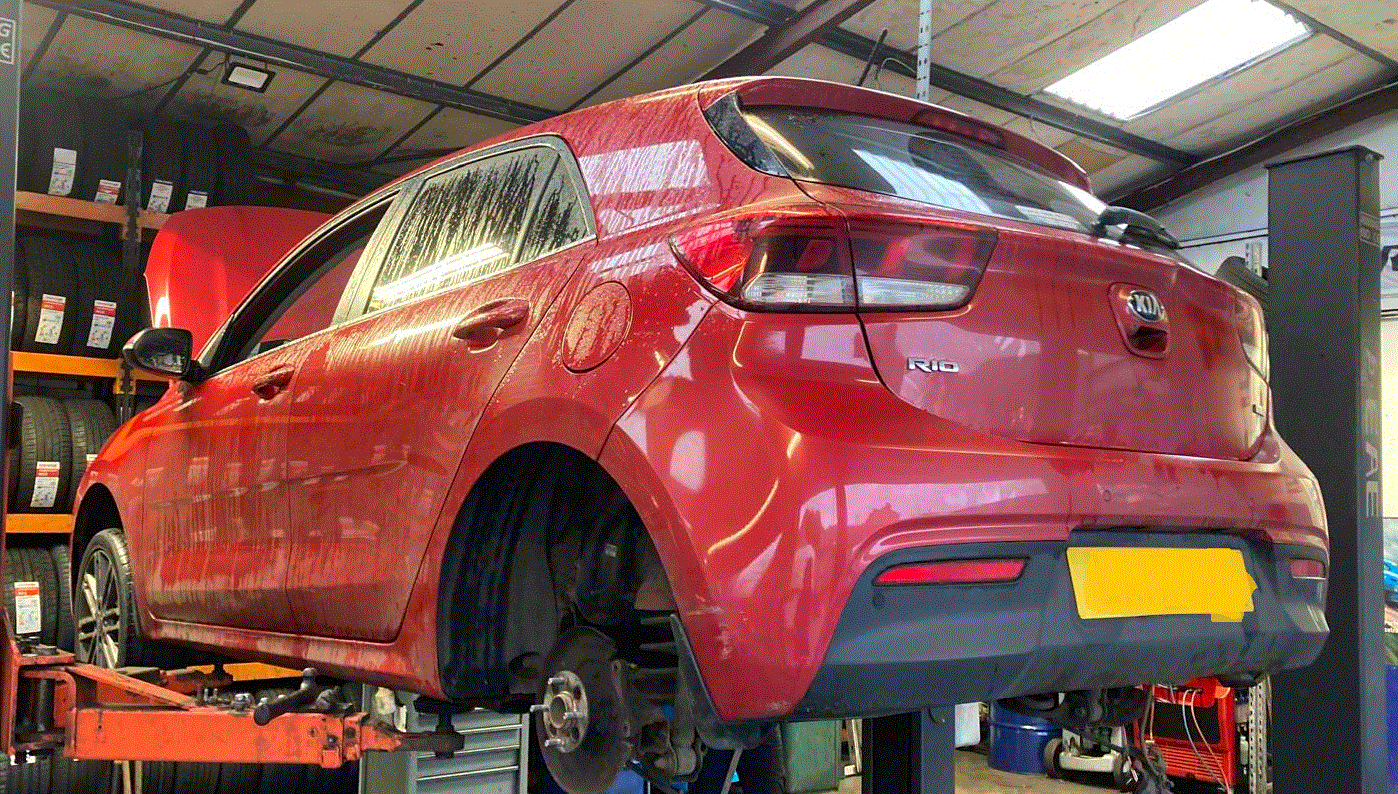
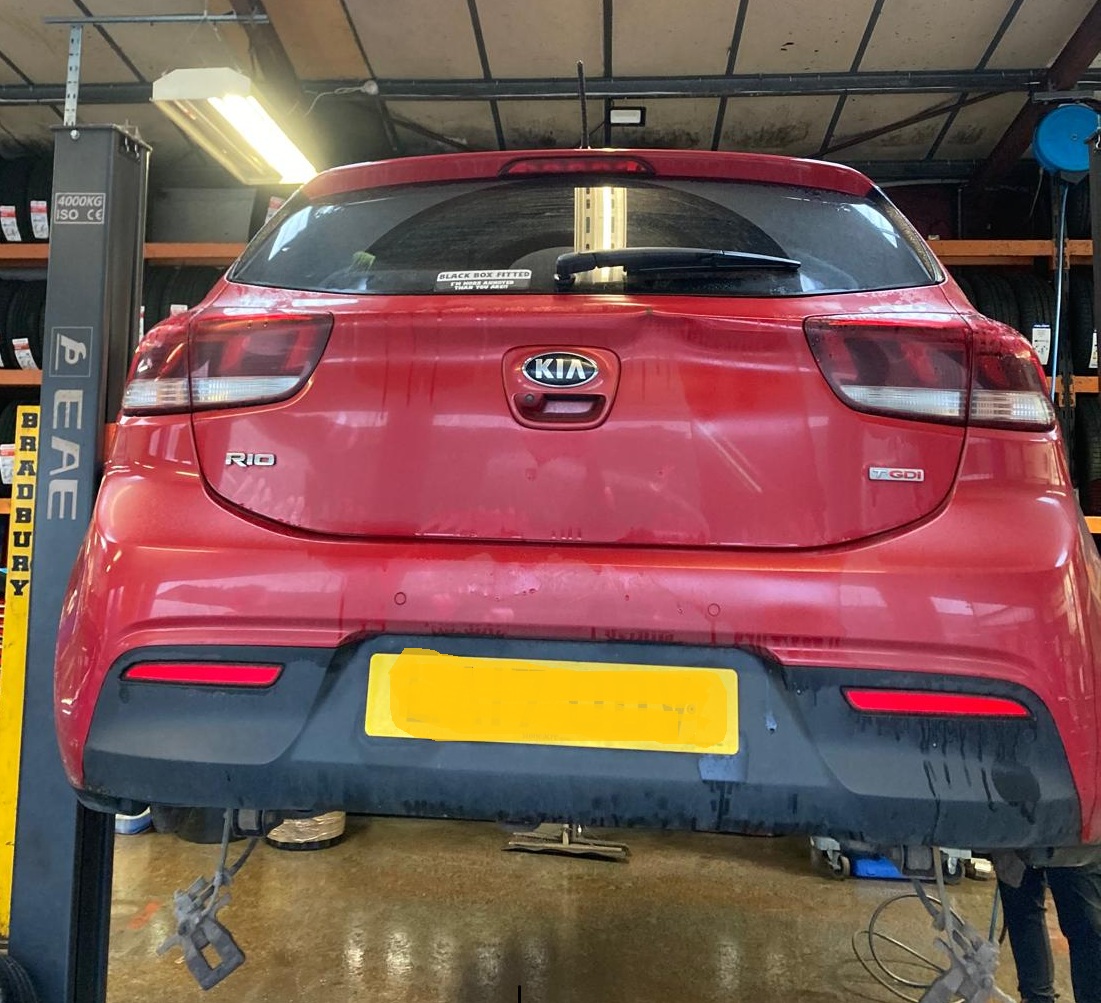
The first job through the workshop went to Ethan, who was tasked with carrying out a complete brake overhaul on a Kia Rio. The car had come in for a regular service, nothing out of the ordinary, but once the wheels were off and the brakes inspected, it was clear they’d seen better days.

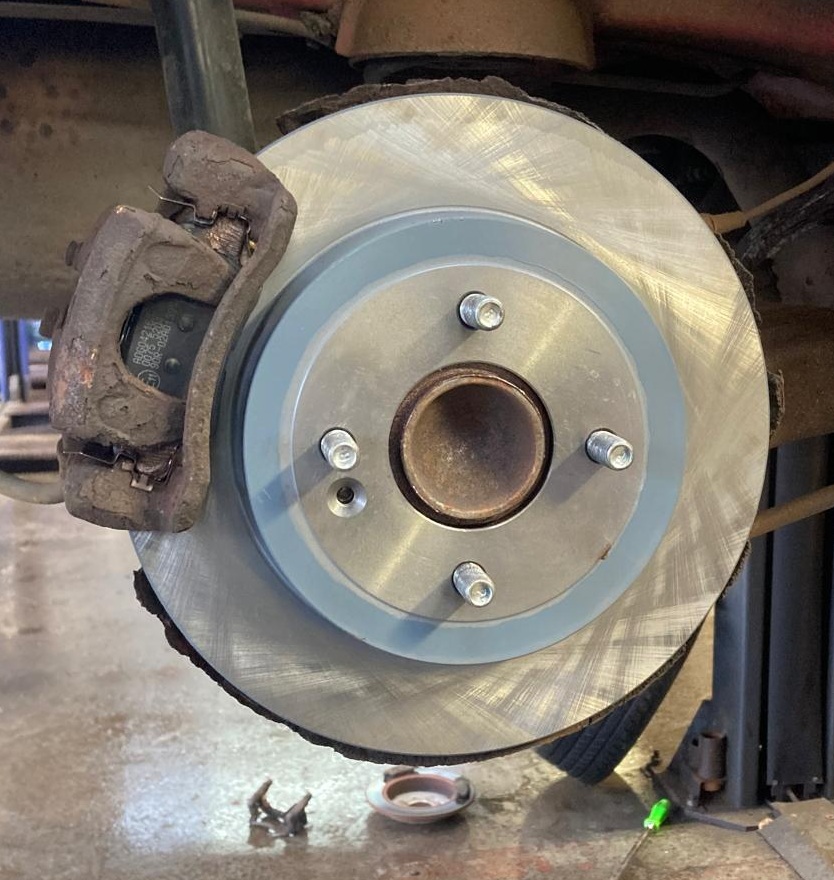
The discs and pads were worn beyond where we’d be happy letting the car leave without attention, so the decision was made to do the job properly. New brake discs and pads were fitted, and the whole braking system was stripped, cleaned, and rebuilt as it should be. Once finished, the brakes were smooth, quiet, and working exactly as they should.
Kia Rio for Brakes Overhauling

A bit of Kia Rio history in the UK: Kia Rio for Brakes Overhauling

The Kia Rio has been a familiar sight on British roads since the early 2000s. When it first arrived, Kia was still shaking off its “budget-only” image, but the Rio quickly earned itself a reputation for being reliable, affordable, and easy to live with.

Over the years, the Rio has grown up nicely. Later generations became more refined, better built, and far more comfortable, making them popular with:

  • First-time drivers
  • Commuters
  • Small families
  • And anyone wanting sensible motoring without flash or fuss

You see plenty of them around Halifax and Calderdale, where small, economical cars make a lot of sense on narrow streets and busy town roads.
Kia Rio for Brakes Overhauling
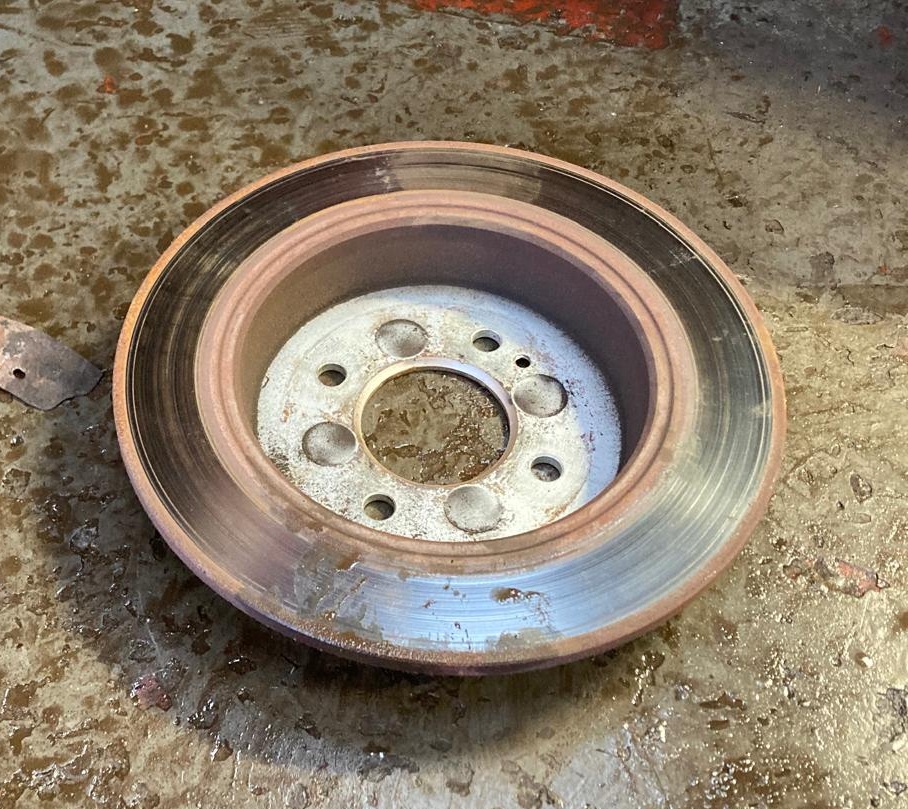
Rusty old brake parts

Why brakes can wear out sooner than expected: Kia Rio for Brakes Overhauling

A lot of drivers are surprised when a car comes in for a service and ends up needing brakes. “It was fine last time” is something we hear regularly. But brake wear depends far more on how and where a car is driven than on age alone.

Around here, brakes work hard. Very hard.

In the Halifax and Calderdale area, we’ve got:

  • Steep hills
  • Tight junctions
  • Narrow, winding roads
  • Stop-start traffic

Every time you slow down for a bend, a junction, or a descent into town, your brakes are doing their job.

Some common reasons we see brakes wearing prematurely include:

  • Hilly driving
    Constant braking downhill builds heat, which accelerates wear on pads and discs.
  • Short journeys
    Brakes don’t always get hot enough to burn off moisture, leading to corrosion on discs.
  • Urban driving
    Lots of stopping and starting in traffic puts far more strain on brakes than motorway miles.
  • Cheap previous parts
    Lower-quality pads or discs can wear quicker and sometimes unevenly.
  • Lack of cleaning
    Brake components can seize or stick if they’re not stripped and cleaned periodically.

Why a full brake overhaul matters

On this Kia Rio, it wasn’t just a case of slapping new pads in and hoping for the best. Ethan carried out a full clean-up of the braking system, which makes a big difference.

That includes:

  • Cleaning caliper carriers
  • Removing corrosion
  • Lubricating contact points
  • Making sure everything moves freely

This helps prevent:

  • Squealing brakes
  • Uneven pad wear
  • Binding calipers
  • Premature failure of new parts

It’s the sort of job that takes a bit longer but pays off in the long run.
Kia Rio for Brakes Overhauling
new brake parts fitted

Brakes and tyres – crucial in Calderdale: Kia Rio for Brakes Overhauling

If there’s one thing we always stress to customers locally, it’s that brakes and tyres are not the place to cut corners. On flat roads, you might get away with things for a while. On Calderdale’s hills, you won’t.

Good brakes and decent tyres mean:

  • Shorter stopping distances
  • Better control downhill
  • Less stress on the car
  • And most importantly, safer driving

Whether you’re heading down into Halifax town centre, winding your way up towards Queensbury, or navigating the back roads, your car needs to be on top form.

Final thoughts from the workshop: Kia Rio for Brakes Overhauling

This Kia Rio is a great example of why routine servicing is so important. Catching brake wear early meant we could sort the problem properly, keep the car safe, and avoid bigger issues down the line.

A full brake overhaul might not be glamorous, but it’s one of the most important jobs we do. And around here, with our hills, bends, and ever-changing weather, working brakes aren’t optional – they’re essential.

If your car’s due a service, or you’re not sure about your brakes, just pop in. A quick check can save a lot of bother later on, and we’re always happy to give honest advice.
Honda Jazz With 8 Spark Plugs

Honda Jazz With 8 Spark Plugs

Honda Jazz With 8 Spark Plugs

Honda Jazz With 8 Spark Plugs

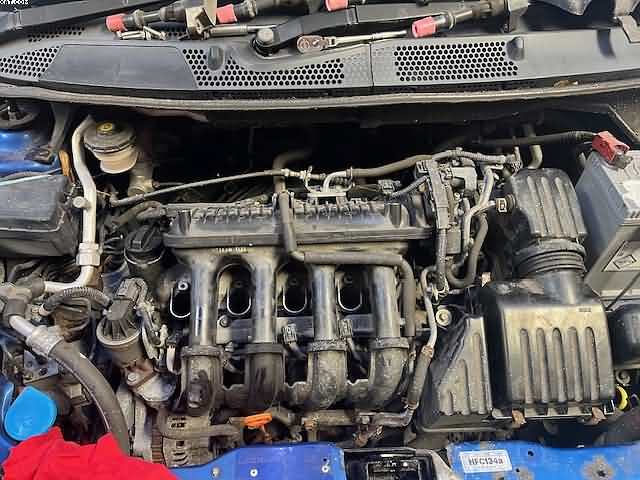
A Surprise Under the Bonnet at Pellon Tyres: The Honda Jazz with Eight Spark Plugs

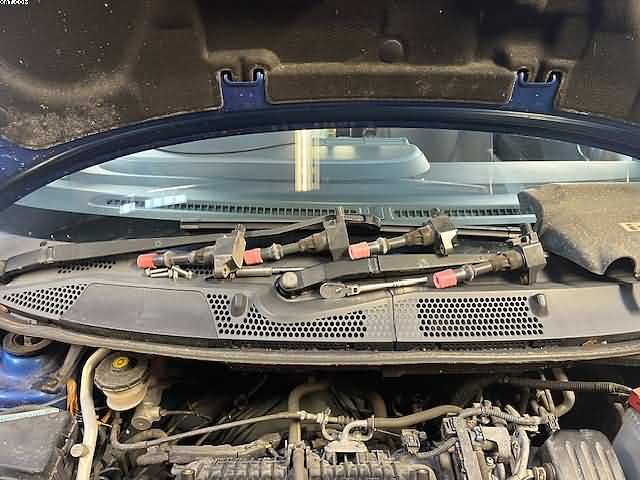
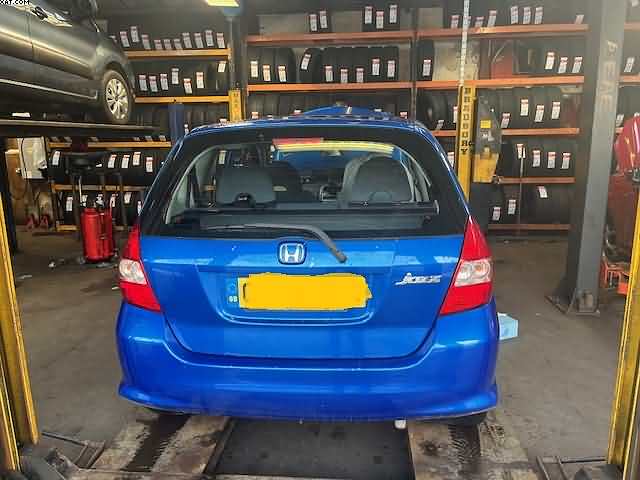
One of our frequent clients recently brought their dependable little Honda Jazz into Pellon Tyres for a standard servicing. I’ve seen my share of oddball automotive features, but this one really took me by surprise. We made the startling discovery that this small car utilises *eight* spark plugs instead of the typical four when we climbed under the bonnet to change the spark plugs. Yes, you read correctly! This small, useful runabout has eight spark plugs hidden in its engine.

This naturally caught my attention, and I felt it would be a fantastic small piece to share with all of you. Let’s examine the history of this enduringly popular car and discover why the Honda Jazz requires twice as many spark plugs as the majority of compact cars.

Honda Jazz With 8 Spark Plugs

 The Honda Jazz Has Eight Spark Plugs: Why? Honda Jazz With 8 Spark Plugs

For those who are perplexed by the idea that a car as small as the Jazz needs eight spark plugs, Honda’s inventive engineering provides the solution. Honda’s i-DSI (intelligent dual sequential ignition) engine powered the Jazz that we worked on. Instead of using a single spark plug per cylinder, this ingenious little system employs two. Why? Enhancing performance, reducing emissions, and increasing fuel efficiency are the key factors.

The engine’s fuel-air mixture can burn more thoroughly thanks to the dual-ignition system. In essence, the gasoline burns more efficiently because both spark plugs ignite in precisely the right order. Given the current fuel prices, this not only makes the engine run more smoothly but also improves fuel efficiency, which every Jazz owner will value!

Although this technology was revolutionary when it was first developed, it also means that maintenance is a little more involved. It takes a little longer (and costs a little more for parts) to replace eight spark plugs rather than four, but it’s all necessary to maintain this ingenious little engine operating the way Honda intended.

Honda Jazz With 8 Spark Plugs

A Synopsis of the Honda Jazz’s Past – Honda Jazz With 8 Spark Plugs

Since it first came to the UK in 2002, the Honda Jazz—also referred to as the Honda Fit in other parts of the world—has been a common sight on the roads. But its origins are a little more ancient. Although the Jazz brand was first used on a Honda vehicle in the early 1980s, the current model really took off in the twenty-first century.

The Jazz established a reputation as a dependable and useful supermini right away. Its amazing interior size was (and remains) its most notable feature. For a car of its size, the inside is surprisingly spacious and adaptable thanks to Honda’s “Magic Seats” system, which enables the back seats to fold entirely flat or flip up like movie seats.

It’s easy to understand why Halifax drivers have come to love the Jazz over the years. It is small enough to easily manoeuvre through our winding streets while still providing plenty of space for passengers, shopping, and even the occasional trip to the tip. The Jazz has established itself as a trustworthy and effective little worker, whether you’re driving up the Calder Valley or speeding around town.

The Jazz (2007–2014) second-generation model is the one we serviced. Thanks in part to its ingenious dual-ignition engine, this iteration increased fuel efficiency and added a little more refinement to the original’s success.

 Reflections and Local Connections- Honda Jazz With 8 Spark Plugs

I couldn’t help but consider how appropriate the Jazz are for our community. Its practical design and ingenious engineering make it the ideal vehicle for Halifax’s blend of urban and rural areas. Whether you’re traversing the undulating hills of the Shibden Valley or scaling the steep inclines of Wainhouse Tower, the Jazz is more than capable.

Over the years, Pellon Tyres has seen a wide variety of cars pass through our doors, but working on a car like the Jazz has a certain allure. It serves as a reminder of how advanced automobile technology has become and how automakers like Honda are still coming up with new ideas for even the smallest vehicles.

 Concluding Remarks

Examining its eight spark plugs revealed that the Honda Jazz boasts more features than its modest appearance. It’s an excellent illustration of Honda’s inventiveness and the reason the Jazz has stayed so well-liked by drivers in Halifax and beyond.

Remember to follow your car’s maintenance schedule whether you’re the proud owner of a Honda Jazz or any other smart tiny vehicle. And since we enjoy a good surprise, bring your car down to Pellon Tyres if you’re ever unsure about what’s under the hood!

Cheers to the Honda Jazz, a compact car with a lot of ingenuity. Let’s toast!


What’s New About Your Cars Oil

What’s New About Your Cars Oil

What's New About Your Cars Oil
What’s New About Your Cars Oil

What’s New About Your Cars Oil

“Unveiling the Grades of Oil: Navigating Car Servicing at Our Halifax Garage”

As the owner of Pellon Autocentre in Halifax, UK, I think it important to write about important things concerning our customers’ cars.

This article is a rough guide to the many different oils that we now have to use when servicing your cars and vans. Subsequently, we now have to keep in a multitude of different oils to suit all the car models out their!

We often talk about the many different oil grades available for vehicle repair at our garage in Halifax, which is a symbol of trust and service. Like me, you’ve likely pondered the seemingly endless variety of engine oil alternatives and wondered what the big deal is. Alright, then, let’s solve this mystery of automobiles and find out what the different oil grades are all about.

As time has progressed, the automotive industry has undergone tremendous change. No longer can all vehicles be adequately serviced with a single, universal oil.

When I was a child, the oil company provided us with a Castrol oil cabinet, which contained the only three grades of oil necessary to service 90% of cars at the time.

We now service a wide variety of vehicles at our Halifax garage, including hybrids and electric vehicles as well as more conventional petrol and diesel models. The different grades are based on the unique engine oil needs of each of these cars.

What's New About Your Cars Oil
Car oils

Why is there an excess of grades? What’s New About Your Cars Oil

The wide variety of oil grades is the first step in meeting the varying demands of modern engines. Proper oiling is essential for the efficient operation of any engine, be it a vintage British car or a cutting-edge electric vehicle. Including the most recent hybrids and electric vehicles, we are proud to service all makes and models at our Halifax garage. This implies that we have extensive knowledge of the specific oil needs of different types of automobiles.

Issues of Viscosity

Viscosity is one of many characteristics that distinguishes different oil grades. The viscosity of an oil is a measure of its thickness. When it comes to lubrication and protection, thicker oils are superior, while thinner oils are easier to work with. Engines run at different temperatures and necessitate oils with varied viscosities for best performance.

Nearby Views

To add some regional flavour, let’s do that now. Innovation has long been a part of Halifax’s storied past. Similar to how the town has transformed through the years, the automobile sector and the oils utilised within it have also undergone changes. Our garage’s dedication to meeting the varied demands of the Halifax community exemplifies this synthesis of history and innovation.

Electric vehicles and hybrid vehicles – What’s New About Your Cars Oil

We have had to adjust to new maintenance issues brought forth by the increasing number of electric and hybrid cars in Halifax. Transmissions and differentials still require specialised oils, even though these cars depend less on conventional engine components and more on intricate electrical systems. No matter how the car industry changes, our garage can adapt.

Environmental Factors to Consider

Here in the eco-conscious United Kingdom, we also consider how our actions may affect the world around us. In order to lessen their impact on the environment, certain types of oil are engineered with greener ingredients. We take into account the environmentally responsible choices of our Halifax community while we service all kinds of automobiles.

In Conclusion

To sum up, the multiple oil grades used in automobiles aren’t merely an example of complexity in action. It’s a reflection of the varied and dynamic requirements of modern cars. Our garage is here to take care of all kinds of vehicles, from vintage rides through Halifax’s historic streets to cutting-edge electric wonders, and we know just what kind of oil they need.

Whether you own a classic car or a cutting-edge electric vehicle, the next time you bring it to our Halifax garage, we will customise our services to meet your vehicle’s unique requirements. Our unwavering determination to meet the needs of our valued Halifax community and its dynamic automotive scene is reflected in our focus to offering the optimal oil for each vehicle.


What’s new about your car’s oil

  1. Synthetic oils leading the way
    These days most modern cars benefit a lot from fully synthetic or semi-synthetic oils. In fact, one industry note says the oil market is being shaped by the growing popularity of synthetic formulations. Mordor Intelligence+3Spherical Insights+3Stellar Market Research+3
    For your everyday motor in Calderdale, this means better protection, longer drain intervals, and a bit less worry when you’ve had a long run up and down the hills.
  2. Engine-specific formulations are key
    A recent UK blog explains that even oils with the same grade (say 5W-30) aren’t all equal. They differ in additive packages, “HTHS” values (which govern performance under heat and shear), and how they protect modern exhaust after-treatment systems. mpmoil.co.uk
    So when we at Pellon Tyres pick an oil for a customer’s car, we’re not just going by “oh it’s 5W-30” – it’s matching the right spec for that engine and driving conditions here in Halifax and the Calder Valley.
  3. Stricter environmental rules and hybrid/EV impact
    With more drivers moving to hybrid cars, and the slow march towards full electric, oil manufacturers are adapting. Clean lubricants designed to work with more advanced engine tech and after-treatment systems are becoming standard. NEOL+1
    Even if your motor is a standard petrol or diesel, this means the oil we choose now has to tick more boxes for emissions, protection and efficiency.
  4. Longer intervals & smarter servicing
    Because of better oil base and additive tech, many vehicles can now go longer between oil changes than the old rule-of-thumb “every 6 000 miles or six months”. But—and this is important—you must always follow the vehicle manufacturer’s recommendation, and consider the driving conditions (hilly Calderdale, stop/starts, towing etc).
    Market research shows the UK engine-oil market is forecast to keep growing (1.9% CAGR from 2025 to 2030). Mordor Intelligence+1
    In plain terms: good news for quality oils, but don’t skip checks just because the interval is longer.
  5. Oil choice still matters locally
    For us here at Pellon Tyres in Halifax, that means:
    • Checking the correct oil spec for the car (engine size, petrol/diesel, hybrid, etc)
    • Considering the local terrain: the steep climbs out of Halifax, the wet weather in the Calder Valley, the stop-starts around town.
    • Being realistic about usage: if someone uses the car for commuting, short trips, heavy loads or towing, we might suggest a “premium” oil or more frequent service.
    • Explaining to the customer: better oil = better protection = potentially fewer faults and longer engine life (which folks appreciate in their everyday cars).

A Yorkshire garage pair of practical tips for your blog

  • Tip 1: “If your car’s been sat a lot (perhaps you were on holiday!) or you do lots of short runs around Halifax or out into the Dales, ask us about “severe usage” oil service – the right oil helps tackle condensation, soot build-up and wear.”
  • Tip 2: “Make sure your oil change includes the right spec for your engine—not just any ‘5W-30’ or ‘10W-40’. Modern engines demand modern oils. At Pellon Tyres we always check the manufacturer’s spec, and match it to your driving style in Calderdale.”