Posts

Anti-Lock Brake Systems: ABS

Anti-Lock braking systems

Anti-Lock Brake Systems

Anti-Lock Brake Systems

So, this is one of the things that I am most proud of. Of course, I have been a garage owner! Is it when a customer contacts my garage for a brake problem to be sorted out? Subsequently, it appears not to be the price that the person is worried about. Because they know how important it is to have good brakes on their car.

Before we remove the wheels, we examine the brakes. So, generally, we have a blank canvas to work from. We know that most cars get to the stage of having practically no brakes! Then the braking system will be in pretty bad shape. Believe me, they usually are.

Back in the old days! Then the car’s brakes were a much simpler affair to diagnose and repair. Of course, with only the upper end of the market cars. Having any type of electrical modification in order to aid better braking. As in almost all the car developments. So, brakes were originally tested and tried on motorsport vehicles. A long time before being tried and tested on average road cars. Including the beginning of the ABS braking systems! Importantly, those are in common use today.

At first, Anti-lock braking systems, only came out on prestige cars such as BMW and Mercedes

But many drivers had not heard of them before; in fact, we still get customers today who do not know what it means when their ABS warning light comes on and have to be investigated. Twenty years ago, many vehicle owners were given the option of having ABS brakes or not, a similar sort of thing to fitting alloy wheels or steel wheels; they were an optional extra.

Anti-Lock braking systems work differently to a standard braking system

ABS brakes do act differently from a normal braking system. The main two advantages are that when you are braking on a wet, slippery road surface, or, say, on ice, your car will stop quicker; this also applies to normal roads, of course. Also, the car will handle much better when the driver has to brake and steer at the same time. Once again, in bad weather conditions, the car will handle much better than when using a conventional braking system.
Anti-Lock Brake Systems

In any normal driving situation, Anti-Lock Brake Systems

such as stopping at traffic lights or at a road junction, the Anti-Lock Braking Systems do not activate, but if you need to brake sharply and suddenly, the Anti-Lock Braking Systems will be activated and assist you in braking more safely.

The Anti-Lock Brake Systems send out pulses of pressure instead of the single pressure that is exerted when braking a normal car. You can actually feel the pulses coming through the brake pedal when you have to exert pressure on the brake pedal in an emergency stop. It’s also crucial to keep in mind that if you do encounter a challenging situation, such as snow or a non-tarmac road, you will still need to slow down because your ABS system won’t be able to assist you.

The main benefit of Anti-Lock Braking Systems is that the driver has full control when braking and steering at the same time, which can help the driver steer away from danger; they prevent the wheel from locking in certain conditions.

Practice your ABS brake system—Anti-Lock Brake Systems

In my experience, it has always been a good idea to take your car and practise with the brakes if you are driving a car fitted with ABS brakes for the first time and get used to the different feel of the brakes when going straight and when steering.

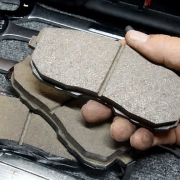
The in-cab ABS warning light may come on if there is a fault with the ABS system or the normal braking system. If the warning light comes on, then you should have the brakes looked at as soon as possible. In our experience it is usually something simple, such as a faulty electrical connection or even that the car needs a set of new pads. You can also find problems with Anti-Lock Brake Systems and other Anti Lock Brake Parts. Once the problem has been found and rectified, the ABS warning light can be reset with a computer.

Also sell Firestone Tyres online from our website www.pellontyres.co.uk. By using the tyre selector and choosing your tyre size. We offer courtesy cars to local motorists who need to go to work. Also an official MOT testing station that carries out checks for high standards of equipment and workmanship.

ABS FAQs:

Q: What are the most common symptoms of ABS problems?
A: Warning lights, grinding noises, pulsing brakes, or increased stopping distances.

Q: Is it safe to drive with faulty ABS?
A: It’s possible, but not recommended, because the wheels can lock under heavy braking.

Q: How long does ABS diagnostics take?
A: At Pellon Tyres we can test your ABS system in around 30 minutes.

Need tyres or brake repairs in Halifax? Call Pellon Tyres on 01422 351314 or visit us on Pellon Lane.

If you’re heading over to the East Yorkshire coast this year, take a look at our Lucky Paws Holiday Home in beautiful Thornwick Bay.
Mercedes A180 with ABS Problems

Mercedes A180 with ABS Problems

Mercedes A180 with ABS Problems

Mercedes A180 with ABS Problems

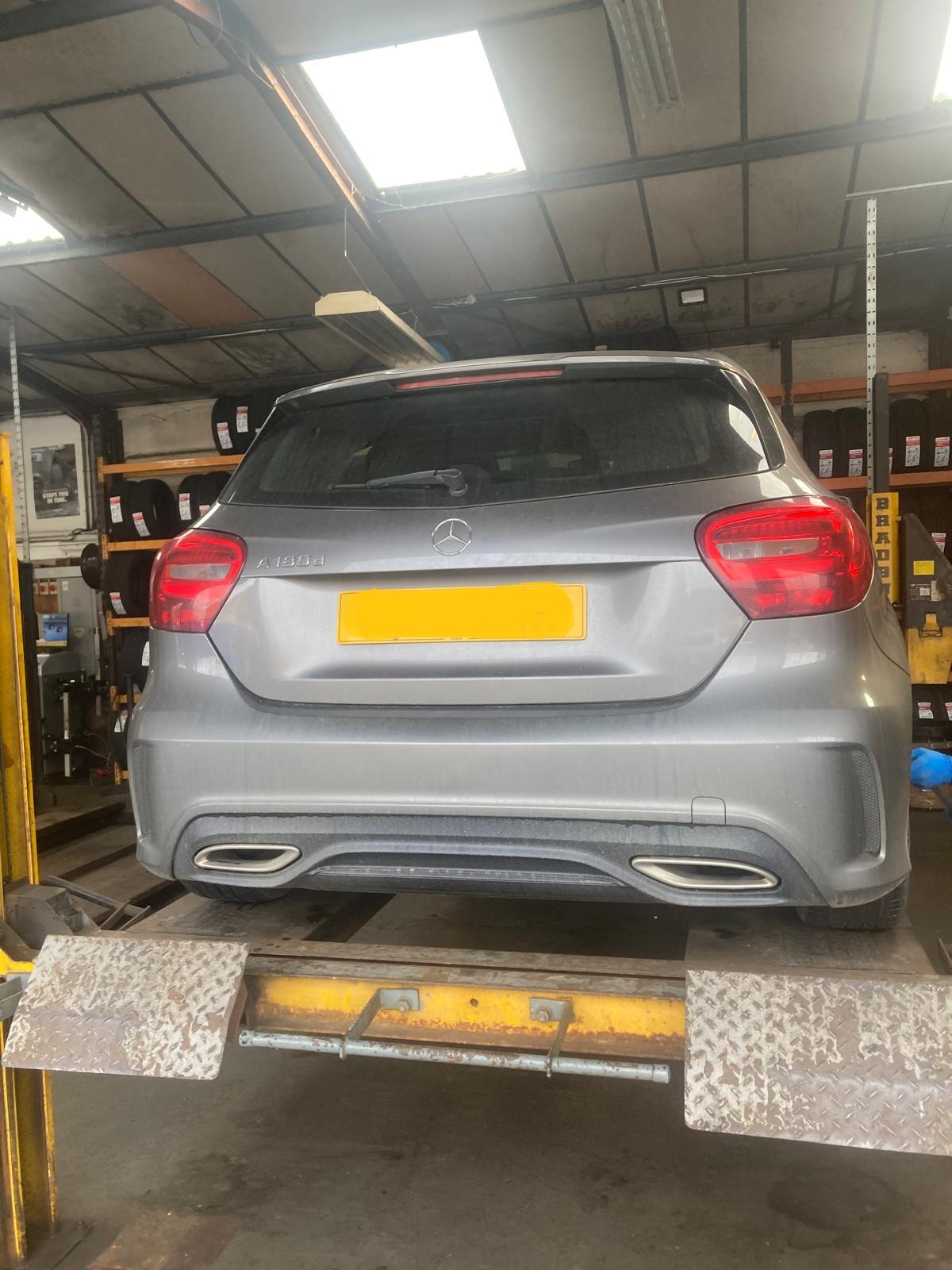
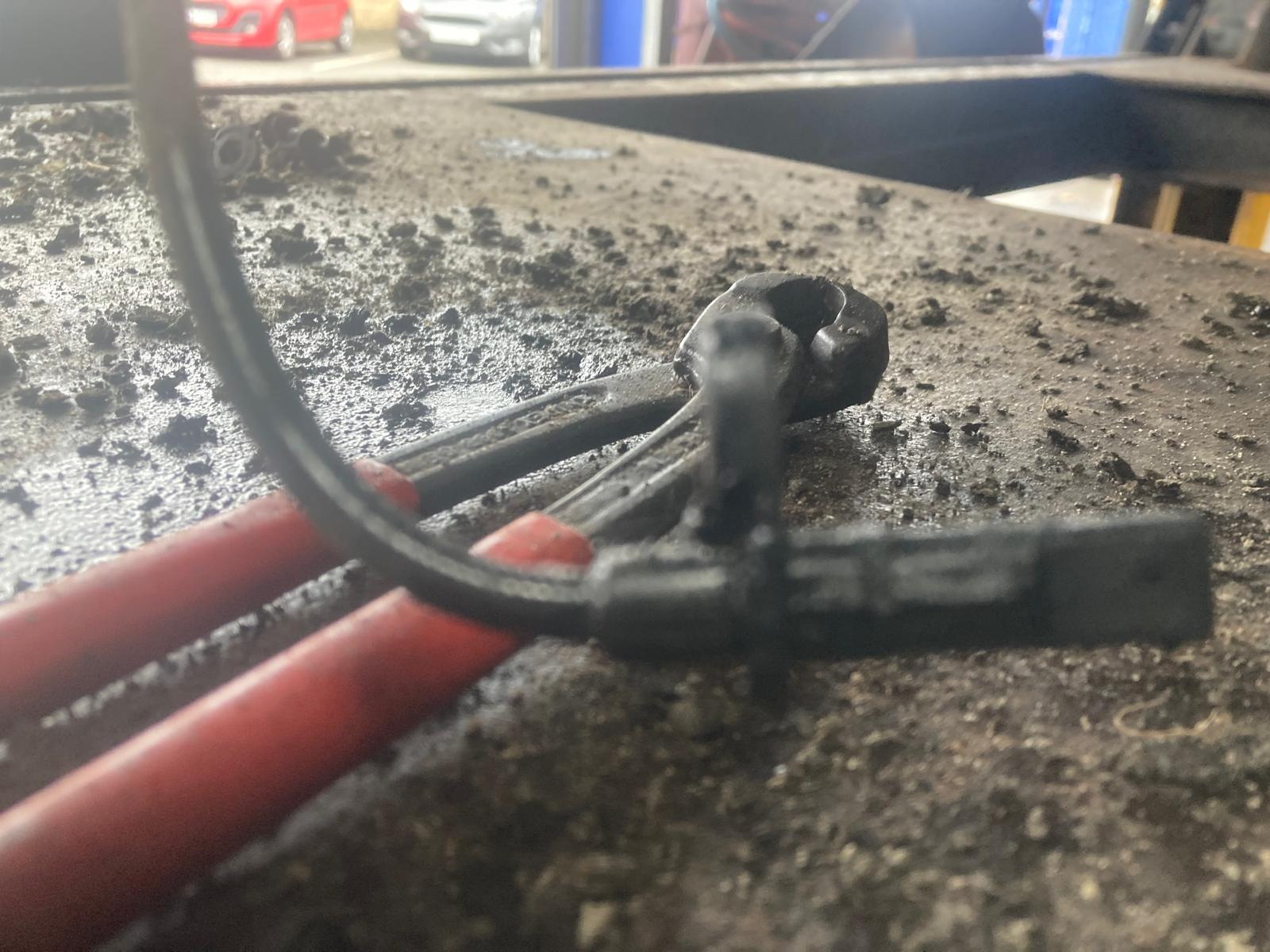
It’s never dull here at Pellon Tyre and Autocentre in Halifax. This morning, we had a Mercedes A180 brought in by a regular customer who said his car’s brakes were “acting funny”. Straight away, our experienced mechanic Alex got to work checking it out. After running a few tests, he found the culprit — a faulty ABS brake sensor.

Now, you might not think a small sensor could cause much bother, but in modern cars like the A-Class, that tiny part plays a big role in keeping you safe on the road.


What the ABS Sensor Does: Mercedes A180 with ABS Problems

The ABS (Anti-lock Braking System) is one of those clever inventions that most of us take for granted. It was designed to stop your wheels locking up under heavy braking, especially on wet or slippery roads — something we get plenty of here in Halifax and the Calder Valley, where the roads can be steep and winding.

Each wheel has a small speed sensor that constantly monitors how fast it’s spinning. If the system notices one wheel slowing down faster than the others (which means it’s about to lock up), the ABS kicks in and pulses the brake pressure to that wheel — keeping you in control.

When one of those sensors fails, as it did on this Mercedes, the system can’t get accurate readings. That usually triggers the Mercedes A180 with ABS problems on your dashboard, and you might notice the brakes feeling a bit different—sometimes heavier or slightly uneven. In some cases, the car may also disable traction control or stability systems, just to be on the safe side.

Mercedes A180 with ABS Problems
old sensor in place

How the Problem Shows Itself: Mercedes A180 with ABS Problems

Our customer said the ABS light had popped up, and the brakes felt a bit “off” when slowing down on hills around King Cross and Sowerby Bridge. That’s a classic symptom.

Alex hooked the car up to our diagnostic machine, which quickly pointed to a faulty rear ABS sensor. Sometimes these sensors fail due to:

  • Road salt and moisture, especially during winter months in Calderdale.

  • Corrosion or dirt building up around the sensor or its magnetic ring.

  • Wiring faults, caused by vibration or general wear and tear.

It doesn’t take much – one dodgy reading and the system throws up a warning. Once Alex replaced the sensor, cleared the fault codes, and tested the car on the road, the brakes were back to their best.

Mercedes A180 with ABS Problems
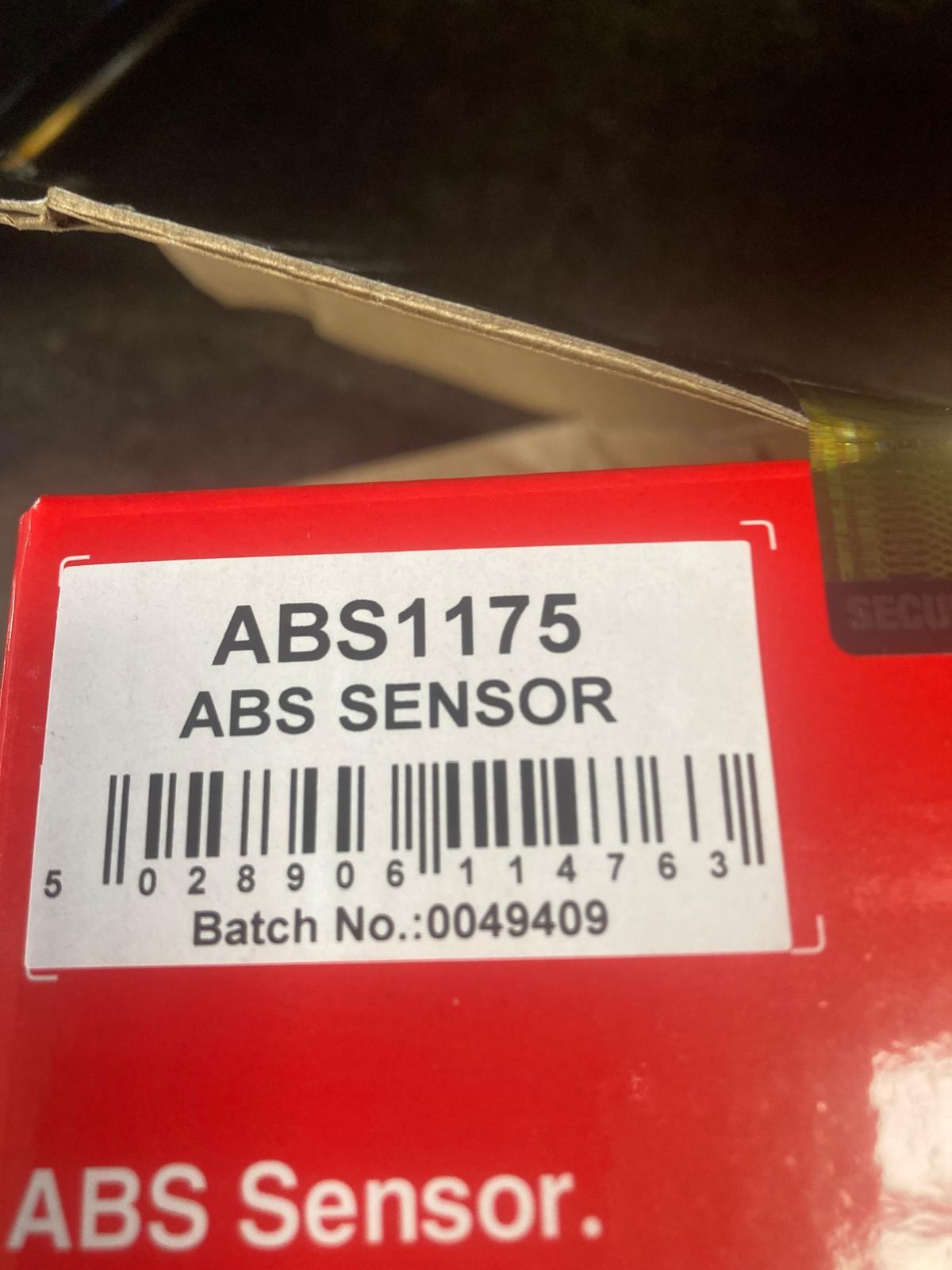
new sensor box

A Bit About the Mercedes A-Class: Mercedes A180 with ABS Problems

The Mercedes-Benz A-Class first arrived back in 1997, a small hatchback that made quite a stir for being a proper “mini-Merc.” It’s been through a few changes since then, with the later A180 models becoming firm favourites in towns like Halifax – smart, comfortable, and efficient.

Of course, with newer tech comes more sensors, modules, and electronics. That’s great for safety and performance, but it also means that when something goes wrong, you need a garage with the right tools and know-how to find the fault quickly — just like our team here at Pellon Tyres.

Mercedes A180 with ABS Problems
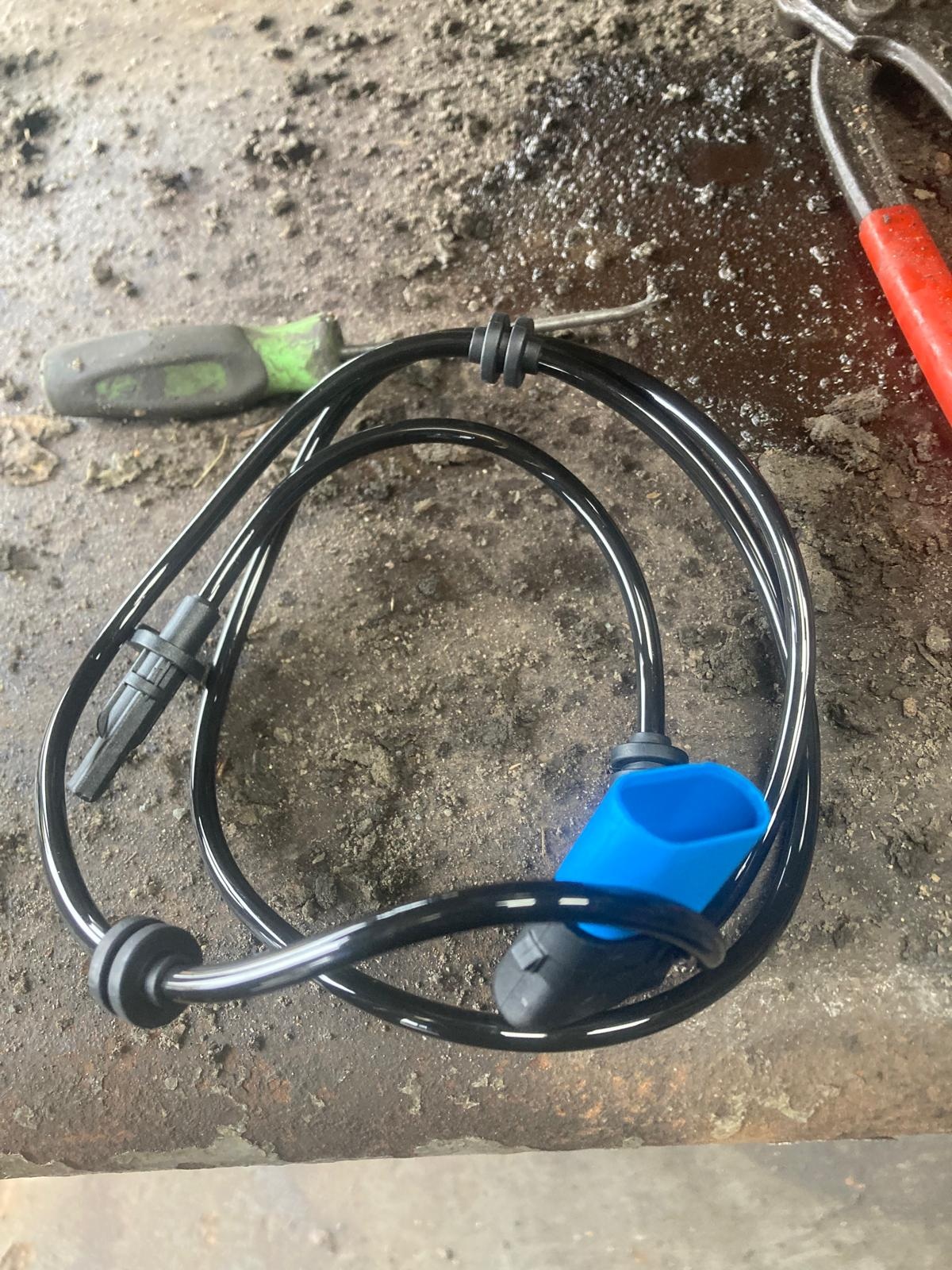
new sensor ready to be fitted by Alex

Why It Matters

Driving with a faulty ABS sensor isn’t the end of the world, but it’s not something you should ignore. The car will still stop, but in an emergency — especially on our hilly Calderdale roads — it might not stop as safely as it should.

If you ever see that amber ABS light come on, it’s best to pop into the garage and have it checked out. Sometimes it’s just dirt or corrosion, but other times it’s a failed sensor or even a damaged ring.

Here at Pellon Tyres, we can diagnose these issues in no time, and we’ve got access to quality replacement parts for most makes and models — from Mercedes to Fords and everything in between.


Brake Problems

Brake Problems

Brake problems can be difficult to diagnose, but most drivers encounter these common symptoms: your brake pedal feels soft or mushy, and when braking, your foot

Eric Roberts‘s insight:

Master cylinder brake fluid may need checking at regular intervals

This Brake Problems video and article written by Joyce Blay are well worth looking at. We in the garage and autocenter sectors are always advising motorists.

Of course, about how they should look after their cars. However, we cannot overstate the importance of the car’s braking system. including how important it is to have your brakes checked. By a professional mechanic or your local garage to avoid future brake problems.

The levels that are checked under your bonnet (hood) Importantly, you will include the level in your master cylinder. The lack of brake fluid in the brake master cylinders will lead to spongy brakes, which, if not corrected, will result in brake problems and even brake failure.

Brake Problems – Brake Problems

So have these levels checked, and if required, you may need a complete brake fluid change. Periodically, the car manufacturers advise doing this as well. So it is well worth checking to see what intervals this job should be done at.

Also, if you are topping up the master cylinder yourself, make sure you use the recommended type of fluid for your model; some are different from others, and your user’s manual will tell you which fluid to use. These procedures may help eliminate any braking problems in the future!

brake revolution

Of course, as time has gone by, brakes have become much more complicated. So one of the big advances has been the introduction of ABS to our braking systems. It is important to realise that in my lifetime, braking systems have improved beyond recognition. That is to say that when I was an apprentice mechanic, most regular cars only had drum brakes fitted front and rear.

Later cars that were in the upper-class bracket, such as Mercedes, were fitted with disc brakes at the front. Developments were coming out of the racing car circuits.

Consequently, technology would be passed from the racing circuit onto everyday regular cars. Motor racing sped up the development of all aspects of modern cars. Up to the latest developments! including the introduction of the AEB (Automatic Emergency Braking). So, this system will detect a potential vehicle impact and automatically apply the braking system.

Brake Problems
Brake Problems

How Vehicle Brakes Have Improved for Safer Driving: A Braking Revolution


Hi to everybody! How do we all feel? Do you want to talk about automobile brakes? I realise it’s not the most exciting topic, but bear with me. The rules of the game have significantly altered over the past several years, making our cars safer than ever. This is all because of some seriously cool developments in brake technology. Now hold on tight, and let’s begin!

A Long Time Ago – Brake Problems

I’m not that ancient, but I do recall a time when car brakes were less complicated. These were functional but not quite as efficient as what we have now. In the present, the surroundings are completely different. Current braking mechanisms resemble something from a science fiction movie.

The Revolution of ABS

ABS, or the Anti-lock Braking System, is likely familiar to you unless you’ve been living under a rock. Nowadays, it comes as standard in the majority of autos, and for good reason. Stop slipping and sliding like Bambi on ice. Even when you stomp on the brakes, ABS ensures that you stay in control of your car. Let me tell you, it’s changed the game.

Automated Emergency Braking: The Latest Trend

This is when things really start to heat up. AEB, or automatic emergency braking, is like having a personal guardian angel in your vehicle. This smart mechanism applies the brakes for you if it detects that a collision is imminent. Yes, your car has your back even if you’re too startled to respond. Incredible, isn’t it?

Technical Part – Brake Problems

All of this brake magic is based on sensors, computers, and real-time data, without getting into a physics lecture. To ensure that our cars are as secure as houses, car manufacturers have made significant R&D investments. And new developments keep happening. I wouldn’t be shocked if in the near future we had brakes that could somehow foretell the future!

Enhanced Road Safety in Halifax and Beyond

What impact does this have on us in Halifax? Really, quite a lot. Having a trustworthy braking system is important because of our twisting roads, our uneven terrain, and let’s not forget the legendary Yorkshire weather. I’ve noticed fewer brake-related problems in the automobiles that enter my garage, and that’s cause for celebration.

Brake Problems
Brake Problems
Finishing up: Brake Problems

Okay, guys, that’s the skinny on how car brakes have developed to improve the safety and security of our drives. Driving appears to have a brighter and safer future thanks to technologies like ABS and automatic emergency braking.

Thank you for watching. You know where to find us if you have any worries concerning the brakes on your automobile. Keep those wheels—and brakes—turning safely, and be careful! 🚗

To be truthful, I am not sure how this is going to work, but I am sure that it will be another brake system success.

More Modern Brake Technology: What Drivers Should Know Today

As car technology keeps marching on, brakes haven’t just improved—they’ve completely transformed. Many drivers don’t realise just how much engineering goes into stopping a modern car safely.

Electronic Brakeforce Distribution (EBD) Brake Problems

You might not hear people talk about EBD down at the pub, but it’s fitted to most modern motors. It works hand-in-hand with ABS and automatically sends more braking force to the wheels that need it most.
In simple terms:
👉 Heavy load in the boot?
👉 Kids in the back seats?

EBD adjusts everything instantly so the car stops in a stable, straight line. Years ago, you’d have felt the back end twitch or slide—not anymore.


Brake Assist (BA): Helping in a Panic

Most drivers think they brake hard in an emergency… But tests show many actually don’t press the pedal fully when they panic. That’s where Brake Assist steps in.
The system senses sudden, sharp pedal movement and automatically applies maximum braking force even if you didn’t push all the way.
This tiny difference can knock metres off stopping distances — a lifesaver when a dog runs into the road or someone slams on ahead of you on the Elland Bypass.


Regenerative Braking on Hybrids & EVs: Brake Problems

Electric cars have brought a new trick to the world of braking. Regenerative braking doesn’t just slow the car — it captures the energy and puts it back into the battery.
In busy towns like Halifax, where it’s stop-start traffic between King Cross, Skircoat and Pellon Lane, regen braking actually gives EV drivers a decent bit of extra range.
Brakes on EVs often last much longer too because the electric motors do a big chunk of the slowing down.


Improved Brake Materials: Longer Life, Better Performance

Brake pads aren’t just lumps of friction material anymore. Modern pads use:

  • Kevlar blends
  • Ceramic compounds
  • Low-metallic materials

These help reduce noise, dust, fading and wear — all things older cars struggled with.
Even the brake discs have improved, with coated and vented designs now standard on many makes and models.

For us in West Yorkshire—hills, stop-start bends, and the odd emergency “Sheep in the road!” moment — these improvements make daily driving far safer.


Autonomous Braking & Radar Technology

Some newer cars, especially premium brands, now combine AEB with:

  • Front radar
  • Cameras
  • LIDAR systems

These don’t just brake for you — they track traffic, judge distance, and sometimes even tighten the seatbelts before impact.
It’s a far cry from the old Ford Cortinas and Vivas we grew up with!


Why Good Brakes Matter More in Yorkshire

If you live around Halifax, Sowerby Bridge, Hebden Bridge or up towards Queensbury, you already know our roads aren’t exactly gentle.
Steep hills, tight bends, potholes, wet leaves and grit all make braking performance even more important.
Every upgrade manufacturers make means fewer accidents, fewer MOT failures, and safer journeys for everyone.


The Future: Smarter Brakes on the Horizon

Engineers are already working on…

  • Brake-by-wire systems (no hydraulic fluid, fully electronic!)
  • Self-diagnosing brake pads that warn you before wear becomes serious
  • Heat-resistant discs designed specifically for electric vehicles

Give it another decade and stopping a car may rely more on computer power than pedal power