Toyota Mirai hydrogen fuel cell vehicle unveiled
Table of Contents
Toyota Mirai
Toyota Mirai
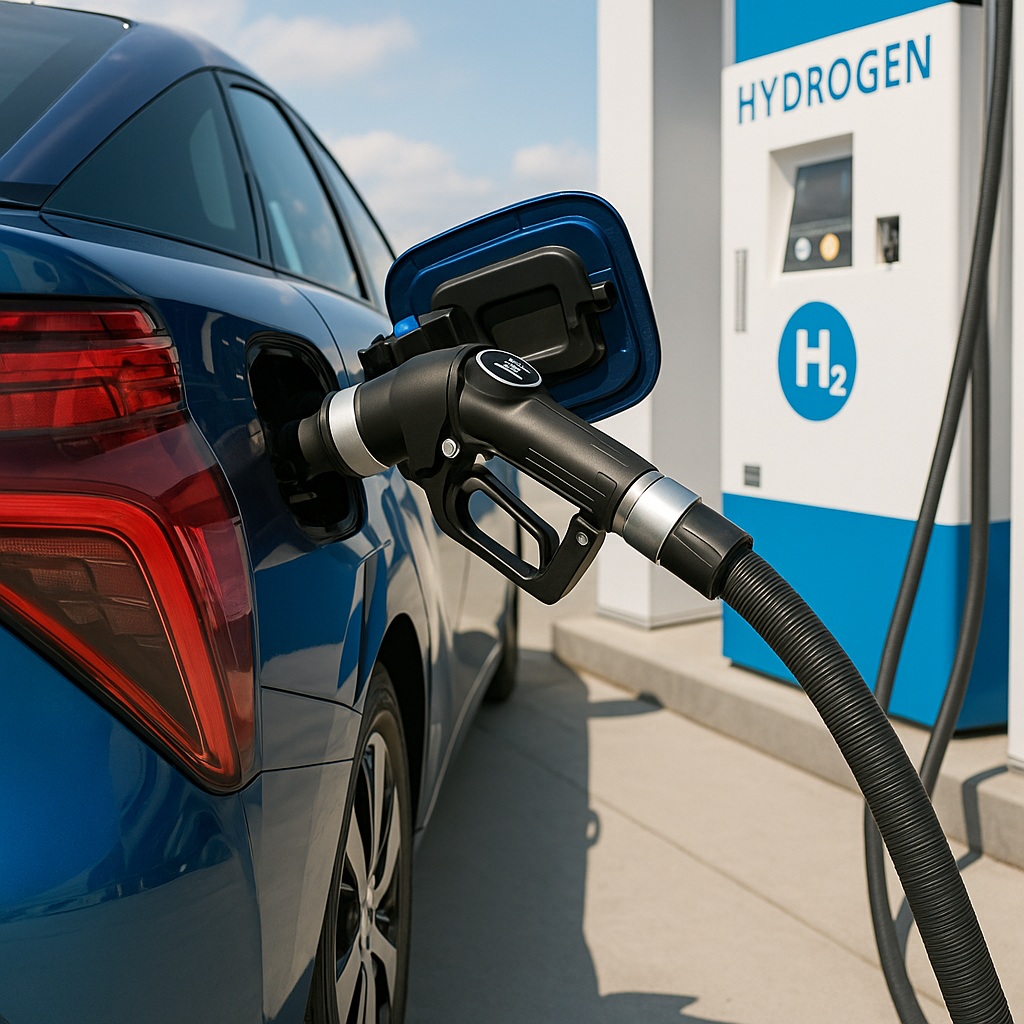
The Toyota Mirai is an electric-drive, mid-size four-door sedan powered by hydrogen, with a range of up to 300 miles and a refuel time of about f…
This is just another part of the big mix of fuels that will power the cars of the near future.
Hydrogen cells are also the favourite of some car manufacturers. Including Toyota now with the Toyota Mirai and BMW. In my opinion, hydrogen will be available at many filling stations in the future.
Toyota Mirai is one of the leaders in hydrogen cell-fuelled cars
It has come to my attention that there are at least three leading car manufacturers that are heading down the hydrogen fuel road with their cars. I am a keen follower of market trends and the direction that the green way forward is heading, and that includes the battle that is rising between EV vehicles, battery Tec technology, the Hydrogen cell technology.
Apart from Toyota with the Toyota Mirai, the other two players are Hyundai and Honda. Other carmakers have also been involved with Hydrogen including the American giant GM. Apparently GM has been running a test fleet of them for a few years now, but it is the Far Eastern country’s carmakers that are ahead of the field.
There are enemies of hydrogen as well as battery-driven cars
But when the largest car company in the world looks interested in something, then it is time to sit up and take note. Toyota is a very experienced and successful manufacturer of cars and has made over 5,600 fuel cell-related patents available. Toyota has started off the motion for hydrogen-powered cars to make it to market at a faster pace.
The inclusion of the auto industry is of particular import to Japan.
Toyota, Honda, and Nissan are key contributors to Japan’s economy, and the industry together accounts for 10% of the national workforce and 20% of exports. To me it is a good thing that Japan is thinking about supporting the home industry, and developing these new products will bring stability to the home workforce.
It does have to make these technologies available to us all eventually to comply with European and American laws, but I think that the Japanese are thinking about this when they free off the patents for the new technology cars.
The scrap between battery power and hydrogen is on.
Both systems have their advantages and disadvantages. So, for instance, electric cars only require plug-in stations. Of course, to be recharged. Significantly, the hydrogen cars will require a network of filling station locations. However, this will mean that they could just be added to the existing gas stations all over the world.
Both cars can claim to have zero emissions.
But the lithium-ion cars are recharged by “dirty” coal-fired power stations. So they are not as green as people think. Especially in countries like China! So, the hydrogen car only emits water, so until the power supplies are greener, the hydrogen car wins there.
At the time of writing this post. Both cars are getting about the same mileage! Subsequently, both types of cars are still very expensive to buy. Hydrogen cars can be refuelled the same as a gas engine. While the battery car has to be charged up over a long period. Although scientists are working on a faster-charged battery all the time,.
Only time will tell which idea brings the most success, but you have to admit that it is interesting times that us auto guys live in.
2025 Update
Hydrogen vs EV – Could Hydrogen Cars Really Work Here in the UK?
Following on from the earlier look at hydrogen-powered cars like the Toyota Mirai, I thought it would be useful to dig a bit deeper into how hydrogen might fit into everyday motoring here in the UK — and more importantly, what it might mean for drivers around towns like Halifax over the next decade.
We all know the government keeps pushing the electric-only route, but the truth is that the future of motoring isn’t settled at all. You’ve got battery EVs racing ahead in sales, yes — but at the same time, hydrogen technology is quietly gaining pace, especially among the big Japanese and Korean brands who tend to think long-term rather than hype-driven.
Why Hydrogen Might Suit British Roads Better Than Many Think
Plenty of drivers are starting to question whether battery-only EVs really suit our infrastructure. Long charging times, queues at chargers, and the simple fact that many people around Halifax live in older terraced properties or flats with no off-street parking make charging a nightmare.
Hydrogen, on the other hand, has big advantages:
- Fast refuelling – roughly the same time as filling a petrol tank
- Longer range compared to many EVs
- Lighter vehicles, because hydrogen fuel cells don’t weigh as much as big lithium batteries
- Cleaner power, with only water vapour coming from the exhaust
In many ways, hydrogen fits more closely with how people actually use cars today — quick fill-ups, longer trips, and no waiting around for hours at a charger.
Hyundai, Honda, and Toyota – The Far Eastern Push Forward
As mentioned in your original piece, Toyota isn’t alone. Hyundai and Honda are deep into hydrogen research, and in typical fashion, they’re playing the long game. Toyota Mirai, has already reached its second generation, Hyundai has the Nexo, and Honda has experimented with both the Clarity Fuel Cell and several commercial hydrogen platforms.
These companies aren’t just tinkering — they’re investing billions because they believe batteries alone won’t meet global demand.
Meanwhile, over in the USA, GM is working with hydrogen for military and commercial vehicles. The American market often leads with pickup trucks and heavy-duty vehicles, and hydrogen suits those far better than giant battery packs.
But the real innovation still seems to come from Japan and Korea. They’ve always had a knack for building technology that lasts — look how long Toyota hybrids have been running around Halifax without missing a beat!
Could Hydrogen Work in Towns Like Halifax? Toyota Mirai
Honestly, yes — if the infrastructure arrives.
Hydrogen refuelling is still rare in the UK, but the few stations we do have prove the technology works perfectly well in British weather and terrain. Halifax, being hilly and often cold, is exactly the type of environment where hydrogen has an advantage over heavy battery EVs struggling with winter range.
Imagine being able to pull into a station near the Calder Valley, fill up in five minutes, and head straight off again — no messing, no apps, no cables across the pavement.
It’s very similar to how we treat petrol and diesel cars now, which is probably why many drivers feel more comfortable with the idea.
Why Toyota Keep Betting on Hydrogen: Toyota Mirai
Toyota has always been cautious about fully committing to battery EVs. Instead, they produce:
- Petrol cars
- Hybrids
- Plug-in hybrids
- Hydrogen cars
They’re spreading their bets, and hydrogen is a big part of their long-term vision. The Mirai isn’t just a science experiment — it’s a proper production car that already has loyal owners.
Toyota knows something the rest of the world is slowly discovering:
There isn’t going to be one single solution to replace petrol and diesel—we’re going to need a mix.
Hydrogen, hybrids, and improved batteries will all have a part to play.