You are here:Home1/Our Blog2/All Alloy wheels Stuff
All Alloy wheels Stuff
All Alloy wheels Stuff
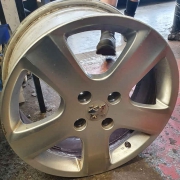
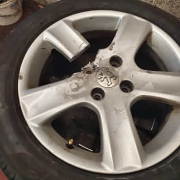
Naturally, wheel refurbishment, will bring your cars wheel virtually back to new. So, the process includes totally stripping down all the old materials. Consequently, down to the original metal. Including, the total wheel both the inside and the outside. Of course and starting the renewing process all over again. All the wheels are resprayed with colour of the customer’s choice. Then they are baked in an oven at high temperature.
The final process is to apply a coating of lacquer. Of course, to give the alloy wheels a further coating for protection.
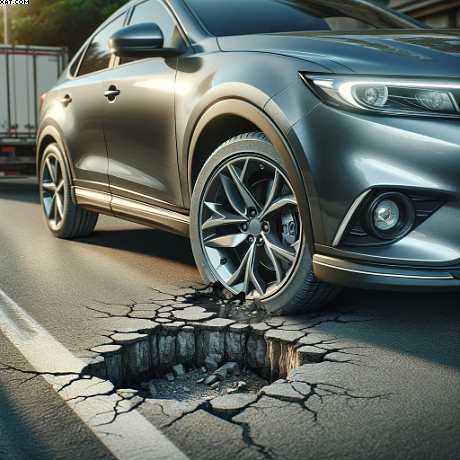
Potholes Damaging Alloy Wheels and tyres are a major problem everywhere? But you can claim your money back
Of course, this is a story that I have been harping on about for a few years now. It seems that local government highway departments and city government departments are struggling with the enormity of the problem.
Originally, this excellent article was from the Detroit metropolis in Canada, but the story could be from any city in the “Western World.” including here in little old Halifax, UK. From a local point of view, we have the same problems across the whole of the UK. We are also benefiting from the extra business that this problem is bringing to us: damage to the wheels, damage to the wheels, damage to the tyres, and many broken springs.
Of course, the condition of our roads is a hot issue for us drivers.
We appear to be riding a bumpier ride the more we talk about it. You’re driving along, taking in the odd glimpse of sunshine, when suddenly another pothole appears. It’s a real threat to alloys and tyres equally, not simply a bother.
Everyone is aware that the UK has many beautiful drives and historical charm, but our roads? Given all the fissures and craters that dot them, they could narrate a few historical stories themselves. It is like trying to drive through a poorly written novel’s plot holes.
Here in Halifax and around the UK, the problem is quite acute.
Potholes deep enough to cook a Sunday feast are what we are discussing! And the promise of smooth tarmac is still just that, a promise, with the council’s finances tighter than a gnat’s chuff. It hurts, especially for those of us who deal with batteries and tyres on a regular basis. You could wind up with a charge for a wheel alignment, a new tyre, or both after one poor turn.
Why, then, is there a crack? As it happens, the funding and prioritisation of maintenance are part of the issue. Apparently, rather than appropriate, long-term improvements, our roadways become victims of band-aid treatments. It’s not really as effective as slapping a plaster on a broken leg. When the frost arrives each winter, those plasters simply fall off.
The effect is on our finances as well as our safety.
Avoiding potholes may make a routine commute seem like an obstacle course. And it causes serious difficulty for companies like ours, where daily operations include customer visits and delivery. It detracts from our service and, to be honest, is a little embarrassing when a customer arrives to pick up a brand-new battery and leaves with a dented alloy.
It was about time we chatted about things other than band-aid solutions. Putting money into our roads is putting money into our health, safety, and scones—after all, no one wants a scone that has endured a seismic tremble in a pothole.
The next time you’re out and about negotiating the lunar terrain of our neighbourhood lanes, consider how a little investment in our roads could make your trip safer, smoother, and a little more enjoyable. Keep an eye on things and keep your tyres inflated until then. You know where to find us if you need a battery that can withstand the highs and lows of British roads. I hope for a more comfortable journey ahead, and be careful out there.
What to do if your wheels/tyres are damaged !
The potholes also cause damage to the car’s suspension and often knock out the wheel alignment. Some of the damage can be claimed back from your local authority here in the UK.
Unfortunately, I do not know how the law works in other countries. However, if you do have pot-hole damage. Firstly, then you should take a picture of the potholes. Secondly get an invoice for the work carried out on your car. Thirdly, then you can put in a claim for compensation. Of course, to recover your losses from the damage that the potholes have caused.
A few of our customers did this after our advice and were successful with their claim.
Because of the rise in the number of damaged alloy wheels. So, we have purchased an alloy wheel straightening machine. I feel that this, along with a new tyre vulcanizing machine, will give our customers better all-round service !
Importantly, improving customer services is always one of my business priorities. Consequently, many damaged tyres can be repaired with the correct equipment ! So, large tyres that are now used on many SUV family cars are very expensive. Getting a nail in the side wall normally means a new tyre.
However, we have now invested in equipment to be able to repair such damage! Significantly, these repairs are both safe and legal.
Relaxing. Last week, I was sitting in my small office . Daydreaming and just looking out of the window. So. I noticed a breakdown recovery truck with a blue car on the back. I never thought more about it, as we have these broken down cars brought into us all of the time, as most busy auto centres do.
About ten minutes later
A member of my staff came in, shouting for me to have a look at this wheel. The damaged alloy wheel had come off the car that was brought in on the back of a transporter, a Ford Focus with a sport conversion, up-rated brakes, and an oversized cheap alloy. You know the thing I mean; this was a young guy’s car and a bit sporty.
However, the guy had been going at speed and hit a massive pothole in the road. The impact had caused a massive blowout out to both his offside (driver’s side) alloy wheel and completely
wrecked the tyres and caused severe damage
to the alloy wheels. We can have small damages repaired by a local alloy wheel welding specialist. These are very often small cracks that appear on the rims and start to leak air from the wheel and tyre assembly. This is most common on some BMW models, and sometimes we have known BMW to replace wheels free of charge.
These small cracks can be repaired successfully, much to the pleasure of many of our customers. It has been a bad time for broken and cracked alloy wheels recently due to the large increase of potholes on our roads, and so it is good to be able to give our customers the good news when they do not have to buy a new wheel, but we can have their damaged refurbished Alloy Wheels repaired.
I had not seen alloy wheel so badly damaged ? Damaged Alloy Wheels Repaired
We were all amazed at the massive split in the Pothole Damaged wheel that came off the front. Shockingly, I have never seen one so bad. Splitting was almost all around the circumference of the wheel. If you look at the image below, then you can see what I mean. Luckily for the customer, we have just become members of a buying group. Now, here in the UK, it’s called MD . Fortunately, this is one of the suppliers we can deal with. Hence, TSW Wheels sells alloy wheel and tyre packages. We were able to supply four new wheels along with two new Falken Tyres, and the guy went on his way, a happy driver.
Pellon Tyre and Auto-Centre offer car and van servicing and repairs
now including “wheel repairs” for all makes of vehicles. Also, we sell Falken tyres online from our website. Using the tyre selector and choosing your tyre size. Offering courtesy cars to local motorists who need to go to work. Leaving their car with us for work. Of course, we are also an official MOT testing station.
So, 80% of cars now have alloy wheels fitted to them! And as you know, every day, thousands of these wheels cause minor damage. Of course, from kerbing, potholes. Causing stone chipping and lacquer discolouration. Predominantly, this damage stands out like a sore thumb. Especially on polished rims. Of course, by offering this new service, we were looking for a cost-effective method. Of course, to repair and bring the damaged alloy wheel(s) back to a showroom finish.
Alloy Wheel Damage – More Common Than You Think
It’s funny really; people spend thousands on shiny new cars with fancy alloy wheels, only to scuff them on the kerb outside Morrisons on their first week of ownership. Alloys might look smart, but they’re not half as delicate compared to the old steel wheels we used to bash about with.
How Do Alloy Wheels Get Damaged? Damaged Alloy Wheels Repaired
Kerb Scuffs The most common one – clip the kerb when parking and you’re left with an unsightly scrape that spoils the look straight away.
Potholes Halifax roads aren’t exactly billiard-table smooth, are they? Hit a pothole at speed and your alloy can crack or buckle.
Corrosion Alloys are metal, and with all the winter salt on our Yorkshire roads, corrosion can creep in if the lacquer gets damaged. That leads to bubbling paint and leaking tyres.
Over-tightened Wheel Nuts Believe it or not, garages using the wrong torque setting can damage the alloy around the bolt holes – something we’re careful about here at Pellon Autocentre.
General Wear and Tear Daily driving, grit, brake dust – it all takes its toll. Over time, alloys lose their shine and need some TLC.
Why It Matters- Damaged Alloy Wheels Repaired
It’s not just cosmetic either. A badly buckled wheel can affect handling, tyre wear, and even safety. Plus, corrosion can cause air leaks around the rim, leaving you with a slow puncture you can’t seem to fix.
At Pellon Tyres & Autocentre, we see all sorts of alloy wheel issues – from small kerb rash to cracked wheels that need replacing. A quick check can save you money and keep your motor looking the part.
Strange Alloy Wheel Damage on a Mercedes – Something We Don’t See Every Day
Last week here at Pellon Tyre and Autocentre, we had one of those busy periods where several what I would call “upper-end” vehicles arrived almost one after another for tyre fittings.
Amongst the cars booked in were the following:
Porsche 911
BMW 5 Series
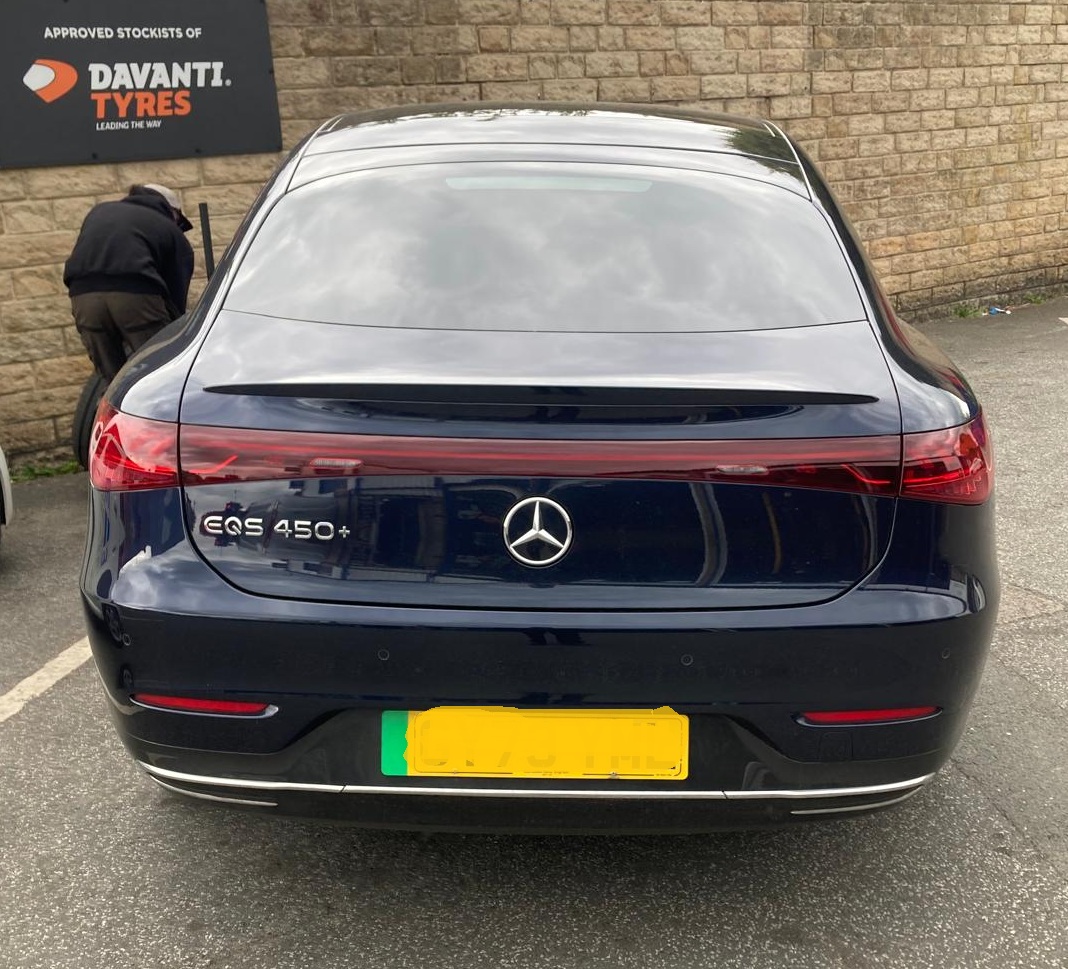
and a very smart Mercedes-Benz
Prestige vehicles like these have become increasingly common around Halifax and Calderdale over the years. What was once considered rare or exclusive is now seen much more regularly on Yorkshire roads, particularly with the popularity of PCP finance and leasing agreements making premium German cars more accessible to many motorists.
However, one of the Mercedes jobs stood out for a completely different reason.
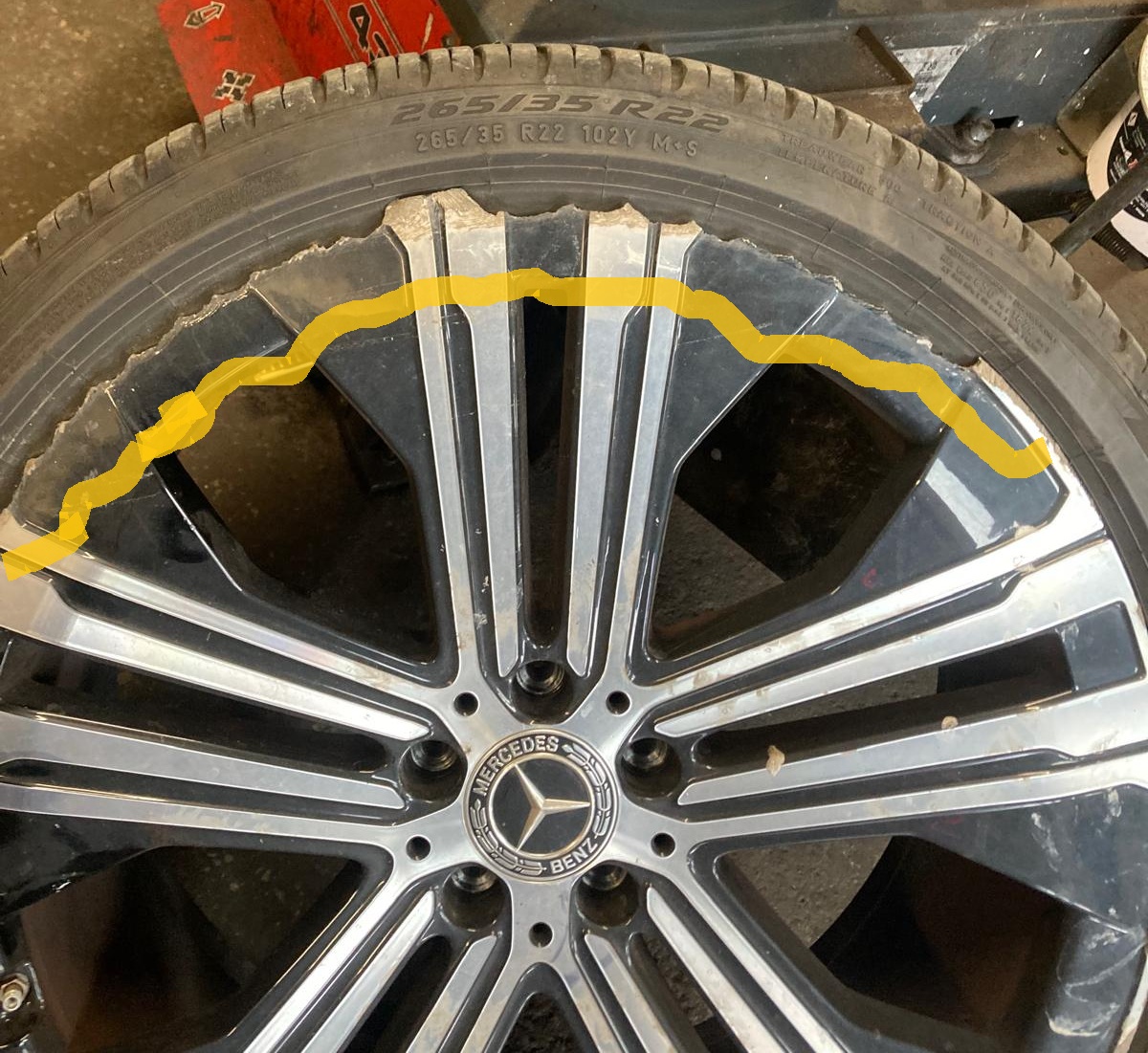
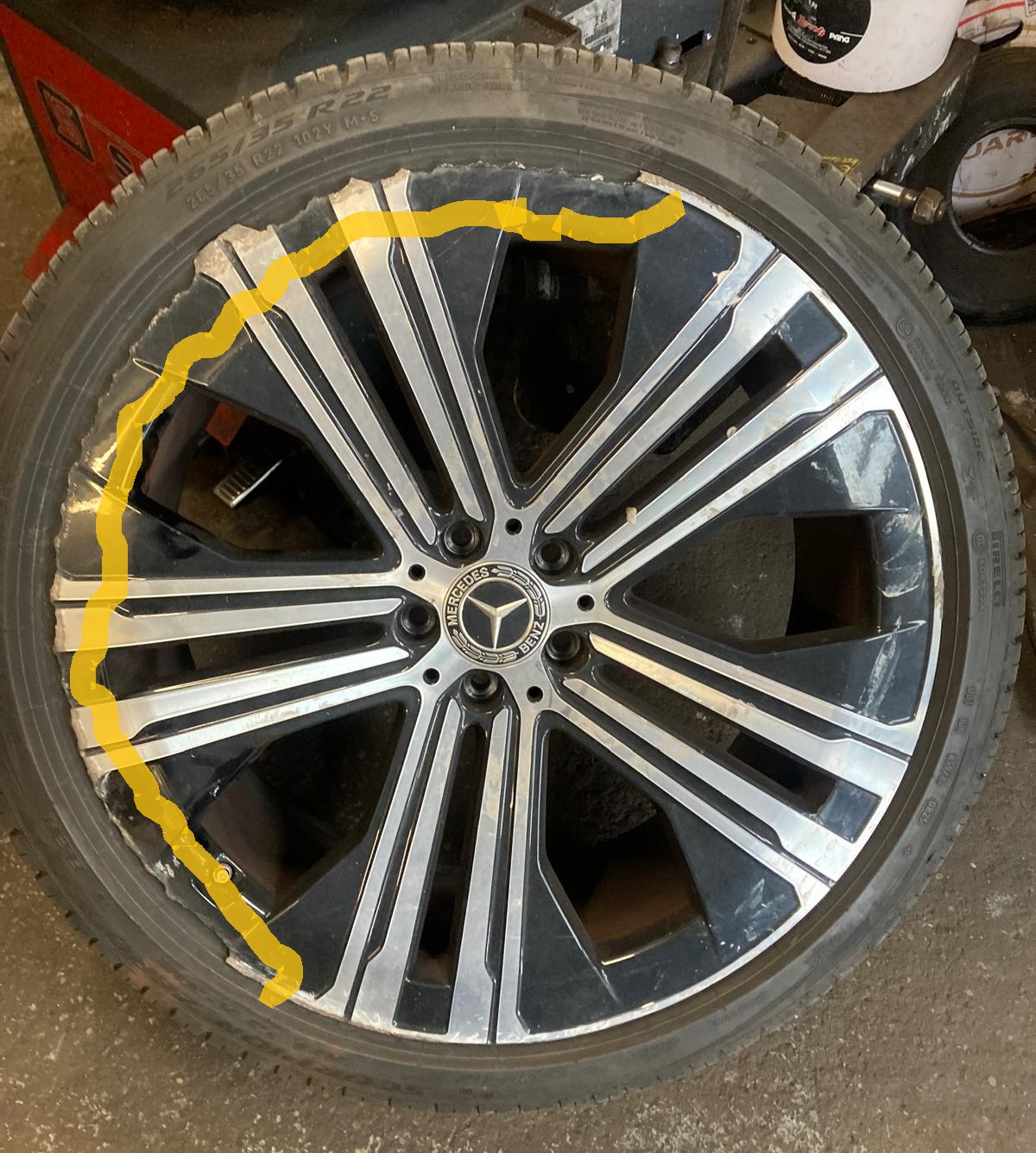
The owner pointed out something unusual affecting two of the alloy wheels. At first glance, the outer rim edges looked almost as though they had been “nibbled away” in small sections.
It was certainly strange damage and not the sort of thing we see every day.
Even after inspecting the wheels closely, I was still left wondering exactly what had caused it.
Mercedes-Benz and Their Popularity in the UK
There is no doubt that Mercedes-Benz remains one of the most respected prestige car brands in Britain.
Years ago, Mercedes ownership was mainly associated with the following:
company directors
business owners
professional drivers
luxury motoring
Today, things have changed considerably.
Modern Mercedes models are now extremely popular across the UK thanks to:
finance packages
reliability improvements
diesel economy
advanced technology
strong resale values
Around Halifax and Calderdale, we regularly see Mercedes vehicles ranging from:
A-Class hatchbacks
C-Class saloons
sporty AMG models
large SUVs
luxury executive cars
Many motorists appreciate the combination of comfort, refinement and strong road presence, especially on longer motorway journeys across Yorkshire and beyond.
Low-Profile Tyres and Larger Alloy Wheels: Mercedes Strange Broken Wheels
One thing that has changed dramatically over recent years is the size of alloy wheels fitted to modern prestige vehicles.
Large alloy wheels with:
low-profile tyres
wider rims
firmer suspension
have become increasingly common.
They certainly improve appearance and handling, but they also create new problems.
Unfortunately, roads around Halifax, Calderdale and much of Yorkshire are not always kind to large alloy wheels.
Potholes, rough surfaces and kerb impacts can all cause damage surprisingly easily.
What Could Cause “Nibbled” Alloy Wheel Damage?
The damage on this particular Mercedes looked unusual because the outer edges of the alloy rims appeared chipped and broken away in several small sections rather than showing one major impact mark.
There are actually several possible explanations for this sort of damage.
Pothole Impacts: Mercedes Strange Broken Wheels
One of the most common causes is repeated pothole strikes.
Low-profile tyres provide less cushioning between the wheel rim and the road surface.
On rough roads, repeated sharp impacts can gradually weaken the alloy edge until small pieces begin breaking away.
Many roads around Halifax suffer badly from pothole damage, especially after winter weather.
Repeated impacts over time can create stress fractures and edge deterioration, which may eventually resemble the “nibbled” appearance we saw.
Corrosion Under the Lacquer
Another possibility is corrosion developing beneath the protective lacquer coating on the alloy wheel.
This is especially common on diamond-cut alloy wheels, where:
moisture
road salt
brake dust
can slowly work underneath the surface finish.
Over time, corrosion can weaken small areas of the rim edge, causing flaking or small sections to break away.
Yorkshire winters with salted roads are particularly hard on alloy wheels.
Potholes and rough road surfaces around Calderdale can still cause expensive damage.
In fact, many prestige vehicles are often more vulnerable because:
larger wheels
lower suspension
firmer ride setups
leave less protection against road impacts.
Final Thoughts: Mercedes Strange Broken Wheels
This Mercedes wheel problem was certainly one of the more unusual things we have seen recently at Pellon Tyres.
The strange “nibbled” appearance around the alloy rim edges remains difficult to fully explain with absolute certainty, but it most likely resulted from a combination of:
Yorkshire road conditions
repeated impacts
corrosion
and possibly age-related weakening
Modern alloy wheels may look fantastic on prestige cars, but they are also far more delicate than many motorists realise.
At Pellon Tyre and Autocentre, we continue seeing how changing vehicle designs and modern road conditions create new kinds of tyre and wheel problems that simply did not exist years ago.
Things never seem to slow down here at Pellon Tyres, and that’s no bad thing. Every week brings something a bit different through the doors, and recently we had a job that really sums up the state of Britain’s roads at the moment.
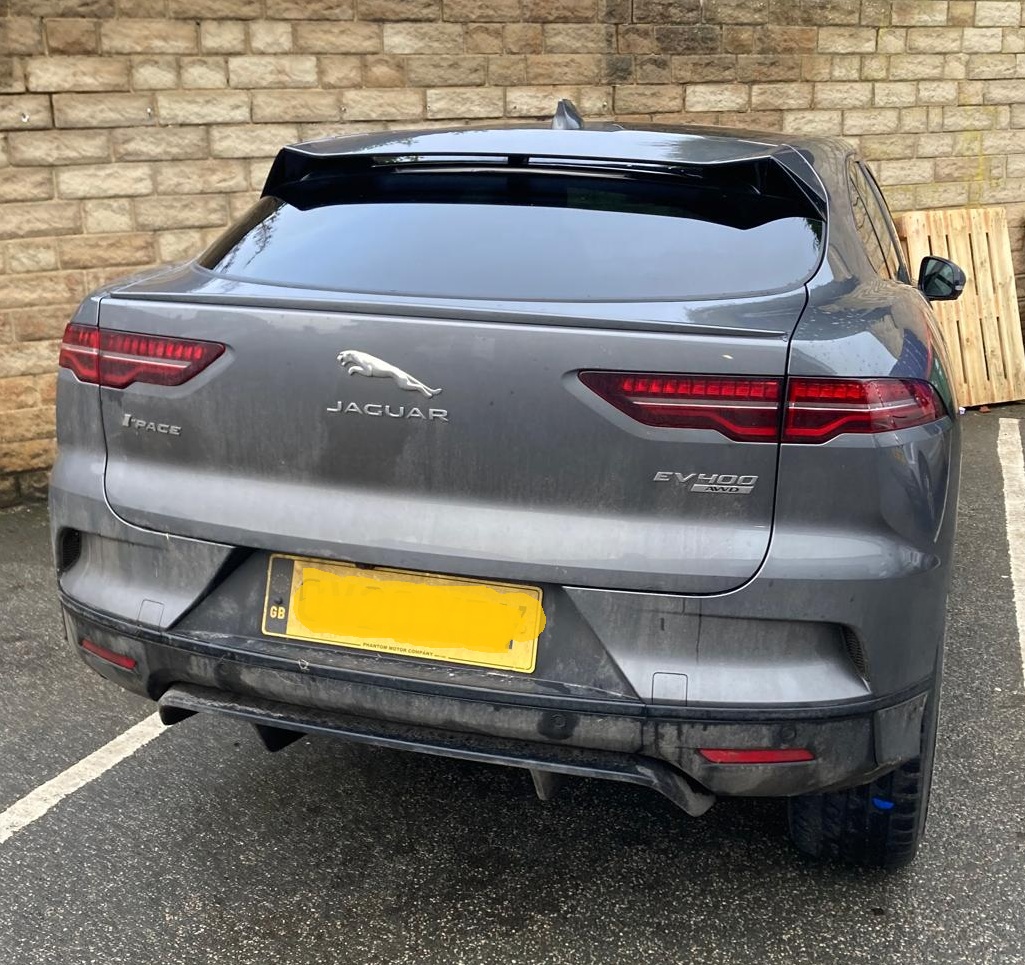
Jaguar I-PACE meets a Yorkshire pothole: Jaguar with Pothole Damaged Wheel
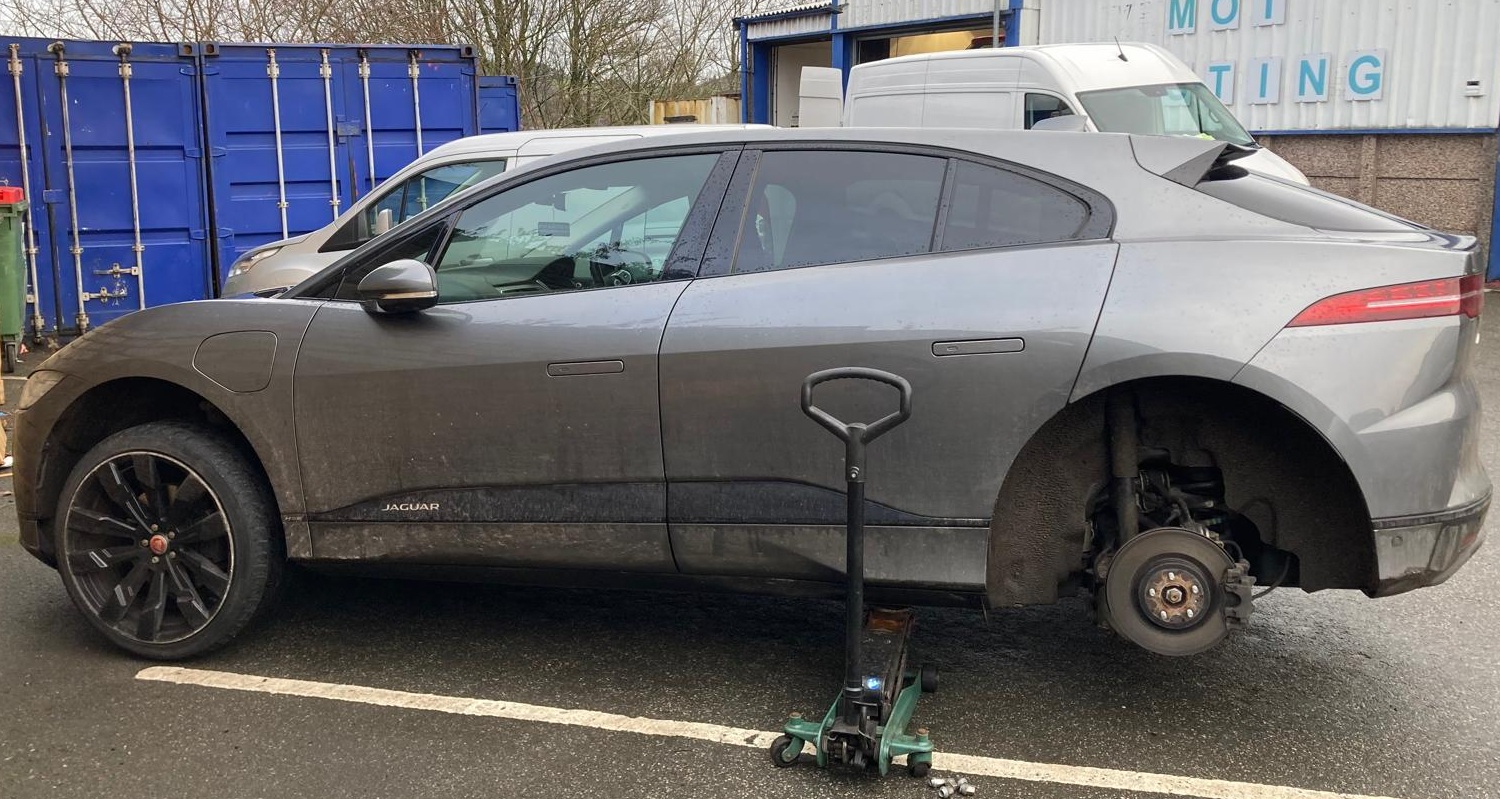
One interesting customer came in with a Jaguar I-PACE that had taken a hefty knock after hitting a pothole. Sadly, this is something we’re seeing more and more of around Halifax and Calderdale in general.
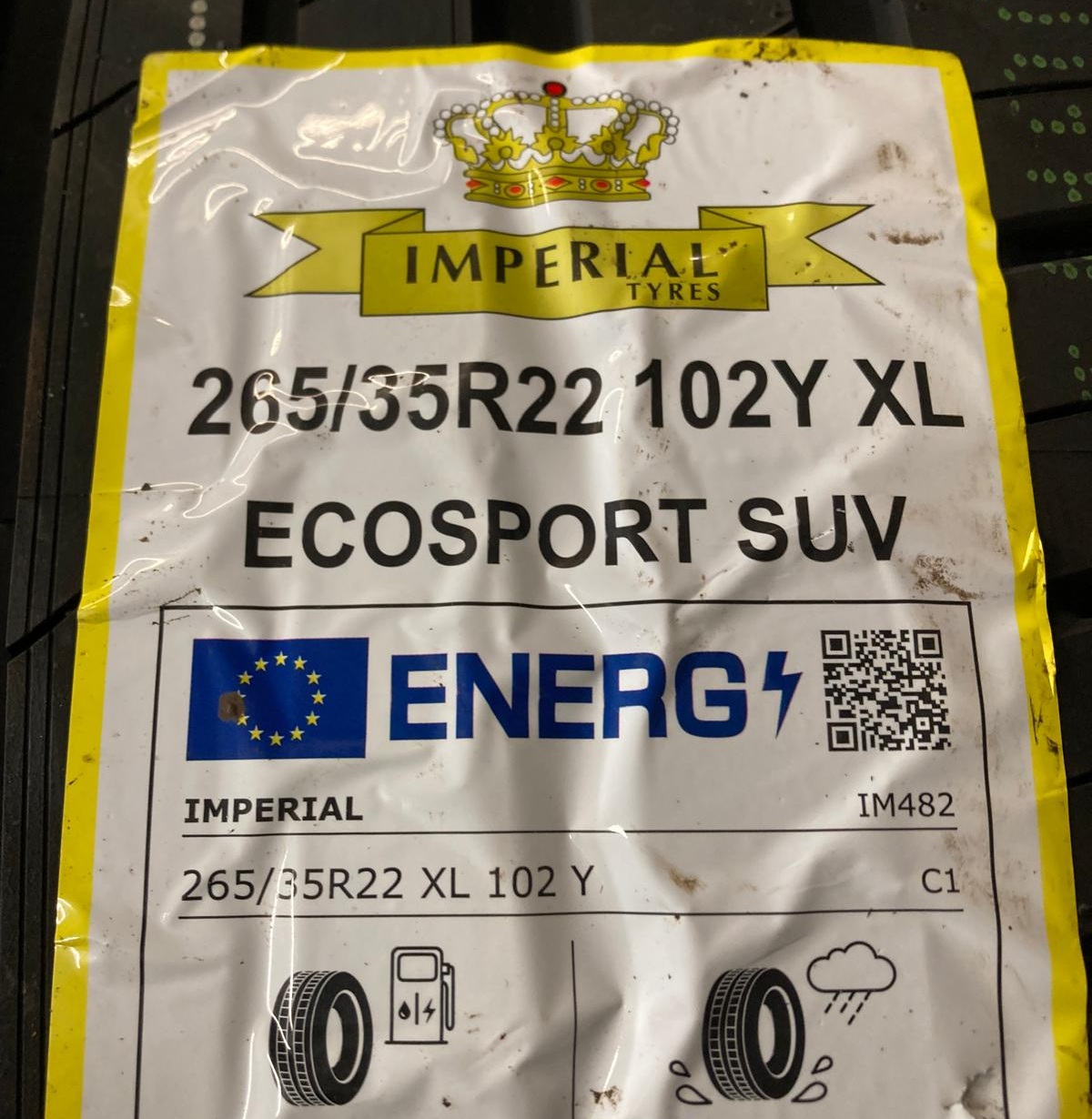
The impact had damaged both the alloy wheel and the tyre. The tyre in question was a chunky 265/35 R22, and we replaced it with an Imperial economy tyre, same size, with a 102Y load rating, which is perfectly suitable for the weight and performance of the vehicle. It’s a sensible option for customers who want to keep costs under control without compromising safety.
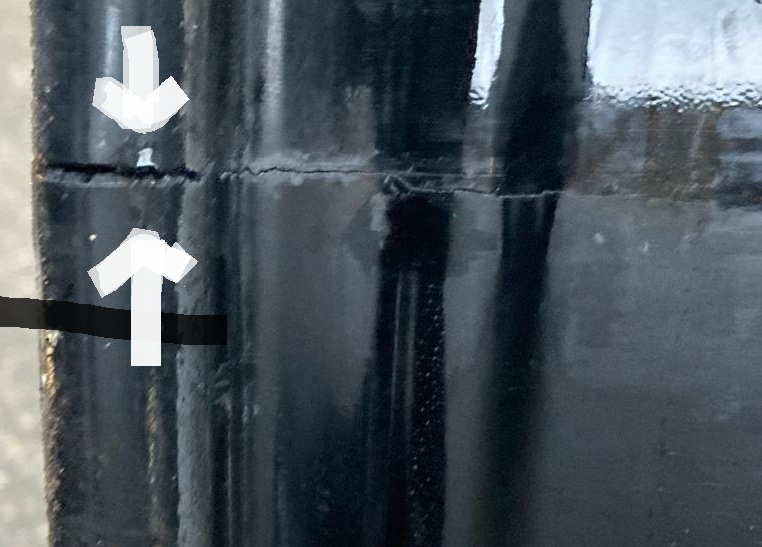
The alloy wheel itself was cracked and buckled – the sort of damage that would have some main dealers sucking air through their teeth and talking about replacement wheels costing thousands.
Jaguar with Pothole Damaged Wheel
Repair rather than replace – common sense wins
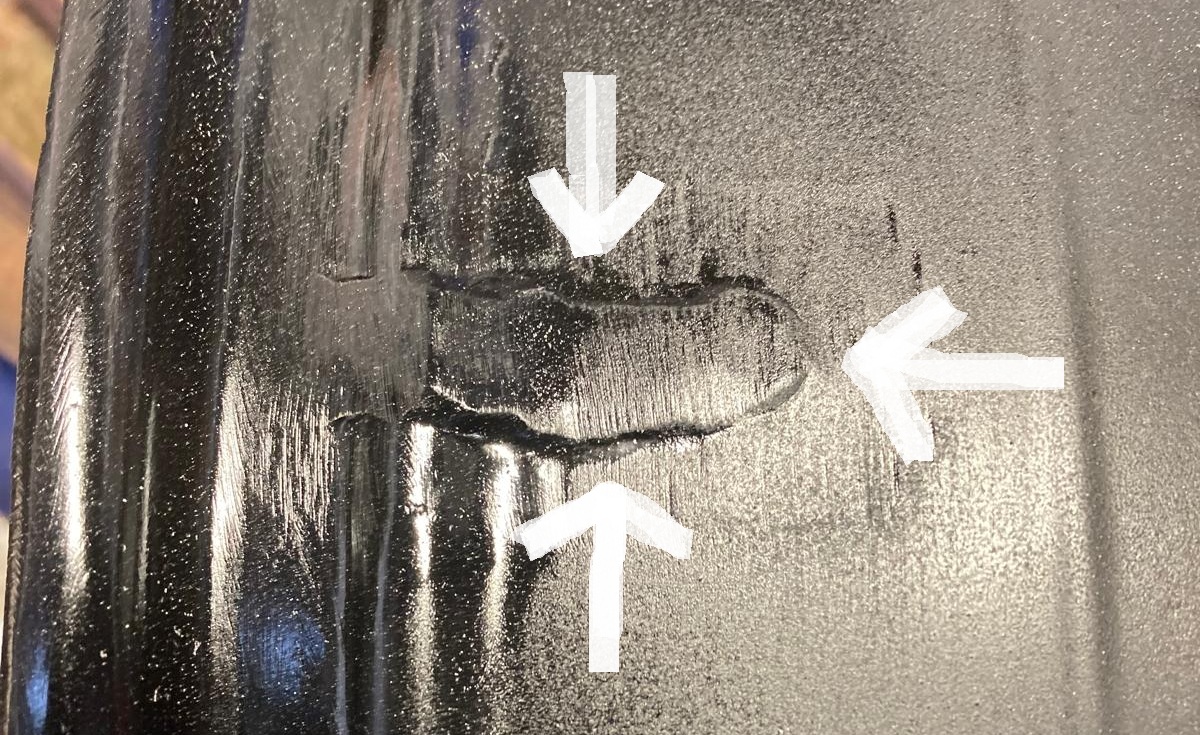
Instead of going down the eye-watering replacement route, we removed the wheel and took it to a local specialist welder we’ve trusted for years. As usual, they did a cracking job, repairing the alloy properly and safely. Once refitted and balanced, the wheel was spot on again.
That one decision saved our customer a small fortune, and it’s exactly why using an experienced independent garage still makes sense.
Crack before repair
A bit of Jaguar I-PACE history in the UK: Jaguar with Pothole Damaged Wheel
The Jaguar I-PACE is an interesting motor. Launched in 2018, it was Jaguar’s first all-electric production car and a bit of a bold move at the time. Built in Austria but designed very much with British roads in mind, it showed that Jaguar could still innovate while keeping that familiar blend of comfort and performance.
In fact, the I-PACE went on to win World Car of the Year 2019, which wasn’t bad going at all. You see quite a few of them around Yorkshire now, especially with company drivers and folk making the move to electric motoring.
That said, even the cleverest electric car in the world can’t cope with the state of some of our local roads.
Fully repaired wheel
Potholes – a real UK problem: Jaguar with Pothole Damaged Wheel
Let’s be honest, potholes are becoming a national disgrace. Winter weather, heavy traffic, and stretched council budgets all take their toll, and tyres and suspension parts are often the first casualties.
And it doesn’t matter whether you’re driving a small hatchback or a high-end electric Jaguar.
New tyre label
Can you claim from the council? Jaguar with Pothole Damaged Wheel
The good news is yes, you can sometimes claim, although it does take a bit of effort.
Here’s some practical advice if you hit a pothole:
Take photos straight away Get clear pictures of the pothole, ideally with something showing its depth (a tape measure or shoe helps).
Note the exact location Road name, nearest house number, landmarks – the more detail the better.
Keep all receipts Tyres, wheel repairs, tracking – keep everything.
Report the pothole Use your local council’s website to report it as dangerous.
Submit a claim Councils usually have an online claim form. Be prepared – they may say they didn’t know about the pothole, which is their usual get-out.
It’s not guaranteed, but plenty of drivers do get money back, especially if the pothole has already been reported by others.
Final thoughts from the workshop
This Jaguar I-PACE job is a good example of how practical repairs and local know-how can save customers serious money. A sensible tyre choice, a proper alloy repair, and an honest approach beat unnecessary replacements every time.
If you’ve clouted a pothole and you’re worried about your tyres or wheels, it’s always best to get things checked sooner rather than later. What looks minor can sometimes turn into a bigger problem down the line.
The Dangers of Installing Oversized Alloy Wheels on Vans
The UK van scene has seen a trend in recent years when an increasing number of van owners are choosing to equip their vehicles with bigger alloy wheels. Larger wheels can definitely give a vehicle a sleek and aggressive appearance, but they also frequently come with a number of issues that many drivers are unaware of.
Having worked for many years in the tyre and garage industry, I have direct experience with the problems that might occur while installing these large alloy wheels. I wish to explain why this trend might not be as wise as it seems in this article.
Attractiveness of Large Alloy Wheels
It’s understandable why large alloy wheels are in demand. They give a van a distinctive, high-performance look that is difficult to miss. Making a statement is more important to many than mere aesthetics. Bigger wheels can also convey the sense of improved performance and handling, which is particularly tempting to people who use their vans for recreational and personal purposes in addition to work.
The Truth: Not Every Wheel Is Fit for a Van-Alloy Wheels on Vans
In actuality, though, a lot of these massive alloy wheels are inappropriate for vans. Vans are made to be durable and able to handle weights, and as such, their wheels and tyres are made with these qualities in mind. The operation of the van is altered when the stock wheels are replaced with substantially larger ones, and frequently not in a positive way.
The Issue with Bigger Wheels-Alloy Wheels on Vans
Compared to regular van wheels, oversized alloy wheels are usually heavier and broader, and they frequently ask for lower-profile tyres. This combination may result in a number of problems:
1. Tyre Wear: Premature tyre wear is one of the most prevalent issues I’ve encountered. Less sidewall height is present on lower-profile tyres, which are frequently paired with bigger alloy wheels. This implies that there is less cushioning between the wheel and the road, which accelerates tyre wear, particularly on the edges.
I recently had a customer bring in his van, and the big alloy wheels were causing early wear on the tyres, necessitating two new ones. He was taken aback to discover how rapidly his tyres had worn out—something he could have prevented by sticking with the recommended wheel size.
2. Problems with Load Ratings: Standard van tyres have a higher load rating since vans are made to carry heavy loads. Fitting bigger alloy wheels frequently results in tyres with a lower load rating, which can be hazardous. There is a greater chance of tyre failure if the van’s weight is too much for the tyres to support, especially when it is completely loaded.
3. Affect on Comfort and Handling: While bigger wheels can help a sports car handle better, they frequently have the reverse impact on a van. Oversized alloys’ stiffer, lower-profile tyres might make the van more difficult to manoeuvre and less comfortable to ride on, especially on uneven or rugged terrain. For people who use their vans for work, where dependability and comfort are essential, this is particularly problematic.
4. Elevated Danger of Damage: There is less rubber between the wheel and the road due to the tyres’ reduced profile. This makes it more likely that the wheels will sustain damage from potholes or curbs, which are frequent on UK roads. Compared to steel wheels, alloy wheels are more likely to break, and replacement or repair costs can mount up quickly.
Alloy Wheels on Vans
Things to Think About Before Upgrading-Alloy Wheels on Vans
A few things to think about if you’re considering giving your vehicle larger alloy wheels are as follows:
1. Please Verify the Load Rating. Verify that the tyres you select have a load rating appropriate for the vehicle you drive. For both legality and safety, this is essential.
2. Speak with an Expert: Speak with an expert before making any alterations so they can advise you on whether the wheels you are thinking about are appropriate for the model of vehicle you are using. A little guidance now can prevent a great deal of hassle later.
3. Understand the trade-offs: Recognise that for the sake of appearance, you can be giving up riding comfort, longevity of your tyres, and possibly even safety. Make sure the compromises are worthwhile for you.
Final Reflections- Alloy Wheels on Vans
Although big alloy wheels might give your van a stylish appearance, they frequently have serious drawbacks that can impair the longevity, safety, and performance of your tires—and ultimately, the performance of your van. Having witnessed these problems repeatedly, I would advise van owners to reconsider their decision to follow this trend.
There’s a reason your van comes equipped with the stock wheels and tyres: they’re meant to keep your car operating safely and smoothly in a range of situations.
Please don’t hesitate to visit our garage (Pellon Autocentre, Halifax, UK) if you have any questions regarding the best solutions for your van or if you have tyre problems after installing bigger wheels. We’re here to assist you in selecting the best options for your car so that it not only looks fantastic but also operates securely and effectively.
Keep your wheels spinning smoothly and drive carefully!
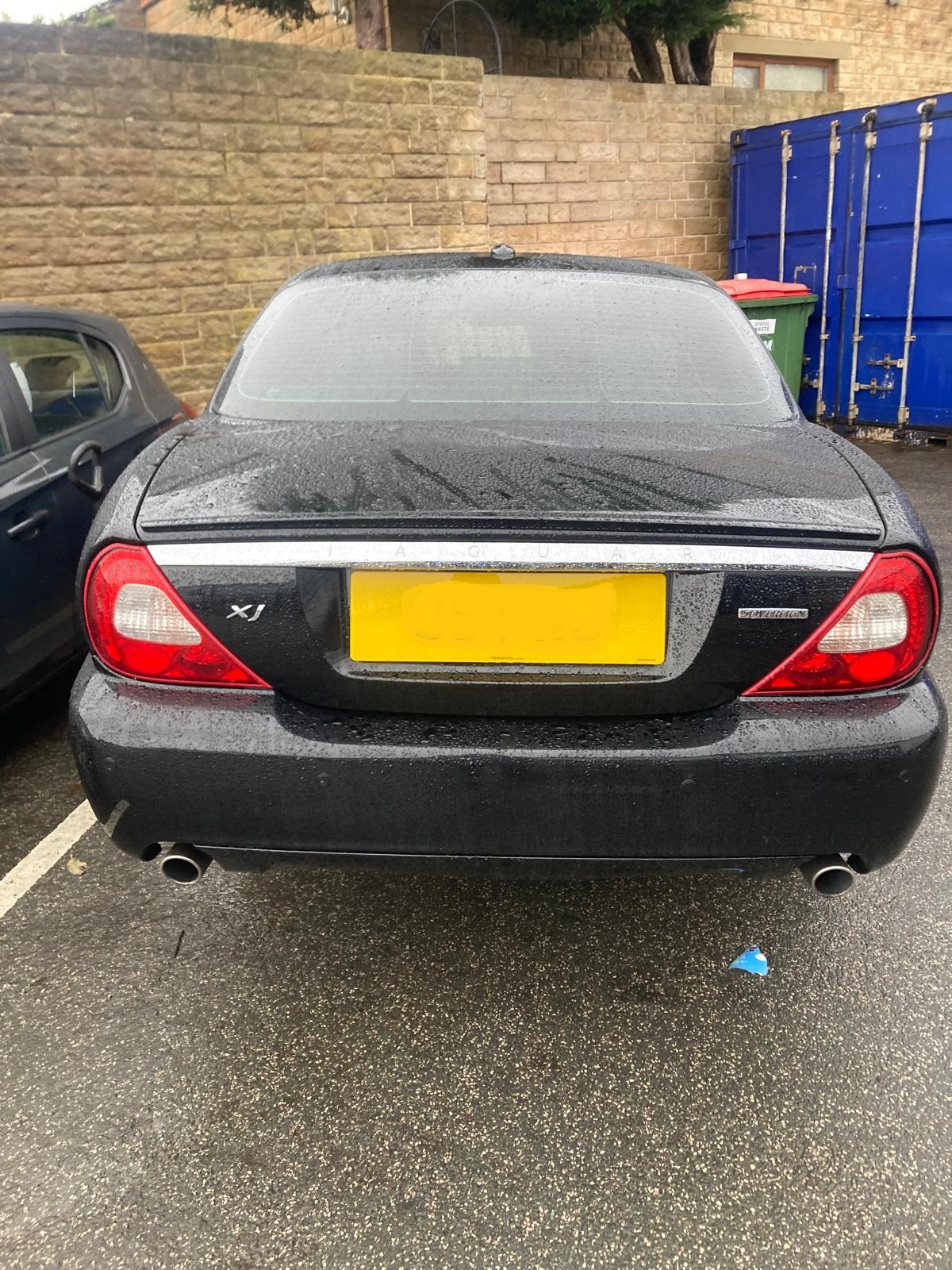
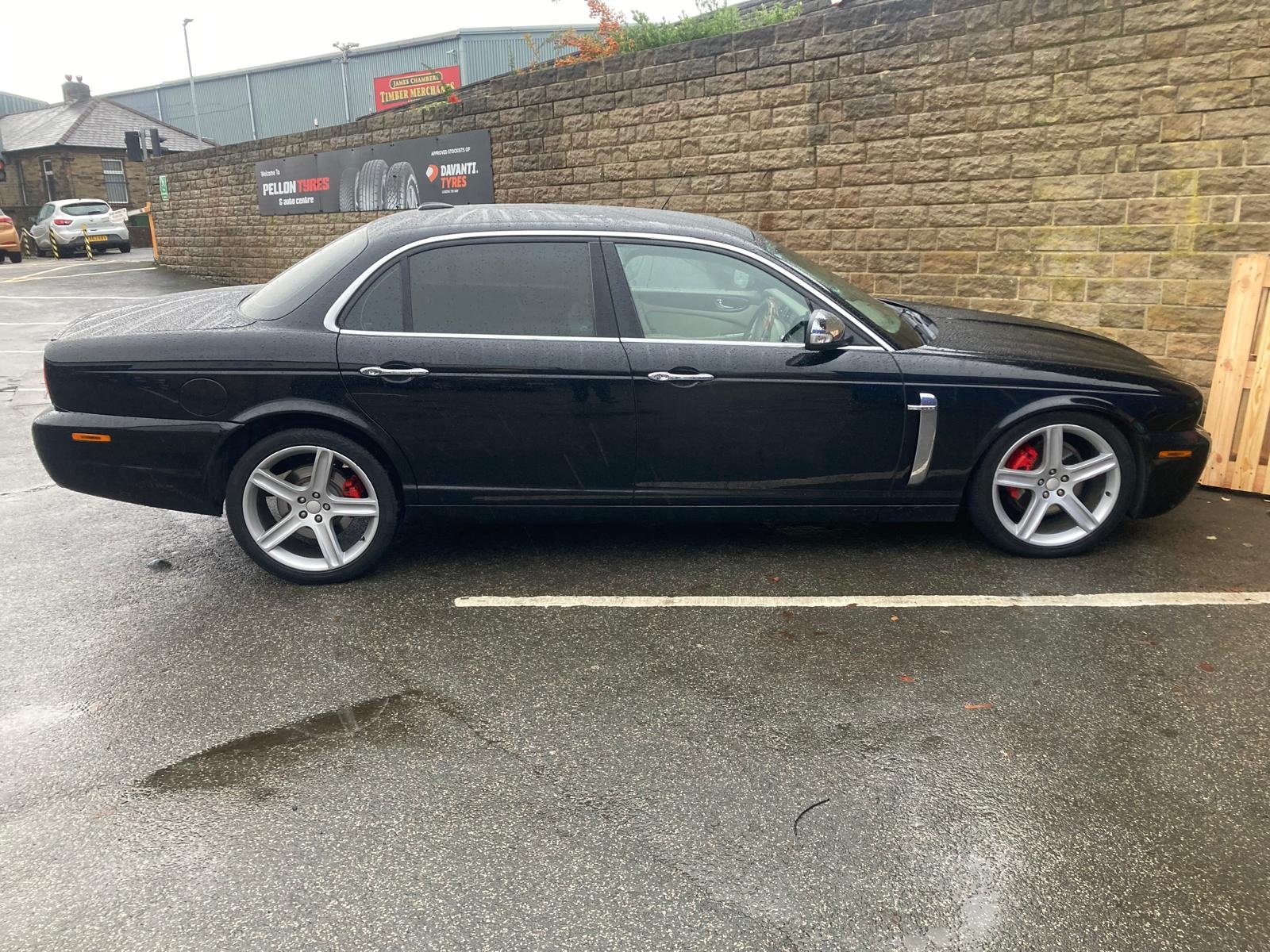
A Cracked Jaguar XJ Wheel in Halifax – Another Busy Day at Pellon Tyres
Yesterday was another very lively day here at Pellon Tyres in Halifax, the sort of steady flow of jobs that keeps us on our toes and reminds me why I still enjoy running a garage after all these years. You never know what’s going to roll onto the forecourt next. This time it was a black Jaguar XJ, gliding in with that classy, unmistakable presence the big Jags always seem to have.
But beneath all that elegance, the owner had a right nuisance on his hands — a tyre that wouldn’t stop losing pressure. He’d been topping it up more often than his kettle and naturally assumed he had a slow puncture. Quite common on Calderdale’s roads, especially with all the potholes we’re blessed with around here.
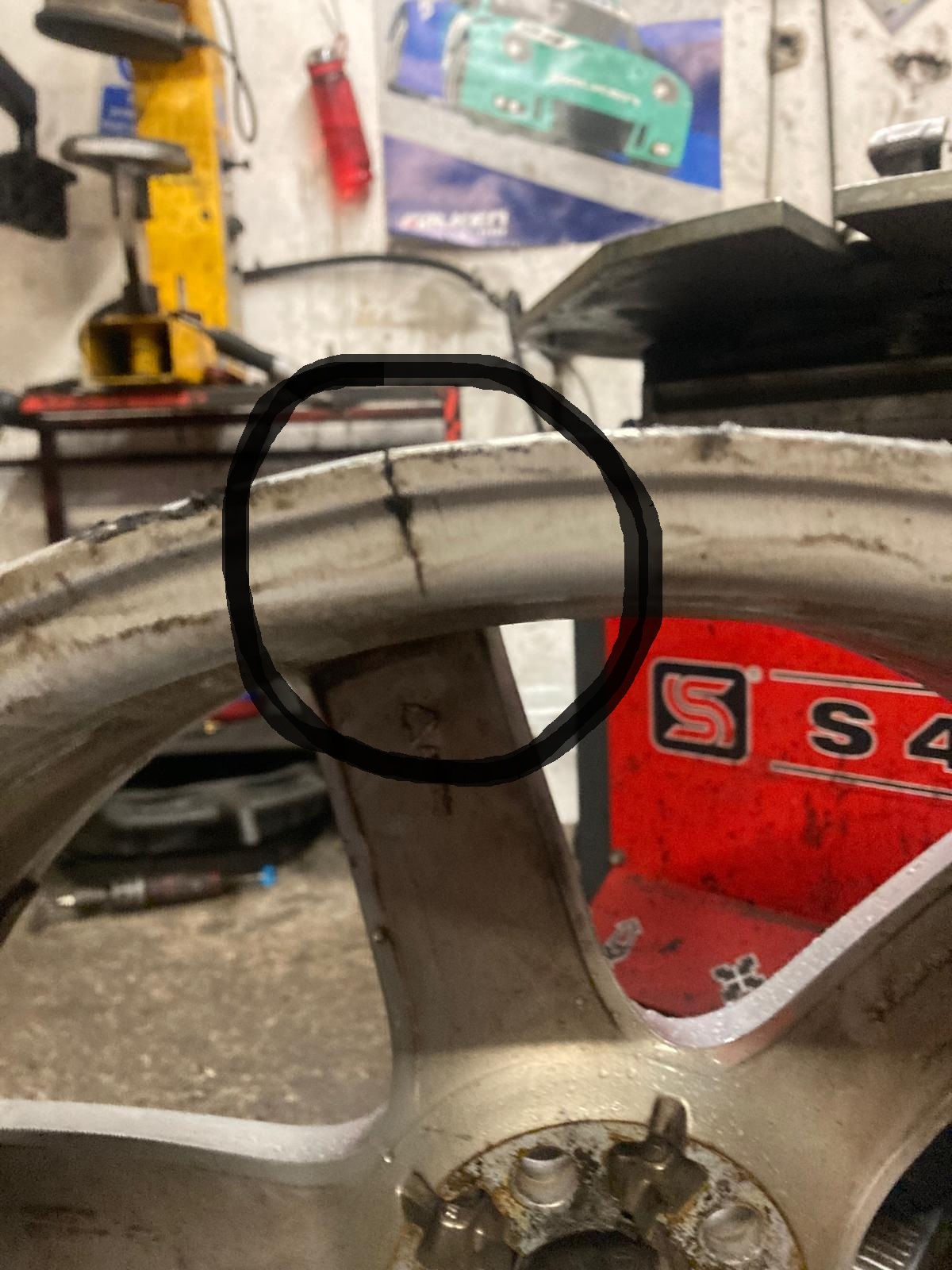
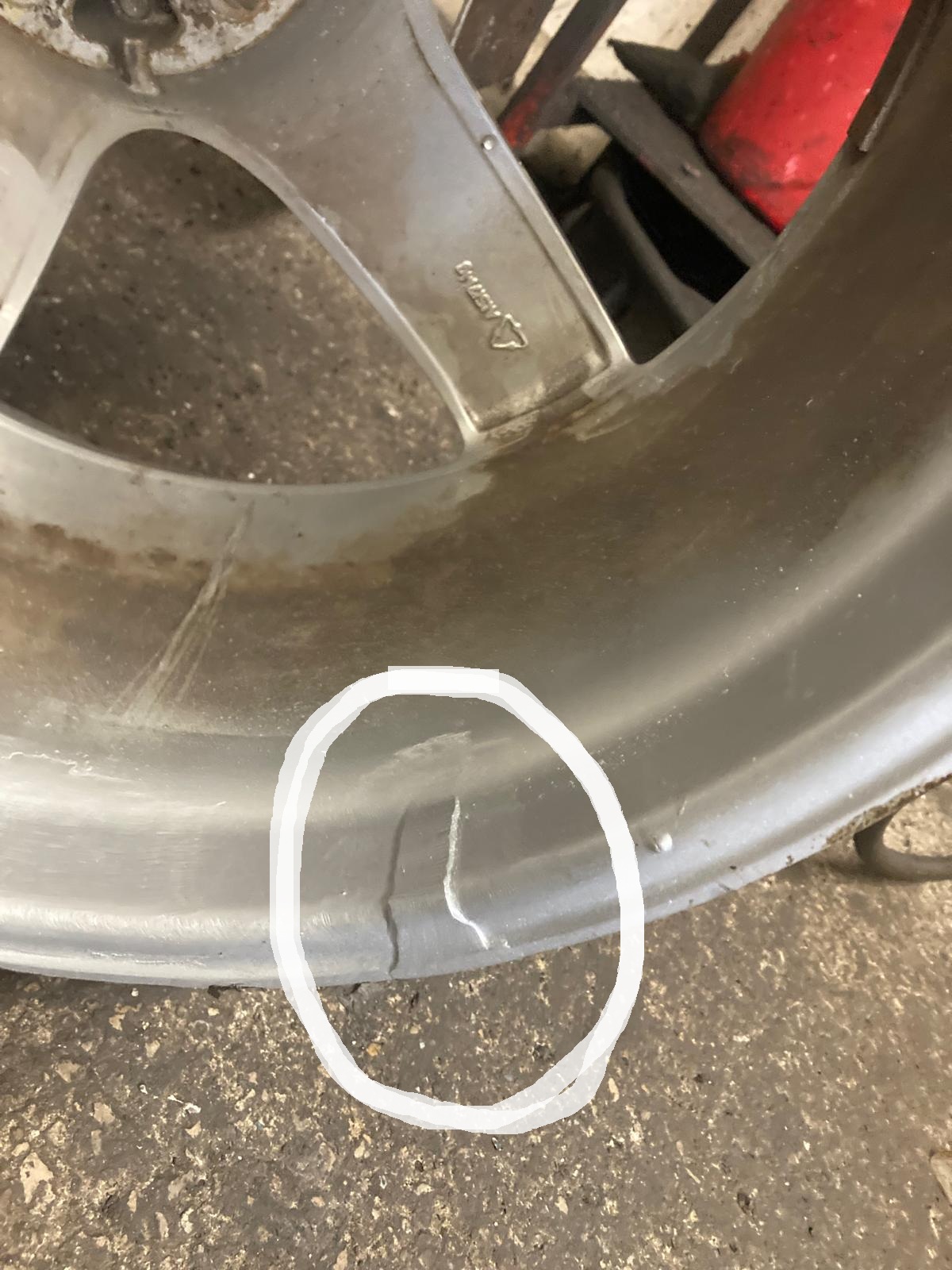
Our lad Adam had a good look at it. He’s got a knack for spotting things most people would miss. After a bit of detective work, he found the real trouble — a crack right on the bead area of the alloy wheel. Only a small split, but that’s all it takes. Air creeps out slowly, and you end up forever pumping the tyre back up.
Cracked-Jaguar-Wheel
What Causes Alloy Wheels to Crack? Cracked-Jaguar-Wheel
Here in Halifax, the answer is fairly straightforward: Our roads are rougher than a miner’s handshake.
Between the winter frosts, steep hills, sharp kerbs and the odd pothole big enough to lose a sheep in, alloy wheels take a hammering. Unlike steel wheels, alloys are more brittle. They’re great for weight and style, but one hard impact can leave:
Hairline cracks (especially on the inner rim)
Buckles, causing steering wobble
Air leaks around the bead area
Flat spots from kerb hits
Most Jaguar XJ owners assume they’ll need a brand-new wheel the moment something like this happens — and with Jaguar prices, that can feel like a Christmas present you didn’t want.
Crack before the repair
But luckily for this chap, that’s not how we operate at Pellon Tyres. We always look for the most sensible and cost-effective solution first. So we took the wheel off and sent it to one of the specialist alloy repairers we use locally in Halifax. These lads know what they’re doing — proper weld-and-true jobs, not quick patch-ups.
Crack after the repair a great job done
Once repaired, we refitted the tyre, sealed it properly, balanced it up and gave the whole wheel a once-over. Good as new. The customer came back, relieved he wasn’t forking out for a pricey Jaguar wheel just before Christmas. A proper little win for him and a satisfying job for us.
A Short History of the Jaguar XJ – A British Legend: Cracked-Jaguar-Wheel
The Jaguar XJ is one of Britain’s most iconic luxury motors. The first XJ arrived in 1968, built to replace the older full-size Jag saloons. Straight away it became the company’s flagship, offering the sort of smooth ride and quiet refinement that turned heads from London to Leeds.
Through the 1970s and 80s, the XJ became a familiar sight outside big hotels, golf clubs, business parks and civic buildings — the car for people who wanted proper British comfort with a bit of swagger. Even up here in Yorkshire, seeing an XJ parked outside a place like Holdsworth House or gliding around Savile Park always made you look twice.
In 2009, Jaguar completely reinvented the XJ with a bold, modern design. Some traditionalists weren’t sure at first, but it ended up winning plenty of fans. Underneath, it still kept that famous Jaguar comfort — smooth, quiet, and effortless, the kind of car that feels just right on the drive between Halifax and Ripponden or across the tops towards Sowerby Bridge.
Even today, the XJ remains a bit of class — which is why it’s always a treat to see one in the workshop, even if it needs a bit of TLC.
“Ensuring Wheel Security: The Significance of Locking Wheel Nuts for Motorists in Halifax, UK”
In the picturesque town of Halifax, where traditional cobblestone lanes intersect with contemporary roads, our automobiles serve as our reliable friends. Regardless of whether you are traversing the historical centre of town or venturing into the picturesque Yorkshire countryside, one aspect stays unchanging: the significance of ensuring the security of your vehicle’s wheels. Locking wheel nuts are essential for drivers in Halifax due to their critical role in vehicle security. Let’s explore the reasons for their importance.
Safeguarding Your Capital: Locking Wheel Nuts Lost
Your car serves as more than a mere means of transportation; it represents an investment in both autonomy and convenience. Therefore, it is inherent to have a desire to safeguard it, particularly in relation to those costly wheels and tyres. Locking wheel nuts serve as protective measures for your wheels, guaranteeing that they remain securely in place on your vehicle.
The topography of Halifax is diverse and varied.
The scenic landscapes of Halifax provide a wide variety of driving experiences. Our vehicles face a range of challenges, from the steep slopes of the metropolis to the twisting country roads of West Yorkshire. Locking wheel nuts offer enhanced security, particularly when driving on difficult terrain or when parking your vehicle alone in public spaces.
The act of deterring thieves: Locking Wheel Nuts Lost
Vehicle theft is a possibility in any location, including our close-knit town of Halifax. Locking wheel nuts serve as a barrier for potential thieves who take advantage of easy opportunities. These specialised nuts necessitate a distinct key for extraction, rendering it notably more arduous for potential wrongdoers to abscond with your wheels. It is akin to adding an additional security measure to protect the precious items in your car.
Ensuring Tranquilly for Motorists in Halifax
Locking Wheel Nuts Lost
Being a proprietor of a garage in Halifax, I have witnessed numerous regrettable occurrences involving pilfered wheels. The tension and inconvenience it induces can be overpowering. Locking wheel nuts offer drivers in our area a sense of security, as they reduce the likelihood of their wheels being easily stolen.
User-friendly
Although you may perceive the addition of this additional security layer as inconvenient, there is no need to worry. Utilising locking wheel nuts is a straightforward process. Upon purchase, you will be provided with a distinctive key that securely slots onto a single wheel nut. Implementing this straightforward measure provides an additional level of protection for your car.
In conclusion :Locking Wheel Nuts Lost
In Halifax, our automobiles are not merely machines but rather important components of our everyday existence. Locking wheel nuts may appear insignificant, but they are crucial for protecting your vehicle and ensuring your peace of mind. Whether you’re exploring the picturesque streets of Halifax or travelling into the breathtaking Yorkshire environment, locking wheel nuts are essential for keeping your wheels securely attached to your car. If you have not done so already, I recommend investing in wheel protectors to ensure the safety and security of your driving experience in Halifax.
So, most people in the auto trade know about the “locking wheel nut problem.
” As a result, cars arrive at our garages and tyre shops with no way of removing the vehicles’ locking wheel nuts. In the beginning, most cars have a set of tools that enable us to remove the locking wheel nuts. These tools are fitted to secure the alloy wheels and prevent theft. Indeed, some alloy wheels are very expensive and an easy target for thieves.
Many modern vehicles are fitted with alloy wheels, and indeed, at one time, they were a selling point when garages sold a new car. In the early days of this, the wheels were often stolen. The alloys were probably sold as scrap and eventually melted down for other uses. Similar to the latest spate of “catalytic converter” thefts that we are having at the moment!
Alloy wheel thefts: what was the answer?
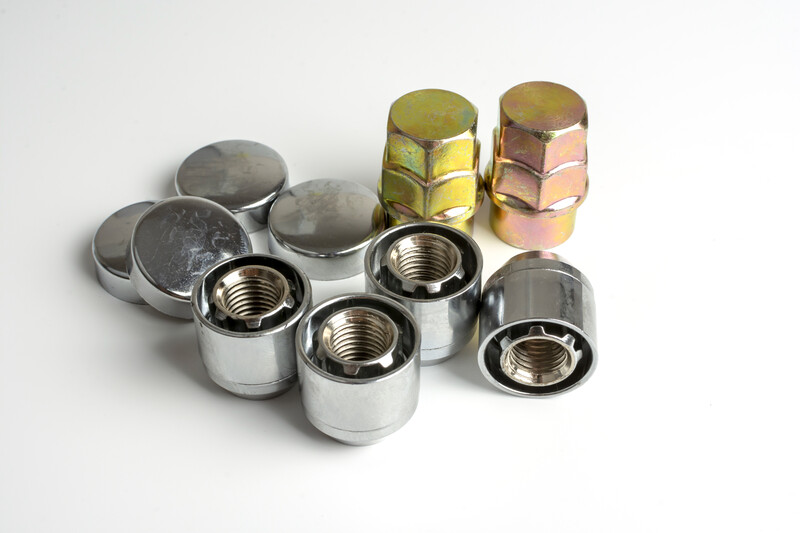
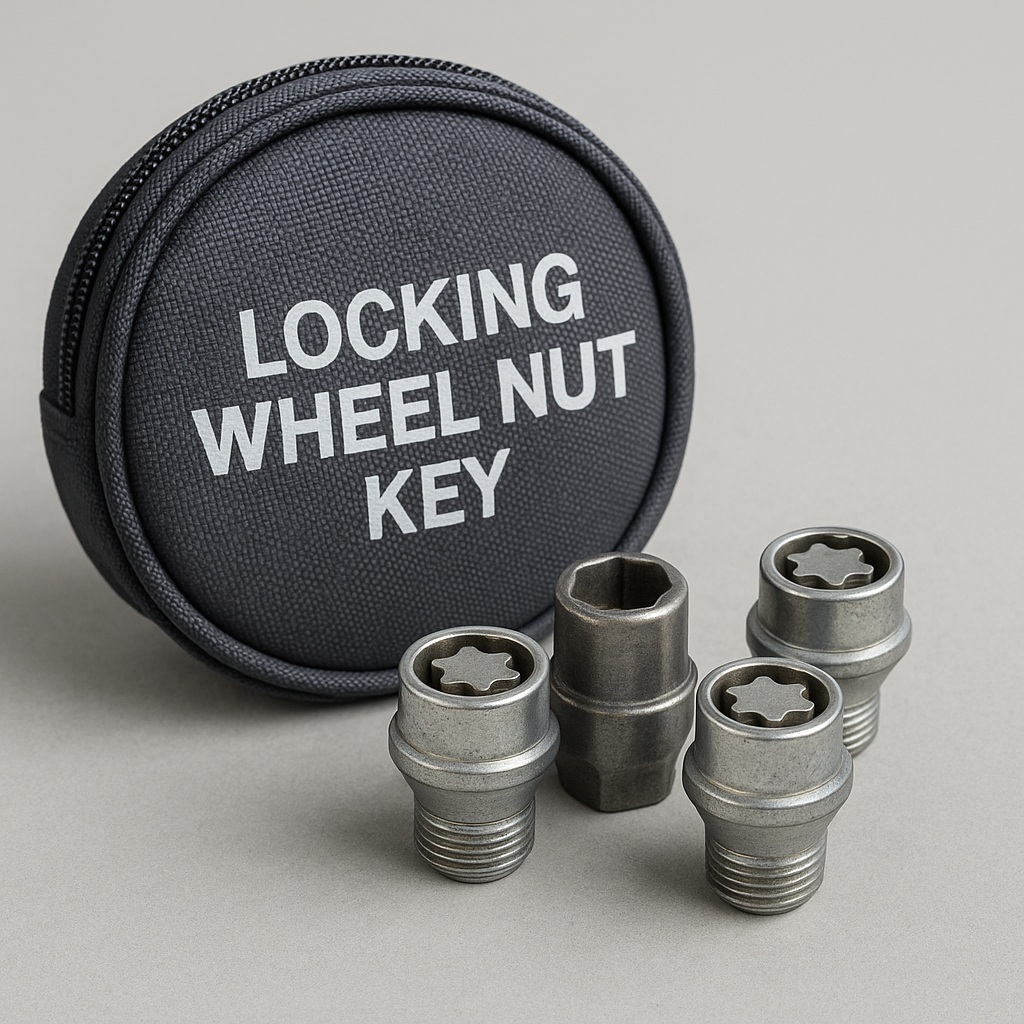
Importantly, the theft problem had to be solved! So, the answer would be the invention of the locking wheel nut. These came in a set of four (one for each wheel). A simple tool would fit on the locker, enabling the driver or garage to remove the locker when required. Over the years, the system has worked, except for a few hiccups!
Mainly, the car owner would lose the lockers, and when the car turns up for, say, a service and needs the wheel removed, “whoops,” there is no locker to remove the wheels. So, this happens time and time again. Fortunately, as an ingenious industry, we again solved the problem. Most garages now carry a special tool that enables us to get the locker nuts off without damaging the car’s valuable alloy wheels.
How not to remove with a saw! Locking Wheel Nuts Lost
So, I thought that I had seen it all until my staff sent me this image for our blog. One of our customers had attempted to cut out the locker with a hacksaw! This can clearly be seen in the images. What do you think? Have you ever seen anything like this? Please let me know.
The Importance of Knowing (and Storing!) Your Locking Wheel Nut Key – A Daily Headache at Pellon Tyres
One of the most common hold-ups we face at Pellon Tyres isn’t a seized bolt, a corroded exhaust or a puncture that’s gone too far to repair — it’s customers turning up without their locking wheel nut key.
Honestly, it happens every single week, sometimes several times a day. A driver calls in for two new tyres, or a puncture repair, or a seasonal change-over… we get the car on the ramp, remove the plastic trims, look for the locking nut — and then the dreaded moment:
“Have you got your locking wheel nut key?” Locking Wheel Nuts Lost
“…Err… I think it’s in the glovebox? Or the boot? Or… maybe the last garage has it?”
Cue the search party!
What Is a Locking Wheel Nut Key, and Why Does It Matter?
Modern cars — especially those with nice alloy wheels — are fitted with locking wheel nuts to prevent thieves from whipping the wheels off in the middle of the night. They look just like a normal wheel nut, but the head has a unique pattern.
Each car has:
Four locking nuts (one per wheel)
One matching key — a small metal adaptor with the same pattern
Without that key, the wheel nuts can’t be undone using normal tools.
That means:
We can’t remove the wheel
We can’t replace the tyre
We can’t fix a puncture
We can’t do your brakes, suspension work, etc.
In short — the job stops dead.
Why Losing the Key Causes Big Problems: Locking Wheel Nuts Lost
When we can’t find the locking key, three things happen:
1. Delays
A simple 20-minute job can quickly turn into a 1-hour hunt through the boot, glovebox, door pockets, spare-wheel well, centre console… even the kitchen drawer at home.
2. Possible Damage
If the key REALLY is gone, we have to use specialist tools to remove the locking nuts. These can be expensive, time-consuming, and occasionally damaging if the nuts are seized.
3. Extra Cost
Replacement locking nut sets can run from £25 to £80. Removal tools cost money, and labour takes longer.
All because of one missing little metal key!
Where Car Makers Usually Put the Key: Locking Wheel Nuts Lost
Most manufacturers store the locking wheel nut key in one of these locations when the car is new:
In the boot, next to the spare wheel
In the foam tool tray beside the jack
In the glovebox
In the centre console
In a small fabric or plastic pouch
But after years of servicing, punctures, home DIY jobs and swaps between owners, the key often gets moved, forgotten… or lost completely.
We’ve even found them:
Under the seats
In handbags
In cup holders
In old coats
Rolling about loose under the boot carpet
You’d be amazed!
Why It’s Important to Know Where Yours Is
If you get a puncture late at night, or in a car park, or miles away from home, roadside assistance will need that key just like we do.
Without it, you’re stuck.
A missing locking key means:
Delays
Extra cost
Stress
Possibly even waiting hours for recovery
All completely avoidable.
The Best Way to Store Your Locking Wheel Nut Key
Here’s what we recommend to customers at Pellon Tyres:
✔ Keep it in the boot with the spare wheel tools
This is the most common and sensible spot.
✔ Use a small labelled bag or box
Stops it falling into gaps or getting lost under luggage.
✔ Tell everyone who uses the car where it lives
Partners, kids, other drivers — everyone should know.
✔ Make a note on your phone
A quick reminder like: “Locking wheel nut key – in boot tool tray.”
✔ Keep the code card safe
Many locking nuts come with a pattern code, allowing you to order a replacement if needed.
A little organisation saves a LOT of stress later.
What We Do If the Key Is Missing
At Pellon Tyres, we have specialist removal tools and plenty of experience dealing with lost locking nuts — it’s part of modern garage life!
But we always try the simple route first:
We help the customer search the common hiding spots
We look around the interior and boot
We double-check the tool trays and pouches
If all fails, we remove the locking nuts safely and recommend replacing them with standard wheel nuts if the customer doesn’t need them.
A Final Bit of Advice from a Yorkshire Garage
Locking wheel nuts are brilliant for security… but only if you know where the key is!
So next time you’re tidying the car, or taking it for tyres or an MOT, take 10 seconds to check you know where your locking nut key is tucked away.
It’ll save you time, stress, and a good bit of head-scratching at the ramp!
Hi, there was a time when it did not matter what type of valve caps were fitted to your car’s wheels. As long as you had something to keep the dirt out of the tubeless valve on the wheels, then that’s all that mattered.
Now, because of TPMS, things have changed.
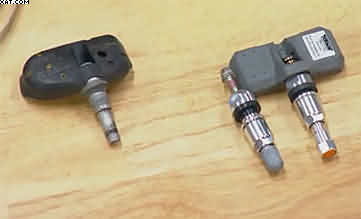
So, your car’s wheels now have a small device fitted to them. This device sends a signal to a receiver whenever the tyre pressure in the wheel or tyre drops. A warning light is activated on the car’s dash. Normally, things work fine. However, we have found that metal valve caps have become problematic.
Here at the garage, we’ve run into a less-than-charismatic problem that’s been giving us a headache in the picturesque town of Halifax, where history and modernity coexist. Metal valve caps are involved, which may not seem like a big deal, but they can have serious and expensive implications, particularly for your TPMS valves.
An Enigma Regarding Metal Valve Caps: The Perils of Metal Valve Caps
Think about this: You’re taking in the breathtaking scenery as you drive through Halifax when, all of a sudden, the TPMS light on your dashboard starts blinking menacingly. This is an indication that your tyre pressure is low, and the culprit could be those pesky metal valve caps.
For what reasons are metal valve caps made?
Metal valve caps are attractive to many vehicle fans due to their long lifespan, lustrous finish, and resistance to corrosion. They appear to be a subtle yet effective method of expressing yourself via your automobile while also adding style to your wheels. Underneath the shiny exterior, though, is a secret issue.
A Catch-22 Situation: The Perils of Metal Valve Caps
When left outside, metal valve caps can swiftly cling to your car’s tubeless valves. All sorts of issues might arise from this apparently harmless relationship. For us as Halifax garage owners, this is a problem that comes up more often than we’d like, and it’s starting to worry our clients.
The Expensive Repercussions
The topic of TPMS valves will now be discussed. When it comes to keeping you safe on the road, these little wonders are indispensable for checking your tyre pressure. Changing them, though, can cost a significant penny. The removal of those metal valve caps might turn into a real hassle when they get stuck on your TPMS valves.
Problem Avoidance: The Perils of Metal Valve Caps
Problematically, what steps can we take to ensure that this problem does not worsen in Halifax? If our clients care about their TPMS valves lasting as long as possible, they should avoid using metal valve caps. The valve caps made of plastic or rubber are more hygienic and easier to remove in case of an emergency.
Also, you really must do maintenance on a regular basis. Because road salt can hasten corrosion, it’s important to inspect your valve caps on a regular basis, but particularly after the winter. Get in touch with our Halifax garage’s experts as soon as you notice any problems if you think your metal valve caps are to blame.
An SEO Perspective: The Perils of Metal Valve Caps
If you’re a Halifax resident looking for information on how to fix a metal valve cap, you’ve come to the correct spot. Our goal is to give you helpful information that solves your problems and boosts our search engine rankings, so you can discover us more easily. We know how important it is to have good SEO.
Ultimately, metal valve caps have a certain attraction to young motorists
but we’ve noticed that they can become stuck and cause costly damage to TPMS valves here in Halifax. If you’re looking for recommendations and solutions to keep your vehicle running smoothly, your local garage is the place to go. Keep in mind that taking small precautions with valve caps will greatly benefit both your TPMS valves and your budget.
The bottom line is that if the metal valve does get seized onto the valve signal sender, then a new one has to be fitted. Motorists don’t realise that this can cost up to £100, depending on the car model and make. The rubber or plastic caps can be easily broken and removed without the need for a new sender valve. New plastic caps are replaced by us free of charge.
https://www.pellonautocentre.com/wp-content/uploads/2024/07/pellon-tyres-logo-509x321.jpg00Eric Robertshttps://www.pellonautocentre.com/wp-content/uploads/2024/07/pellon-tyres-logo-509x321.jpgEric Roberts2025-11-04 18:48:032025-11-04 18:48:03The Perils of Metal Valve Caps
We may request cookies to be set on your device. We use cookies to let us know when you visit our websites, how you interact with us, to enrich your user experience, and to customize your relationship with our website.
Click on the different category headings to find out more. You can also change some of your preferences. Note that blocking some types of cookies may impact your experience on our websites and the services we are able to offer.
Essential Website Cookies
These cookies are strictly necessary to provide you with services available through our website and to use some of its features.
Because these cookies are strictly necessary to deliver the website, refusing them will have impact how our site functions. You always can block or delete cookies by changing your browser settings and force blocking all cookies on this website. But this will always prompt you to accept/refuse cookies when revisiting our site.
We fully respect if you want to refuse cookies but to avoid asking you again and again kindly allow us to store a cookie for that. You are free to opt out any time or opt in for other cookies to get a better experience. If you refuse cookies we will remove all set cookies in our domain.
We provide you with a list of stored cookies on your computer in our domain so you can check what we stored. Due to security reasons we are not able to show or modify cookies from other domains. You can check these in your browser security settings.
Other external services
We also use different external services like Google Webfonts, Google Maps, and external Video providers. Since these providers may collect personal data like your IP address we allow you to block them here. Please be aware that this might heavily reduce the functionality and appearance of our site. Changes will take effect once you reload the page.