Why Timing Belts are Important
Table of Contents
Why Timing Belts are Important
Why Timing Belts are Important
Why Timing Belts Are Important – And Why Ignoring Them Can Destroy Your Engine
If there’s one thing I’ve learned after decades running Pellon Tyre & Autocentre here in Halifax, it’s this…
Most drivers don’t give their timing belt a second thought – until it snaps.
And when it does? Well, that’s when the real trouble starts.
Timing belts are one of the most critical, yet most overlooked, parts of your engine. They quietly keep everything running in perfect harmony, day in and day out. But once they wear out, stretch, or fail completely, the damage can be catastrophic.
So let’s dive into why timing belts are important, why servicing matters, and how a bit of preventative care can save you thousands of pounds and a whole heap of stress.
What Exactly Does a Timing Belt Do? Why Timing Belts are Important
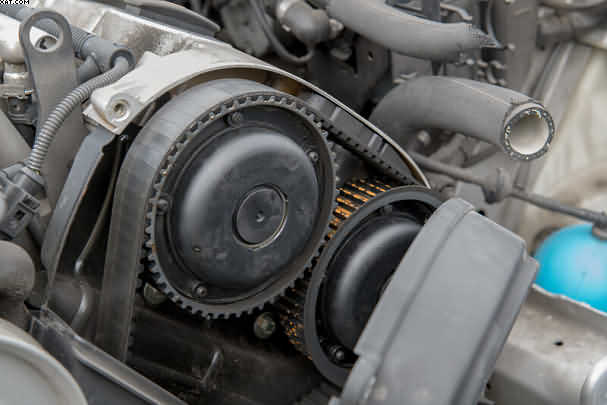
The timing belt synchronises the crankshaft and camshaft, making sure your engine valves open and close at precisely the right time.
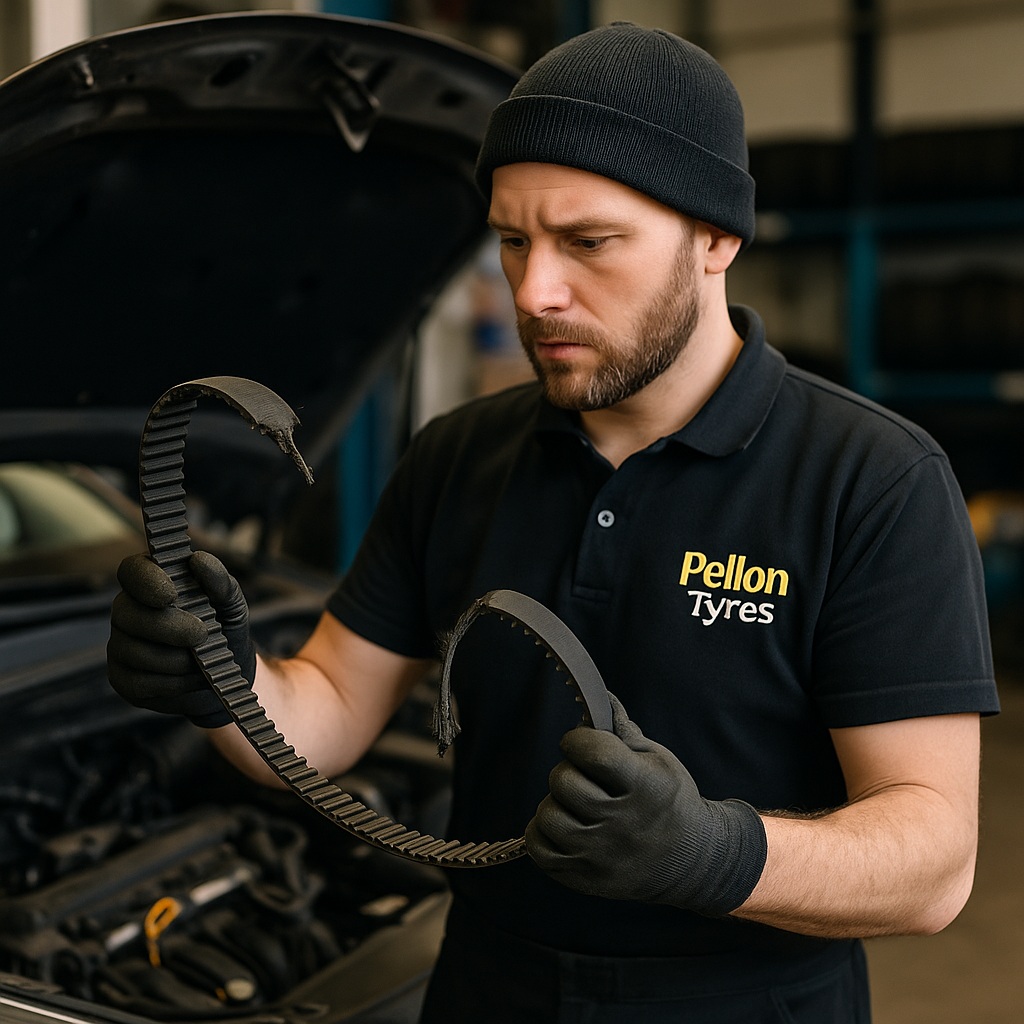
If this timing is even slightly off, your engine performance suffers. If it’s massively off — usually because the belt snaps — then pistons and valves collide, bend, or break.
It’s the automotive equivalent of a heart surgeon dropping the stopwatch.
Without a good timing belt, your engine is simply not safe.
Why Timing Belts Are Linked to Regular Servicing
When we service cars at Pellon, we always check:
- The mileage and age of the timing belt
- Whether the water pump has been changed
- Manufacturer replacement intervals
- Signs of cracking, fraying or stretching
- Whether the last garage left notes or stickers
We check this because manufacturers set strict replacement intervals – normally between 60,000 and 100,000 miles, or every 5–7 years, whichever comes first.
At Pellon, we use our data systems to check the exact replacement interval for every make and model.
This makes sure you’re getting the right advice – not guesswork.
👉 Internal link you can add: https://www.pellontyres.co.uk/car-servicing-halifax/
👉 External authority link (DVSA service info): https://www.gov.uk/getting-an-mot
What Happens If You Ignore a Timing Belt? Why Timing Belts are Important
Here’s the huge one…
1. Catastrophic Engine Failure
Most modern engines are “interference engines”, meaning the valves and pistons occupy the same space — but never at the same time.
If the belt snaps:
- Pistons smash into valves
- Valves bend
- Cylinder heads crack
- Engines lock solid
We’ve seen repair bills well over £1,500–£3,000, and sometimes the car is written off.
2. Reduced Resale Value
Buyers always ask whether the timing belt’s been done.
If it hasn’t, they either walk away or knock a huge amount off the price.
A stamped service history makes all the difference.
3. Poor Performance & Bad Fuel Economy
A stretched belt throws the timing off slightly. This makes your engine:
- Judder
- Idle poorly
- Use more fuel
- Struggle on hills
Many Halifax drivers think their car is “getting old”.
Nope — often it’s just a tired timing belt.
Why the Water Pump Is Usually Replaced at the Same Time
This surprises a lot of people.
The water pump is normally driven by the timing belt, which means:
- If the pump seizes, it snaps the belt
- If the belt fails, the pump won’t circulate coolant
- If the pump leaks, you’ll need the whole job doing again
Doing them both together saves labour and prevents repeating a big job.
Best Practices to Keep Your Engine Safe: Why Timing Belts are Important
Here’s what we advise at Pellon Tyres:
✔ Follow manufacturer intervals
Mileage or age — whichever comes first.
✔ Replace belt, tensioner & water pump together
Cheap insurance against massive repairs later.
✔ Never ignore squeaks, ticking, or rough running
Early symptoms are subtle, but they matter.
✔ Book servicing on time
Your belt won’t last forever, even on low-mileage cars.
Why Halifax Drivers Need to Pay Extra Attention: Why Timing Belts are Important
Here in Halifax, Sowerby Bridge, Hebden Bridge, and Ripponden, we’ve got steep hills, stop-start traffic, and cold winters. All of this puts added strain on engines.
Short journeys — like popping to Lidl or driving to work on Pellon Lane — mean your engine never gets fully warm. That increases moisture, accelerates belt wear, and can shorten its lifespan. It’s one reason we see so many local vehicles coming in with overdue belt replacements.
Warning Signs Your Timing Belt May Be Failing
Not every belt gives warning before it snaps, but some do. Look out for:
- Tapping or ticking noises from the engine
- Oil leaks around the timing cover
- Engine misfires
- Car struggling on hills
- Dashboard engine warning lights
If you hear any of these, get it checked immediately.
What Happens During a Timing Belt Replacement at Pellon: Why Timing Belts are Important
A lot of customers ask what’s involved. It’s a pretty detailed job:
- Remove covers, belts, and ancillaries
- Lock engine timing into place
- Remove old belt, tensioner, and water pump
- Clean mating surfaces
- Fit new parts and set precise tension
- Double-check timing alignment
- Refill coolant and run engine up to temperature
We always road-test the car afterwards to make sure everything is spot-on.
A New Trend: Wet Timing Belts (or “Wet Belt Systems”)
In recent years, many car manufacturers have moved away from traditional dry timing belts. Instead, they now use “wet belt” timing systems — where the belt runs inside the engine’s oil bath rather than exposed to air.
🔧 What’s a Wet Belt, Then? Why Timing Belts are Important
- A wet belt is coated in engine oil, so it runs quietly and smoothly.
- It’s more flexible and generally lasts longer than a dry belt.
- Because it’s immersed in oil, the rubber maintenance issues (like drying out or cracking) are far less likely.
🚗 Which Cars Use Wet Belt Systems?
Several manufacturers now fit wet-belt systems to many models — especially modern compact/small engines and some diesel engines. While there are many across Europe and Asia, a few common examples include:
- Some recent Volkswagen Group engines (certain TSI/TDI variants)
- Some Nissan/Infiniti petrol engines
- Many hybrid-ready or economy-focused engines from manufacturers like Honda and Hyundai
Tip: Always check your car’s service manual or log to see whether you have a belt or a chain — and whether it’s dry or “wet”.
✅ Caring for a Wet Belt System: Why Timing Belts are Important
- Use the correct engine oil — cheaper or incorrect-grade oil may not offer the same lubrication and can accelerate wear.
- Follow oil change intervals strictly, because the belt depends on the oil bath for lubrication.
- Keep engine leaks or contamination in check — water, debris or sludge can damage the belt or surrounding components.
- Although wet belts last longer, don’t ignore them — mileage, usage, and oil condition all affect their lifespan.
In short: a wet belt needs a bit less maintenance than a dry one, but you’ll pay for that with the need for proper oil care and upkeep.
Common UK Car Models That Use Wet Timing Belts
More and more manufacturers have been switching to these “wet belt” systems over the past ten years. They’re designed to run quietly inside the engine oil, but they do need correct servicing — especially regular oil changes with the proper grade.
Here are some of the most common UK models fitted with wet belts:
Ford (the biggest user of wet belts in the UK) Why Timing Belts are Important
Ford call it a “Belt-in-Oil” (BIO) system.
You’ll find wet belts on engines such as:
- 1.0 EcoBoost (all variants) – Fiesta, Focus, Puma, Ecosport, B-Max, C-Max
- 1.5 TDCi diesel – Fiesta, Focus, Ecosport
- 1.5 EcoBoost (some models) – Mondeo, Kuga
- 1.8/2.0 TDCi (certain later versions)
These are the most well-known for problems when oil changes are missed or cheap oil is used.
Volkswagen Group (VW, Audi, SEAT, Skoda)
Some newer TSI engines use a wet belt system:
- 1.5 TSI (selected versions) – Golf, Leon, A3, Octavia
- 1.0 TSI (later versions) – Polo, Ibiza, Fabia
Vauxhall / Opel
Newer small petrol engines:
- 1.2 Turbo (PSA engine) – Corsa, Crossland, Astra
- 1.0 Turbo – Adam, Corsa
Peugeot / Citroën (PSA Group)
Their PureTech engines are famous for wet belt issues:
- 1.0 & 1.2 PureTech petrol – 208, 2008, 308, C3, C4, DS3
Nissan
Some petrol turbo engines share components with Renault–PSA units:
- 1.2 DIG-T – Qashqai, Juke
- 1.3 DIG-T (shared with Mercedes) – Qashqai, Captur, A-Class
Renault
- TCe petrol units (selected models) – Clio, Captur, Megane
Honda & Hyundai
Some hybrid-ready systems and small turbocharged engines also incorporate wet belts.
❓ How often should I replace my timing belt?
Most manufacturers recommend every 60,000–100,000 miles, or every 5–7 years, whichever comes first.
Wet belts can last longer — but only if the correct oil has been used religiously.
❓ What happens if a timing belt snaps?
In most modern “interference engines”, valves and pistons will collide.
This means:
- Bent valves
- Damaged pistons
- Ruined cylinder head
- Bills easily over £1,500–£3,000
Many cars are written off for this reason alone.
❓ Is a wet belt better than a normal timing belt?
Wet belts can last longer and run quieter, but they are VERY sensitive to poor-quality oil.
If the oil breaks down, the belt becomes soft, sheds rubber, and clogs the oil strainer — starving the engine of oil.
This is why so many Ford 1.0 EcoBoost engines have had expensive failures.
❓ How do I look after a wet timing belt?
- Always use the exact oil grade recommended by the manufacturer
- Change oil on time — or earlier, not later
- Avoid cheap filters
- Have the belt checked if the car does lots of short journeys
❓ Should I replace the water pump when changing the belt?
Yes — on almost all engines.
It saves labour costs later and avoids the belt being contaminated by coolant leaks.
❓ Do timing chains need replacing too?
Yes — despite the old myth, timing chains do stretch and wear out.
Some modern chains wear even faster than belts if oil changes are missed.