Posts

Brakes Grinding Problem

Brakes Grinding Problem

Brakes Grinding Problem

Brakes Grinding Problem


Brakes Grinding – Why You Should Never Ignore That Awful Noise

Every now and again, a car rolls into Pellon Tyre & Autocentre that genuinely makes you stop, stare, and wonder how on earth it was still moving. One unforgettable example was a Skoda that arrived with the driver casually saying, “My brakes feel a bit spongy.”
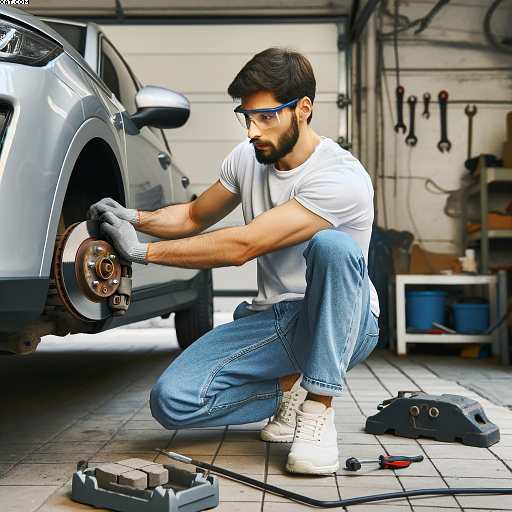
A bit spongy? When we whipped the wheels off, the front brake discs were completely shattered — broken into several pieces. It looked like someone had attacked them with a hammer. Honestly, I’ve been in the motor trade for decades, and this was one of the worst cases of brake neglect I’ve ever seen.

Believe me, letting your brakes reach that state isn’t just unwise — it’s downright dangerous. When brakes start grinding, they’re already crying out for help.


What Does Brake Grinding Actually Mean? Brakes Grinding Problem

If you’ve ever heard that horrible metal-on-metal scraping noise while slowing down, you’ll know exactly what I’m talking about. It’s like dragging a shovel across concrete — enough to set your teeth on edge.

But grinding brakes aren’t just embarrassing. They’re warning you that something is badly worn or broken.

Common Reasons Brakes Start Grinding

Here are the main culprits we see daily in Halifax, Huddersfield, Bradford and beyond:

1. Worn-Out Brake Pads

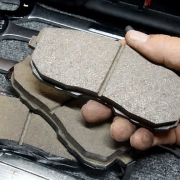
This is by far the most common reason. Brake pads naturally wear down over time. If they’re not checked regularly, the friction material disappears completely, leaving only the metal backing plate.
That metal then grinds directly onto your brake discs — which not only causes noise but also destroys the discs in no time.

2. Stones or Road Debris in the Caliper: Brakes Grinding Problem

Yorkshire’s roads aren’t the cleanest. One rogue stone flicked up from a pothole can lodge itself between the pad and disc, making an awful grinding or scraping sound.

3. Rust and Corrosion

With our damp weather and gritted winter roads, brake discs can corrode fairly quickly. Overnight moisture often creates surface rust, which can cause grinding until it wears away.
But if corrosion becomes severe, the disc surface becomes rough and uneven — and that’s when grinding turns into a permanent problem.

4. Damaged Brake Hardware

Springs, clips and slides can loosen or seize over time. When they fail, the pad doesn’t sit straight, and you get uneven wear and noise.

5. Faulty or Seized Callipers: Brakes Grinding Problem

If a calliper sticks, the pads can constantly rub on the disc — get too hot — and start grinding. Sometimes you’ll even smell burning.


How Grinding Brakes Affect Safety

Grinding isn’t just annoying; it seriously reduces your stopping power. You’ll experience:

  • longer braking distances
  • steering pull to one side
  • overheating brakes
  • risk of brake failure altogether

Not what you want when driving down the steep hills of Halifax or through tight bends in Hebden Bridge.

Ignoring grinding brakes is like ignoring chest pain — it won’t fix itself. It only gets worse.


Brake Grinding in Everyday UK Cars

We see it a lot on:

  • Ford Fiesta & Focus
  • Vauxhall Astra & Corsa
  • Peugeot 207/208
  • VW Golf & Polo

Particularly after winter, when potholes have had a good go at everything underneath.

Some cars still run rear drum brakes, too. A grinding noise from the back often means:

  • worn brake shoes
  • rust built up inside the drum
  • broken springs or adjusters

All simple fixes — as long as you don’t leave them until the parts are destroyed.

Brakes Grinding Problem

How We Diagnose Brakes Grinding Problem at Pellon Tyres

One of our favourite tricks is the Co-op car park test.
We take the customer’s car around the wide open area by the store in Pellon with the window down. At low speed, every creak, scrape and grind becomes crystal clear.

From there we can quickly work out whether it’s:

Most brake problems are solved the same day, and drivers leave absolutely gobsmacked at how quiet their car suddenly is.


Prevention: Stop Grinding Before It Starts

A little bit of TLC goes a very long way. Here’s what we always recommend:

  • Have your brakes checked at least once a year
  • Get noises investigated early
  • Avoid cheap, unbranded brake pads
  • Make sure your brake fluid is changed every 2–3 years
  • Keep an eye on dashboard warnings

It’s no different from checking the weather before heading to Blackpool—you avoid hassle by being prepared.


Final Thoughts – Don’t Ignore the Signs

If your brakes start grinding, don’t turn the radio up and pretend you didn’t hear it. It’s your car saying, “Help me!”

A quick inspection now could save you hundreds of pounds later — and more importantly, keep you and your family safe on our unpredictable Yorkshire roads.

And remember…
The only grinding noise you should hear on your travels is the coffee machine at your favourite café.

If your brakes are making odd noises, pop into Pellon Tyre & Autocentre, Halifax. We’ll sort you out and get you safely back on the road.

How Local Roads Make Brake Problems Worse

One thing many motorists don’t realise is just how much local driving conditions affect brake wear. Here in Halifax, with our steep hills, tight bends, and constant stop–start traffic, your brakes work twice as hard as they do in flatter parts of the UK.

Coming down the tops from Queensbury, Ripponden Bank, or even the hill into Sowerby Bridge puts enormous strain on discs and pads. If your brakes are already worn or low-quality, that extra heat buildup can finish them off pretty quickly.

It’s one of the reasons why we see so many grinding and screeching cases in our workshop — Yorkshire roads are stunning, but they’re brutal on braking systems!


Why Cheap Pads and Discs Can Cost More in the Long Run

Another point worth mentioning is the false economy of buying cheap no-name brake pads or discs. We’ve seen plenty over the years, and they often deteriorate far quicker than decent branded ones.

Some budget pads use hard, poor-quality materials that crumble or glaze under heat, which then causes even more grinding, vibration, and long stopping distances. When you compare that with a quality set fitted properly, the difference in safety — and lifespan — is massive.

Spending a little extra now can save you a fortune later, not to mention keeping you and your family safer on the road. At Pellon Tyres, we always recommend using trusted, well-made parts, because your brakes are the last thing you want to gamble with.

Audi A1 Brake Problems Solved

Audi A1 Brake Problems Solved

Audi A1 Brake Problems Solved


✅ Audi A1 Brake Problems Solved

Spongy Pedal? Grinding Noise? Here’s How We Fixed a Serious Audi Brake Issue in Halifax

There’s nothing quite like driving an Audi, is there? That smooth ride, German engineering, and a touch of class that makes it feel a cut above. But even the best-built cars can run into trouble. And recently, we had a real challenge roll into Pellon Tyre and Autocentre here in Halifax, West Yorkshire – a proper head-scratcher involving an Audi A1 with some very dodgy brakes.

This wasn’t your average squeaky pad. It was the kind of fault that could have led to a serious accident if left unchecked. Thankfully, Dave (our customer) knew something wasn’t right and brought it straight to the experts.


The Problem: Brakes That Just Wouldn’t Stop Audi A1 Brake Problems Solved

Dave described his brakes as feeling “spongy” – sometimes they worked, sometimes they didn’t. That’s enough to make anyone nervous behind the wheel.

After a quick test drive around the block, we knew straight away that this wasn’t just in his head. There was a nasty grinding noise, and the braking distance was far too long. Time to get it up on the lift.

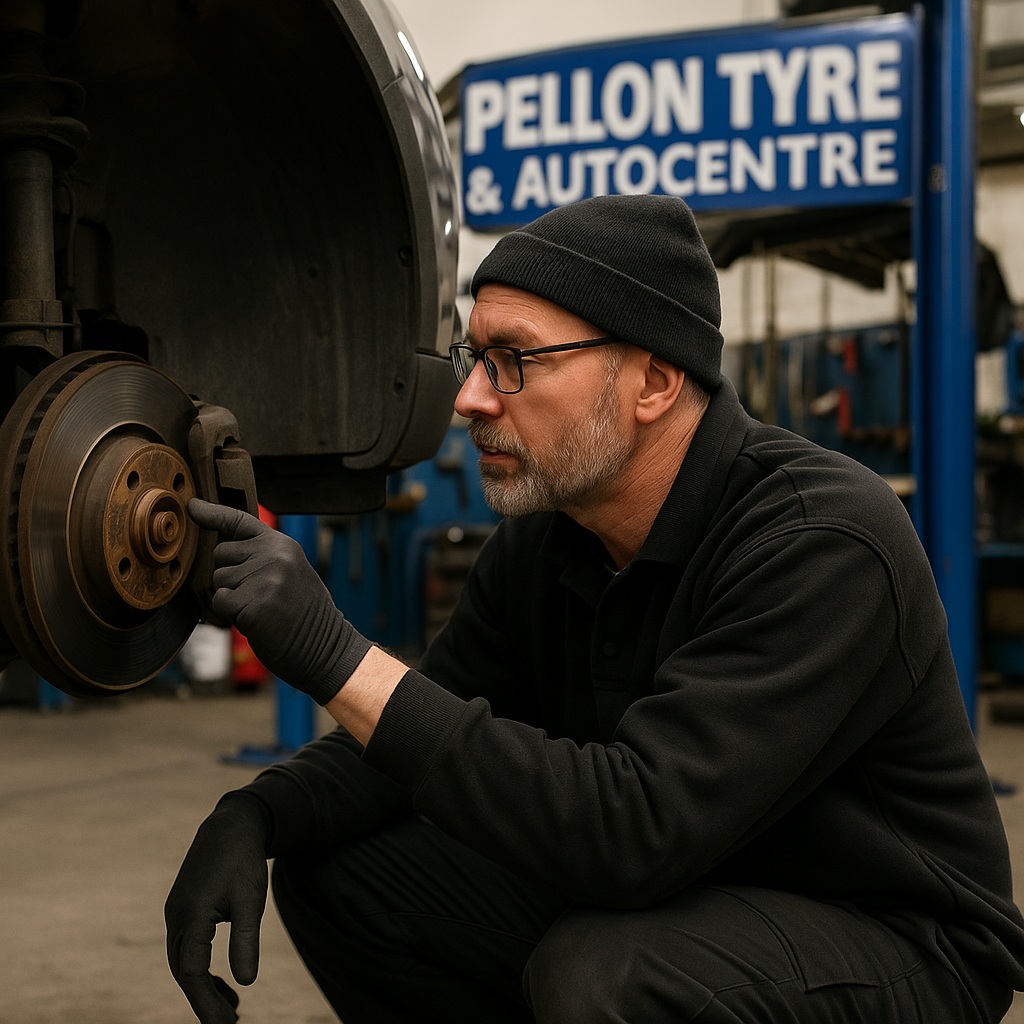
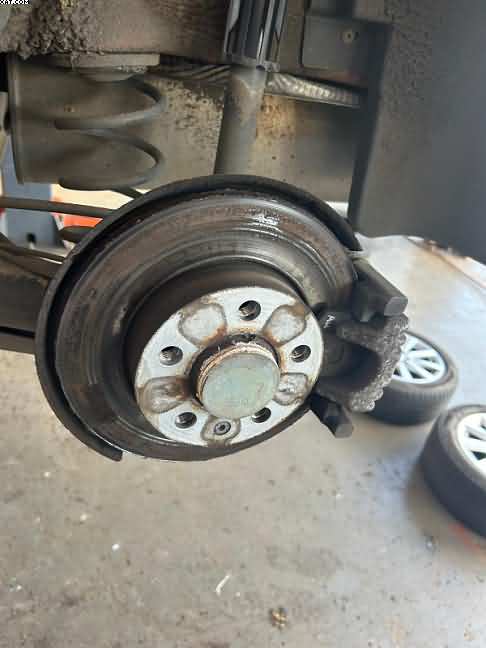
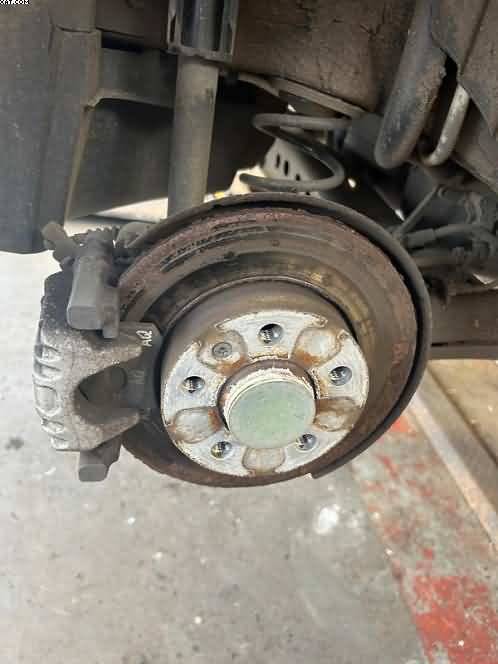
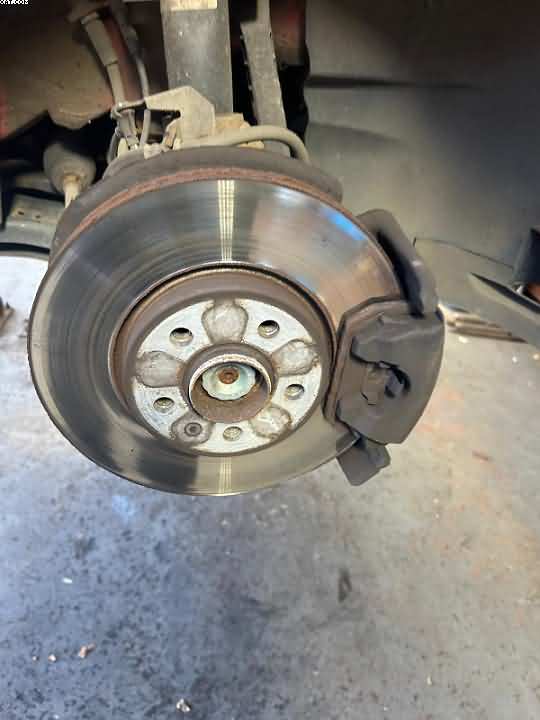
We started by removing the wheels and checking the usual suspects. The brake discs were in a right state – badly corroded, worn, and pitted like the surface of the moon. The brake pads were also toast – thin, uneven, and starting to crumble at the edges. But it didn’t stop there…


The Root Cause: Seized Brake Callipers & Contaminated Fluid

A closer look revealed partially seized brake callipers, causing uneven pad wear and excessive heat build-up. That explained the grinding and inconsistent performance.

To top it off, the brake fluid was old and contaminated – which is often the reason behind a soft or spongy brake pedal. If brake fluid isn’t changed every couple of years, it absorbs moisture and loses effectiveness. (The AA recommends checking it regularly.)


The Fix: Getting the Audi Back to Safety Audi A1 Brake Problems Solved

Once we had a full diagnosis, we got to work. We:

  • Fitted new high-quality brake pads and discs
  • Stripped and refurbished the brake callipers
  • Flushed out the old brake fluid and replaced it with fresh DOT 4 fluid
  • Carried out full brake testing, including another road test

The result? Dave’s Audi A1 now stops exactly as it should – no sponginess, no grinding, and full confidence every time he touches the brake pedal.

🔧 You can read more about brake repairs at Pellon Autocentre here.


A Quick Look at the Audi A1

Launched back in 2010, the Audi A1 was Audi’s answer to the likes of the MINI Cooper and Volkswagen Polo – compact, stylish, and still packed with premium features.

Over the years, it’s gone from strength to strength with various engine options, trims, and even performance models. The A1’s a favourite with commuters heading to Leeds or Manchester, thanks to its size, economy, and classy interior.

Despite its smart looks, though, the braking system still needs proper care – especially with our UK winters and salty roads accelerating rust and corrosion on discs and callipers.


Why You Shouldn’t Ignore Brake Issues Audi A1 Brake Problems Solved

Brakes are your car’s most important safety system – no question about it. If your brake pedal feels soft, you hear strange noises when stopping, or you just feel something’s off, don’t take the risk.

We see all sorts of brake issues here in Halifax – especially during MOT season, when cars that have sat unused suddenly need to perform. Catching problems early saves you money and could even save your life.

👉 Book your MOT or brake inspection online today.


Final Word: Safe Braking in Halifax and Beyond

Dave’s Audi A1 is now back on the road and braking like new – another happy customer in the books.

Here at Pellon Tyre and Autocentre, we’re proud to offer honest, expert service to drivers across Halifax, Sowerby Bridge, Brighouse, Hebden Bridge, and Elland. Whether it’s brakes, MOTs, tyres, or suspension work, we’ve got your back.

If your car doesn’t feel quite right, give us a ring or pop in. It might just need a bit of TLC – and we’re always happy to help.

Audi A1 Brake Problems Solved


Jaguar XF Brake Problems

Jaguar XF Brake Problems

Jaguar XF Brake Problems

Jaguar XF Brake Problems

Jaguar XF Brake Problems – Past Lessons, Present Fixes

Here at Pellon Tyre and Autocentre in Halifax, we’re fortunate to have a loyal customer base, including a few proud owners of the stylish Jaguar XF. As someone who’s been in the garage game for a long time – going right back to my days as an apprentice mechanic – I’ve always had a soft spot for Jaguar cars.

They’ve come a long way over the decades, but some things haven’t changed – particularly the ongoing issue of brake vibrations.


🚗 A Bit of Jaguar History – From Fox’s Biscuits to Flared Arches

Back in the day, we had a number of wealthy customers who brought their Jags in for service – including one of the Fox family, the directors behind the Fox’s Biscuits empire. He was always rolling in with a fresh set of new Jaguars – typically keeping four or five on the go at once – which kept us busy with regular servicing and brake repairs.

I particularly remember the Jaguar XJ4 when it launched in the late 1960s – a real head-turner with flared arches and a brand-new tyre spec: the ER70VR15, specially made for Jaguar by Dunlop Tyres. These tyres were engineered in partnership with Jaguar to cope with the power and handling of the new cars.


🛞 The Original Brake Vibration Mystery Jaguar XF Brake Problems

But as great as the XJ4 looked, it wasn’t without its issues – particularly vibration through the brakes and steering wheel. I remember working for National Tyre Service at the time (owned by Dunlop), and we were constantly trying to balance Jaguar wheels as precisely as possible.

Back then, we didn’t have the fancy laser-guided balancers we use today – just basic machines and plenty of elbow grease. In fact, some of the worst cases were taken in secret to a Dunlop test facility in Leeds, where engineers would even skim the tread off tyres in an attempt to make them perfectly round. That’s how serious the vibration problem had become – and how committed Jaguar and Dunlop were to protecting their reputation.


🛠️ Back to the Modern Day – Jaguar XF Brake Issues Still Exist

Fast-forward to today, and we’re still seeing similar issues on the Jaguar XF, especially when it comes to brake judder and droning noises. We regularly carry out brake servicing on several local XF models, and a pattern has started to emerge.

🔍 Case 1 – Vibration at Low Speed Jaguar XF Brake Problems

One XF owner came in reporting a strange issue: the car ran perfectly at high speeds but vibrated when slowing down between 60 and 40 mph. We road-tested it, but – as is often the case – the problem wouldn’t show itself while we were behind the wheel.

The customer had also visited the main dealer, who confirmed this is now a recognised fault with the XF range. The likely cause? Disc brake or hub runout – a slight misalignment that causes vibration when the brakes are applied.


🔧 Case 2 – New Discs and Pads, But Still Vibrating

Another Jaguar XF came in for servicing and needed discs and pads all round. We replaced them, but a few months later the customer returned, complaining of a slight vibration through the brake pedal.

We took the car in for inspection and – while everything looked fine – we suspected a faulty disc. We replaced it under warranty with help from our supplier, but this time we took an extra step: we thoroughly cleaned the hub face before fitting the new discs.

Sure enough, a small amount of rust build-up on the outer part of the hub had caused a very slight misalignment. Cleaning it completely and re-seating the new discs fixed the issue.


🔧 Top Tip – Always Clean the Hub Face Jaguar XF Brake Problems

This experience has led us to a clear conclusion: if you’re fitting new brake discs to a Jaguar XF (or any precision car, really), it’s vital to clean the hub face thoroughly. Even a tiny bit of corrosion can throw off the alignment just enough to cause brake vibration.

It’s a simple fix that many overlook – and it could save a lot of head-scratching (and repeat visits) later on.


📍 Jaguar Brake Repairs and MOTs in Halifax

If you drive a Jaguar XF and you’ve noticed:

  • A pulsing brake pedal
  • Droning noises when slowing down
  • Juddering through the steering at low speeds

…bring it in to Pellon Tyre and Autocentre for a full brake inspection. We specialise in brake repairs, MOT testing, and servicing for prestige cars.

With decades of hands-on experience and a real passion for cars, we’ll keep your Jaguar running smoothly – without the mystery vibrations.

Eric Roberts