Worn Tyres Mean More Punctures
Table of Contents
Worn Tyres Mean More Punctures
Worn Tyres Mean More Punctures
Why Worn Tyres Pick Up Objects More Easily – A Hidden Danger on Yorkshire Roads
One thing we’ve noticed over the years at Pellon Tyres in Halifax is this:
Most puncture repairs don’t happen on brand-new tyres.
They happen on tyres that are already less than half worn.
It’s something we see week in, week out. A customer comes in with a screw, bolt, shard of metal or some other unpleasant object sticking out of the tread. And nine times out of ten, the tyre isn’t new—it’s already worn down quite a bit.
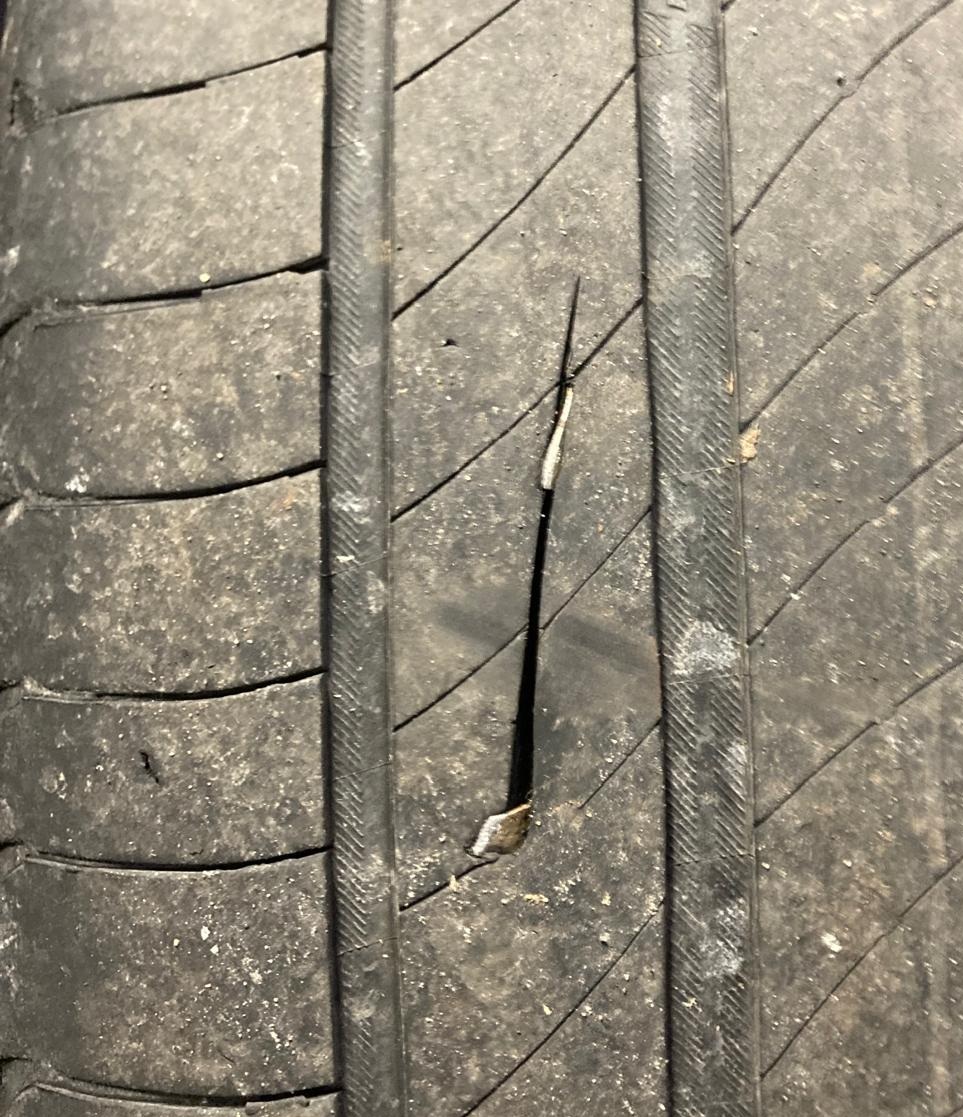
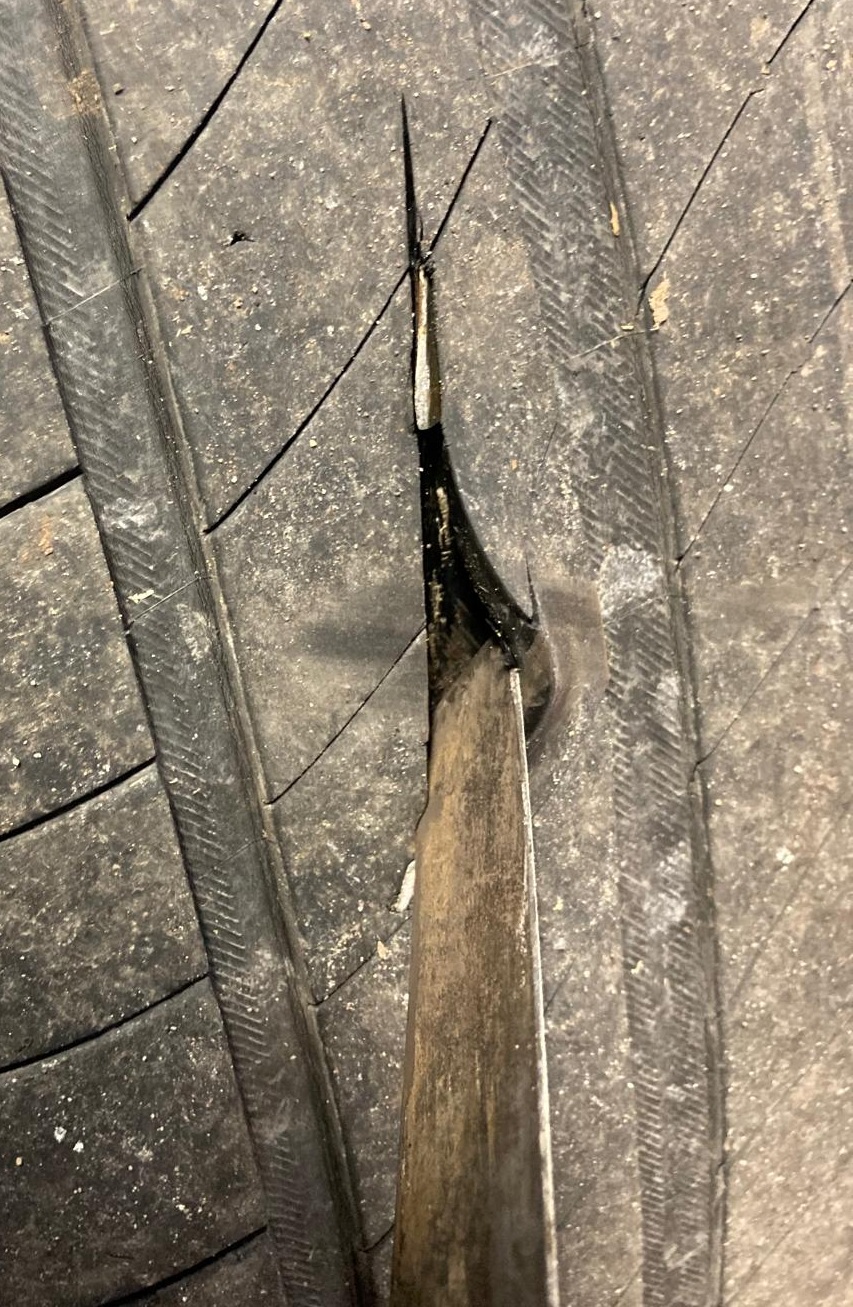
Recently, one tyre in particular was a good example. It had picked up a large steel object — properly embedded in the tread. The tyre was already close to replacement depth, so it had to be changed anyway. But had that object caused a sudden blowout at speed, especially somewhere like the A629 or M62 corridor, it could have been a very different story.
So why does this happen?
1️⃣ Less Tread Depth Means Less Protection: Worn Tyres Mean More Punctures
The most obvious reason is simple physics.
A new tyre typically starts with around 8 mm of tread depth.
As it wears down to:
- 5 mm
- 4 mm
- 3 mm
There’s simply less rubber between the road surface and the internal structure of the tyre.
When a sharp object is lying on the road — a screw, nail, or metal shard — a deeper tread can sometimes:
- Deflect it
- Trap it shallowly
- Prevent it reaching the carcass
But once tread depth reduces, there’s less material to absorb or deflect that intrusion.
The object reaches the structural belts much more quickly.
2️⃣ The Rubber Compound Changes Over Time
Tyre compound doesn’t stay the same throughout its life.
As tyres age and wear:
- Heat cycles harden the surface layer
- UV exposure affects the rubber
- The compound loses some elasticity
Interestingly, the tread surface can sometimes become slightly less resilient and more brittle with age. That means instead of flexing around debris, it may allow penetration more readily.
However — and this is important — as tread blocks get thinner, they also flex differently. A worn tread block can “open up” slightly under load, especially at speed, making it easier for sharp objects to wedge in.
So it’s not just softness — it’s the change in flexibility and structural depth.
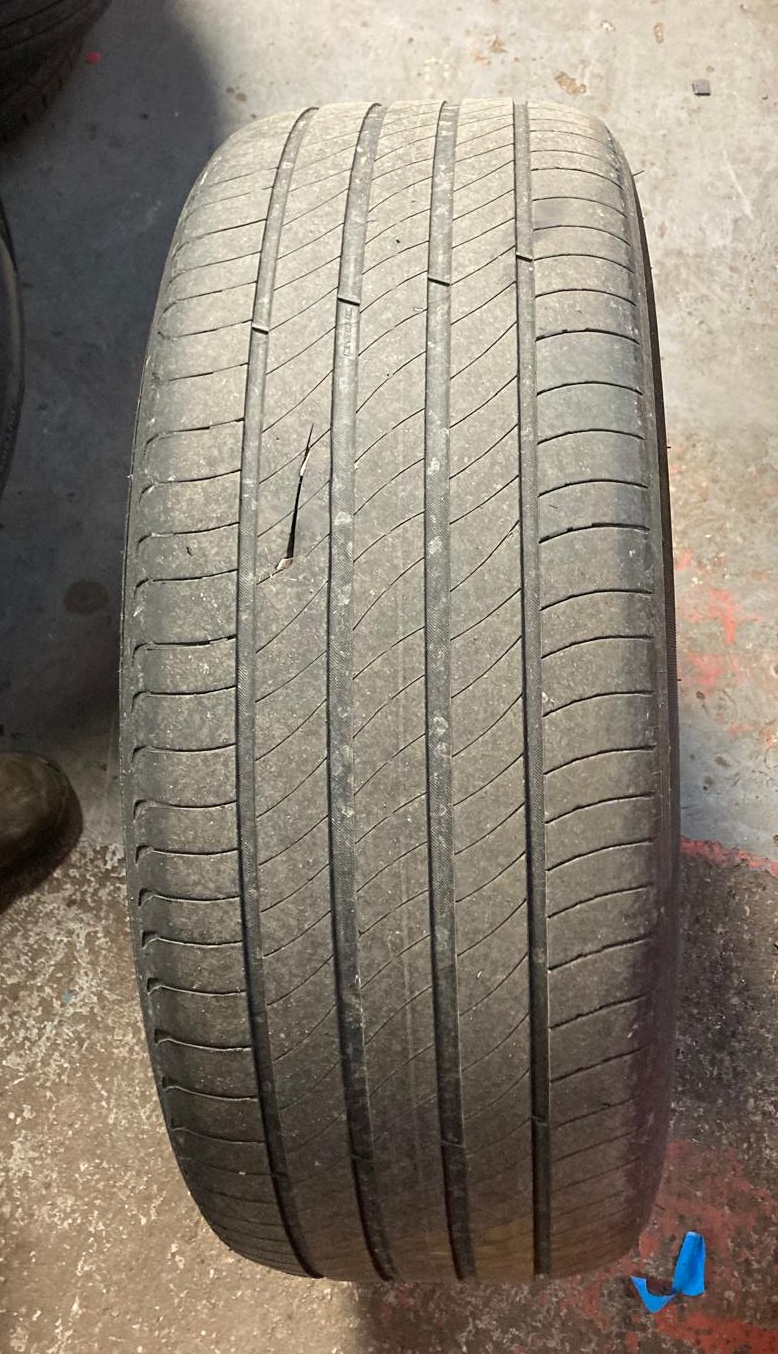
3️⃣ Shallower Grooves Trap Debris: Worn Tyres Mean More Punctures
New tyres have deep channels designed to clear water and debris.
As those grooves wear down:
- Small stones sit more firmly
- Metal fragments become wedged
- There’s less self-cleaning effect
Around Halifax and Calderdale, with:
- Ongoing roadworks
- Farm traffic
- Industrial estates
- Construction vehicles
It’s very common to find screws and metal fragments on the road surface.
A worn tyre with shallower grooves is more likely to hold onto these objects rather than flicking them away.
4️⃣ Reduced Structural Strength: Worn Tyres Mean More Punctures
Modern tyres are incredibly strong, with steel belts beneath the tread.
But as the tread wears:
- The cushioning effect reduces
- Impacts transmit more directly to the belts
- Penetration resistance drops
So when that large steel object in the example tyre was driven over, it didn’t have much rubber depth to fight against.
The result? A dangerous penetration and potential blowout risk.
5️⃣ Heat and Pressure Effects
Worn tyres also run differently.
With less tread depth:
- Heat builds differently
- Load is distributed over thinner rubber
- The tyre has less mass to absorb impacts
Combine that with motorway speeds or heavy loads — especially on vans and SUVs — and the risk increases.
We’ve seen cases where drivers didn’t even know they’d picked something up until the tyre deflated later.
6️⃣ Driving Behaviour Plays a Part: Worn Tyres Mean More Punctures
Let’s be honest — once tyres are near the end of their life, some drivers “run them out”.
They know they’ll be replacing them soon.
But that period is actually when they’re most vulnerable.
Especially on:
- Calderdale’s steep hills
- Tight roundabouts
- Wet roads
- Faster A-roads
A weakened, worn tyre picking up a large object can turn into a blowout very quickly.
The Blowout Risk
In the example we mentioned, the tyre was already ready for replacement.
But had that steel object caused a sudden air loss at 60 mph?
That could have meant:
- Sudden steering instability
- Vehicle pulling violently
- Loss of control
- Serious accident risk
That’s not scaremongering — it’s reality.
Tyres below 3mm tread depth are significantly more vulnerable to both aquaplaning and penetration damage.
Yorkshire Common Sense Advice
Here’s the honest advice we give at Pellon Tyres:
✔ Don’t run tyres down to the legal minimum if you can avoid it.
✔ Think about replacement around 3 mm.
✔ Regularly inspect tyres for embedded debris.
✔ Check pressures properly.
✔ Don’t ignore slow punctures.
A tyre that looks “okay for a bit longer” might actually be in its most vulnerable stage.
Final Thoughts: Worn Tyres Mean More Punctures
Worn tyres don’t just lose wet grip.
They lose:
- Structural protection
- Debris resistance
- Heat buffering
- Penetration tolerance
That’s why so many punctures happen on tyres below half worn.
The steel object in this case made the decision for us — the tyre had to be replaced.
Better that than a roadside blowout on a wet Calderdale morning.
Sometimes spending a little earlier on replacement saves a lot more later