
Keep Your Car Safe for Wheelchair Users
Table of Contents
Keep Your Car Safe for Wheelchair Users
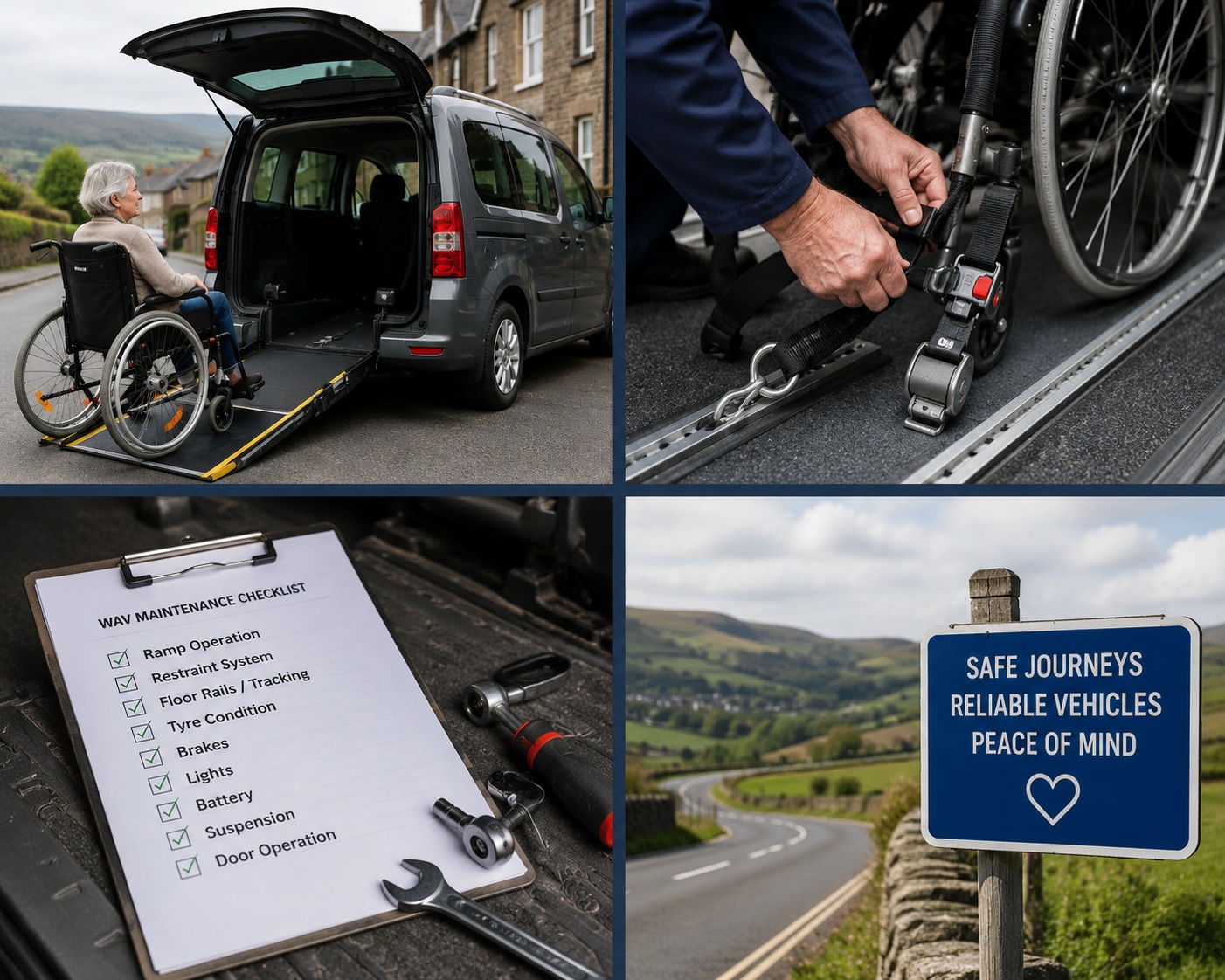
Keep Your Car Safe for Wheelchair Users
Keeping Your Car Reliable When Someone in the Family Uses a Wheelchair
Over the years at Pellon Tyre and Autocentre, we have seen how important reliable transport becomes when someone in the family relies on a wheelchair-accessible vehicle.
Most motorists are familiar with the normal running costs of a car:
- tyres
- brakes
- servicing
- MOT testing
- batteries
- suspension repairs
Usually, vehicles give at least some warning before problems appear.
However, wheelchair-accessible vehicles — often known as WAVs — add another layer of responsibility altogether.
These vehicles still need all the normal maintenance, but they also depend on specialist accessibility equipment working properly every single day.
That includes:
- ramps
- lifts
- restraint systems
- winches
- lowered floors
- sliding doors
- wheelchair tracking systems
When one of those systems fails, it is not simply an inconvenience.
It can mean:
- missing hospital appointments
- school runs disrupted
- work delays
- cancelled outings
- stressful situations for families already juggling difficult circumstances
My Own Experience with a Wheelchair-Accessible Vehicle
This subject became very personal to me when my late wife became seriously ill with motor neurone disease.
As her illness progressed, I eventually had to purchase a specially adapted disability vehicle capable of carrying her wheelchair safely. Like many families facing these situations for the first time, I quickly realised there was far more involved than simply buying another car.
The vehicle itself was extremely well designed, with ramps and wheelchair restraints fitted correctly, but emotionally it was a very difficult experience for both of us.
Even when everything was secured properly: Keep Your Car Safe for Wheelchair Users
My wife never truly felt comfortable travelling in the wheelchair position. Although the restraints were completely safe, she often felt vulnerable and uneasy during journeys. Gradually, as her illness became worse, she slowly lost confidence in travelling altogether.
That was one of the saddest parts of the illness because something as ordinary as going out for a drive, visiting places or simply enjoying a change of scenery became increasingly difficult.
Eventually, as her condition deteriorated further, I had to make the difficult decision to sell the vehicle altogether. So its important to, Keep Your Car Safe.
It gave me a much greater understanding of the emotional side of wheelchair-accessible transport that many people outside these situations may never fully appreciate.
A WAV Becomes Part of Everyday Family Life
For families around Halifax and Calderdale who rely on a wheelchair-accessible vehicle, the car becomes far more than simple transport.
It becomes part of the household routine and, in many cases, part of maintaining independence and dignity.
Many WAVs are used daily for:
- medical appointments
- shopping trips
- family visits
- school transport
- day care journeys
- local driving around Yorkshire towns and villages
That is why proper maintenance becomes so important.
The best approach is never to wait for something to break. Good WAV ownership is really about regular checks and preventing problems before they happen.
A Normal MOT Does Not Check Everything: Keep Your Car Safe for Wheelchair Users
One thing many motorists do not realise is that a standard MOT mainly checks the vehicle itself as a roadworthy car or van.
It does not necessarily fully assess every part of the wheelchair conversion.
For example:
- A ramp may begin moving slowly
- Restraint rails may become worn
- electric winches may sound strained
- Tracking systems may become stiff
These things can gradually deteriorate without immediately appearing as standard MOT failures.
That is why WAV owners should think about both parts of the vehicle:
- the original vehicle
- the wheelchair conversion itself
Both systems matter equally.
Buying a Used WAV Needs Extra Care: Keep Your Car Safe for Wheelchair Users
Over the years, many customers have asked for our advice when buying used wheelchair-accessible vehicles.
A used WAV really has two separate histories:
- the car or van itself
- the conversion work and accessibility equipment
Mileage and bodywork only tell part of the story.
Families should also ask:
- Who carried out the conversion?
- Has the ramp been serviced?
- Have the restraints been checked regularly?
- Has the lift or winch been maintained properly?
- Is there paperwork for previous repairs?
These details often become more important than cosmetic appearance alone.
Checking the Ramp or Lift Properly
One of the first things worth inspecting on any WAV is the ramp or lift system.
At Pellon Tyres, we always advise customers to watch the ramp operate several times rather than just once.
Pay attention to:
- hesitation
- uneven movement
- grinding noises
- clicking sounds
- stiffness
- corrosion around hinges and pivots
Yorkshire weather can be particularly hard on ramps and lower mechanisms because of the following:
- road salt
- grit
- mud
- standing water
A ramp may still appear fine from above while corrosion quietly develops underneath.
Floor Rails and Restraints Matter More Than People Think: Keep Your Car Safe for Wheelchair Users
Wheelchair restraint systems are one of the most important safety features on any WAV.
Floor rails and tracking systems collect dirt surprisingly quickly, especially during winter around Halifax when roads become muddy and wet.
Over time:
- Restraints may stop locking properly
- Dirt blocks the tracking
- Corrosion begins around fittings
The restraint webbing itself also deserves careful checking.
Look out for:
- fraying
- damaged stitching
- sticking buckles
- worn anchor points
These systems protect the wheelchair user during travel and should never be ignored.
WAVs Put Extra Strain on the Vehicle
A wheelchair-accessible vehicle is usually heavier than the standard version it started life as.
That additional weight affects:
- tyres
- brakes
- suspension
- steering
- wheel bearings
Tyres in particular work much harder on heavier WAV vehicles.
Incorrect tyre pressures can quickly cause the following:
- uneven tyre wear
- poor handling
- reduced braking performance
This is particularly noticeable on the steep roads and hills around Calderdale.
Battery Problems Can Affect Accessibility Equipment: Keep Your Car Safe for Wheelchair Users
Battery condition becomes especially important on WAVs fitted with:
- electric ramps
- powered lifts
- electric winches
A weak battery may still start the engine while struggling to operate the accessibility equipment properly.
This is often the kind of failure families remember most clearly:
“The car started, but the ramp wouldn’t work.”
Cold Yorkshire winters can expose weak batteries very quickly, especially on vehicles carrying additional electrical loads.
Planning Ahead Reduces Stress
One thing many experienced WAV owners learn over time is that preventative maintenance reduces a great deal of stress.
A wheelchair-accessible vehicle needs care not only as a car but also as an essential part of family life.
When the
- ramp works properly
- restraints lock securely
- battery remains healthy
- tyres stay safe
The entire family benefits from reliable daily transport.
Final Thoughts
Wheelchair-accessible vehicles play an incredibly important role for many families across Halifax, Calderdale and the wider Yorkshire area.
My own experiences caring for my wife during her illness showed me just how emotionally important safe, reliable and comfortable transport can become.
Although WAVs need slightly more attention than standard vehicles, regular checks and preventative maintenance can help avoid many common problems before they disrupt everyday life.
At Pellon Tyre and Autocentre, we understand how important vehicle reliability becomes when people depend on accessibility equipment every day.
Good maintenance is not simply about avoiding breakdowns — it is about helping families keep their independence, routines and peace of mind.