
A Black Box Warning
A Black Box Warning
Table of Contents
A Black Box Warning
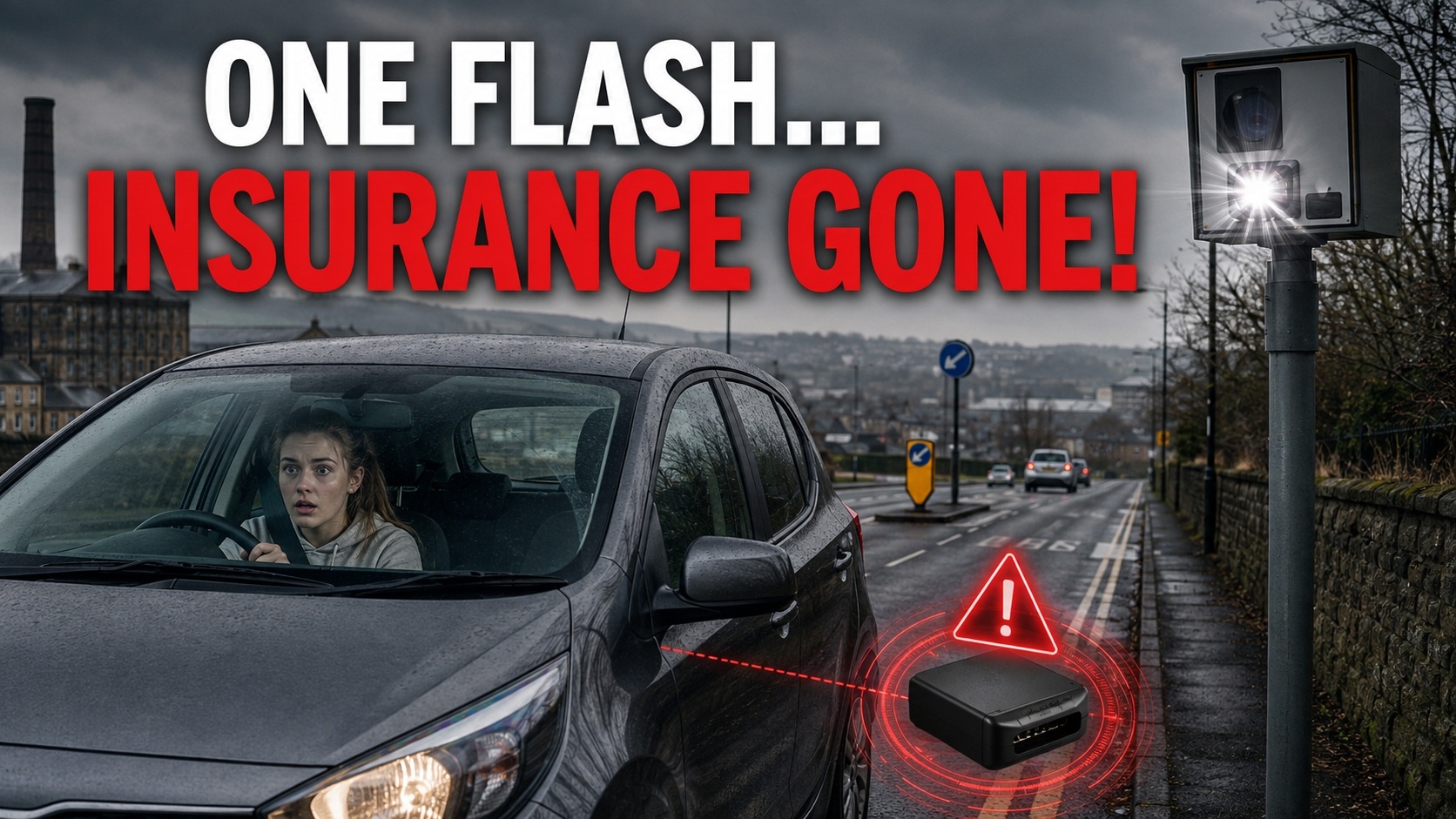
One Flash—and Her Car Insurance Was Gone!
A Black Box Warning – Every Young Driver Should Read
A young lady I know recently passed her driving test. Like most new drivers, she must have been thrilled to finally have the freedom to get into her car and travel wherever she wanted without an instructor or parent sitting beside her.
Unfortunately, that freedom did not last very long.
On her very first day of driving, she was flashed by a speed camera. The incident was also detected by the black box fitted to her car for insurance purposes.
Her insurance was then suspended, and she faced a £100 speeding penalty. To keep using the car, she has apparently had to arrange temporary insurance and pay for cover by the day.
One moment of carelessness had suddenly turned into an extremely expensive and upsetting experience.
I am not writing this to embarrass or criticise the young lady concerned. New drivers make mistakes, just as older and supposedly wiser motorists do. However, her experience provides a powerful warning about how black-box insurance works—and why young drivers must fully understand what they have agreed to.
What Is a Black Box? A Black Box Warning
A black box insurance policy is also known as telematics insurance. Despite the name, it may not always involve an actual box hidden inside the car. Some policies use a small plug-in device, while others monitor the driver through a mobile phone application.
The technology can record information such as:
- The speed of the vehicle
- Acceleration and braking
- Cornering
- The time of day the car is driven
- Distances travelled
- The roads and locations used
- Overall driving patterns
The insurer uses this information to calculate a driving score and assess the risk presented by that particular driver.
Black-box policies are particularly popular with young people because conventional insurance can be frighteningly expensive after passing the driving test. A telematics policy may reduce the initial premium by allowing a careful young motorist to demonstrate that he or she is a safer driver.
That sounds like a fair arrangement—and for many responsible young drivers, it can work very well. However, the driver must remember that the car is effectively reporting back to the insurer every time it is used.
The Black Box Is Always Watching
When I started driving, there was no electronic device recording every journey. If you braked too sharply or went around a bend a little too quickly, the car did not send the information to an insurance company.
Of course, that did not make poor driving acceptable. It simply meant that motorists were not being monitored in the way some young drivers are today.
A black box can detect harsh acceleration, sudden braking and speeding. Depending on the terms of the policy, poor driving may result in a warning, a lower score, an increased premium or cancellation of the insurance.
The Financial Ombudsman Service confirms that insurers may use telematics information to decide whether to continue providing cover, adjust monthly premiums or calculate the renewal price. Complaints have been made after drivers believed that incorrect scores had caused their premiums to increase or their policies to be cancelled. Financial Ombudsman Service
This is why the policy documents and accompanying application must be read carefully. Different insurers have different rules. Some may issue warnings and allow the driver to improve, while others may respond much more severely to what they regard as excessive or dangerous speed.
The Speed Camera and Black Box Are Separate: A Black Box Warning
It is important to understand that the speed camera and insurance black box are not necessarily working together.
A roadside speed camera provides evidence to the police. The black box separately sends driving information to the insurance company.
Therefore, one speeding incident can potentially cause two different problems:
- The police may take action for the speeding offence.
- The insurer may take action under the terms of the black-box policy.
The minimum speeding penalty in the UK is currently £100 and three penalty points, although an eligible driver may sometimes be offered a speed-awareness course. A motorist caught by a camera would normally receive a Notice of Intended Prosecution and a request to identify the driver before any fixed penalty is issued. GOV.UK speeding penalties
The insurer does not issue the official speeding fine. However, it can act on the telematics information if the driving has broken the conditions of the policy.
In the young lady’s case, the £100 appears to be connected to the official speeding process, while the suspension or cancellation of her cover would be a separate insurance matter.
Her need to purchase insurance by the day is not an automatic punishment imposed on every driver. It is more likely a temporary and costly solution she has had to arrange after losing her original cover.
New Drivers Cannot Afford to Collect Points
For a newly qualified driver, three points are especially serious.
If a driver accumulates six or more penalty points within two years of passing their first driving test, the licence is revoked. They must apply for a new provisional licence and pass both the theory and practical driving tests again before regaining a full licence. GOV.UK guidance for new drivers
That means two ordinary three-point speeding penalties could be enough to place a newly qualified driver back at square one.
After all the lessons, expense, nerves and effort required to pass the test, that would be a terrible waste.
Insurance Cancellation Can Follow You: A Black Box Warning
Having an insurance policy cancelled can cause difficulties far beyond the immediate inconvenience of not being able to drive.
When applying for future insurance, motorists are commonly asked whether they have previously had a policy cancelled or declared void. The question must be answered honestly.
A previous cancellation can limit the number of insurers willing to provide cover and may make future premiums much more expensive. That is why a young driver should never simply ignore a cancellation notice or assume that another cheap policy will automatically be available.
The Financial Ombudsman Service reported receiving more than 1,200 car-insurance complaints from drivers under 25 during 2025. Policy cancellations were the largest category of complaint. It has also dealt with complaints involving black-box data, unexpected premium increases and drivers who believed their policies had been unfairly cancelled. Financial Ombudsman warning for young drivers
In one published case, an insurer cancelled a telematics policy after its system recorded a car travelling at 125 mph. The driver disputed the reading, demonstrating that disagreements about the accuracy of black-box data can and do happen.
What If the Black Box Is Wrong?
Technology is clever, but it is not necessarily perfect.
A telematics system could potentially apply the wrong speed limit or confuse a vehicle’s position with a nearby road. If a driver genuinely believes that the information is incorrect, they should ask the insurer for the details of the recorded incident.
Useful evidence may include:
- The date and time
- The recorded location
- The speed detected
- The speed limit used by the system
- Screenshots from the insurance application
- Dashcam footage
- Details of roadworks or temporary speed limits
- Any warning messages already received
The driver should first make a formal complaint to the insurer. If the matter is not resolved satisfactorily—or the insurer does not issue its final response within eight weeks—the complaint may be taken to the Financial Ombudsman Service.
The Ombudsman can examine the telematics information and ask what checks the insurer made to ensure that the correct road and speed limit were recorded. If a policy was cancelled unfairly, it may require the insurer to remove the cancellation record, refund charges and reimburse additional insurance costs.
However, this protection is for cases where something may genuinely have gone wrong. It should not be viewed as a way of escaping the consequences of proven dangerous driving.
Parents Should Read the Policy as Well: A Black Box Warning
Many young people purchase insurance with help from their parents or grandparents. Everyone naturally concentrates on finding an affordable price, but the cheapest quotation may come with strict conditions.
Before accepting a black-box policy, the family should find clear answers to the following questions:
- What exactly does the device monitor?
- What happens after one speeding incident?
- Does the driver receive a warning first?
- Are there restrictions on night-time driving?
- Can poor braking or acceleration scores increase the premium?
- Is there a mileage limit?
- What happens if the device or phone application stops working?
- Can the policy be cancelled immediately?
- Are cancellation or removal charges payable?
- How can incorrect information be challenged?
Do not assume that all black-box policies operate in the same way. Read the important conditions and ask the insurer to explain anything that is unclear.
Yorkshire Roads Can Catch Drivers Out
Around Halifax and Calderdale, our roads can change character very quickly. A driver may leave a faster main road and enter a 30 mph or 20 mph area within moments.
We also have steep hills, sharp bends, busy junctions and roads passing through villages where the limit can change several times over a relatively short distance.
New drivers must watch the signs and not simply follow the speed of the traffic in front. Saying that everybody else was travelling at the same speed will not help when the camera flashes or the black box records the journey.
The driver must remain in control and know the limit.
A Black Box Can Also Be a Good Thing: A Black Box Warning
It would be unfair to claim that black boxes are entirely bad. They can make insurance more affordable and encourage young motorists to develop safer habits.
Smooth acceleration, sensible braking and careful observation are all signs of a good driver. If the knowledge that a journey is being monitored encourages someone to slow down and think ahead, the device may help prevent a collision.
The problem arises when the young driver does not fully appreciate the consequences of breaking the policy rules.
A black box is not just a gadget fitted to obtain cheap insurance. It forms part of the agreement between the driver and the insurer.
One Flash Can Change Everything
The experience of this young lady should be a warning to every newly qualified motorist.
One flash from a speed camera may mean a £100 penalty and three points. At the same time, the black box may report the speed to the insurer, creating a second and potentially more expensive problem.
The result could be a suspended or cancelled policy, expensive replacement cover and a cancellation that must be declared when seeking insurance in the future.
So my advice from here in Halifax is simple: enjoy the freedom of passing your test, but do not let the excitement carry you away. Learn how your black-box policy works, watch every speed-limit sign and remember that the device is recording how the car is being driven.
It took a great deal of time and money to earn that driving licence.
Do not lose it—or your insurance—for the sake of arriving a few minutes earlier.
The UK Police can also ask for a driver eye test if required.