
Clean Fiat 500 Lights Up
Clean Fiat 500 Lights Up
Table of Contents
Clean Fiat 500 Lights Up
Clean Fiat 500 Lights Up After Free Pellon Check
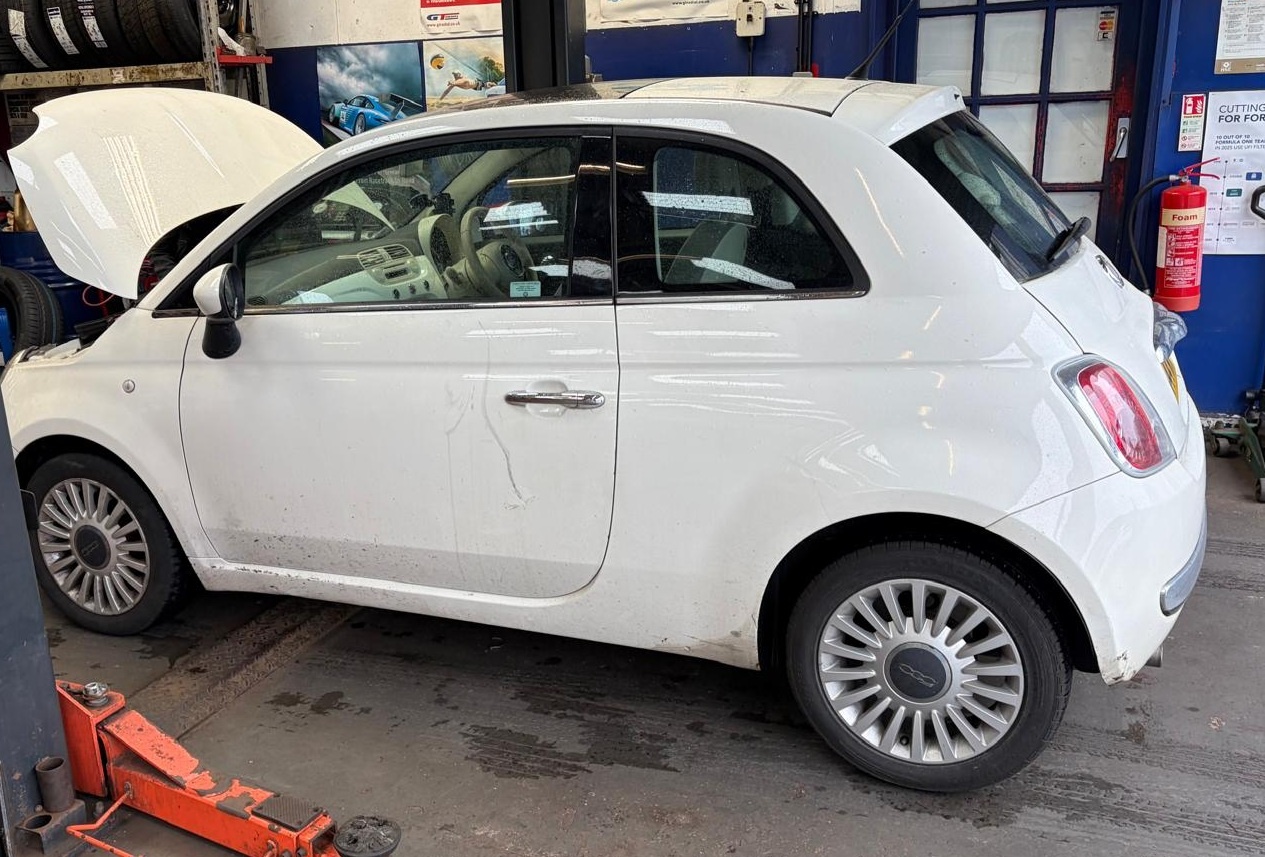
It must have been clean-car day at Pellon Tyre & Autocentre on Monday because another beautifully presented vehicle arrived at our Halifax garage. This time, it was a very clean white Fiat 500 belonging to a lady customer.
The Fiat looked lovely from the outside, but the owner had been told that some of its lights were not working properly. With the evenings already beginning to draw in across Halifax and Calderdale, she wisely decided not to ignore the warning.
We carried out one of our free lighting checks and discovered that three different bulbs needed replacing. Once the correct bulbs had been fitted and all the lights tested again, the little Fiat was ready to leave with everything shining as it should.
It was a straightforward everyday job, but it carries an important message for every driver: do not wait until the police, an MOT tester or another motorist tells you that your lights have failed.
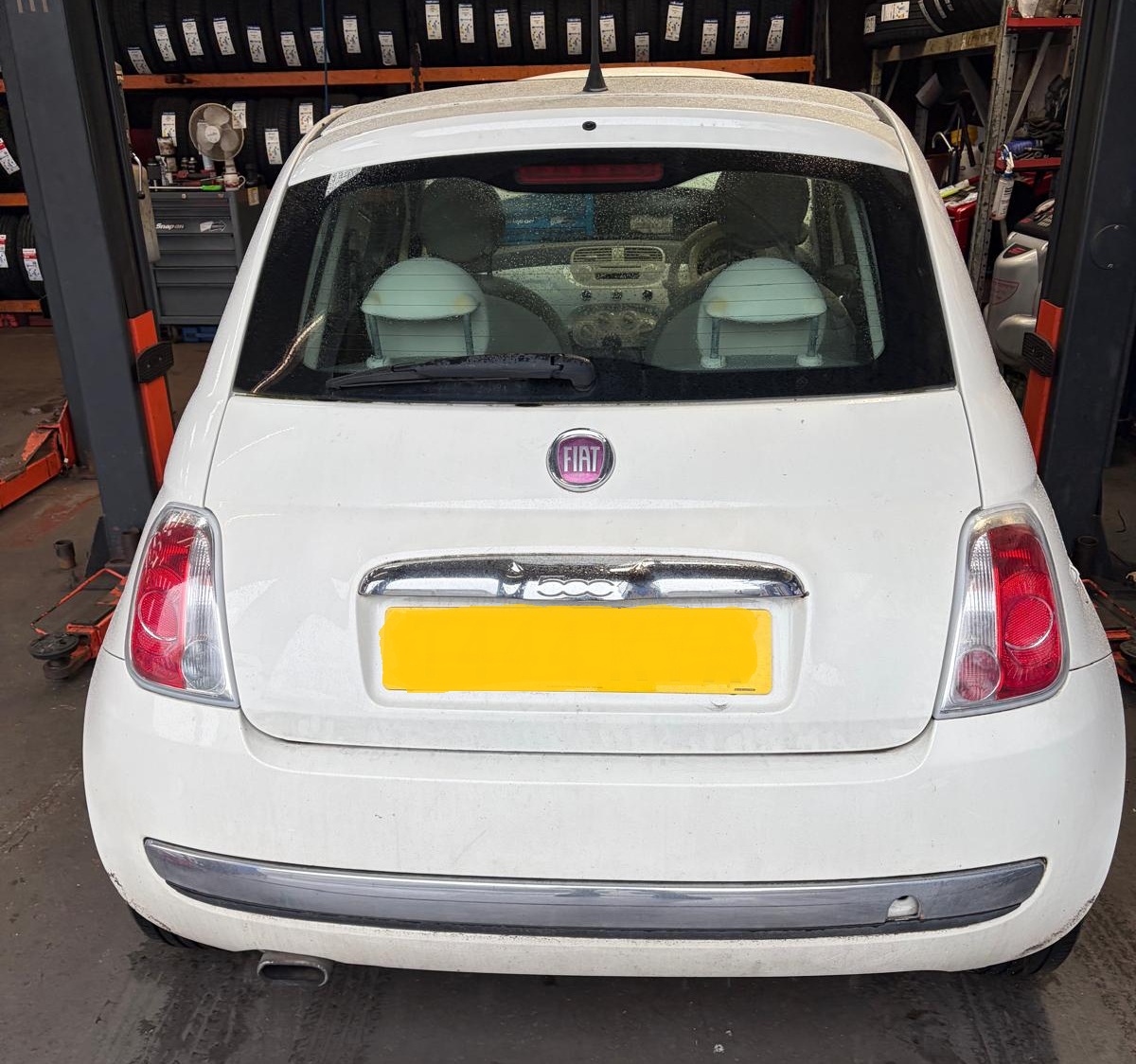
A Free Check Could Keep You Safe: Clean Fiat 500 Lights Up
Checking vehicle lights is simple when two people are available. One person can operate the switches and pedals while the other walks around the car.
However, it is more difficult when you are alone. A driver cannot easily press the brake pedal and stand behind the car at the same time. Reflections in a garage door or shop window can help, but they do not always show whether every lamp is working properly.
That is why we are happy to carry out a free light check for our customers at Pellon Tyres.
We can inspect:
- Dipped and main-beam headlamps
- Front and rear position lamps
- Brake lights
- Direction indicators
- Hazard warning lights
- Rear fog lamps
- Reversing lights
- Number-plate lights
- Daytime running lights, where fitted
It only takes a short time, but it could identify a failed bulb that the driver knew nothing about.
Darker Yorkshire Evenings Are Already Returning
It never seems long since we were enjoying those wonderfully light summer evenings. Before we know it, the darkness begins arriving earlier, and the weather starts changing.
Here in our beloved Yorkshire, autumn can bring rain, mist and grey skies. Around Halifax and Calderdale, we also have steep hills, twisting roads and narrow streets where good visibility is essential.
A failed headlamp makes it more difficult for the driver to see the road ahead. Just as importantly, defective rear lights, indicators or brake lights make it harder for other motorists to understand what the vehicle is doing.
A working brake light gives the driver behind a valuable warning that you are slowing down. An indicator shows your intention to turn. Rear lights help other road users judge your vehicle’s position and distance in darkness or poor weather.
These small bulbs perform extremely important jobs.
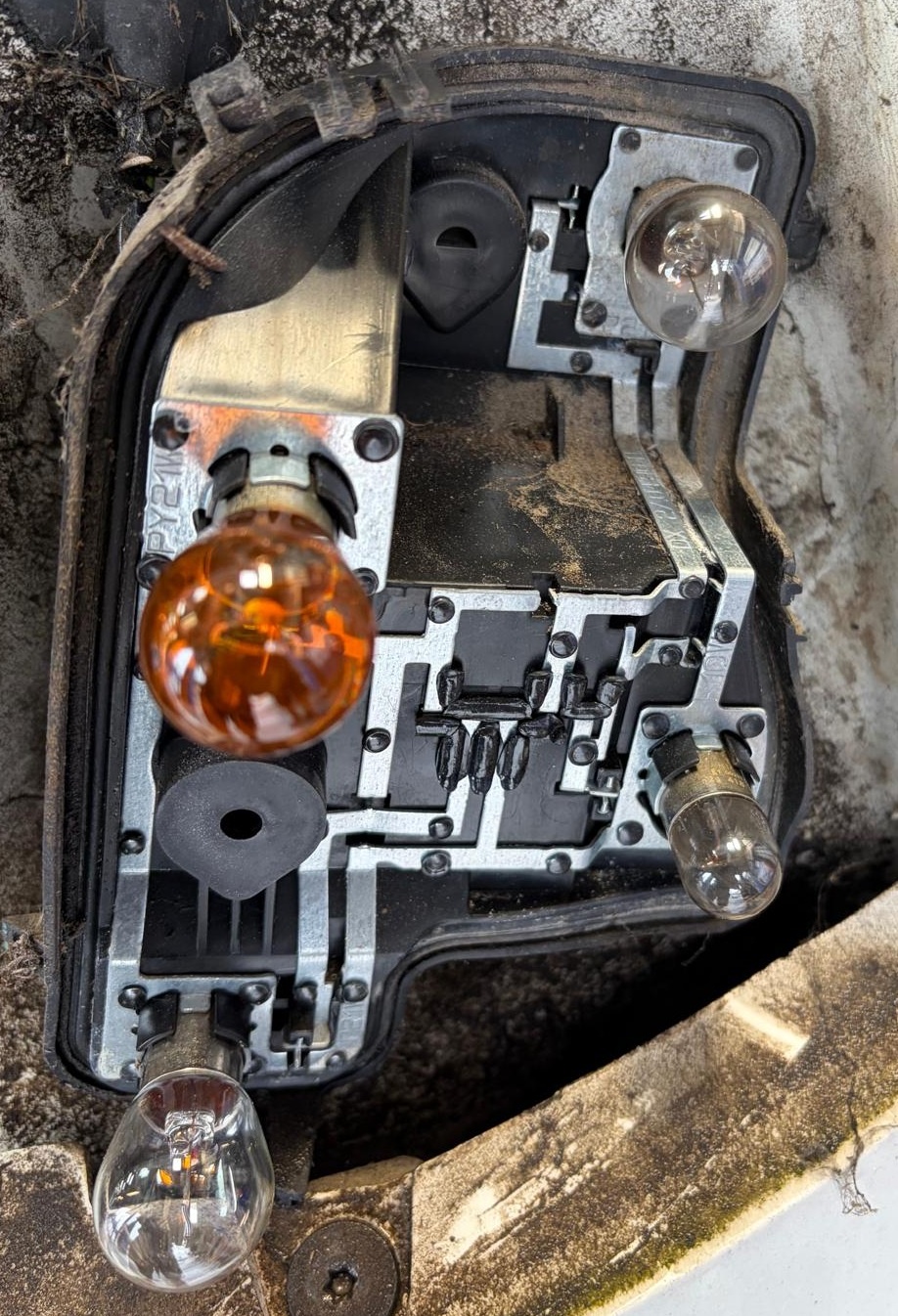
It Is Not Worth Getting Into Trouble: Clean Fiat 500 Lights Up
The Highway Code states that drivers should take special care to ensure their lights are working. It also says that lights, indicators, reflectors and number plates must be kept clean and clear, while headlamps must be adjusted correctly to prevent dazzling other road users. Highway Code vehicle-maintenance guidance
If the police find a defect such as a failed brake light, they may issue a vehicle defect rectification notice. The driver would then need to have the fault repaired and provide proof within 14 days. GOV.UK guidance on vehicle defects
Why risk that inconvenience when a quick check could find the problem first?
A failed lamp can also lead to an MOT failure, depending on which light is affected and the nature of the defect. Headlamps, position lamps, stop lamps, indicators, hazard lights, fog lamps, reversing lamps and number-plate lamps are among the lighting items covered during the MOT inspection. DVSA MOT inspection manual
An MOT pass also only confirms the condition of the vehicle at the time of the test. A bulb could fail the following day, so motorists should continue checking their lights throughout the year.
No Fitting Charge on Around 90% of Bulbs
One thing we are particularly proud of at Pellon Tyre & Autocentre is that we do not charge a fitting fee on approximately 90% of the replacement bulbs we supply.
The customer normally pays only for the bulb itself.
Some larger national companies add a separate charge for fitting a bulb. That is their business decision, but for an ordinary bulb replacement, I have never believed that this is the right way for us to treat our customers.
If we can fit a bulb quickly during a free check, we are happy to do so without adding an unnecessary labour charge.
Of course, there are exceptions. Some modern cars have lamps in extremely awkward locations. A bulb replacement might require the removal of trim, a wheel-arch liner, the battery, an air-intake component or even part of the bumper.
Other vehicles use sealed LED lighting units rather than ordinary replaceable bulbs. These can involve more complicated diagnosis and considerably more expensive components.
However, for around nine out of ten everyday replacement bulbs, Pellon customers pay for the bulb, and we fit it without an additional fitting fee.
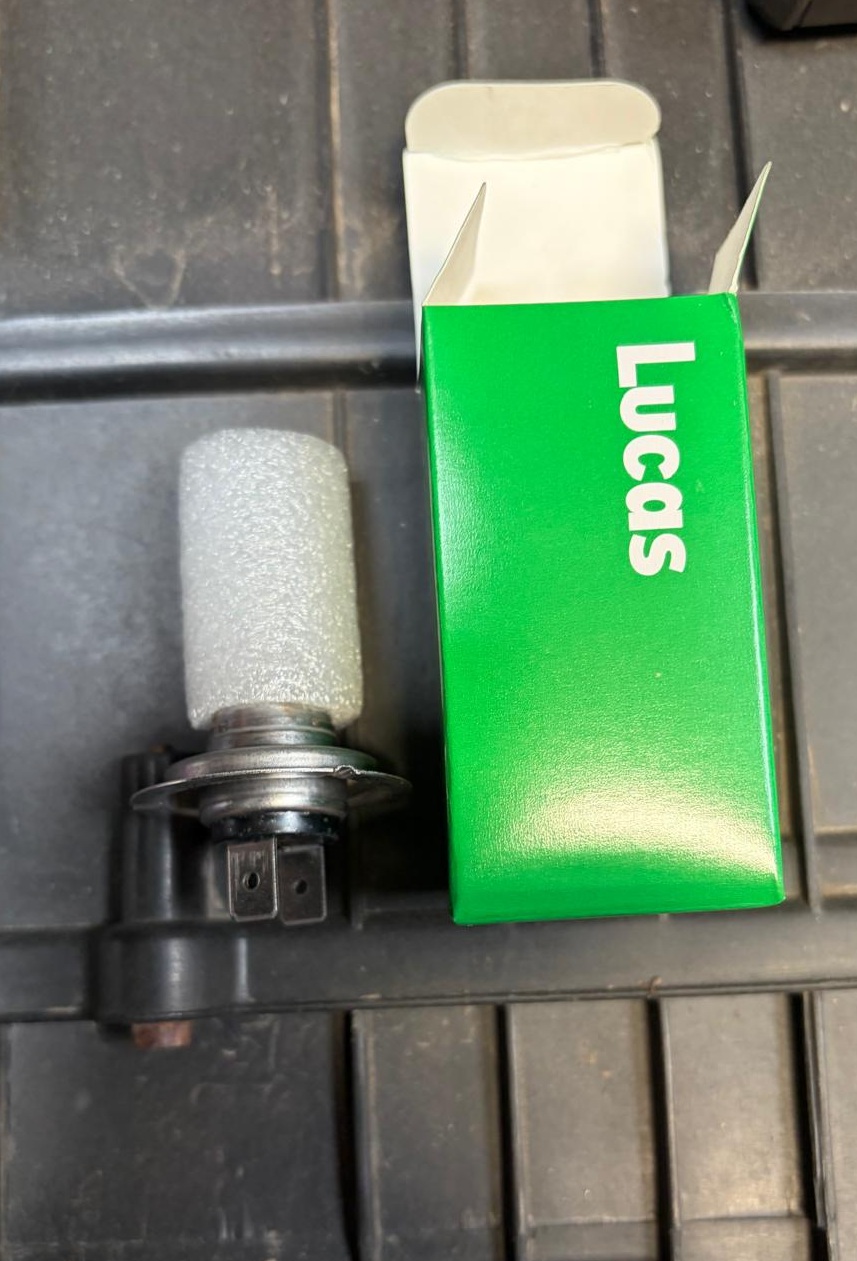
Why Are Some Modern Bulbs Difficult to Replace? Clean Fiat 500 Lights Up
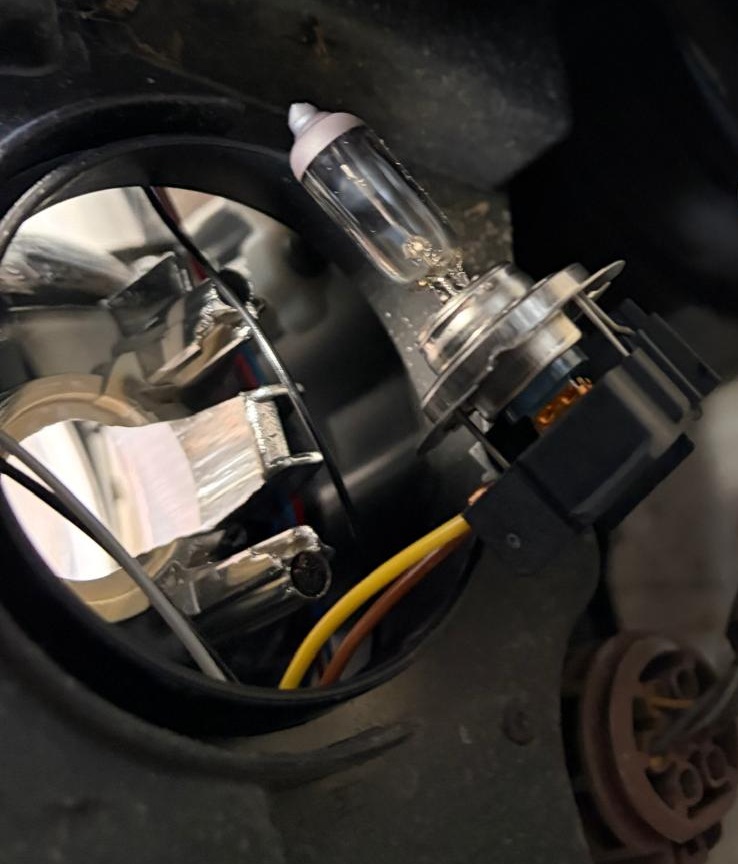
Older drivers may remember when changing a headlamp bulb was often a simple five-minute job. You opened the bonnet, reached behind the lamp, removed the old bulb and fitted the replacement.
Modern engine compartments are much more crowded. Manufacturers have to find room for numerous electrical systems, safety equipment, emission-control components and, in some cases, hybrid technology.
Unfortunately, the headlamp bulb can end up tucked away behind all this equipment.
Even experienced garage staff sometimes come across a model where access is extremely restricted. Trying to force a hand into a tiny gap risks damaging wiring, clips or the new bulb.
This is another good reason to let a garage replace it. The correct bulb must be selected, fitted securely and tested without damaging the lamp or surrounding components.
Why Some Bulbs Should Never Be Touched
Eric was quite right that certain headlamp bulbs should not be touched with bare hands, although it is not because the special gas inside will harm you.
Many halogen headlamp bulbs contain pressurised gas and use a quartz-glass envelope that operates at a very high temperature. Natural oils and dirt from our fingers can remain on the glass.
When the bulb heats up, that contamination can create an uneven hot spot. This may shorten the life of the bulb and, in some circumstances, damage the glass.
We therefore handle these bulbs by their metal or plastic base or use clean gloves or a suitable tissue. If the glass is touched accidentally, it should be cleaned properly before installation.
High-intensity-discharge or xenon lighting systems require even greater care because they can operate at dangerously high voltages. These should be inspected and repaired by somebody who understands the system.
Replace the Correct Bulb: Clean Fiat 500 Lights Up
A replacement bulb should be the correct type, wattage and specification for the vehicle. Fitting an unsuitable bulb can produce a poor beam pattern, create excessive heat or dazzle other drivers.
It is also worth examining the condition of the other bulb on the same axle. Headlamp bulbs of a similar age have completed roughly the same amount of work. When one fails, the other may not be far behind.
That does not mean that bulbs must automatically be changed in pairs in every situation, but it is sensible to check both carefully and compare their light output.
If bulbs keep failing, the vehicle may have another problem. Possible causes include:
- A poor electrical connection
- Water entering the lamp
- Excessive vibration
- Corroded bulb holders
- Charging-system problems
- Incorrectly fitted bulbs
- Damage to wiring
Repeatedly inserting new bulbs without investigating the cause can waste money and leave the driver without dependable lighting.
The Fiat 500 Remains a Popular Little Car
The white car visiting Pellon was a modern Fiat 500, but the model has roots stretching back to the original little Fiat 500 launched in Italy in 1957.
That first model was designed as affordable transport for ordinary families navigating crowded Italian towns. Its small dimensions, economical engine and cheerful appearance helped make it one of Europe’s best-known cars.
Fiat revived the famous name and styling with the modern 500 in 2007. It retained the rounded shape and friendly character of the original while providing the comfort, equipment and safety expected from a modern car.
The model became particularly popular in Britain. Its compact size suits town driving and parking, while the enormous selection of colours and trim levels has allowed owners to choose a 500 reflecting their personality.
The clean white example visiting our Halifax garage certainly looked as though its owner took great pride in it. After three replacement bulbs, its lighting was once again as smart as the rest of the car.
Give Your Lights a Five-Minute Check: Clean Fiat 500 Lights Up
As the nights draw in, I would encourage every driver across Halifax, Calderdale and the surrounding Yorkshire area to check their vehicle lights.
Do not assume that a warning will always appear on the dashboard. Some cars detect failed bulbs, but others do not—and monitoring systems are not infallible.
Ask a family member or friend to help. Operate each light in turn and make sure it is bright, steady and the correct colour. Check that the lenses are clean and free from serious damage.
Pay particular attention to brake lights because drivers often cannot see them from inside the car.
If you are unsure, call at Pellon Tyre & Autocentre and ask us to have a look. Our light check is free, and for approximately 90% of ordinary bulbs, there is no fitting charge—you pay only for the replacement bulb.
That is surely better than driving around Halifax in the dark with a light missing, risking an accident, an MOT failure or an unwanted conversation with the police.
The lady with the clean white Fiat 500 did exactly the right thing. She listened to the warning, brought the car to us and had all three bulbs replaced before darkness caused her a more serious problem.
Sometimes the smallest garage jobs can carry the most important safety message.