Brake Warning Light on the Dashboard
Brake Warning Light on the Dashboard
Table of Contents
Brake Warning Light on the Dashboard
Brake Warning Light on the Dashboard – What Should You Do?
A brake warning light appearing on the dashboard should never be ignored. It may be something straightforward, such as the parking brake still being applied, but it could also indicate low brake fluid, worn brake pads or a more serious braking-system fault.
Modern cars can display several different brake-related warning lights. Some are red, others are amber, and their precise appearance varies between manufacturers. Understanding the difference can help you decide whether the car needs booking into a garage or whether you should stop driving immediately.
Here at Pellon Tyre and Autocentre in Halifax, we regularly investigate dashboard warning lights. The safest approach is always to identify why the light has appeared rather than simply resetting it and hoping it stays off.
Is It Normal for a Brake Warning Light to Appear When Starting the Car?
Most dashboard warning lights illuminate briefly when the ignition is switched on. This is a self-check that confirms the bulbs, display and monitoring systems are working.
They should normally go out after the engine or hybrid system has started.
The red parking-brake warning will remain illuminated if the handbrake or electronic parking brake is still applied. Once it has been released, the light should go out.
If a brake warning light remains on, appears while driving or begins flashing, the vehicle is telling you that something requires attention.
What Does the Red Brake Warning Light Mean?
The red brake warning light commonly appears as an exclamation mark inside a circle, sometimes surrounded by curved brackets. Some vehicles display the word ‘BRAKE’ instead.
Possible causes include:
- The handbrake or parking brake is still applied.
- The parking brake has not released completely.
- The brake-fluid level is low.
- A fault has developed within the hydraulic braking system.
- There is a problem with an electronic parking brake.
- The braking system has detected another serious malfunction.
First, make sure the parking brake has been completely released. If the red light remains illuminated, stop somewhere safe and consult the vehicle handbook.
A red warning usually indicates that immediate attention is required. If the brake pedal feels soft, travels further than usual, the car pulls to one side, or braking performance feels reduced, do not continue driving. Arrange recovery and have the system inspected.
Why Does Brake Fluid Become Low?
Brake fluid transfers the pressure created when the driver presses the pedal to the brakes at the wheels.
The fluid level may gradually move down as the brake pads wear and the calliper pistons extend further. However, a noticeably low level can also indicate a leak from a pipe, hose, calliper, wheel cylinder or another hydraulic component.
Simply topping up the reservoir without discovering why the level fell is not a proper repair. If fluid is escaping, the fault could become dangerous.
Brake fluid also absorbs moisture over time, which can reduce its performance. This is why its condition and recommended replacement interval should be considered during routine servicing.
What Does the Amber ABS Warning Light Mean?
ABS stands for anti-lock braking system. Its job is to help prevent the wheels from locking during heavy braking, allowing the driver to retain more steering control.
The amber ABS light normally comes on briefly during the vehicle’s start-up check and then goes out. If it stays illuminated, the system has detected a fault.
Possible causes include:
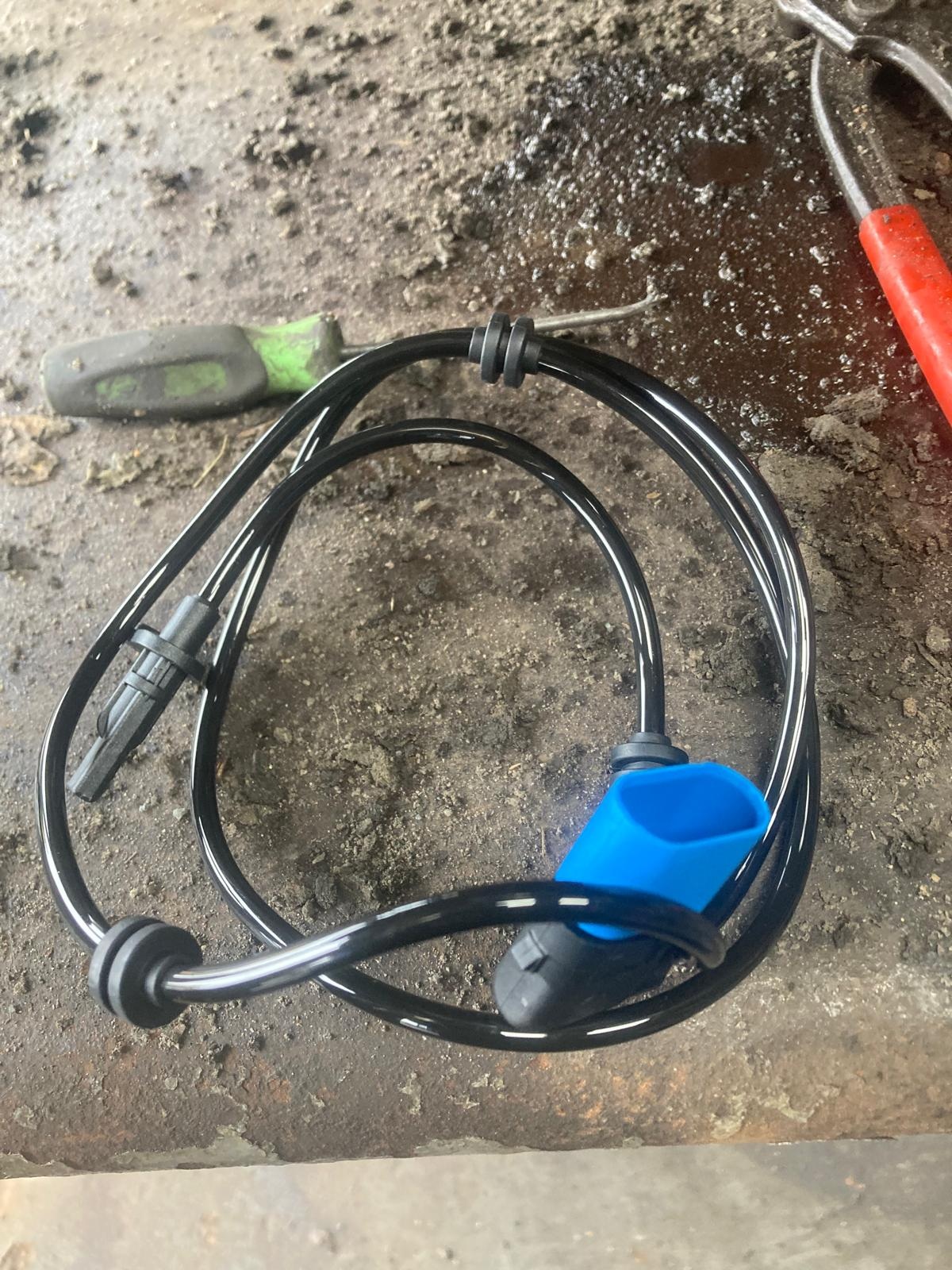
- A faulty wheel-speed sensor.
- Damaged or corroded sensor wiring.
- A damaged reluctor ring or magnetic wheel-bearing encoder.
- A fuse or electrical fault.
- Low system voltage.
- A problem inside the ABS hydraulic unit or control module.
The conventional brakes may still operate when only the amber ABS warning is showing, but the anti-lock function may be unavailable. Other connected safety systems, including traction control and electronic stability control, may also be affected.
The car should be inspected promptly. If the ABS light appears together with a red brake warning, or the braking feels abnormal, stop driving and obtain professional assistance.
What Is the Brake-Pad Wear Warning Light?
Some vehicles have sensors that monitor brake-pad wear. The warning symbol may resemble a circle surrounded by broken or dotted brackets.
When the friction material reaches a certain point, the sensor contacts the brake disc and activates the dashboard warning.
This does not always mean the brakes are about to fail immediately, but it does mean they require inspection. Continuing to drive for too long could allow the pads to wear down to their metal backing plates, damaging the discs and increasing the repair cost.
Not every car has electronic pad-wear sensors. Some pads use a small metal indicator that produces a squealing noise instead, while others rely on routine visual inspection.
Electronic Parking Brake Warning Lights
Many modern vehicles use an electronic parking brake operated by a switch rather than a traditional handbrake lever.
A warning light or dashboard message may appear if:
- The parking brake has not released.
- Battery voltage is too low.
- A rear brake motor has failed.
- A calliper is sticking.
- A switch or sensor is faulty.
- The control system requires diagnosis.
- The vehicle has been left in a particular service or test mode.
If the electronic parking brake will not release, do not force the vehicle to move. Driving against an applied parking brake can overheat and damage the rear brakes.
Electronic systems often require diagnostic equipment to identify the precise fault.
Could Worn Brake Pads Cause the Warning Light?
Worn pads can activate a dedicated pad-wear warning on vehicles fitted with sensors. They may also contribute indirectly to a low brake-fluid level because the calliper pistons extend as the pads become thinner.
However, a dashboard light alone cannot confirm which parts require replacement.
The complete braking system should be inspected, including:
- Brake-pad thickness.
- Brake-disc condition and thickness.
- Brake-fluid level and condition.
- Callipers and sliders.
- Hydraulic pipes and flexible hoses.
- ABS sensors and wiring.
- Parking-brake operation.
- Stored diagnostic fault codes.
This prevents unnecessary parts from being fitted and ensures that the actual cause is dealt with.
Can a Brake Warning Light Cause an MOT Failure?
Brake-related warning lights form part of the MOT inspection. The ABS, electronic stability control, electronic parking brake and brake-fluid warning lights may all be checked.
A warning light that indicates a system malfunction, fails to follow the correct start-up sequence or remains illuminated when it should go out can result in an MOT failure.
Official government guidance confirms that dashboard warning lights for the ABS, ESC, electronic parking brake and brake fluid are among the items checked during an MOT.
However, motorists should not wait for the annual test before investigating a brake warning. The light could appear at any time, and braking safety is far more important than simply passing an MOT.
What Should You Do When a Brake Warning Light Appears?
Remain calm and consider the colour of the warning and how the vehicle feels.
If a red warning remains on after releasing the parking brake:
- Slow down carefully.
- Stop in a safe place.
- Check the vehicle handbook.
- Do not continue if the pedal or braking feels abnormal.
- Arrange professional inspection or recovery.
If an amber ABS or pad-wear warning appears, arrange an inspection promptly. Avoid unnecessary journeys until the cause is known, particularly if several warning lights appear together.
Never cover the warning, remove the bulb or repeatedly clear a fault code without repairing the underlying problem.
Brake Warning-Light Checks in Halifax
Pellon Tyre and Autocentre has looked after motorists throughout Halifax and Calderdale since 1989.
Our experienced team can inspect braking components, check fluid levels, test electronic parking brakes and use diagnostic equipment to investigate ABS and warning-light faults.
We welcome customers from Pellon, King Cross, Boothtown, Sowerby Bridge, Elland, Brighouse and surrounding areas.
If a brake warning light has appeared on your dashboard, contact Pellon before the problem becomes more serious. We will inspect the vehicle properly, explain what we find and never replace parts unless they genuinely need replacing.
You may also notice other symptoms, such as grinding brakes or your car juddering when braking
Call us on 01422 351314 or 01422 362030 to arrange an inspection.