Car Juddering When Braking
Car Juddering When Braking
Table of Contents
Car Juddering When Braking
Car Juddering When Braking – Could Worn Brake Discs Be the Cause?
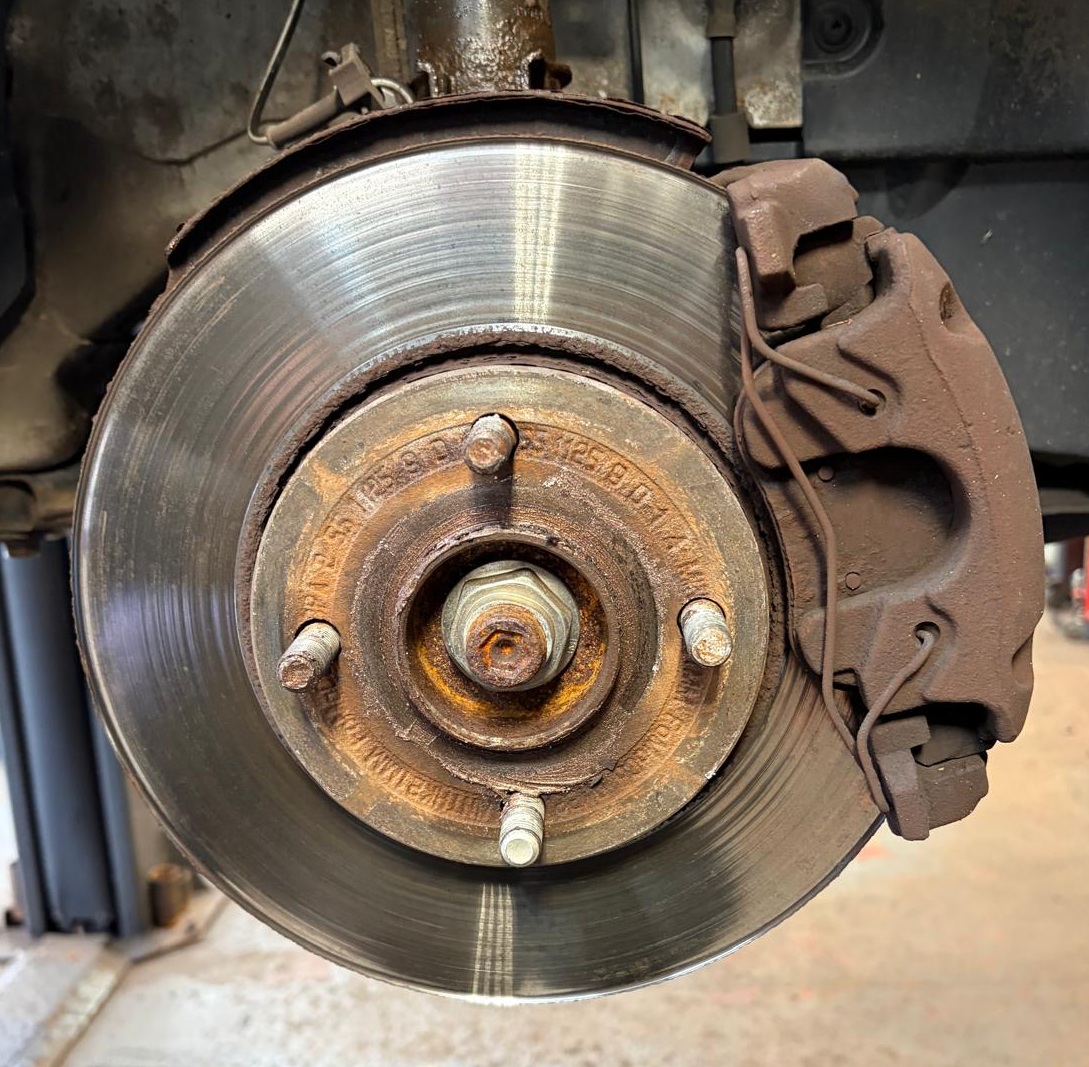
A car juddering when braking can be unsettling, particularly when it happens while slowing down from a higher speed. The steering wheel may shake in your hands, the brake pedal may pulse under your foot, or the vibration may seem to travel through the whole vehicle.
Here at Pellon Tyre and Autocentre in Halifax, this is a problem we regularly investigate. Worn or uneven brake discs are one of the most common causes, but they are not the only possibility. A proper inspection is needed before deciding which parts, if any, require replacing.
As we always say at Pellon, we never do a job unless it genuinely needs doing.
What Does Brake Judder Feel Like?
Brake judder is a vibration that appears or becomes noticeably worse when the brakes are applied.
Customers describe it in several different ways:
- The steering wheel shakes when braking.
- The brake pedal moves or pulses.
- The front of the car vibrates when slowing down.
- The entire vehicle seems to shudder.
- The problem becomes worse when braking from motorway speeds.
- The brakes feel rough rather than smooth and progressive.
The precise sensation can provide useful clues. A shaking steering wheel often points towards a problem affecting the front brakes, wheels or suspension. Movement felt mainly through the seat or body of the car may come from the rear.
However, symptoms can overlap, which is why guessing and simply fitting parts is not the right approach.
Can Worn Brake Discs Cause Juddering?
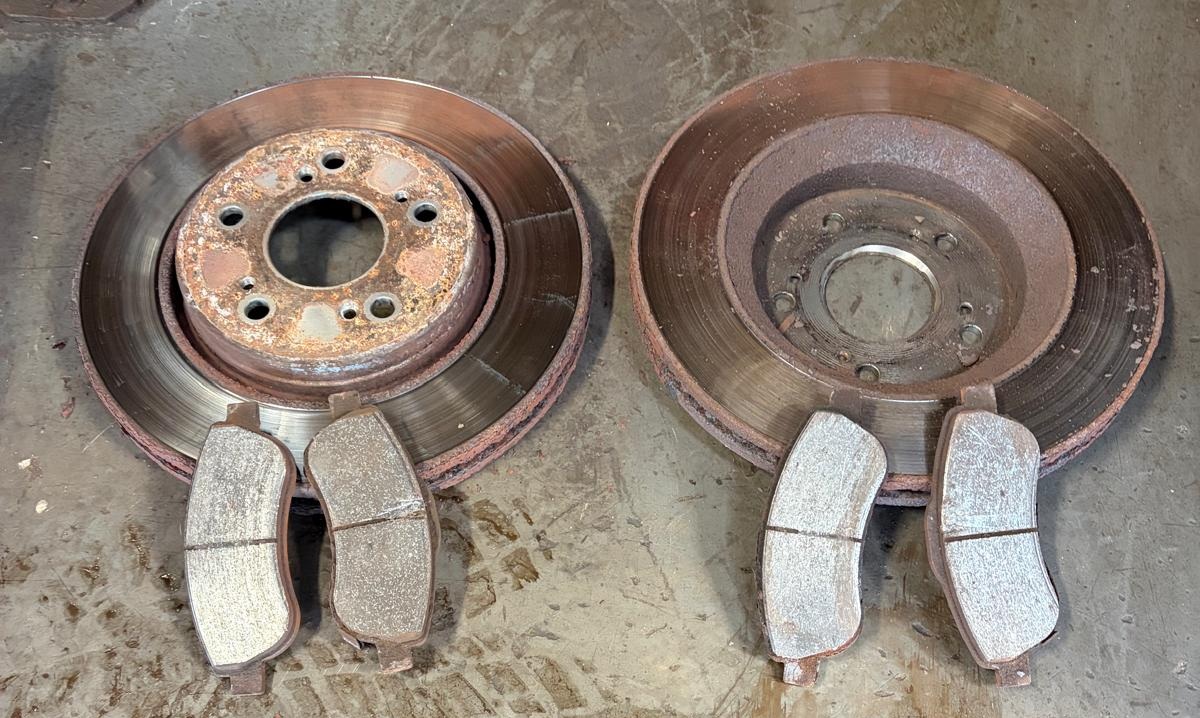
Yes. Brake discs should have smooth, even surfaces so that the brake pads can grip them consistently.
As the driver presses the brake pedal, the callipers push the pads against the rotating discs. This creates the friction needed to slow the car. If a disc has worn unevenly, become badly corroded or developed variations in thickness, the pads may not contact it evenly.
That changing contact can produce a vibration each time the wheel turns. The faster the vehicle is travelling or the harder the brakes are applied, the more noticeable the judder may become.
Drivers sometimes describe this as having “warped brake discs”. Although that is a commonly understood expression, the problem can also involve uneven disc thickness, corrosion, heat damage or the disc not running perfectly true.
Whatever name is used, the important thing is to inspect and measure the components rather than assuming the cause.
Why Do Brake Discs Become Uneven?
Brake discs work in demanding conditions and experience repeated heating and cooling. Several things can contribute to uneven wear or brake judder.
Normal Wear
Discs gradually become thinner through normal use. Eventually, they may reach the manufacturer’s minimum permitted thickness or develop a pronounced outer lip.
New brake pads should not simply be fitted against discs that are excessively worn or badly damaged.
Heavy Braking and Excessive Heat
Repeated hard braking can create a great deal of heat. This may happen when travelling down long hills, towing, carrying heavy loads or braking repeatedly in demanding traffic.
Our hills and valleys around Halifax and Calderdale can place extra demands on a vehicle’s braking system, particularly when the car is fully loaded.
Excessive heat can affect the disc surface and sometimes leave blue or darkened areas. It may also damage the pads and reduce braking performance.
Corrosion
West Yorkshire’s damp conditions can be hard on braking components. Cars that stand unused or cover only short journeys may develop rust on their brake discs.
Light surface rust will often clear during normal braking. Heavy corrosion, deep pitting or rusty areas that the pads no longer clean properly can cause rough braking and uneven contact.
Rear discs are particularly prone to corrosion on some vehicles because the front brakes normally perform a greater share of the stopping work.
A Seized or Sticking Brake Calliper
A calliper that does not release correctly can leave one pad dragging against the disc. This causes extra heat and may wear the disc and pads unevenly.
Signs may include:
- One wheel becoming noticeably hotter than the others.
- A burning smell.
- The car pulling towards one side.
- Poor fuel economy.
- Uneven brake-pad wear.
- Persistent scraping or grinding noises.
Replacing the discs and pads without correcting a sticking calliper could allow the same trouble to return.
Dirt or Corrosion Behind the Disc
When a brake disc is fitted, it must sit correctly against a clean wheel hub. Rust, dirt or damage between the disc and hub can prevent it from sitting perfectly square.
Even a small amount of irregularity may become noticeable as the disc rotates. This is why careful preparation and correct fitting matter just as much as the quality of the replacement parts.
Incorrect Wheel-Bolt Tightening
Wheel bolts should be tightened correctly and evenly. Excessive or uneven tightening can contribute to problems on some vehicles.
We use the appropriate procedures and tightening settings when refitting wheels after brake, tyre or suspension work.
Could Something Else Cause the Vibration?
Not every vibration experienced while slowing down comes from the brake discs.
Other possible causes include:
- Worn suspension bushes.
- Damaged ball joints.
- Steering-component wear.
- Wheel-bearing problems.
- A buckled wheel.
- A damaged or badly worn tyre.
- Incorrect wheel balance.
- Loose or incorrectly tightened wheel bolts.
- A fault with another part of the braking system.
Wheel imbalance normally causes vibration at a particular road speed, whether or not the brakes are being applied. If the shaking begins specifically when the driver presses the brake pedal, the brakes become a more likely suspect.
The pulsing felt when the anti-lock braking system operates during an emergency stop is different. ABS deliberately pulses the braking pressure to help prevent the wheels from locking. That is normal when the system is actively working on a slippery road or during very heavy braking.
Regular juddering during ordinary stops is not normal and should be investigated.
Will Brake Judder Cause an MOT Failure?
Brake judder itself is not something a driver should leave until the annual MOT. If the underlying problem causes seriously weakened, imbalanced or damaged brakes, the vehicle may fail its test.
An MOT only confirms that the car met the required standard at the time it was examined. A fault can develop at any point during the following year.
If a steering wheel begins shaking when the brakes are applied, arranging an inspection promptly may prevent further damage and help keep the vehicle safe.
Do the Brake Discs and Pads Need Replacing Together?
When a badly worn or damaged disc requires replacement, new pads are normally fitted at the same time on that axle.
Old pads will have worn to match the surface of the previous discs. Reusing them against new discs may result in poor contact, noise or uneven bedding.
Brake components on the same axle are generally replaced in matching pairs. Replacing only one front disc, for example, could create uneven braking performance between the two sides.
Before recommending anything, we inspect the brakes and consider disc condition, thickness, pad wear, calliper operation and the condition of associated parts.
Brake Inspections and Repairs in Halifax
Pellon Tyre and Autocentre has served motorists throughout Halifax and Calderdale since 1989. Our experienced mechanics inspect and repair brakes on cars, vans, hybrids and electric vehicles.
We welcome customers from Halifax, Pellon, King Cross, Boothtown, Sowerby Bridge, Elland, Brighouse and the surrounding areas.
If your car has started juddering when braking, the steering wheel is shaking or the brake pedal feels unusual, please don’t ignore it. An inspection can establish whether the cause is worn brake discs, a sticking calliper, suspension wear or something entirely different.
Call Pellon Tyre and Autocentre on 01422 351314 or 01422 362030 to arrange a brake inspection.
We will examine the vehicle properly, explain what we find and never carry out additional work without your agreement.