Horror Tyre
Table of Contents
Horror Tyre
Horror Tyre
The Worst Tyre We Have Ever Seen – And the Driver Had No Idea
After spending most of my working life in the tyre trade, I sometimes think I have seen just about everything that can possibly go wrong with a tyre.
Well, yesterday at Pellon Tyre & Autocentre here in Halifax, we were reminded that you should never say never.
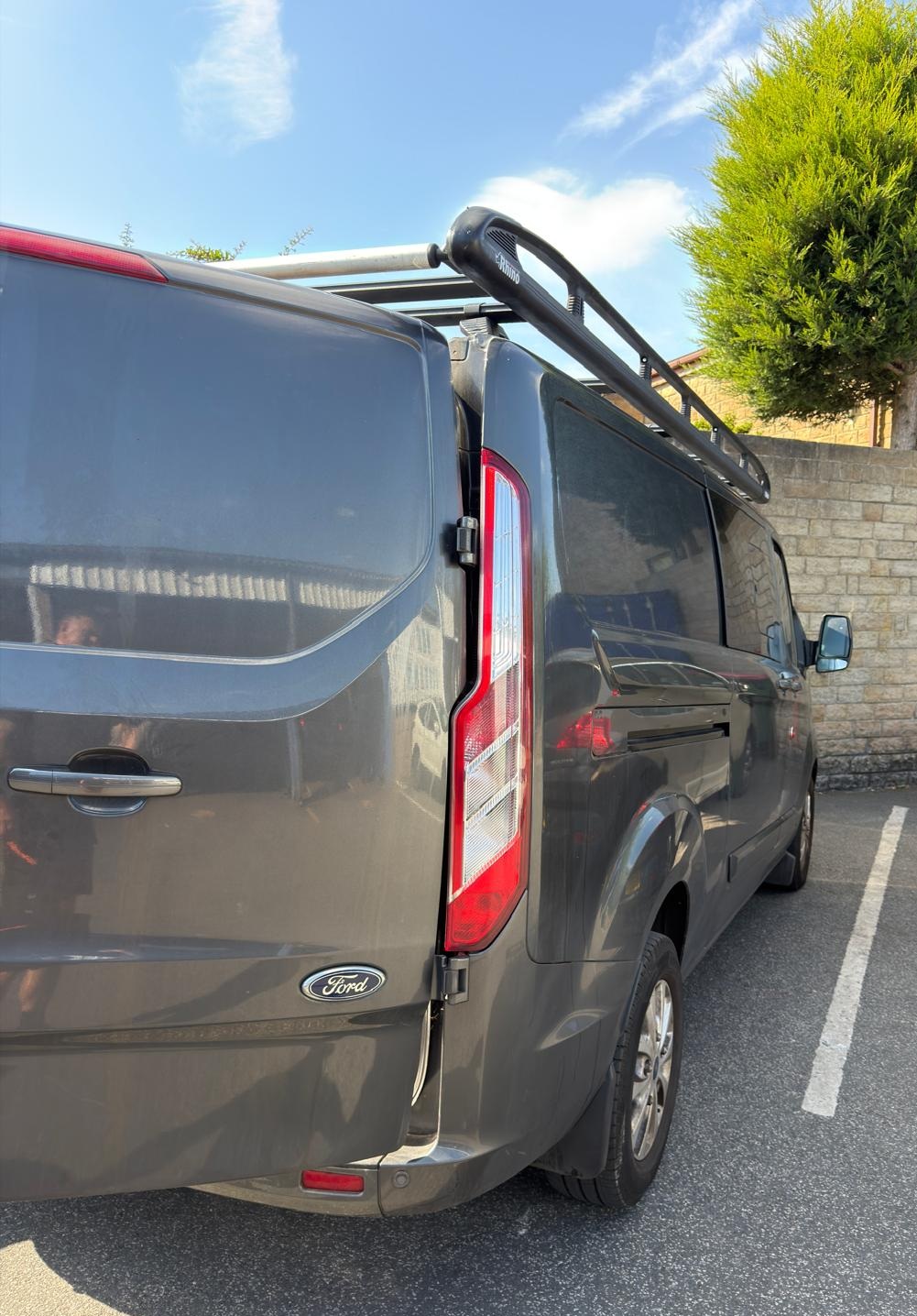
A customer brought a Ford Transit van into us and asked us to have a look at one of the tyres.
What we found genuinely horrified us.
And I don’t use that word lightly.
In fact, looking around at the reaction of our experienced staff, we all came to much the same conclusion.
This was quite possibly the worst tyre we have ever seen still fitted to a vehicle being driven on the road.
A Huge Section of the Tread Had Completely Disappeared: Horror Tyre
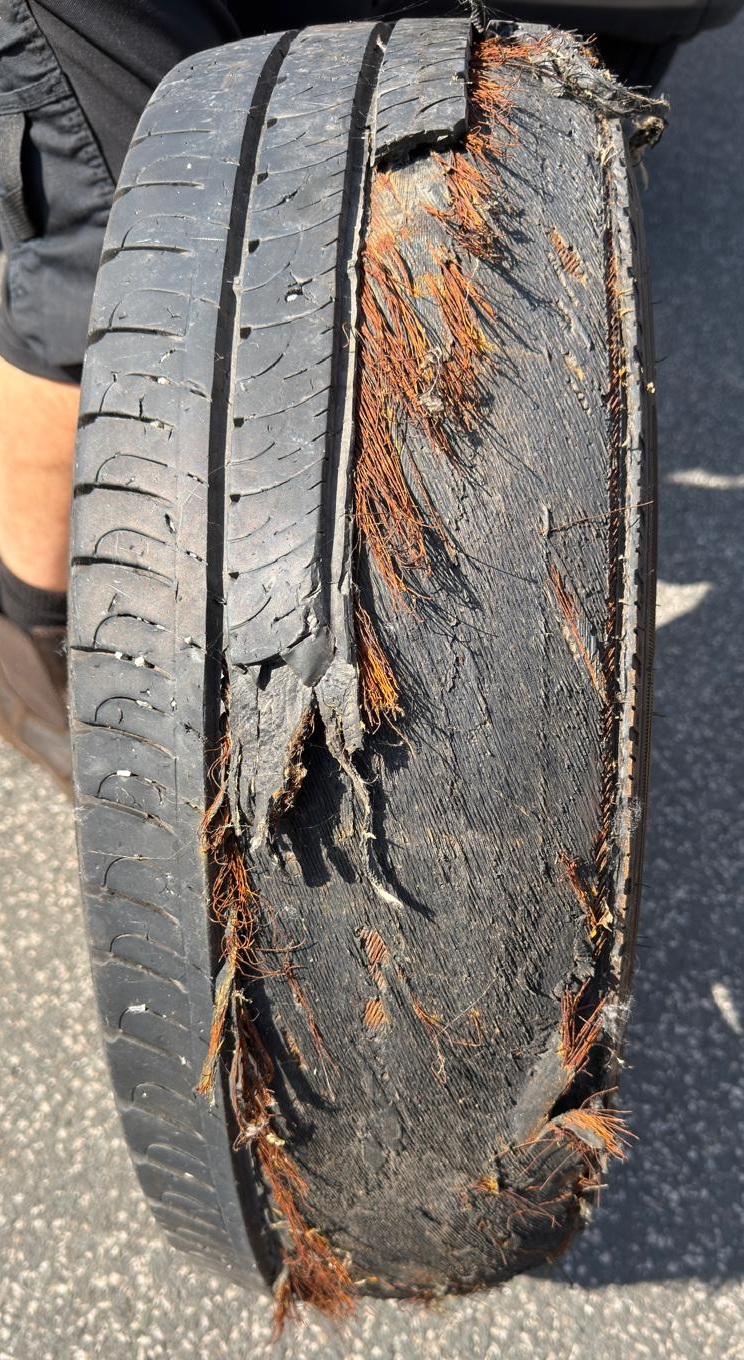
The photograph we took tells the story better than words ever could.
A huge section of the tread had been completely worn away, with a badly cracked tyre shoulder at least, exposing the tyre’s internal steel reinforcement.
This wasn’t simply a tyre that had gone slightly below the legal tread limit.
The rubber had disappeared altogether across a substantial part of the tyre. Many of the exposed steel cords were visibly corroded, with that unmistakable rusty orange colouring clearly visible in the photograph.
Sections of rubber had also broken and torn away, leaving the internal construction of the tyre exposed.
This wasn’t a tyre approaching the end of its useful life.
It was a tyre that had gone far beyond anything we would consider remotely safe to use on the road.
Yet Part of the Tyre Still Had Recognisable Tread
One particularly interesting – and frightening – feature can also be seen in our photograph.
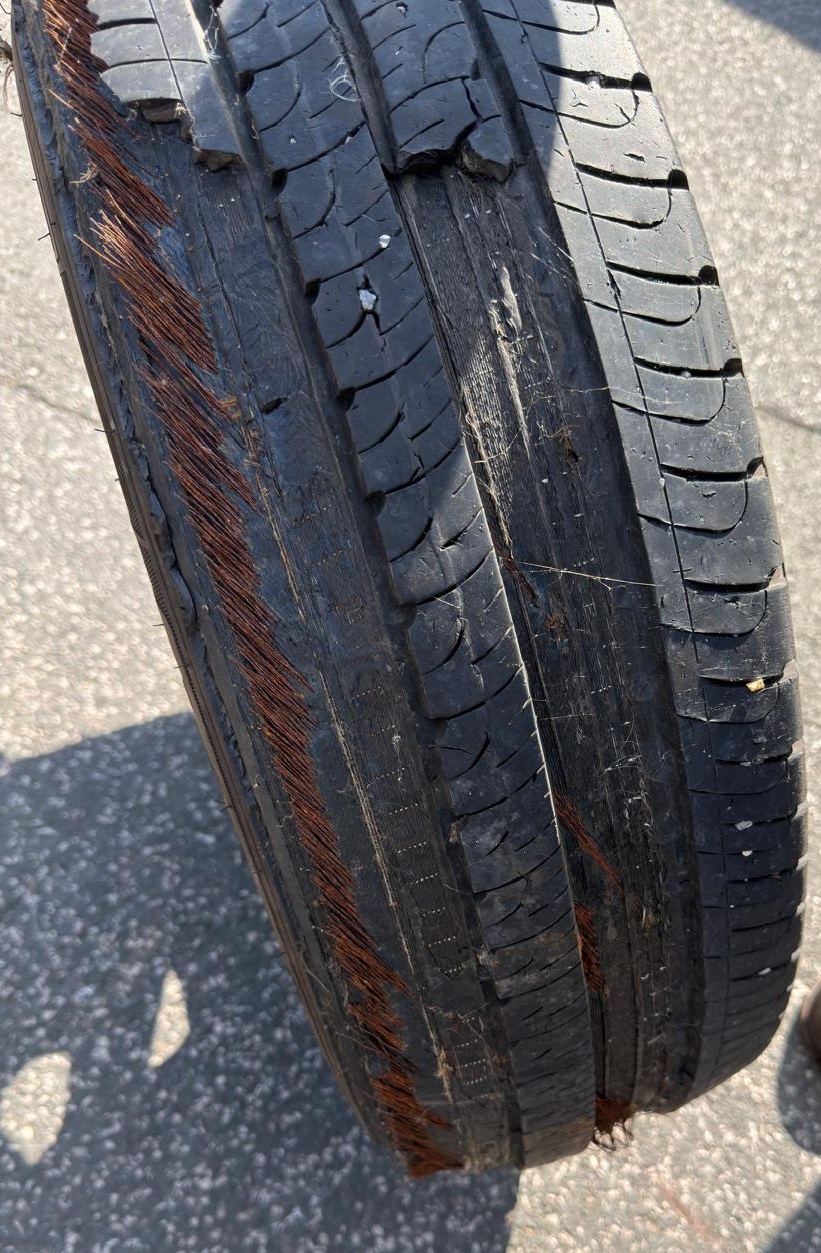
Part of the tyre still has recognisable tread remaining.
Move across the width of the same tyre, however, and suddenly the tread virtually disappears. The adjoining section is completely destroyed, with exposed and corroded steel reinforcement showing through.
This may offer at least part of the explanation as to why the driver hadn’t realised just how dangerous the tyre had become.
If you simply walk around a van and look at the easiest part of each tyre to see, everything may appear reasonably normal.
The dangerous wear can be taking place somewhere much less obvious.
That’s why simply kicking a tyre or glancing at it before setting off isn’t really a tyre check.
You need to look right across the tread wherever possible.
How Had This Been Allowed to Get So Bad? Horror Tyre
That was the question all of us at Pellon were asking.
When we removed and inspected the tyre, the danger stood out like a sore thumb.
Yet the customer apparently had no idea.
This van hadn’t arrived on the back of a recovery truck. It had been travelling around with the tyre in this condition.
Looking at the extent of the damage, it was frightening to think about the journeys it might already have completed.
The Rusty Steel Cords Really Concerned Us
Perhaps the most striking feature of the photograph is the amount of rust on the exposed steel reinforcement.
We’ve had an unusually long dry spell here in Yorkshire, so naturally it made us wonder:
Just how long had those steel cords been exposed?
We cannot answer that accurately.
You can’t look at the amount of corrosion and calculate whether a tyre has been like this for a few weeks or several months. Temperature, moisture, road conditions, salt and many other factors can influence corrosion.
However, one thing is certain.
The steel reinforcement inside a tyre is not supposed to be exposed to the weather in the first place.
The visible corrosion tells us that moisture had reached steel that should have remained safely protected inside the tyre.
That alone demonstrates just how far the deterioration had progressed.
This Wasn’t Simply an MOT Failure: Horror Tyre
UK law requires cars and light vans to have at least 1.6mm of tread across the central three-quarters of the tyre and around its complete circumference.
Tyres must also be free from serious damage.
And importantly, the internal cords must not be exposed.
Our Transit tyre wasn’t hovering around 1.5 mm or 1.6 mm.
We were way beyond that conversation.
We had extensive loss of tread, exposed reinforcement, damaged rubber and heavily corroded steel cords.
In our professional opinion, there was absolutely no question about it.
The tyre had to come off the vehicle.
What Could Have Happened at Motorway Speed?
This is the part that really concerns me.
We have the M62 running straight through our part of West Yorkshire.
Imagine this Ford Transit travelling between Halifax, Huddersfield and Leeds at motorway speeds.
Perhaps it has tools or materials in the back.
It hits one of our famous Yorkshire potholes.
Or the driver has to brake sharply because traffic suddenly slows ahead.
The forces going through a van tyre under those circumstances are enormous.
Now look again at our photograph.
That tyre was expected to cope with all those forces despite a substantial section of its tread being completely worn away and its internal reinforcement exposed and damaged.
The possibility of a tyre failure doesn’t bear thinking about.
A tyre letting go at motorway speed can cause a driver to lose control, potentially involving completely innocent motorists travelling alongside or behind the vehicle.
Why Did the Tyre Wear Like This? Horror Tyre
Whenever we replace a badly worn tyre at Pellon Tyres, we don’t just want to fit another one and forget about it.
We want to know why it happened.
Severe wear across one particular area of a tyre can have several causes.
Wheel alignment is certainly one of the things we would consider. Suspension or steering wear can also contribute. Incorrect tyre pressures, overloading and the hard working life experienced by many commercial vans can all play their part.
And then there are potholes.
Anyone driving regularly around Halifax and Calderdale will know that avoiding every pothole isn’t always easy.
A heavy impact can affect alignment or damage steering and suspension components, which can then cause abnormal tyre wear.
Simply replacing a destroyed tyre without investigating the reason for the wear could result in the new tyre eventually suffering the same fate.
Van Tyres Have a Hard Life
Ford Transit vans are workhorses.
Thousands of businesses throughout Yorkshire depend upon them every day.
Builders, plumbers, electricians, delivery drivers, gardeners and countless other trades rely on vans to earn their living.
Unlike many family cars, a working van can spend almost the entire day on the road.
It may be carrying considerable weight, climbing kerbs, travelling over building sites, running up and down motorways and negotiating rough urban roads.
That’s precisely why van tyres deserve regular attention.
Don’t Assume the MOT Will Protect You for 12 Months: Horror Tyre
Another misconception we sometimes come across is:
“It passed its MOT, so everything must be alright.”
An MOT only tells you that the vehicle met the required standards at the time it was tested.
It isn’t a guarantee that the tyres will remain safe for another twelve months.
A tyre can be legal when a vehicle passes its MOT and subsequently develop abnormal wear.
This is particularly important if the wheel alignment has moved out or a suspension component has developed excessive wear.
The responsibility for keeping the vehicle roadworthy remains with the driver.
Check the Inner Parts of Your Tyres.
This Ford Transit is a perfect example of why we encourage motorists to inspect the whole width of their tyres.
The photograph demonstrates it brilliantly.
One section still looks like a tyre.
The neighbouring section looks as though somebody has attacked it with a machine.
If that badly damaged area isn’t easily visible when the wheel is fitted to the vehicle, a driver might repeatedly walk past it without realising what is happening.
With front tyres, turning the steering from one lock to the other can make it easier to see more of the tread.
Look for:
- Uneven tread wear
- Bald areas
- Cracking
- Cuts
- Bulges
- Objects stuck in the tyre
- Exposed cords or wires
- Unusual wear on either edge
And check your tyre pressures regularly.
It only takes a few minutes.
If You Can See Wires – Stop Driving: Horror Tyre
This is perhaps the simplest message to come from this story.
If you can see wires or cords coming through a tyre, don’t carry on driving normally.
Get professional advice immediately.
Don’t think, “I’ll get another week out of it.”
Don’t wait until payday.
And certainly don’t plan another motorway journey on it.
A tyre showing its internal reinforcement has already gone far beyond normal tread wear.
We’d Rather Tell You Your Tyres Are Fine
At Pellon Tyres we have always worked on a simple principle:
We never do a job unless it needs doing.
If somebody brings a van or car to us because they’re worried about a tyre and we think it’s perfectly safe, we’ll tell them.
I’d much rather send somebody away saying, “There’s plenty of life left in that yet”, than sell them something they don’t need.
But occasionally we see something where there can be no debate whatsoever.
This Ford Transit tyre was one of those occasions.
Probably the Worst Tyre We’ve Ever Seen: Horror Tyre
I’ve been involved with tyres since I was a young man.
I’ve seen bald tyres.
I’ve seen tyres with cords showing.
I’ve seen blowouts, sidewall damage, punctures, cracked tyres and tyres damaged through poor wheel alignment.
But this one stopped us in our tracks.
The sheer area of missing tread was astonishing.
Then there were the rusty exposed steel cords, broken rubber, and severely damaged construction.
And perhaps most shocking of all:
The owner didn’t realise how bad it was.
Thankfully, the van came into Pellon Tyres, and we found the problem before something much worse happened.
So please use this photograph as a reminder.
Whether you drive a Ford Transit, a family hatchback, an SUV, or anything else, take a proper look at your tyres.
Don’t just look at the easiest bit to see.
Look across the tread.
Check the edges.
Check the pressures.
And if something doesn’t look right, have it inspected.
After seeing this tyre at our Halifax garage, I think all of us were left thinking the same thing:
How on earth did it get this far without somebody spotting it?
Thankfully, this time, somebody finally did.

Leave a Reply
Want to join the discussion?Feel free to contribute!